Over the weekend, my friends and I went on a cemetery road trip.
We had it planned and mapped out for a while now and were excited to spend the day together while exploring cemeteries. We started bright and early and fully caffeinated.
I just finished going through all the photos I took on our adventures, all 957 of them. The first thing I always do after a cemetery adventure is, upload my photos to my computer and file them accordingly and get the number of cemeteries visited.
If you have been following me for a little bit now, you may remember that our record for cemeteries visited in one day is 13. Well, Saturday was a full day of adventures, and we have a new record!
15!
A personal best. I have the best friends and travel companions a taphophile could ask for! I love that they love exploring cemeteries as much as I do, and enjoy a good challenge too.
It will take me a while to sort through my photos and get them posted. But they should be popping up on my social media channels and website soon. I will most likely write a more in-depth post about our day of adventures in the future as well. There were some fun surprises!
I am in the midst of working on a blog post about my adventures searching for the grave of Tom Thomson in Algonquin Park. I’m hoping to have it up in the next week or two. In the meantime, I thought I would take a look at some Egyptian revival architecture that can sometimes be found in cemeteries, more specifically—obelisks.
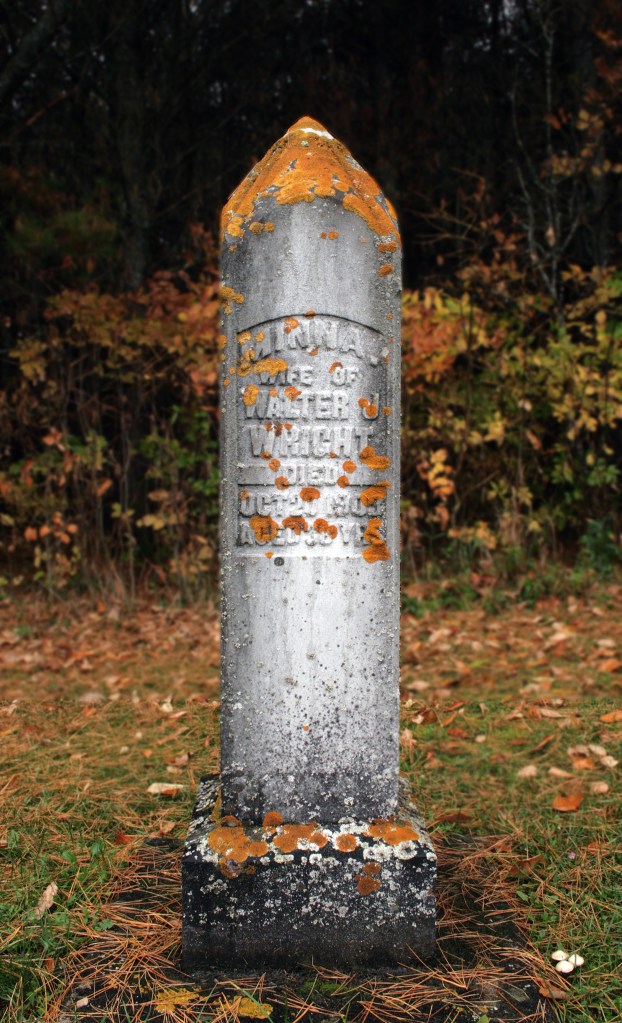
Obelisks are Egyptian in origin, but became a popular Christian funerary symbol. They are now a common sight in most cemeteries. I have found quite a few in my cemetery travels and wanted to share some of them with you today.
In Understanding Cemetery Symbols, Tui Snider notes that obelisks became popular symbols after Napoleon invaded Egypt in the late 1700s. An obelisk is thought to represent a ray of light, but it can also symbolize focused spiritual goals, with the wide base narrowing to a point, symbolizing the deceased reuniting with God at death, and the two becoming one.
Different variations of obelisks can be found throughout a cemetery. For example, Truncated obelisks do not come to a sharp point at the top, but are flat or topped with another symbol like a cross, urn or an orb.
Obelisks can sometimes be found at the center of a family plot, representing the family’s connection to God. They are particularly well suited for this, as there is generally a lot of room on all four sides of the stone to inscribe the names of family members.
During my two-week vacation, something unexpected happened. While touring around the winding roads of St. Joseph’s Island, I found a Pet Cemetery.
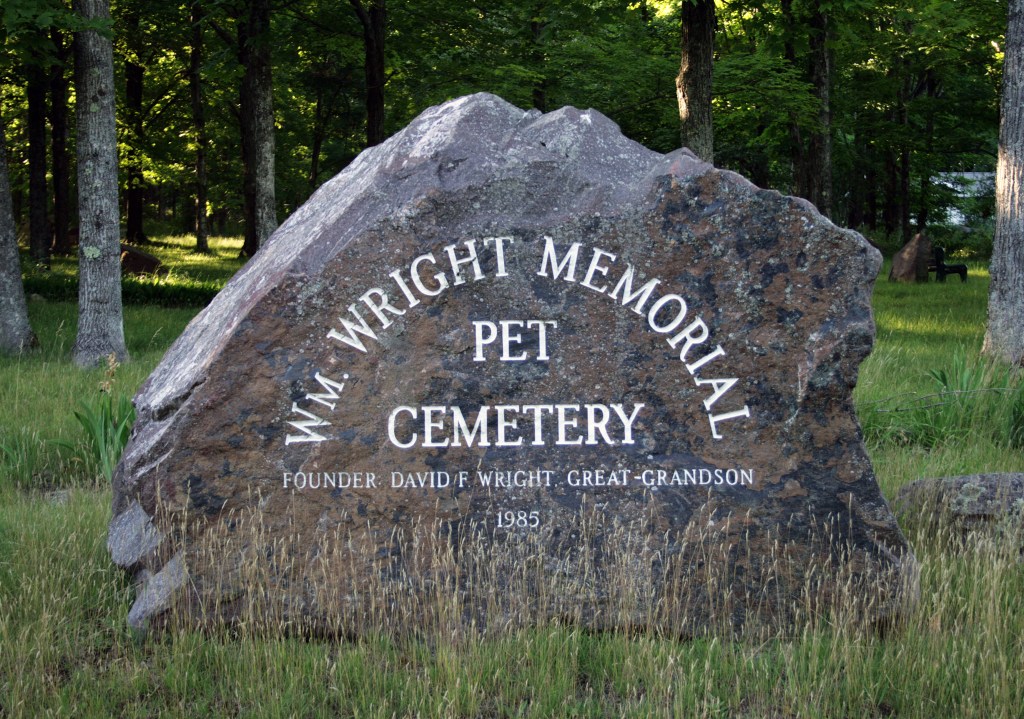
I had researched the area before my trip and had marked off every cemetery on the island, with the hopes of visiting them all. I had not read anything about a pet cemetery, so I was very surprised when I noticed a large stone with the words “Wm. Wright Memorial Pet Cemetery” engraved on it. I quickly pulled over to the side of the road and made a three-point turn. My mother, who was traveling with me, was just as surprised as I was when she saw the cemetery sign.
The William Wright Memorial Pet Cemetery sits on land that was once the site of a Presbyterian Church. The Church suffered a fire, and from my understanding, the cemetery behind this church was moved to a cemetery further down the road. The land was inherited by William’s great-grandson, David Wright, who started the Pet Cemetery and named it after his Great Grandfather, in 1985. Today, the cemetery is cared for by the St. Joseph Lions Club.1
This beautiful cemetery is surrounded by large maple trees. It has a little chapel and even its own little receiving vault, also known as a dead house. When the Lions Club took over the care of the cemetery, they converted a shed to accommodate two freezers for winter storage.1
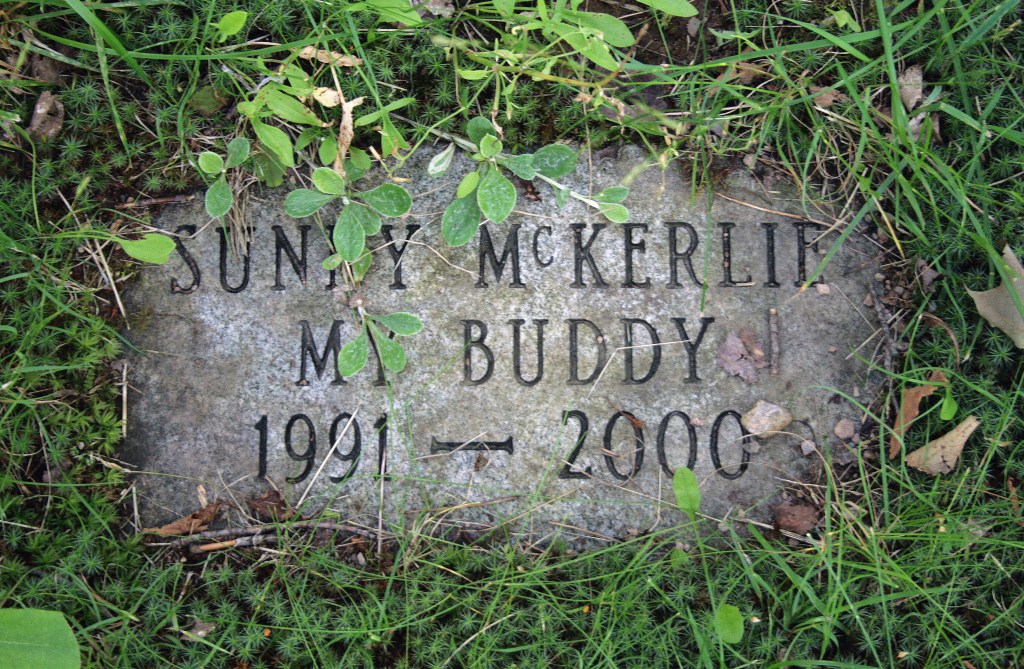
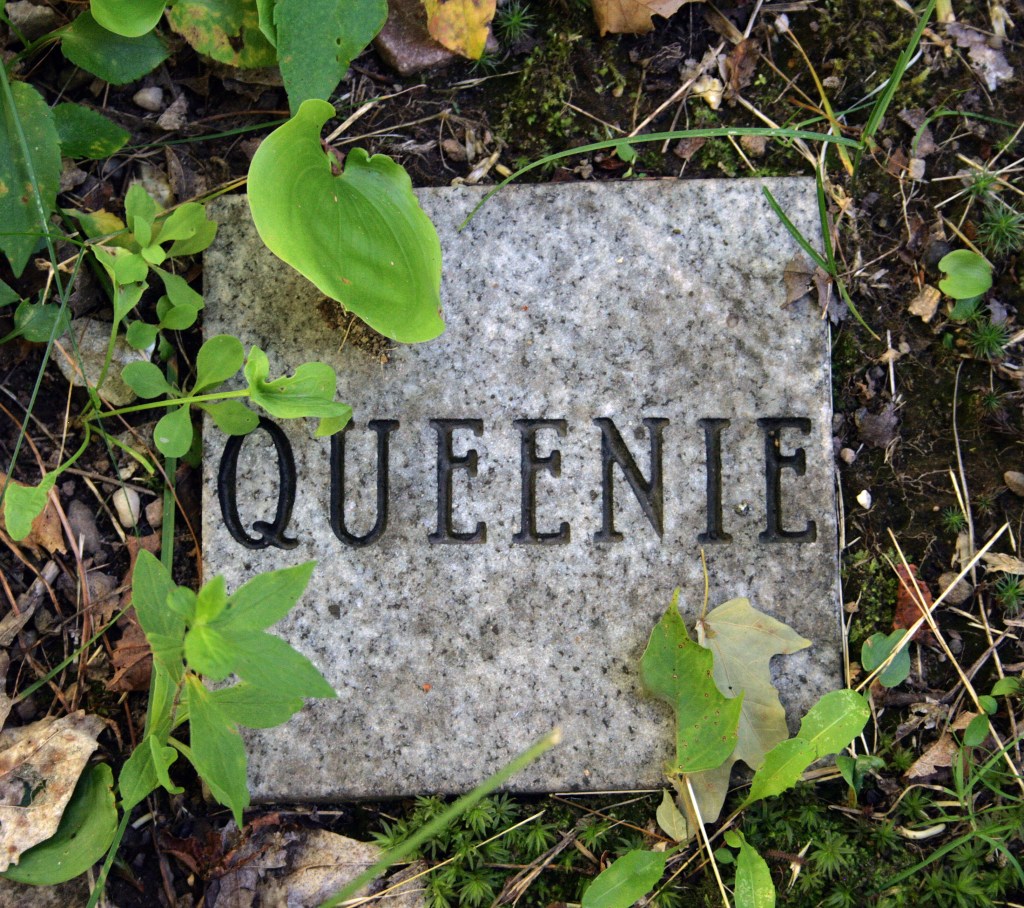
This was my first time visiting a pet cemetery. There is a mix of flat grave markers, homemade crosses, and other types of homemade gravestones that looked to be laid out in sections. I was affected immediately by the love and care that was taken to memorialize these animals. They were not just animals, but furry family members and beloved pets.
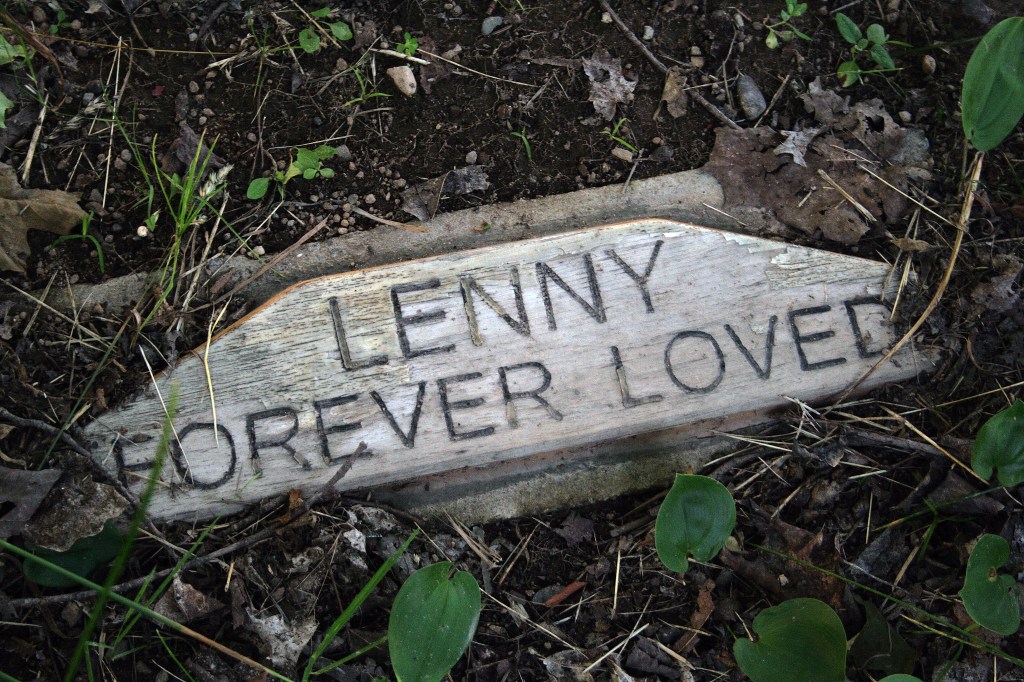
Some of the markers only bared names, while others had etched portraits or had loving epitaphs inscribed on them. The epitaphs got to me the most —things like “My Buddy” and “Forever loved”. Seeing these kinds of things inscribed on a tombstone for a pet, some of which were only in this world for a short time, was incredibly heartbreaking. I don’t usually have this sort of response in cemeteries and was a little surprised at how hard it was for me to read each stone.
Although it was an emotional experience for me, I was thrilled to be able to visit a pet cemetery. I think that they are growing in popularity, but they are still a fairly rare thing. After a little research, I only found information for eleven of them in Ontario, including the one I visited. I did try to visit a pet cemetery a few years ago, in Sault Ste Marie. But, we were unable to find it, and I have since been able to find out very little more about it. I would love to be able to visit more in the future. They are incredibly beautiful places.
Have you been to a pet cemetery before? What was your experience like? I would love to read about your experiences in the comments!
Summers in Northern Ontario are very short, so you need to make the most of them. Before long we’ll be knee-deep in frozen snow. But let’s not think about that right now!
I just got back from a lovely two-week vacation. My fiancé and I were finally able to visit some family and friends we haven’t seen in 3 years, due to COVID-19. It felt almost like a normal vacation. We traveled a wee bit, and of course, I visited some cemeteries!
My vacation was split into three different trips. I went camping at Algonquin Provincial Park with my 80-year-old mother. She hadn’t been camping in about 40 years. We only stayed for one night, but we had all the camping experiences; cooking on a fire, making s’mores, sleeping in a tent, and spending some time at the lake. We also took the opportunity to try finding the grave of Tom Thomson, a famous Canadian painter, who died mysteriously on Canoe Lake. You’ll be able to read more about that adventure in an upcoming blog post.
My fiancé and I, also took some time to visit Southern Ontario and visit family and friends, that we haven’t seen since before the pandemic. We toured the city a little bit, had some great food, and spent some quality time together. We even got a chance to visit some cemeteries. My fiancé is not very interested in visiting cemeteries, but he is very supportive of my love for cemeteries. I think he may have enjoyed hunting for them as we drove back home. We stopped at a few interesting ones that were along our route.
I also took some time to visit St. Joseph Island, the historic fort, and the bird sanctuary. My mother came along with me for that little trip as well. We toured the island and explored. We did some hiking and visited the beautiful Adcock’s Woodland Gardens. We also visited a lot of cemeteries, including a pet cemetery. That was a first for me. You’ll be able to read all about that adventure in an upcoming blog post as well.
I made sure to plan some buffer days to just relax and recoup between heavy days of driving, where I could spend some time with my fur babies and get ready for the next adventure. I also scheduled some days just to do nothing—but those days filled up fast with spontaneous things. Overall, it was a great vacation! I managed to visit 16 cemeteries, reconnect with friends and family, and recharge my batteries.
It was a wonderful break from work and my normal routine, but now it’s time to get back to it! I am feeling refreshed and am looking forward to writing about my vacation adventures and editing the hundreds of photos I took. I am also really excited about an upcoming special project and am currently playing around with some new ideas for the blog. I was starting to feel like my creative juices were stalling a little bit, but having a break has helped me reset and look at things with fresh eyes.
I hope you can take some time for yourself this summer if you haven’t already. Even if it’s only a long weekend. It’s so important to take the time to refresh and revitalize. To take your mind off work and just enjoy your family, friends, and nature or whatever else that makes you happy!
I haven’t posted a road trip story in a little bit, so today I wanted to share my adventure of finding a cemetery via railroad tracks!
It was back in 2020, amid the COVID-19 pandemic. Social bubbles were very much in place and almost everything was shut down. There was not a lot to do that summer. BUT visiting cemeteries is always a viable option! My fiancé and I, and our close friends whom we had been bubbling with (that’s an odd to say), decided to go on a little adventure to try and find two cemeteries in Spragge, Ontario.
The little town of Spragge found its beginnings in 1882 but was originally named Cook’s Mills. It was a self-sufficient town of about 350 residents all built around the sawmill. In 1895 the whole operation was sold, and the village was renamed Spragge, after the township. When the depression hit, the mill closed in 1932. That same year, there was a devastating fire that burned almost the entire village to the ground. This caused a lot of folks to leave town, although a few remained and tried to rebuild. The mill never did re-open, and now there only sit about a dozen homes within the small village limits of Spragge.1 Two cemeteries remain, the Spragge Catholic cemetery and the Spragge Protestant cemetery.
This adventure would take us a little over an hour and a half on the road to get to Spragge. Our little group made a day trip out of it. We stopped at a diner and safely had lunch outside on the patio. We asked some of the locals about the cemetery. The stories we heard were pretty interesting. We were told that the owners of the property where the cemetery sits, do not like visitors and consider them trespassers. They talked about how this causes some tension between the townsfolk who want to visit their relatives, but are barred from doing so. The community was trying to get free access to the cemeteries. We were also told that the property owner was known to brandish a shotgun! We were a little put-off by the stories, but we were determined to take a look for ourselves.
After our slightly uncomfortable lunch, we continued on our way with directions by Google Maps. We turned off the main road onto a side road and what looked like a parking area. My fiancé was completely put-off by the stories we were told, he was also not as enthusiastic about visiting the cemeteries as we were, so he waited in the car and played look-out.
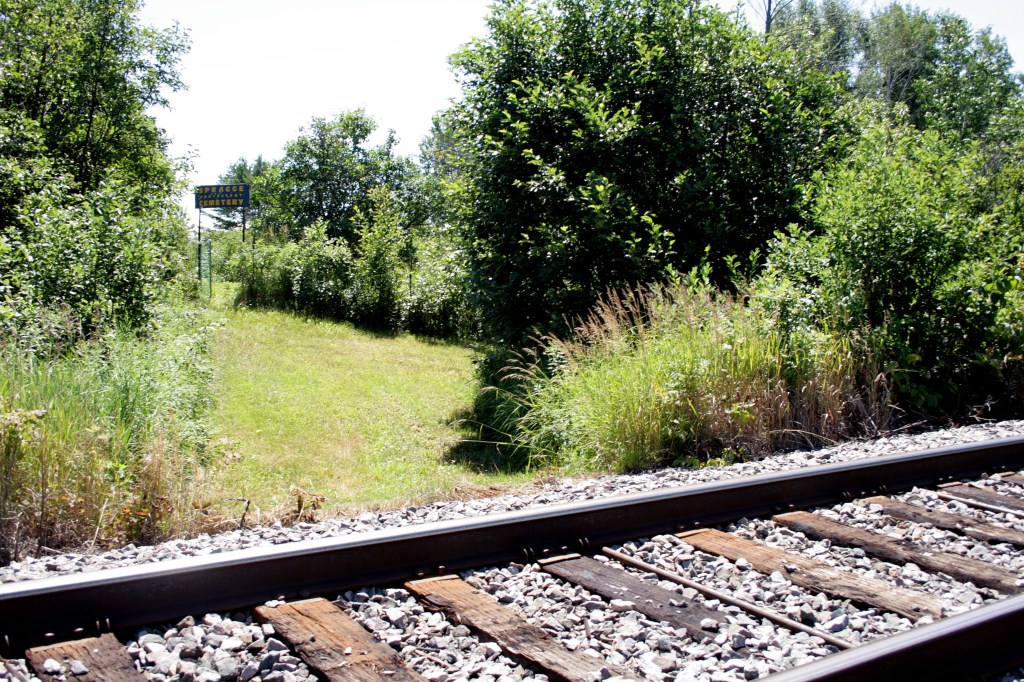
The rest of us began tentatively walking down the dirt road. When it opened up and we could see it was a driveway leading directly to a house, we decided to turn around and try a different approach. We had crossed a set of train tracks, that ran parallel with the main highway. After consulting Google Maps, it looked like we might be able to access the cemetery at a clearing just off the train tracks. We decided to try that. We chose a hot day to walk along the train tracks, but it ended up only being a short walk. On our left, a little clearing opened up which lead into the cemetery.
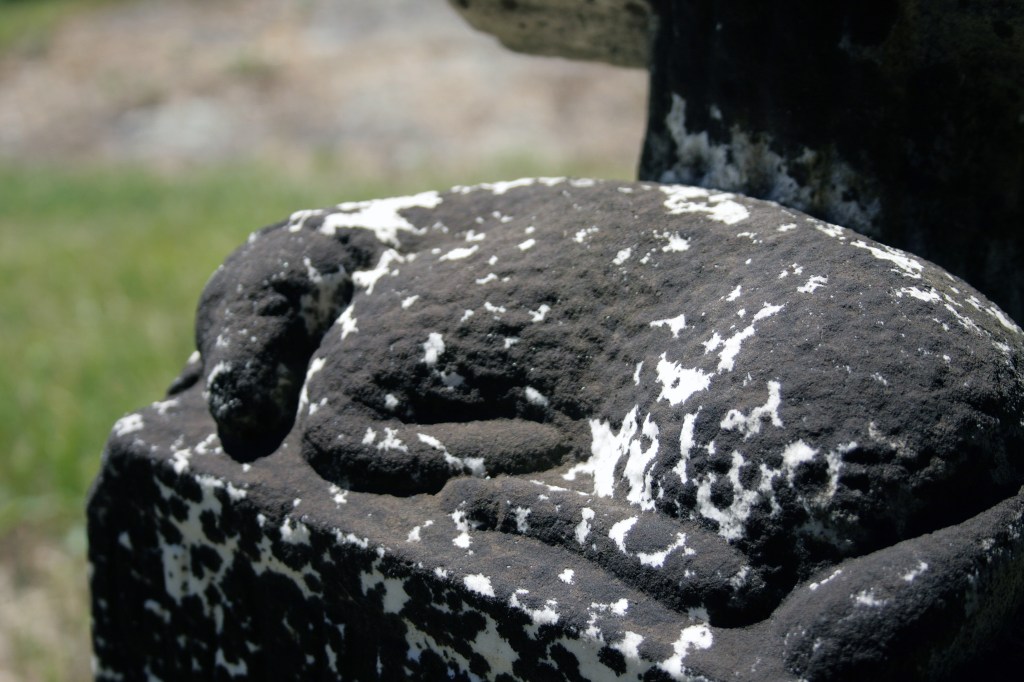
We had found the Spragge Protestant cemetery! We took some time to wander the grounds and look at the beautiful stones. It was a smaller cemetery and looked to be well-maintained. Not at all what we had pictured in our minds. We had been under the impression that the cemetery was abandoned and in disrepair. Some of the stones were too worn to be read, but some others were still in great condition. Some of the common cemetery symbols we found were clasped hands, obelisks, and little lambs.
After we explored a little bit, we tried to find the Spragge Catholic cemetery. According to my friend’s research, it should have been very close to where we were. We branched out a little, exploring the oddly well-kept lawn that snaked in between clumps of trees. We were nervous about getting too close to the house or going in full view of it. After a little more wandering, with no luck, we decided to turn back and reunite with my fiancé, who was patiently waiting in the car.
We were very happy to have at least found one of the cemeteries, and we vowed to do a little more digging and return in the future to find the elusive cemetery. It was still a fun adventure, after all exploring is half the fun.
But that’s not the end of the story!
This past winter I was busy uploading photos to Find a Grave and uploaded some of my photos from Spragge. A woman reached out to me, looking for coordinates for the Spragge Catholic cemetery, as she has family there. I passed on all I knew, and let her know we were not able to find it. She had also heard about the access issues, but since she was a relative was hoping the property owner would be understanding. She later contacted me and gave me an update. She was able to locate both cemeteries and visit her family. It turns out the town of Spragge did not want the expense of maintaining the cemeteries, and a private owner requested to take it over and purchased the property. When he is not in town, he has entrusted maintenance and upkeep to another property owner in the immediate area—who also happens to have loved ones buried in the cemeteries.
I also had another person reach out about these cemeteries. They have turned out to be pretty popular locations. This time, the person who reached out was searching for the location of the Spragge Protestant cemetery. He had visited the Spragge Catholic cemetery but did not find the other. We exchanged information. I shared everything I knew about the one I had visited. In return, he shared the exact coordinates of the Spragge Catholic cemetery and the contact information of the property owners. If we had searched closer to the water’s edge when we were there, we would have found it. So close!
I’m still a little confused about the stories that the folks at the diner told us, about the owners brandishing shotguns. From what I heard from both people who reached out, the owners seem very kind and willing to allow visitors into the cemetery. Although one had also heard about the access issues. Were there issues at one time? A misunderstanding maybe? Or maybe it was just some locals trying to scare away visitors? That mystery still remains…
Armed with all this new information, I will have to make another trip out to Spragge to visit the elusive Catholic cemetery. I love how this little adventure turned out because it showcases how interesting cemeteries can be. Cemetery mysteries are very much a part of the fun, and the fact that the cemetery community is so willing to share information and come together to solve these little mysteries is heartwarming.
Have you ever visited the cemeteries in Spragge? Do you have a cemetery mystery you would like to share? I would love to read about it in the comments.
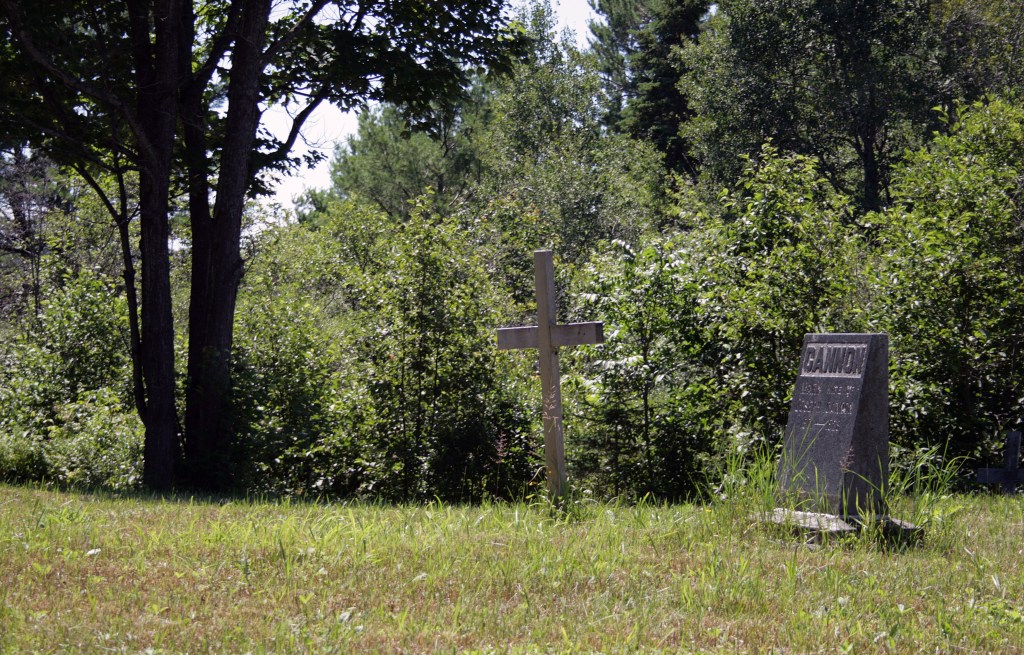
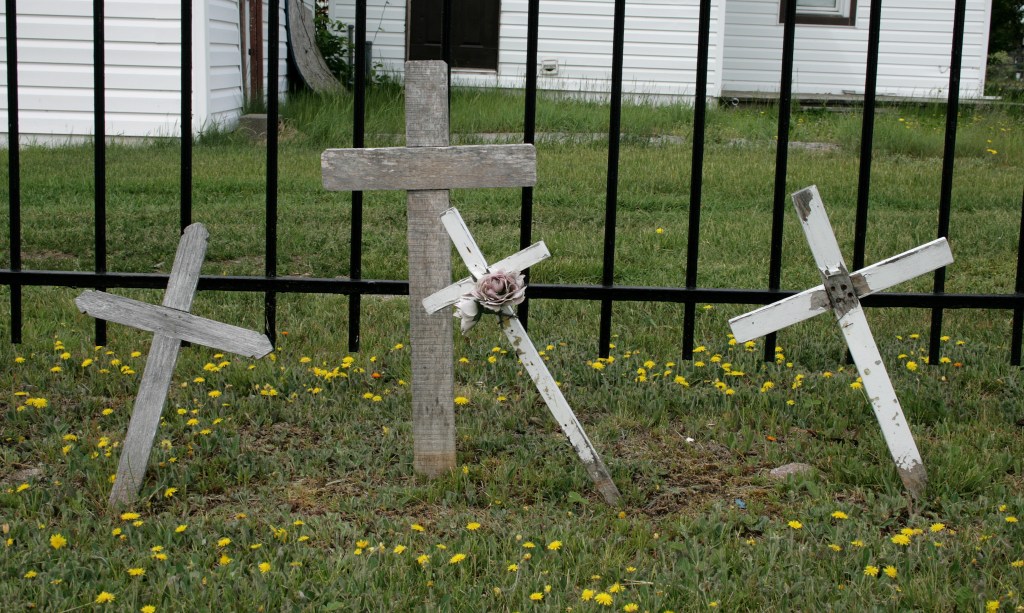
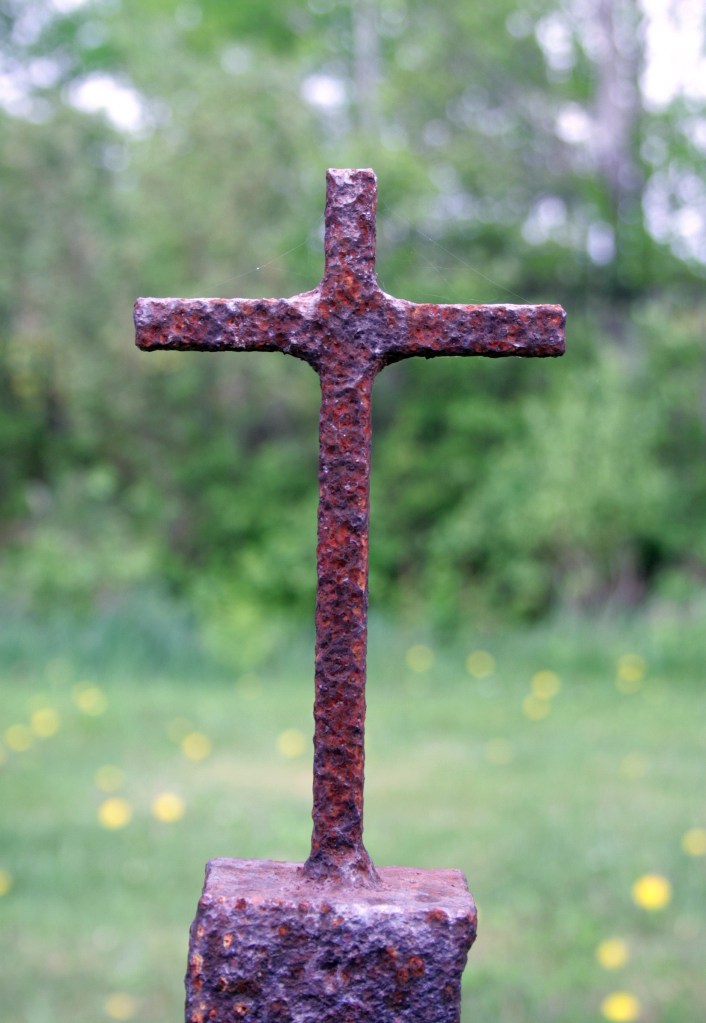
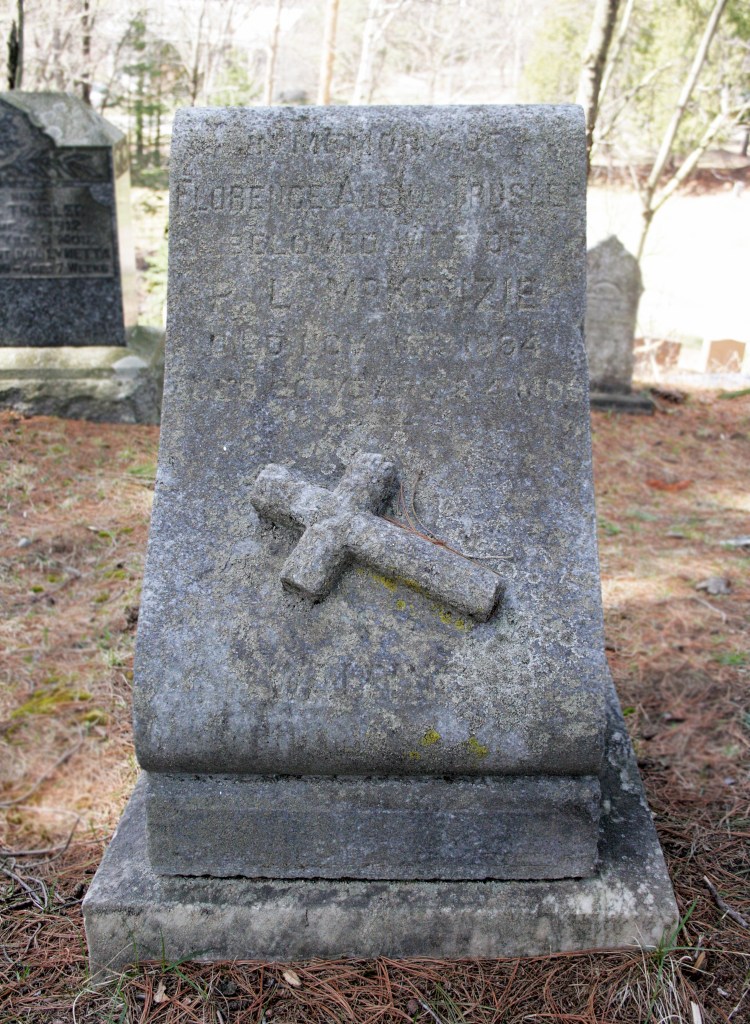
Crosses have to be the most easily recognizable and common symbol found in cemeteries and funerary art. There are so many variations of this Christian religious symbol. Since crosses are so common, you may think if you have seen one, you’ve seen them all—but I would beg to differ!
Today I wanted to take a closer look at this funerary symbol and share some of the many crosses I have photographed over the years.
First off, let’s look at the difference between a cross and a crucifix, as they are not the same thing. A crucifix shows the body of Jesus nailed to it, while a cross does not.
A Latin cross is probably the most common cross found in cemeteries. This cross has no embellishments. It is sometimes called a Protestant cross, because it can represent Jesus as risen, instead of focusing on his suffering on the cross.
A Celtic cross is easily recognizable. It usually has a Celtic knot pattern engraved on it and also includes a nimbus, a distinctive circle that represents the union of heaven and earth. These crosses are often found at the graves of those with Irish heritage.
In the example below you can also see the letters IHS in the center. This is sometimes called a Christogram. There are a couple of different theories about what the letters IHS stand for. One theory is that it is an abbreviation of the Latin phrase “in hoc signs vines” (In this sign you will conquer), another line of thought is that it’s an abbreviation of the Latin phrase “Jesus Hominum Salvator” (Jesus, Saviour of Men). According to Doug Keister’s book Stories in Stone: A field guide to cemetery symbolism and iconography, these letters are the first three letters of Jesus’ name using the Greek alphabet.
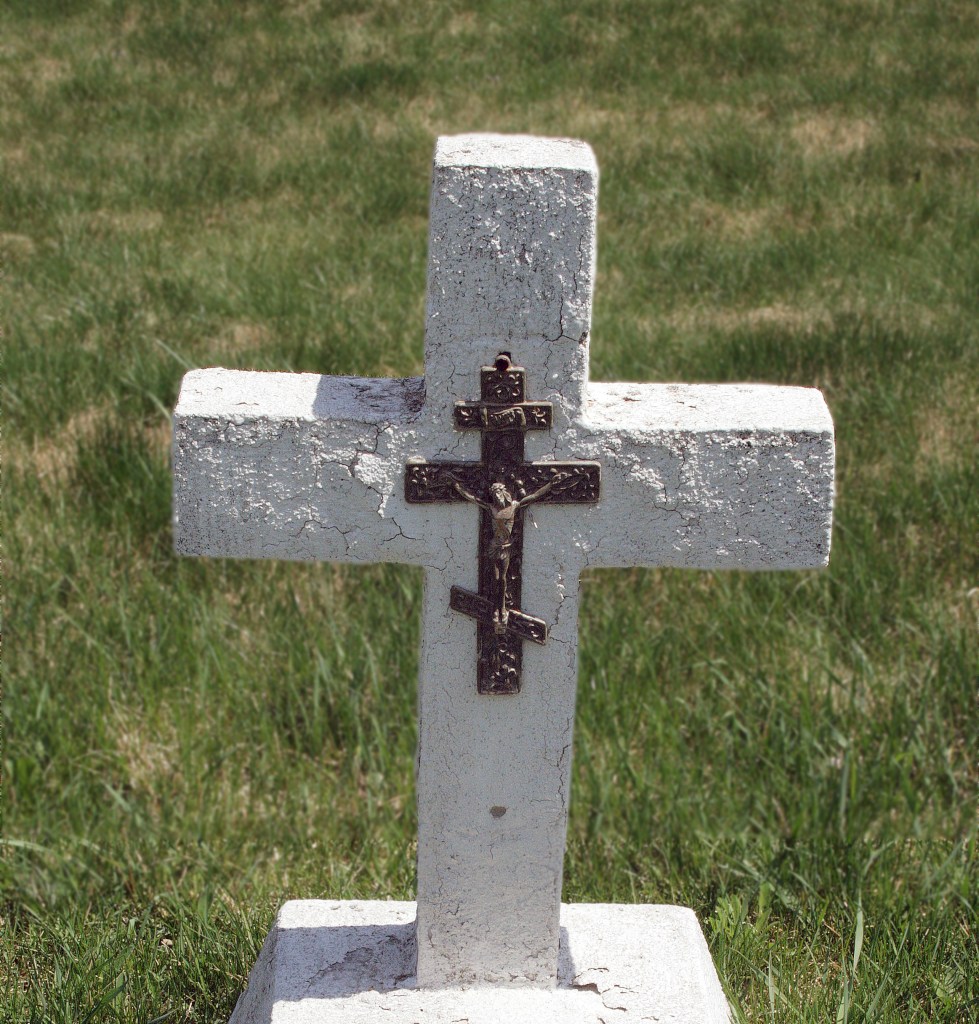
Below is an example of an Eastern crucifix on a white Latin cross. The Eastern cross is easily recognizable by its two horizontal cross bars, and one slanted one. This cross is a symbol of Eastern Orthodox religions. This one would be considered a crucifix, as it has the tortured body of Jesus nailed to it.
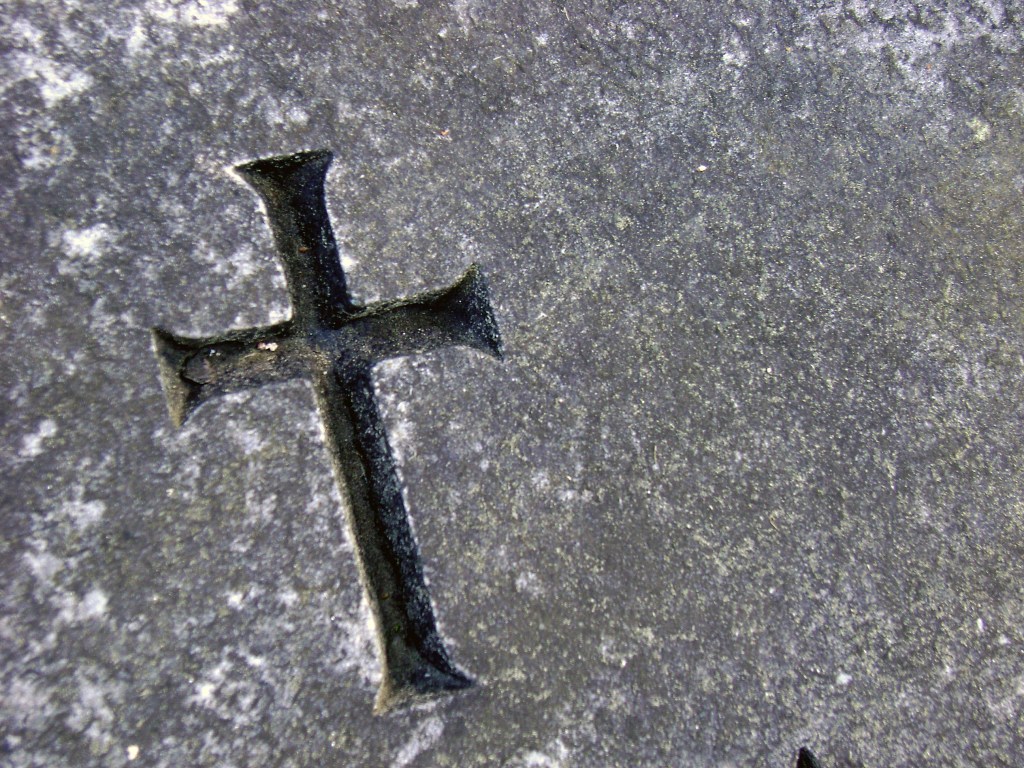
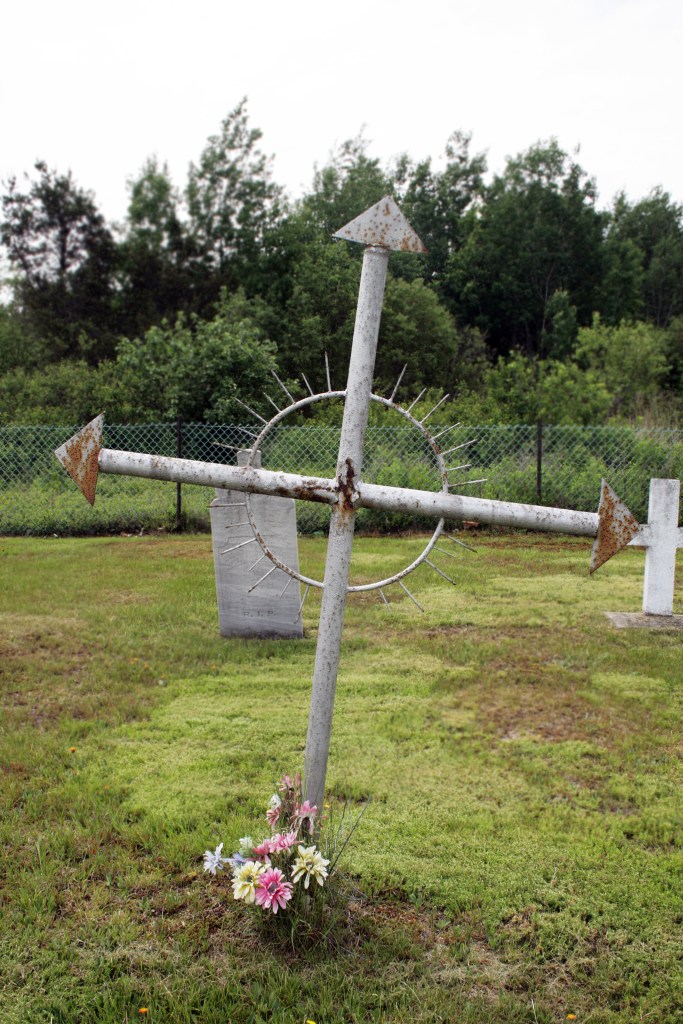
An Agony cross has sharp points at the end of each arm. This is said to represent the suffering or agony, that Jesus endured. This cross is sometimes called a pointed cross or a cross of suffering.
Last month, I was pleasantly surprised when an author reached out to me and asked if I would be interested in reading and reviewing his new book. Based on the title alone, I was very interested!
The book is called Sacred Ground: Loyalist Cemeteries of Eastern Ontario, Volume One by Stuart Lyall Manson. This book, published in 2021, focuses on Loyalist cemeteries in Eastern Ontario, and the stories behind the Loyalists buried there.
For the book review this month, I wanted to share my thoughts about Sacred Ground. Canadian cemeteries and history is something I am always interested in reading about. I will also admit that while I read along, I created a map of all the cemeteries explored in this book. I would love to visit them all one day! So who or what are loyalists, you may be asking. Loyalists were American colonists who supported and fought for the British cause in the American Revolutionary war. Thousands of these Loyalists settled in British North America during and after the war. They left an indelible mark on Canada.
From Global Genealogy: “This book describes six notable loyalist cemeteries situated in the Eastern Ontario counties of Stormont, Dundas and Glengarry. They are: Trinity Anglican (Cornwall); St. Andrew’s Roman Catholic (St. Andrew’s West); Iroquois Point (Iroquois); Knox-St. Andrew’s United (Bainsville); Maple Grove (Cornwall), and the Pioneer Memorial (South Dundas).
In each chapter the author discusses in depth, an individual cemetery containing United Empire Loyalist mortal remains. Numerous cemeteries in this region contain many such burials… all of the sites described in this book also contain non-loyalist burials. An historical overview of each of these burial grounds, along with biographical information on specific loyalists with particularly-remarkable stories. The locations chosen for this volume are based on geographic distribution, religious diversity, and other factors. The book is based on rigorous primary and secondary source research.
Sacred Ground: Loyalist Cemeteries of Eastern Ontario complements other publications that list burials or transcribe tombstone inscriptions. Those publications are important resources. This book supplements that basic data with greater historical context and additional research into the lives and experiences of these men, women and children who laid the foundations of modern Ontario.”
As mentioned above, the book is broken down into six chapters, each focusing on one loyalist cemetery. Each chapter provides an interesting look at the cemetery itself, and it’s history, along with the history of the notable loyalists buried within it. The stories of the cemeteries themselves are fascinating, and made me want to visit them to experience them for myself. The history of the cemeteries are deeply explored, delving into the history of the Loyalists laid to rest within them. In the life stories of the loyalists, we also get a look at broader historical aspects, such as slavery and colonialism. This book is extensively researched and it shows; it’s filled with old illustrated maps, letter samples, and many lovely gravestone photographs.
I enjoyed this book immensely, and found it very engaging. There are some incredibly interesting histories and stories in this book, like the Pioneer Memorial in South Dundas. It isn’t a cemetery per say, but a memorial made from bricks collected from the buildings demolished before the flooding for the Seaway project. This memorial is the new home for the tombstones of those who are buried in the now sunken cemeteries. They moved the headstones, but didn’t move the bodies! There are quite a few historical gems like that to be found in this book. I am looking forward to the next volume. I would highly recommend this book to those interested in Canadian and Loyalist history, as well as genealogists and those interested in tombstone mysteries.
I am always searching for cemetery-related book recommendations. Please feel free to share in the comments. If you are an author and have a cemetery-related book you would like me to review, please reach out at hello@chantallarochelle.ca. I would love to hear from you.
A couple of weekends ago I was able to cross something off my cemetery bucket list—visiting all 25 cemeteries in the care of the City of Greater Sudbury. For today’s blog post, I thought it might be interesting to take a closer look at some of these cemeteries.
The City of Greater Sudbury is centrally located in Northeastern Ontario. It sits on the Canadian Shield in the Great Lakes Basin and is composed of a combination of urban, suburban, rural, and wilderness environments. Greater Sudbury is 3,627 square kilometers in area, making it the largest municipality in Ontario, geographically.1 Making up this municipality are many small communities that over time, have been amalgamated into the City of Greater Sudbury. Almost all of these little communities have their own cemeteries, that now fall under the care of the city.2
Each of these cemeteries has their own charm and has been very interesting to visit. Some are newer cemeteries with very modern stones, that are still very active, like Valley East and Park Lawn cemeteries. Some of them have tombstones marking persons who are still living. Those always make me think—do the owners visit their gravestones? Other cemeteries are pioneer cemeteries, like Ruff Pioneer Cemetery. Those types of cemeteries hold a lot of history. I wrote about my visit to the Ruff Pioneer Cemetery, you can read it here.
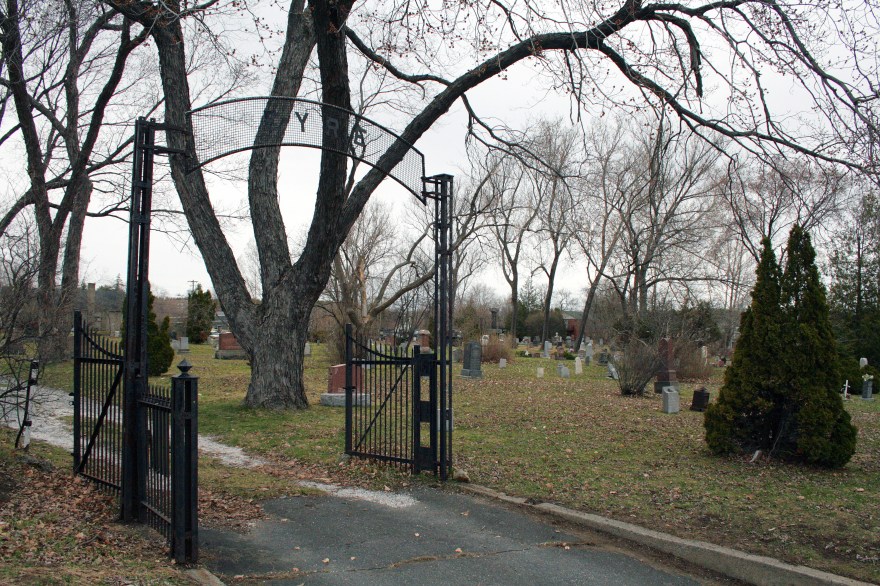
Two of the oldest of these cemeteries, I believe, are the Eyre and Anglican cemeteries. They are directly beside each other, and there is no distinct line to separate the two. The earliest grave is from 1890.3 Both of these cemeteries can tell you a lot about our city. You can find the namesakes for the Gatchell and Lockerby areas of town, as well as the grave of Frederick J. Eyre, who discovered one of the first mines for the Canadian Copper Company.3 Sudbury, at its roots is a mining and railroad town.
Some of these cemeteries were a challenge to find and can be hard to access. Ruff Pioneer Cemetery would be more easily accessible with a four-wheeler. Make sure you have plenty of water with you for that adventure in the woods. The Coniston Cemetery is a little bit more accessible now, as a cemetery trail has been created, linking it to the Jean Tellier hiking trail. The first time I visited that one, we searched for a while before deciding to ask for directions from some locals at a convenience store. They were more than happy to help and even drew me a map. They also shared some stories from their childhood, of how they would play in the cemetery and nearby woods. Coniston Cemetery is particularly interesting because there are no more headstones. There may have originally been wooden markers or fieldstones there that have since deteriorated or have been moved. It was an active cemetery from 1914 to 1926, when the parish that was taking care of the cemetery announced they could no longer do so.4In 1997 a memorial plaque was installed honoring the deceased known to have been buried there. Another hard-to-find cemetery is the Wahnapitae Public Cemetery. This one is located on a hillside with seemingly hidden access. I tried to find it again recently, but with no luck.
There are a few cemeteries on this list that I have visited many times, either due to their size or proximity to me. Lasalle Cemetery for instance is one of the largest cemeteries in the area. So large in fact that every time I have visited I have focused on a different section to photograph. Another large one, that just so happens to be down the street from me, is Civic Cemetery. This is an active cemetery, and I think has changed the most over time. It has a large columbarium, as well as some lovely winding paths. It’s a lovely rural cemetery. I have many friends of the family that are buried here.
I have enjoyed seeking out all these cemeteries. I feel like I can now say that I have truly explored my city. All these cemeteries hold small threads, connections, that all lead to the creation and growth of my hometown. I have learned a lot about the history of Sudbury, like the stories of some of its founders, the history behind street names, and much more. I would love to spend more time in some of them, to fully explore the grounds, look for specific graves and to see what else I can learn.
Thanks for joining me, as I look back on this bucket list milestone. Do you have a bucket list? What’s on your list? I would love to read about it in the comments.
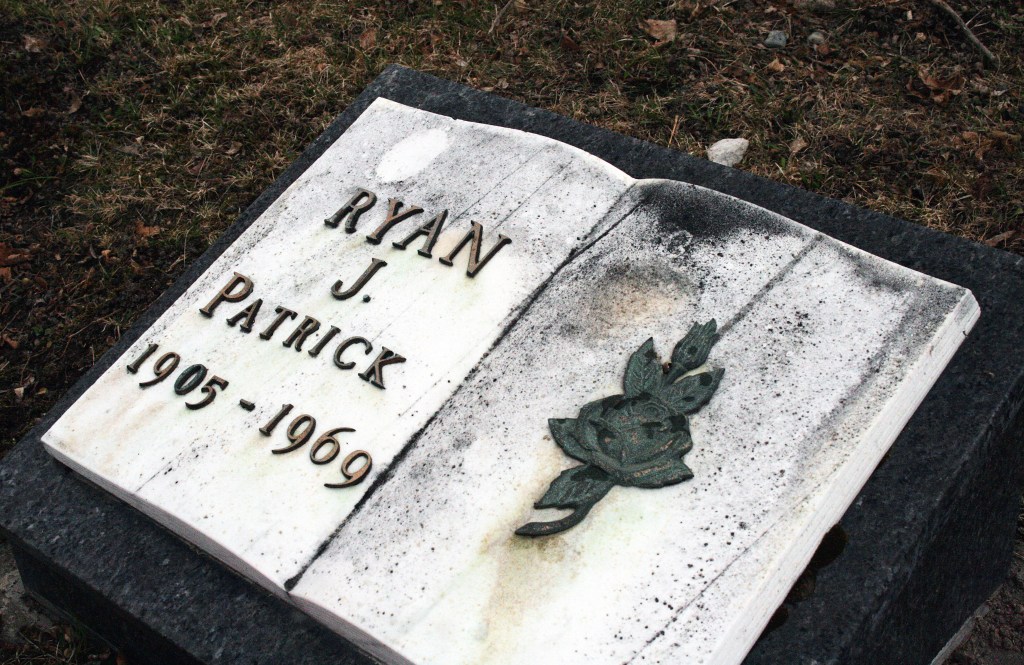
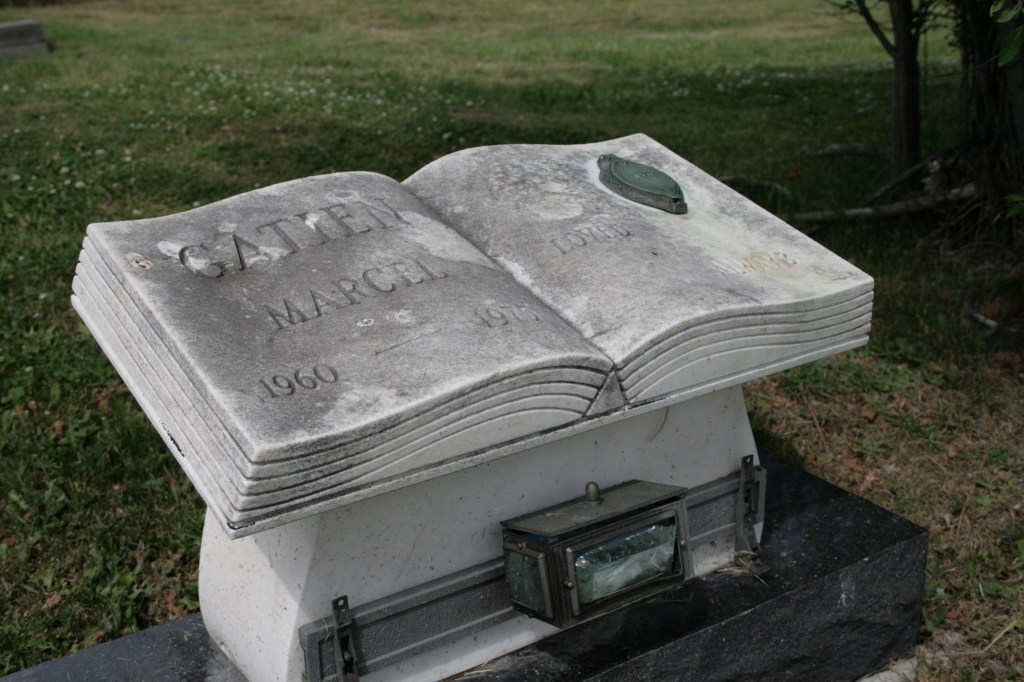
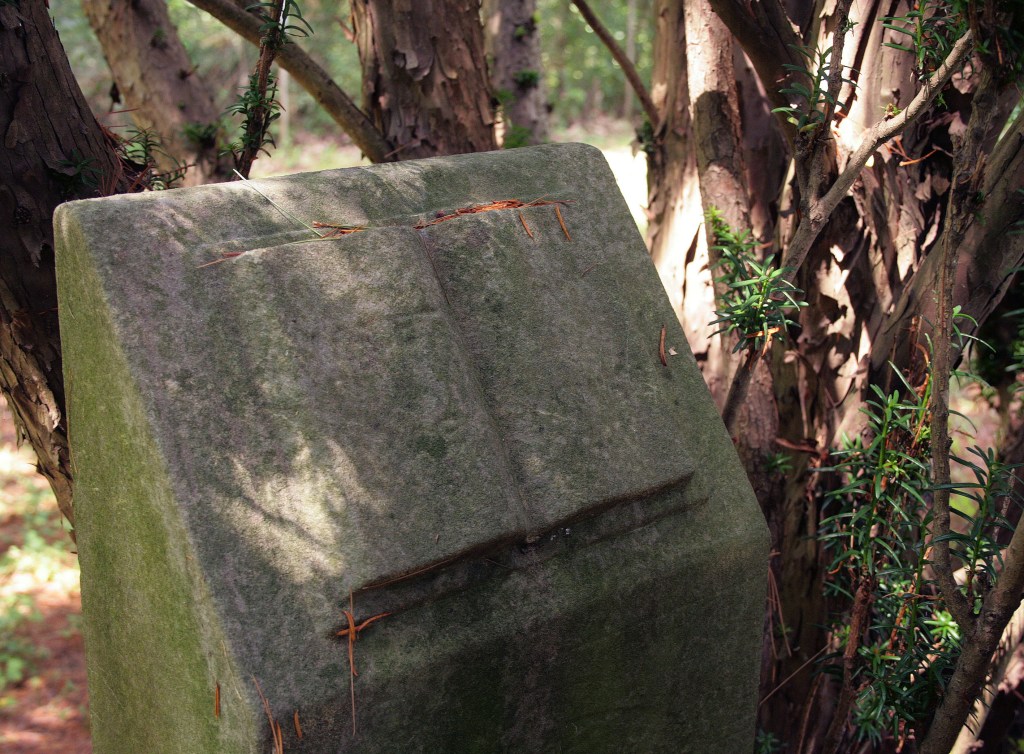
I love books! I am a big reader and have a large book collection at home, but I love finding stone books among the tombstones while wandering a cemetery. I find them very interesting and love trying to interpret what they mean.
Books can be both decorative or a representation of something. You can sometimes find a book being used as a decorative device to display the name of the deceased along with the birth and death dates. An open book can sometimes represent the human heart, as in it’s emotions are open to the world. An open book may also symbolize a life that has been cut short, before getting to the last page. Another variation of this is an open book with a cloth draped across it. This also represents a life cut short, the veil of death having bookmarked the person’s last chapter before the book is finished being written. A closed book might represent a long life, lived to the last chapter.
Any book found in a cemetery may represent the bible. Sometimes you may even find the words “Holy Bible” engraved on the book.
In my experience, books are not as common as some other funerary symbols, like hands and lambs. I love to photograph them when I do find them. I wanted to share some of my favorites with you today.
I wrote this post around this same time, in 2020, but it never made it to the blog. At that time, the pandemic would have been in full force, just at the beginning of our quarantine. This would also have been one of the first cemetery trips of that year, after a long winter. I think I was just beginning to seriously focus on my website and blog, and I’ll be honest – it was off to a slow start with sporadic posting. That’s probably why this was never posted. I figured since this was written around the same time, only a couple of years ago, it is worth posting now.
Last weekend, I ventured outside to explore a couple of my local cemeteries. It has been a long winter of being cooped up inside, dreaming about summer cemetery road trips. We had our first sunny weekend, so I took advantage. I figured it is also a safe place to practice physical distancing during these weird times.
The first stop I made was at the Civic Memorial Cemetery, also known as Sudbury Municipal Cemetery. This cemetery is right down the street from me, and the one I have spent the most time in. As a kid, I would spend a lot of time walking around this cemetery looking for ghosts. It’s a newer cemetery, with modern stones and newly built mausoleums. The entrance to this cemetery was recently renovated when they widened Second Avenue. They installed a shiny new archway, similar to the archway at Lasalle Cemetery. They also cleaned up the winding path that leads into the cemetery. I have close family and friends in this cemetery, so I paid them a visit. I also stopped to take some photos of one of the more interesting monuments in this cemetery. The resting place of, I think, the founder of Ellero Monuments, a local headstone maker. The monument is a very detailed sculpture of a man sitting on a rock-cut with tools in his hands, working on breaking the stone. It’s very large and encased in a plexiglass box. To really see the detail, you need to almost press your face against the plexiglass. Over the years the box has become clouded, giving it a spooky silhouette.
The second cemetery I visited was the Lasalle Cemetery. One of the larger cemeteries in my city. I try to visit different parts of the grounds every time I visit since it is so large. This time, I focused on the stones closest to the street. There are many smaller statues among the stones there. Unfortunately, this cemetery has the most toppled stones, either because of vandalism or ground shift. There is a mix of modern and old stones here, and many feature cameos; ceramic photographs of the deceased.
My last stop of the day was Eyre Cemetery, the oldest and my favorite of my local cemeteries. It’s a smaller one, filled with only older stones. At this point, the weather had changed on me and was drizzling a little bit, but I did not let that stop me. I wandered the entire left side of the grounds, in search of a few Find a Grave requests. I came up empty-handed though. Some of the stones are so worn that they are not legible. I hope that I did not pass them by because of this. I will need to go back and make some inquiries with cemetery staff, to make sure they are not forgotten. The rain started to pour down more heavily so I decided to pack it in at that point.
Overall it was a lovely outing. I got some exercise and fresh air, as well as some new photos. Surprisingly, I did see a lot of people out and about. The groundskeepers were busy maintaining the grounds at each cemetery I visited, and there were visitors at each cemetery as well. I guess in these quarantine times, cemeteries, which are usually quiet and mournful, are being used more as a green space. I saw an elderly couple strolling arm in arm and people walking their dogs. It was different for me, as I tend to be the only living person when I visit.
Looking back, it seems as though many people were discovering cemeteries. I hope those who may have thought it taboo to visit cemeteries, found that they are beautiful green spaces and outdoor art galleries. I think a lot of people were forced to look into their own backyards during quarantine, to find outlets while things like travel were not possible. I know I was very grateful that one of my favorite pass times was still available to me. I was even able to share my love of cemeteries with my mother! Even though COVID-19 restrictions have been lifted in my area, I think I will be staying close to home again this summer.
Did you spend a lot of time in cemeteries during the height of the pandemic? Did you discover any new cemeteries? I would love to hear your thoughts in the comments.

















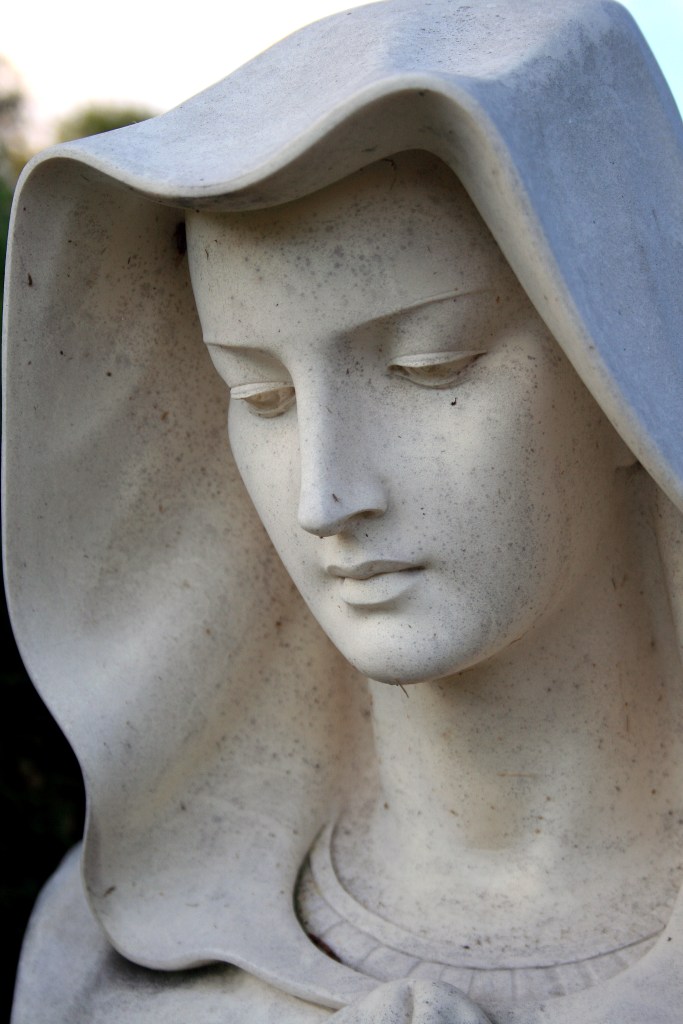


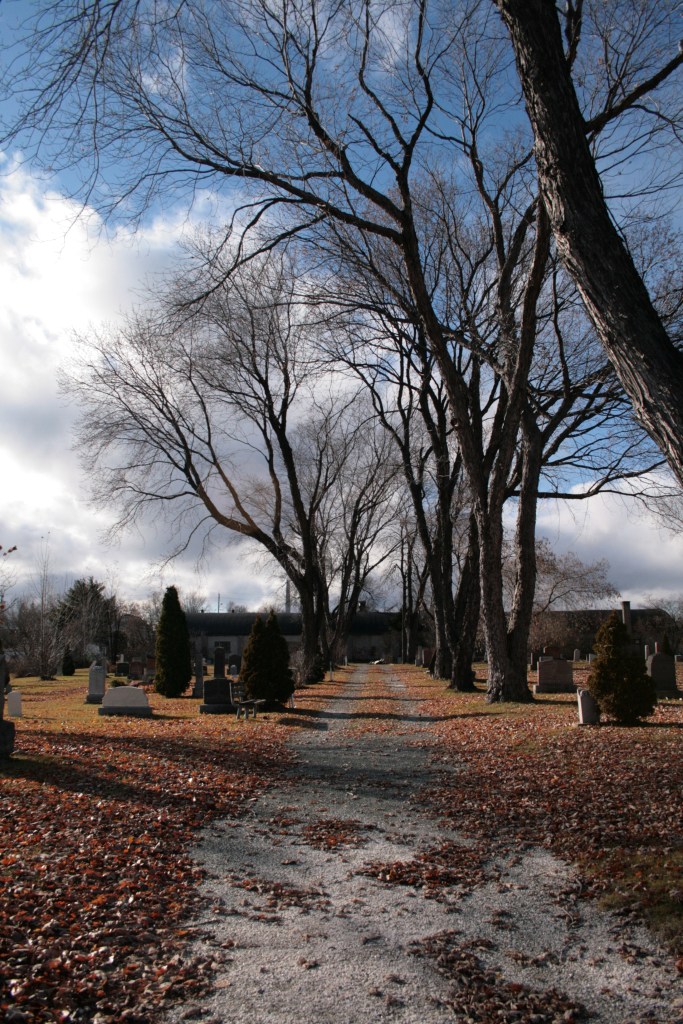

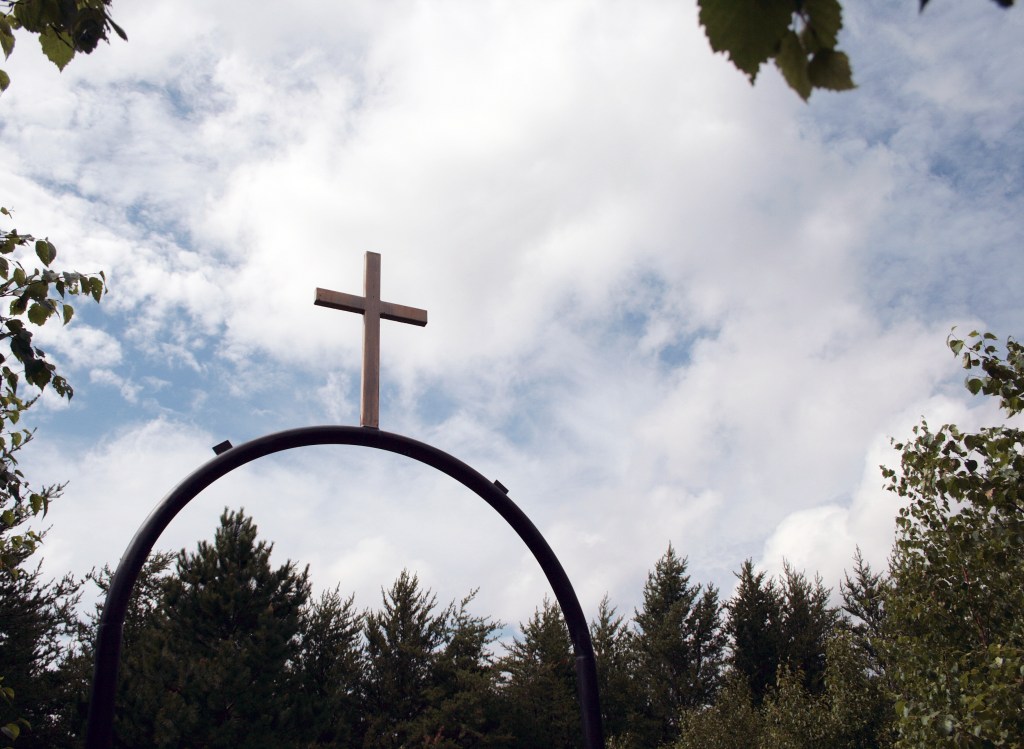

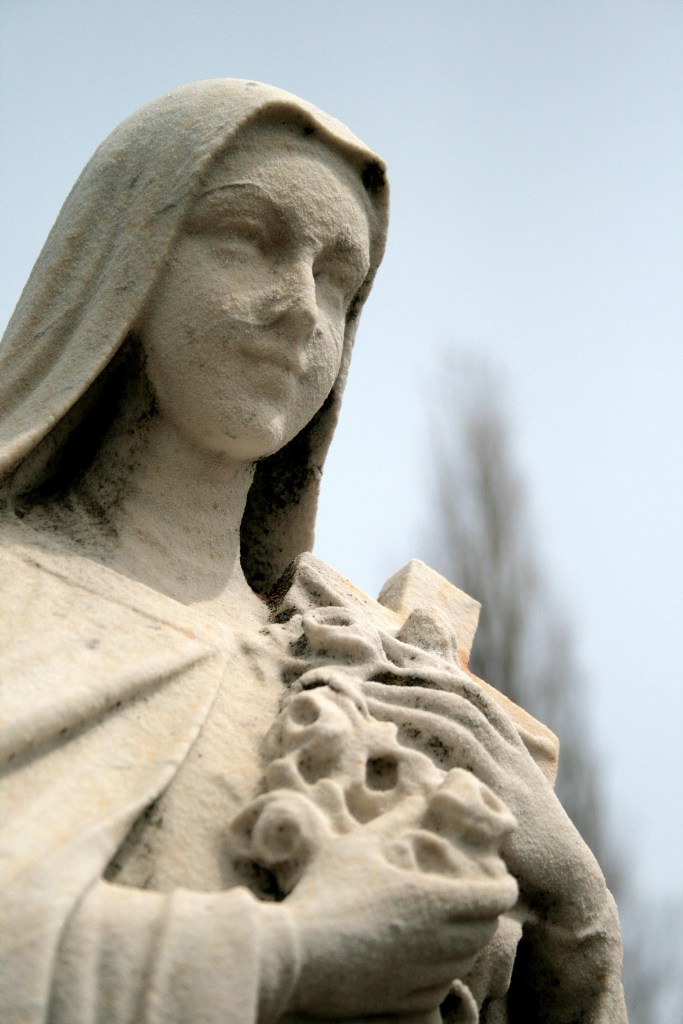





 Cemetery Photography by Chantal Larochelle