Cemetery Road Trip: Guess Where Trips

Who doesn’t love a road trip; especially one that is pre-planned for you? All you need is your sense of adventure, a full tank of gas, and someone to share it with!

I mentioned last week that I would share more details about the Guess Where Trips adventure that my mom and I did during our summer vacation. So, today on the blog, I wanted to introduce you to this fun company, if you haven’t already heard of them, and share a little bit more about how our adventure played out.

Marilu, the Travel Support Specialist at Guess Where Trips, gave me a Historic Haunts tour to try out for free, in return for an honest review. The Historic Haunts tour includes a couple of cemetery stops, so it was a perfect fit! This trip is a round-up of spooky and unusual attractions, leading you on a route full of haunted history and ghostly stories. My favorite kind of road trip!
Guess Where Trips

Guess Where Trips offers beautifully packaged, one-day surprise road trips that will take you to all manner of hidden gems in Canada and the United States. Inspired after creating a scavenger hunt-style road trip as a gift to her parents, Jess Off founded Guess Where Trips in January of 2020.1 These curated road trips encourage you to explore the road less traveled, while also supporting small businesses and communities along the way.1

Lots of meticulous planning and research goes into all 135 available trips. And they are working on creating new adventures all the time. On June 20th of this year, they released 13 new trips that feature Michigan, Ohio, and Indiana.

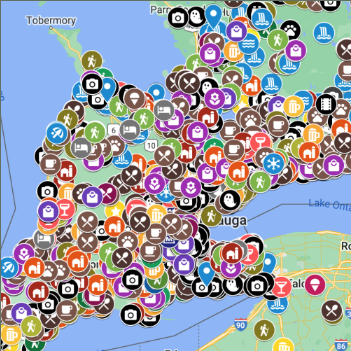
In a recent email, the Guess Where Trips team shared all the intricate work and planning that goes into designing their trips. A big part of their planning revolves around what they call their “magic map”, an evolving map filled with pinned locations that serve as a foundation for outlining their growing list of surprise road trips. 

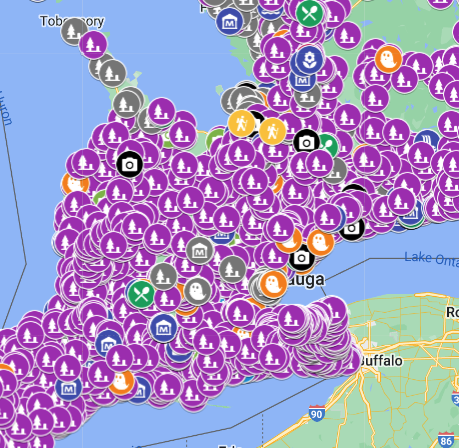
I thought their magic map looked pretty similar to my master map of Ontario cemeteries. Although mine focuses on cemetery locations, there are a few hiking trails, and museums pinned on there. I use my map a bit differently, using it to track visited sites (the grey pins) and as a starting point for creating location-specific maps for my cemetery road trips.  
The Historic Haunts tour was the first ghostly trip created by Jess Off and her team and was initially most popular around the Halloween season. Today, all their haunted trips have become popular regardless of the season. Some of the other spooky trips they offer in Ontario are Weird and Wonderful ThingsSpooky Sights & Ghostly TalesBeautifully Haunted, and Hidden Gems of Huronia.

They offer an adventure for everyone! If haunted hidden gems are not your thing, you might enjoy one of their other themed trips. They have trips that feature wineries, and breweries, romantic getaways, scenic drives, and outdoorsy adventures.

My Guess Where Adventure

The Historic Haunts tour begins in Cambridge, Ontario which is about a 4-and-a-half-hour drive from me. So, my mother and I packed up the car and took advantage of the nice summer weather to make an overnight trip. We drove up to the tri-city on Thursday, with plans to follow the surprise road trip all day on Friday. Then we would drive home on the Saturday. This gave us some extra time to explore the area, so I found some other things for us to do as well.

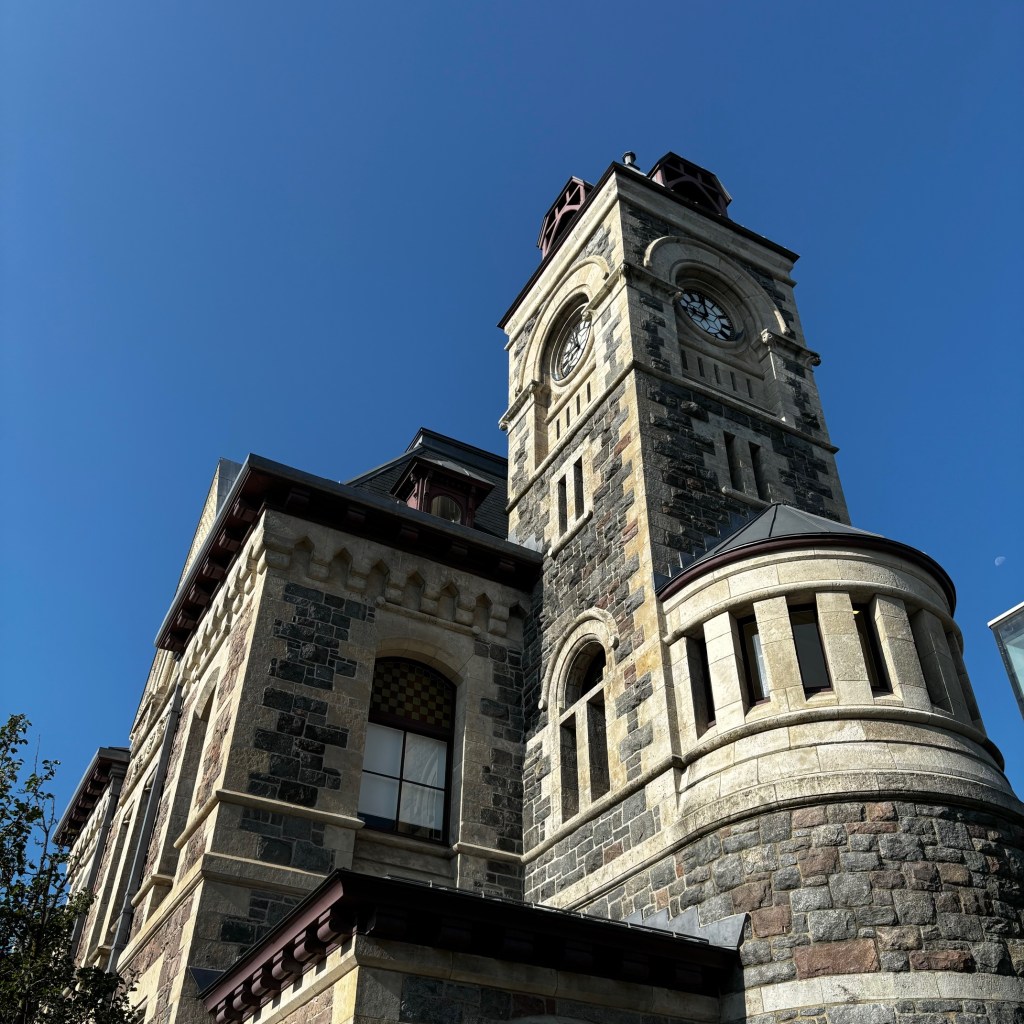
Friday morning, after a nice breakfast, we opened our first envelope to see where our first stop would take us. It brought us to downtown Cambridge to explore the architecture and haunted history of some of its older buildings. With coffee in hand, we sat outside the beautiful stone building that was once a Post Office, and read the tragic tale of a torrid love affair that ended in suicide. Even though it was a bright sunny morning, it was still a bit spooky to be looking up at so much dark history.
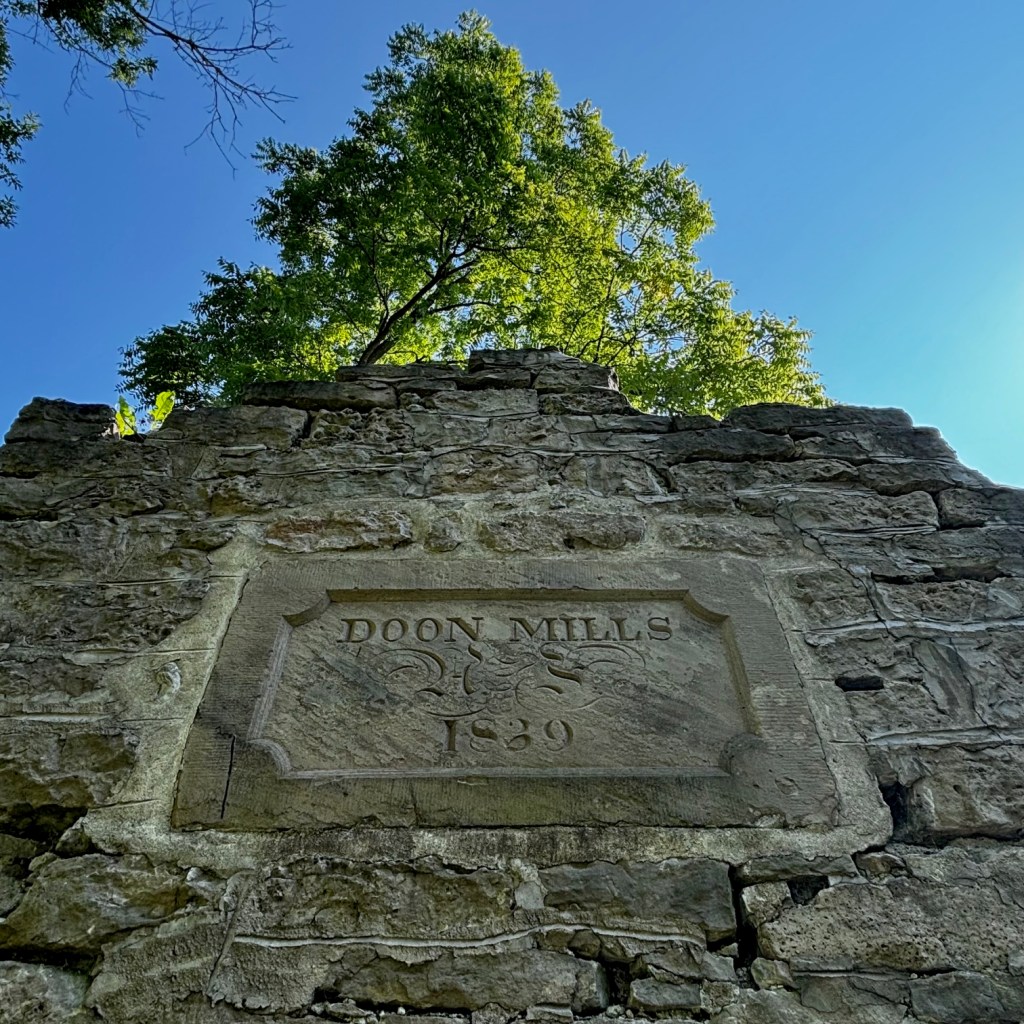
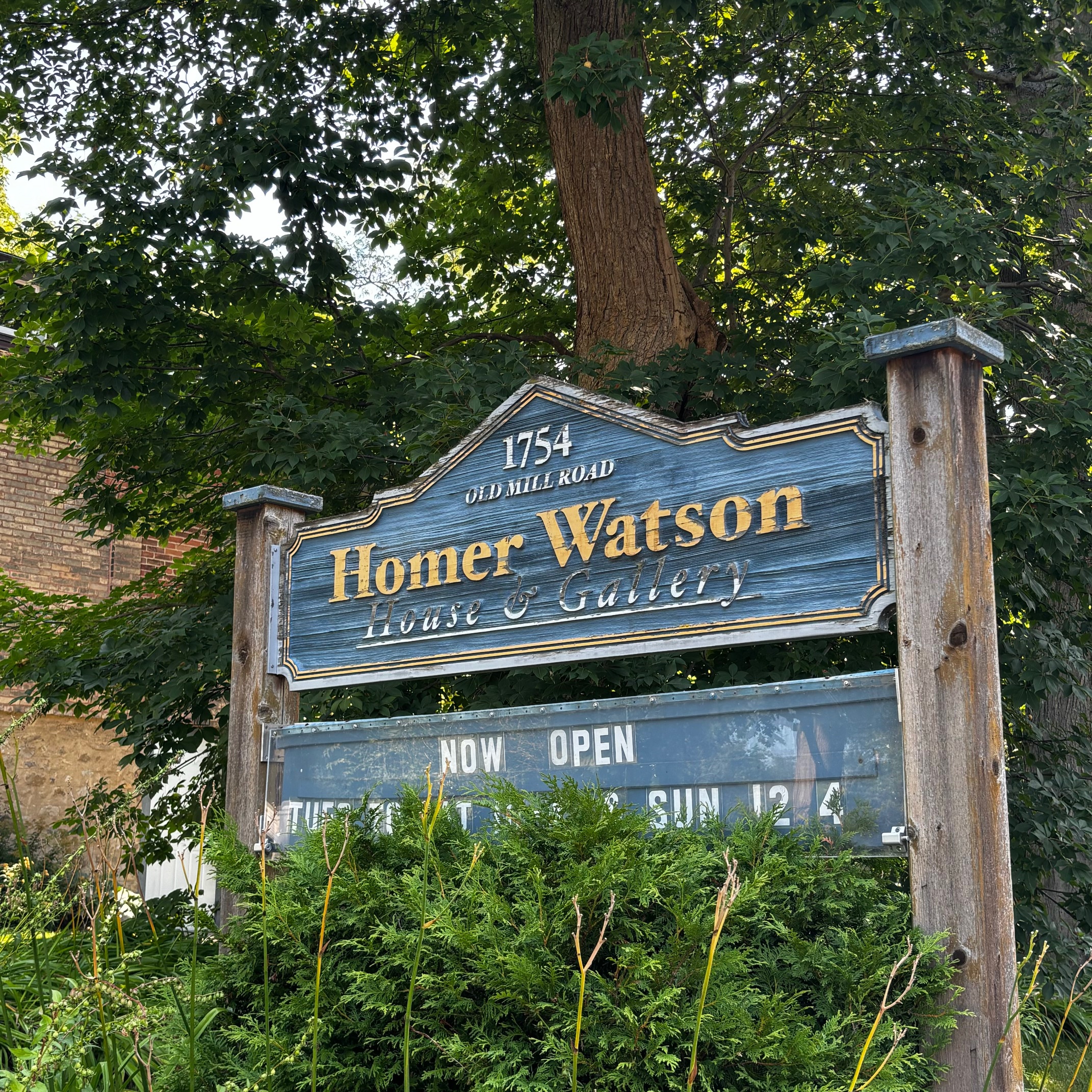
Our second stop brought us to a beautiful historic house and art gallery. We were a little early, arriving before they opened for the day, so we decided to explore the optional spooky abandoned spot that was just around the corner—The Doon Mills Ruins. 

Things got a little interesting at this point. The Doon Mills, originally built in 1834 have seen many tragedies, having burned in a fire not once, but twice! Today, many people report ghostly occurrences at this small section of ruins that sit at the trailhead. People claim to have heard ghostly footsteps or even heard their name called. Almost as soon as we arrived at the ruins, my mother complained of a burning wood smell. I didn’t smell anything though. My mom got a little creeped out when I reminded her that smelling burning wood was something many people experienced when visiting the ruins. 
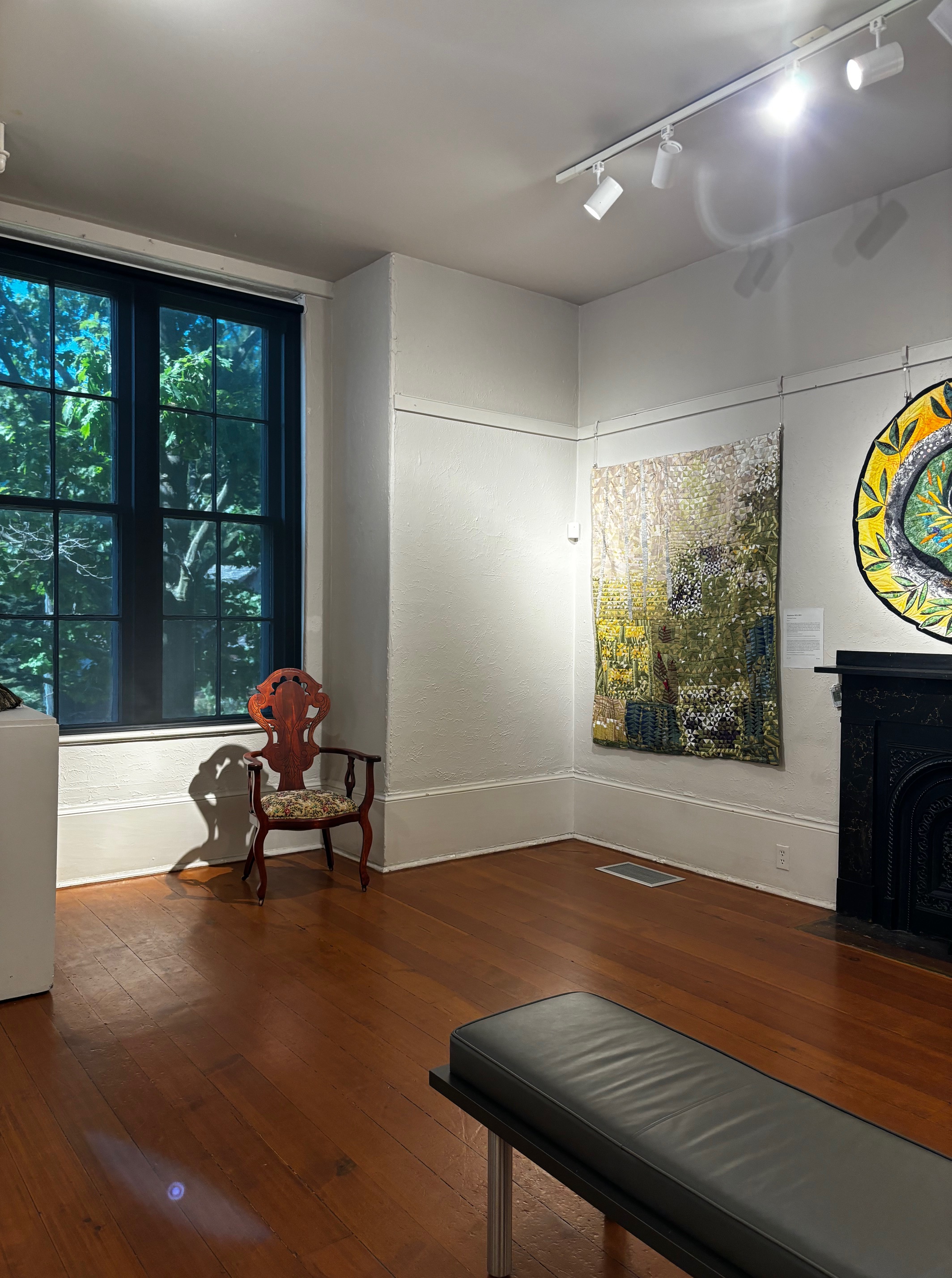
We made our way back to the Homer Watson House & Gallery once it had opened for the day, and was given a lovely tour by the staff. They made sure to tell us the haunted history of the place when we told them we were on the Haunted History tour. It is a beautiful house with a very interesting history. After exploring the house, I just had to ask where Homer Watson might be buried. It just so happens that he is laid to rest in the cemetery just down the road from the historic house, so my mother and I made an extra stop to visit his grave and pay our respects.
Remember how I mentioned I had found some other things for us to visit while we were in Cambridge for the tour? Well, that ended up mucking up our surprise road trip a little bit. The third stop on our road trip directed us to a haunted tower and an ancient cemetery. Well, it just so happens that my mother and I had visited this location the day before. It was a perfect evening activity as it checked a lot of boxes for us; a historic site, a cemetery, and a walking trail. At the time of our visit though, we had no idea the tower was haunted.

By this time it was also the lunch hour, so instead of visiting that location again, we decided to try one of the recommended restaurant stops. We visited the Borealis Grille & Bar to have some lunch and read through some of the haunted history of the tower we visited the evening before. After that nice rest, we opened our next envelope.

Our fourth envelope presented a choose-your-own-adventure opportunity. So it worked out that we had already visited the previous stop. This gave us more time to visit multiple locations on this leg of our road trip adventure.

We chose to visit Rushes Cemetery in Wellesley first. I was pretty excited to see this listed as the first optional stop. There is a very interesting gravestone in this cemetery, and it has been on my cemetery bucket list for a while. This cemetery is the final resting place of Henrietta and Susanna, the first and second wives of Dr. Samuel Bean. What makes this stone so unique is the fact that this tombstone is written in a crossword code, and it took over 100 years to decode it. 
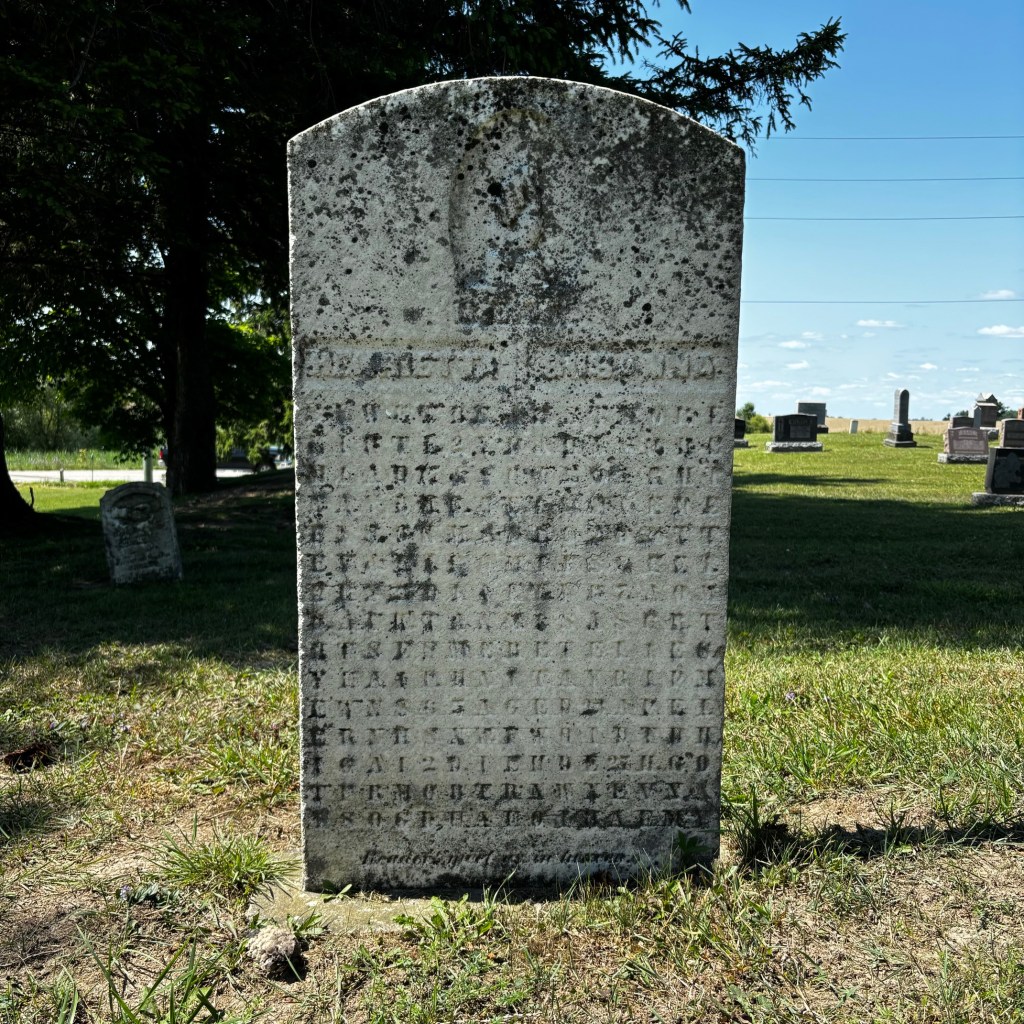
After I took some time to photograph the cemetery we made our way to Fergus to visit the Wellington Museum & Archives. By the time we got there, we would have just enough time for a quick tour before they closed for the day. 

Once known as the Wellington County House of Industry and Refuge, built in 1877, this beautiful building now houses a permanent display of the Institution’s history, as well as a few changing exhibits. The permanent exhibit “If These Walls Could Speak” explores the lives of the people who lived, worked, and died within the walls of the Poor House. It’s not surprising this National Historic site is also home to a few ghosts. 

After we toured the building, taking in all the interesting exhibits and history we made our way down the road to visit the Poorhouse Cemetery. This cemetery sits at the edge of the property and was established for those who had no family to claim them. After we paid our respects at the cemetery, we headed back to Cambridge to have some supper and rest at the hotel. 

Our Historic Haunts tour was a great success. My mother and I had a lot of fun exploring and learning about the community and local history. It was a great mix of haunted history, museums, and cemeteries. Although we did add a couple of cemetery stops to our trip, it made sense to stop in and pay our respects after learning so much about their history. 

I also loved the surprise element and the choose-your-own-adventure style. Opening each envelope was a fun addition that created a sense of anticipation. The multiple options also gave you the freedom to choose how your route was going to unfold. The restaurant and cafe options were also great additions, taking into account that you may get hungry or need a coffee break during all the exploring. It is so well thought out!   

I asked my mom what she thought of the trip and she loved that all the planning is done for you and that it was really easy to follow. She also loved all the history that is provided for each stop, her favorite being the tragic tale of love and loss at the Old Post Office. She loved the beautiful architecture but noted that we would have never known about its tragic history, just by looking at the building. She said it was a great adventure!

We had a great time, and we both would recommend these trips to anyone looking for a unique adventure. So if you are looking for road trip ideas, definitely check out Guess Where Trips and let them lead you to some fun and fascinating destinations! 

Thanks for reading!


References:

  1. About Us | Guess Where Trips

Cemetery Road Trip: The Muskokas

It’s graving season again in Northern Ontario!

Two weeks ago, I went on my first cemetery road trip of 2024. I was inspired by a book I read at the end of March, called Muskoka’s Most Haunted 2 by Andrew Hind. I have read a few of Hind’s books that have inspired some cemetery road trips, but this one was a bit serendipitous. I was already planning a trip to the Muskokas this summer and had a few cemeteries mapped out, one of which just so happened to be featured in the book. I took that, and the warmer weather, as a sign it was time to get back in the field. 

The Muskoka District is located north of Lake Simcoe and extends from the southeast shore of Georgian Bay to Algonquin Provincial Park.1 Sometimes referred to as cottage country, the Muskoka area is well known for its beautiful landscapes and rugged shorelines.

The Muskokas are also home to many charming small towns. They dot the landscape among picturesque parks. It is so well known, that many celebrities spend their summer vacations here. In 2023, Shaquille O’Neal, Mark Wahlberg, and Victoria & David Beckham were all spotted in the Muskokas enjoying everything the summer has to offer.2

Small towns are usually accompanied by cemeteries. For this trip, I planned a route that would take us up and around Lake Muskoka. There are many cemeteries in the area, so I was uncertain how many we would actually be able to visit. 

We left bright and early on the morning of Easter Monday, stopping for our obligatory road trip coffee before officially getting on the road. We planned to visit as many cemeteries as we could, while also visiting any attractions that may be open, and of course, stopping for a meal. That second item on the list was a little uncertain as the holiday meant that some places would be closed.

Our first cemetery stop, after enjoying the winding views in Bala, was Torrance Union Cemetery. Since it was so early in the morning, it was a bit chilly out but we still took our time exploring. We spent quite a bit of time at this cemetery, but I don’t want to go into too much detail just yet about our visit. This cemetery has some very interesting stories attached to it that I want to explore a little more in October.

Our next stop was the larger town of Gravenhurst. We made another stop for coffee and then stopped in at the three cemeteries within the city limits. We will have to go back to Gravenhurst sometime in the summer to take in the views of the waterfront and visit some attractions. That’s always the downfall of visits on a statutory holiday—everything is closed.

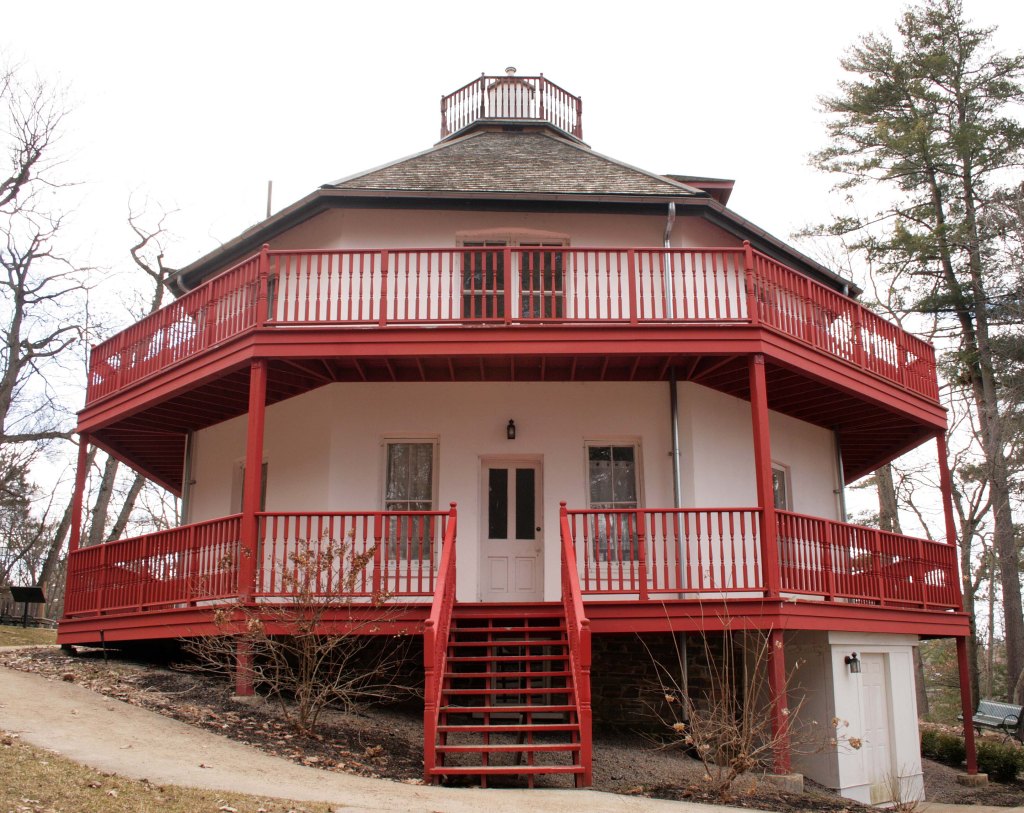
After a leisurely lunch at Chuck’s Roadhouse in Bracebridge, we decided to change things up a bit. Our next stop was the Woodchester. This beautiful octagonal home is a historic site, that is also an event space. It too was closed when we visited, but many walking trails surround it. Some of the trails have historical plaques that tell the story of the house and its previous owners. We were able to walk the circumference of the house and look at building maps that show what the layout of the inside looked like, when it was lived in. 

The Bracebridge walking trails meander alongside the Muskoka River and waterfalls. The waterfalls were strong and thundering when we visited. Unfortunately, part of the trail was closed off, most likely due to possible flooding, so we didn’t get to enjoy the full trail. The views were still lovely though and it was a nice way to break up our day. 

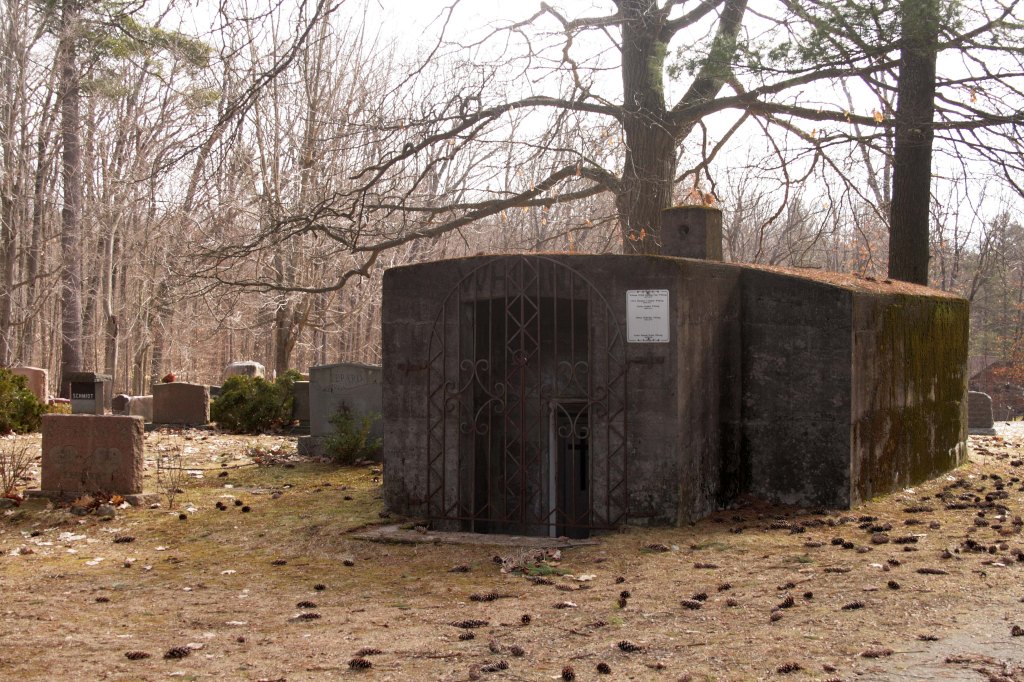
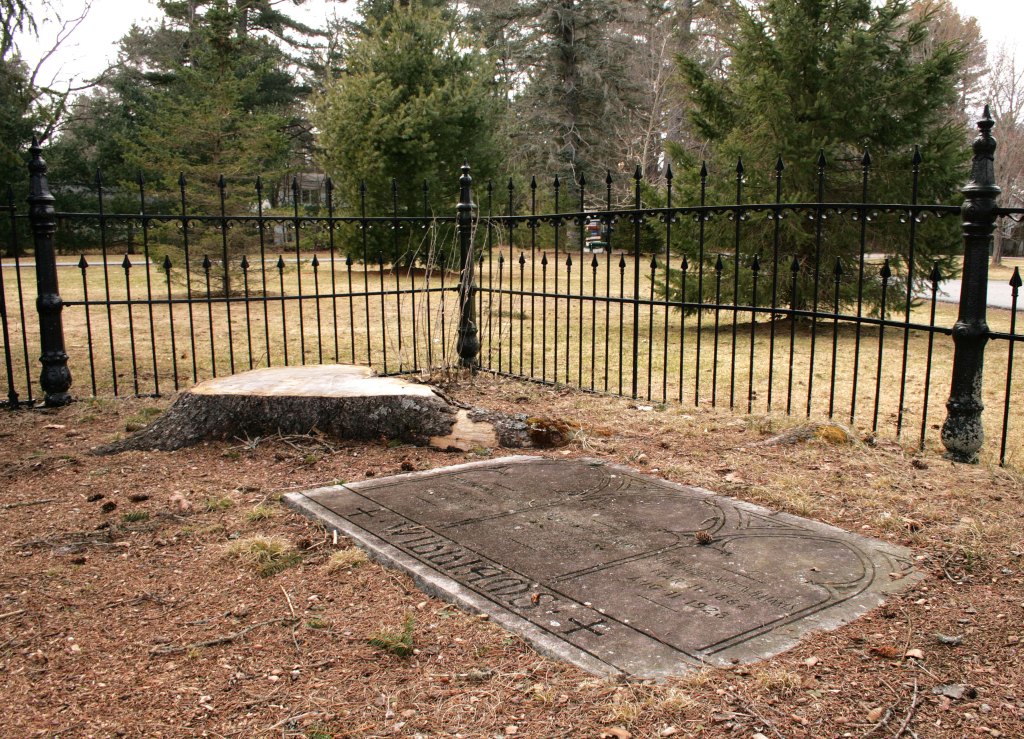
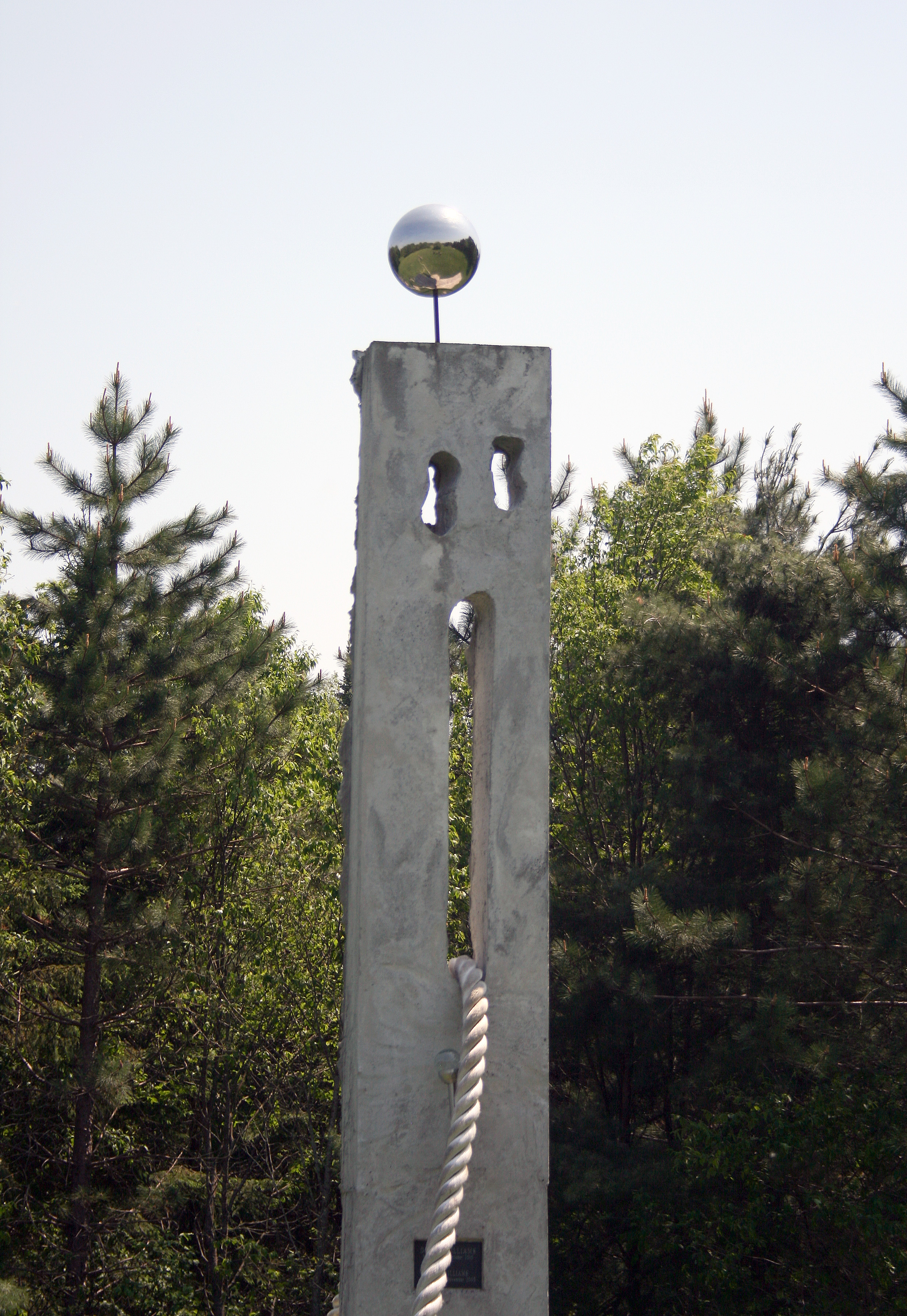
After that little pit stop, we visited three more cemeteries. The Annie Williams Memorial Cemetery was the smallest cemetery we visited that day. Only three people rest in that cemetery, which sits in the middle of a park and playground. This tiny gated cemetery sits under some large trees, only a few feet away from an active playground that often hears the boisterous sounds of children playing. It also sits a foot or two away from a popular little library, that was bursting at the seams with books.

As the day waned, it was time to start making our way back home. But we couldn’t help but stop at one more cemetery. Our last cemetery stop of the day was Port Carling Cemetery. That marked the end of our loop around Lake Muskoka.

This trip was a lot of fun! We ended up visiting a total of eight cemeteries, not bad for a first-time out after the cold of winter. We had beautiful weather that warmed up as the day went on which made our visits comfortable. Which means the weather can only get better from here. I look forward to my next outing and seeing where cemeteries take me. 

Thanks for reading!


References: 

  1. Muskoka | Destination Ontario
  2. This Canadian Town Is A Magnet For A-Listers On Vacation— Here Are 8 Celebs That Were Spotted There This Summer | Buzzfeed

Cemeteries:

  1. Torrance Union Cemetery also known as Whitting Family and Church Cemetery, Torrance
  2. St. James Anglican Cemetery, Gravenhurst
  3. Lakeview Cemetery, Gravenhurst
  4. Mickle Memorial Cemetery, Gravenhurst
  5. Bracebridge United Cemetery, Bracebridge
  6. Annie Williams Memorial Cemetery, Bracebridge
  7. Saint Thomas Cemetery, Bracebridge
  8. Port Carling Cemetery, Port Carling

Puddingstone

Have you ever heard of Puddingstone?

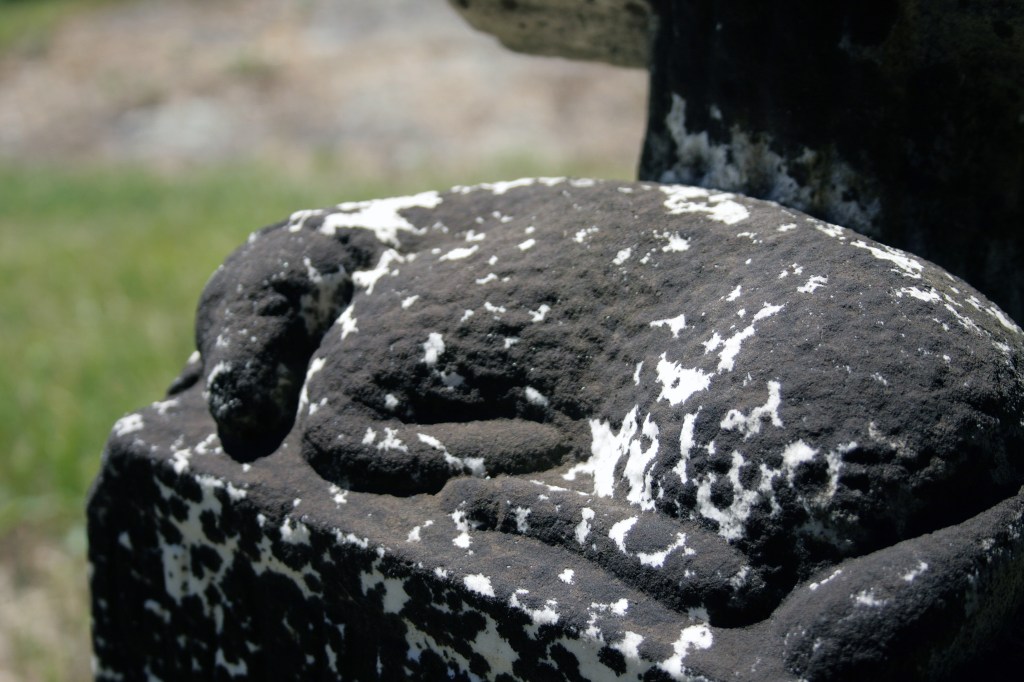
I first came across puddingstone while visiting cemeteries on St. Joseph Island. My mother and I visited the island in 2022, with plans to visit every cemetery on the island. We started to notice many gravestones made out of this unique stone. We also found large pieces of it left at gravesites, and in one instance possibly used as a temporary marker. I wanted to learn more about this peculiar stone.

During our visit to the island, we had a private tour of Adcock’s Woodland Gardens. The gardens, that sprawl for acres, are filled with beautiful trails and ponds, and hundreds of varieties of plants and flowers. My mother was in heaven. At the end of the tour, as we were heading back to the car, I noticed a cute little wishing well that looked to be made out of the same spotted stone we found in the cemeteries. I asked our tour guide about it. Grant, the owner of Adcock’s Woodland Gardens, was happy to share that this type of rock, native to the St. Joseph Island area is called Puddingstone. 

Puddingstone is everywhere on the island. When we visited Historic Fort St. Joseph, we were greeted by a large boulder of puddingstone at the entrance of the Visitor Centre. Since puddingstone is native to the area, when my mother and I toured the ruins, we spent some time at the water’s edge to see what we could find. Although we did find a few interesting rocks and pebbles, we didn’t find any puddingstone. There was also a sign at the waterfront asking that nothing be taken from the area. It is an archaeological site after all. 

On our way out, we of course checked out the little gift shop. Alas, no puddingstone for sale. I was a little disappointed because there was a beautiful piece of puddingstone sitting at their front desk. It was a baseball-sized chunk, that was mostly all natural and rough except for a smooth clean cut, showing the inside of the stone. 

We left the island without a sample of the stone, but I never forgot about it. I found it curious that it seemed like such a common material on the island, with countless gravestones made from it. I also found it curious that it was also a common grave good on the island. I wanted a little piece of my own.

What is Puddingstone? 

Puddingstone is a jasper conglomerate, a form of sedimentary rock composed of rounded cobblestone and other pebble-sized fragments. Conglomerates are formed by river and ocean wave movement.1 In Canada, puddingstone is commonly found on St. Joseph Island and in Bruce Mines, Ontario.2 It is unique to this part of Algoma.

The name Puddingstone comes from British settlers who were stationed in the area, they thought the pale sedimentary rock, dotted with red and brown jasper, looked like “boiled suet pudding with berries”.3

The Last Spike Stone Cairn, a cairn marking the location of where the last spike was driven for the Canadian Pacific Railway, includes rocks from across Canada. Can you guess what stone was sent from Ontario?

That’s right, it was a piece of puddingstone from Bruce Mines.4

The search continues

I checked in with my local gem and mineral shops to see if they carried puddingstone. Surprisingly, they didn’t know what it was. My next thought was to look at any upcoming gem and mineral shows or fairs.

I stopped in at the Galaxy Psychic & Crystal Fair. This weekend event happens annually in the Spring and Fall, but this was my first time attending. I thought there might be some gem and crystal vendors who might be able to help me. Again, no one knew what puddingstone was. One vendor was curious as to what puddingstone was used for. With a Google search, we discovered that it’s thought to have many metaphysical properties and benefits, with dream recall being one.5 She suggested that may be why I was searching for it. Maybe? I was more interested in its use in cemeteries. 

I decided it might be time to visit Bruce Mines again. I planned a cemetery road trip for the summer of 2023. The plan was to visit a few cemeteries, check out some antique shops, have a chip truck lunch, and visit the Bruce Mines Museum. I had read a well-timed Back Roads Bill article about some of the oldest graves in Northern Ontario, and there just so happened to be one in Bruce Mines. According to the article, the Bruce Mines Museum has in its collection, a wooden grave marker that is dated October 6th, 1850, and March 20th, 1851, for two victims of the 1849 cholera epidemic.6

Unfortunately, the Museum was closed when we arrived. I did double-check the operating hours before going, but I found out later that the Museum was short-staffed that summer, and didn’t always follow their posted hours. But we did get to see more Puddingstone. There are a few large pieces of puddingstone decorating the museum grounds.

My mother and I were both a bit disappointed that we didn’t get to visit the museum, but it wasn’t the end of our trip. We still had some antique shops to visit. We saw a lot of interesting items in the shops, but no puddingstone for sale. I did make sure to ask. At the last shop we visited, my mother found a couple of interesting books, so while she was cashing out I asked the clerk if they had any puddingstone. At this point, I didn’t expect them to have any, and they didn’t. 

But they knew where I could find some!

I was directed to a small artists workshop, that doubles as a gift shop called S&S Creations. To my surprise, the shop was full of puddingstone! The shop features beautiful stained glass artwork, that uses traditional stained glass, but also very thinly cut puddingstone. There was puddingstone in all shapes and forms—from book ends and coasters to large stone pieces and jewelry.

The shop belongs to artist Stephanie and her husband and stone cutter, Steve. With over ten years of experience, they take on projects of all sizes, from furniture and custom work to more delicate art pieces and home accessories. No one up to this point had any idea what puddingstone was, so I was so happy to talk to Stephanie. She told me that she had encountered the same thing, and found it as strange as I did. I guess Puddingstone is a hidden gem!

She asked me how I learned about puddingstone and I told her about my passion for visiting cemeteries, and how the gravestones had piqued my curiosity. It turns out that Stephanie and her shop were responsible for the creation of a lot of the puddingstone markers I had visited. We had a very good conversation, and I was able to finally get my own piece of Puddingstone.

I always find it interesting where cemeteries take me, and this was a fun example of that. There is always something new to be learned. I wonder where cemeteries will take me next?

Thanks for reading!


References:

  1. Sedimentary Rocks | Oregon State University
  2. Puddingstone (rock) | Wikipedia
  3. Puddingstones | Drummond Island Tourism Association
  4. Alex knows Puddingstone | Parks Canada
  5. Puddingstone | All Crystal
  6. Back Roads Bill takes us to the oldest graves in Ontario | Sudbury.com

Stone Stories: The U.F.O. Gravestone

In early July, my friends and I went on a cemetery road trip, up through Hailybury and New Liskeard to Kirkland Lake. We made quite a few stops along the way, not only at cemeteries. We stopped at a couple of roadside attractions to stretch our legs and take in the sights. 

We did have a few points of interest that we were determined to visit that day. One was the grave of Charles Bélanger, son of famous Canadian sculptor Rose-Aimée Bélanger. You may remember that story, as I wrote about our visit in a blog post called Stone Stories: Art in a Cemetery

The other point of interest, high on our list to see was a gravestone with an epitaph about U.F.O.s.

One of my favorite things about visiting cemeteries is finding unique gravestones. I love gravestones that stand out, that showcase a sense of humor, or something specific about their life story. I love stones that give you a glimpse of who the person was. Sometimes these peculiar gravestones also present a mystery! 

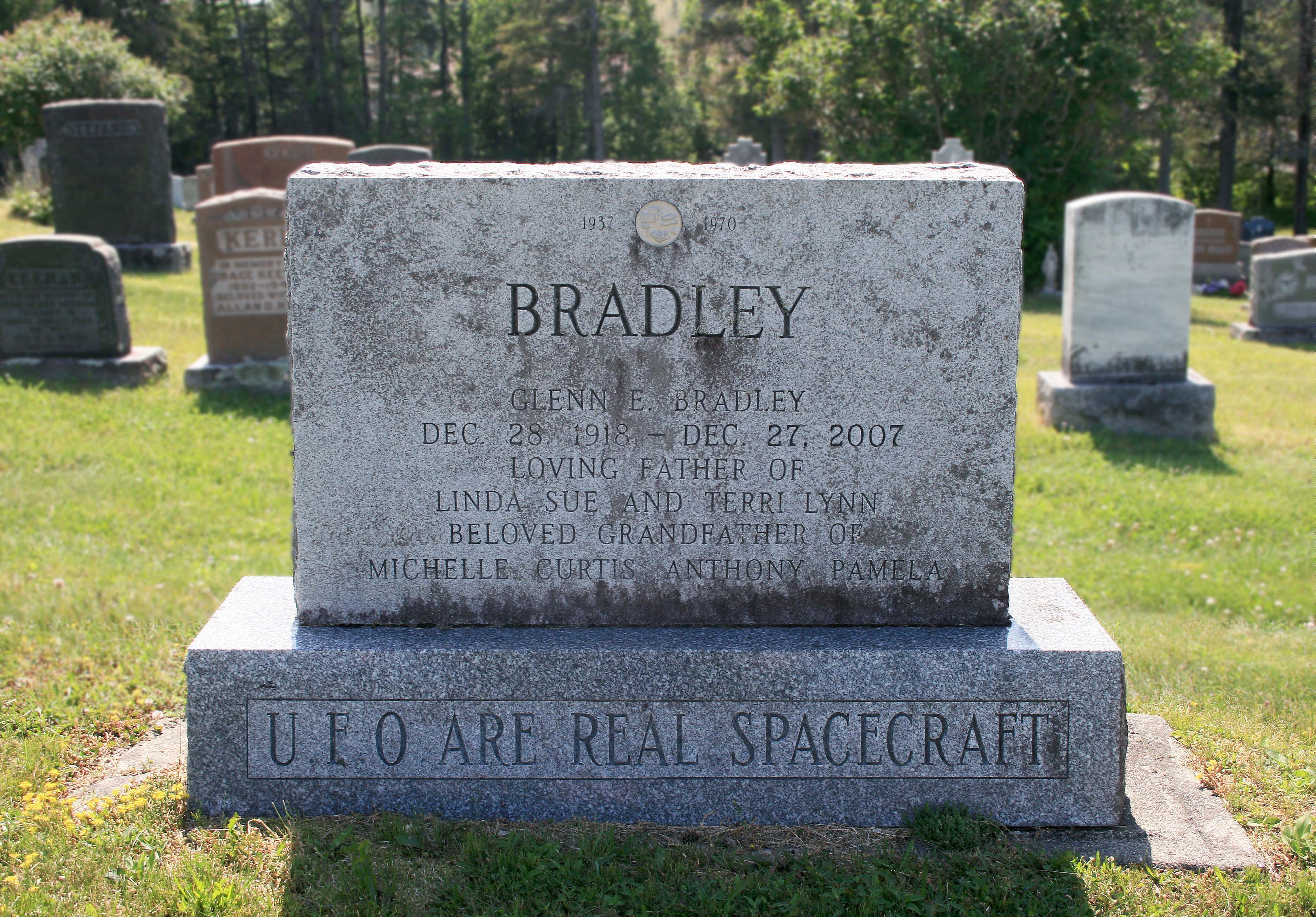
Like this gravestone in Kirkland Lake Cemetery that reads “U.F.O. Are Real Spacecraft.”

This is the gravestone of Glenn Bradley, who passed away on December 27, 2007. A day before what would have been his 89th birthday. From far away, his gravestone doesn’t seem to stand out. It’s a classic style headstone, in grey granite. But upon closer inspection, the epitaph jumps out at you.

It reads: “Bradley / Glenn E. Bradley / Dec. 28, 1918 — Dec. 27, 2007 / Loving Father of / Linda Sue and Terri Lynn / Beloved Grandfather of / Michelle, Curtis, Anthony, Pamela / U.F.O. Are Real Spacecraft.”

The epitaph continues on the backside of the stone: “Spinning Objects Vanquish Gravity / Spinning Objects Levitate / Spin to Exceed the Earths / Relative Feet Per Second / Honorable 60th C.B. Service / 1942 U.S. Navy 1945”

What does it mean? 

I am not the only one fascinated with this gravestone. Bill Steer, also known as Back Roads Bill, wrote an interesting article about this peculiar stone. In it, he shares an interesting tidbit found in Bradley’s obituary. It reads: “He will be remembered for his scientific work such as antigravity and his belief in UFOs.”1

Bradley’s gravestone tells us that he was a veteran of World War II with the U.S. Navy, having served from 1942 to 1945. Is that where he worked on antigravity? Had he seen a U.F.O.?

Recently, NASA revealed a report on UFO sightings, confirming that they are actively monitoring and collecting evidence. In the report, they state that unidentified anomalous phenomena (UAP) are not definitively connected to alien life, but what they are remains uncertain.2 You can read the 33-page report here.

It was on a particularly hot day, that we chose to visit the cemetery. It was the final cemetery on our list, having stopped at many cemeteries along the way. This meant that we were fairly tired when we arrived at the Kirkland Lake Cemetery, also known as Swastika Cemetery. 

Kirkland Lake Cemetery is actually located in Swastika, Ontario, a former mining and railroad town. It sits within the Kirkland Lake municipal boundaries.3 Swastika was originally a railway station along the Temiskaming and Northern Ontario Railway in the early 1900s. The town grew into a small mining community in 1907. It became known for its abundance of gold, which led the company, and officially the town itself, to name themselves after the Sanskrit symbol for “good luck” in 1908.4 

I don’t think we were prepared for how large this cemetery is! I was a little disheartened when we arrived, thinking we may not be able to find the fabled UFO stone. Find a Grave lists 7,871 memorials for this cemetery, and it’s marked as only 83% photographed. It’s quite large! 

After a brief distraction of falling into my regular photographer’s routine of stopping at gravestones that caught my eye, I remembered our objective. I regrouped with my companions and checked out Google one more time to point us in the right direction. In the end, we used some online photos to help us triangulate the stone’s location by matching up unique stones and markers in the background of the photos.

BINGO!

As mentioned previously, the stone from a distance is fairly nondescript. At the top of the gravestone, there is a coin embedded into it, with the dates 1937 — 1970. The coin reads: “E.W. Bliss Company / Bliss since 1857 / From Ingot to Finished Product”. According to the Military Wiki page, E.W. Bliss was an American company based in Brooklyn, New York. Among other things, they produced a line of special sheet metal work presses, power stamping machines, car parts, torpedoes, shrapnel, and armor-piercing projectiles.5

We spent time circling Bradley’s gravestone, pondering his curious epitaph. Without more background information, and as a layperson it did make me scratch my head in curiosity.

Maybe one day, answers will come forth as to what Bradley was talking about with his cryptically scientific epitaph. For now, it makes for a curious extraterrestrial mystery!

Have you ever seen a U.F.O. mentioned on a gravestone before? What do you think? Do you want to believe?

Thanks for reading!


References:

  1. A most unusual epitaph | Bay Today
  2. NASA reveals results of highly anticipated report into UFO sightings | CTV News
  3. Kirkland Lake Cemetery | Find a Grave
  4. Swastika, Ontario | Town of Swastika
  5. E. W. Bliss Company | Military Wiki

Stone Stories: The Screaming Heads

Writing these weekly blog posts, I often feel like a travel writer. Cemetery tourism is one of my favorite things! For this week’s blog post I wanted to share another cemetery road trip destination—The Screaming Heads.

At the beginning of June, I went on another Birthday weekend road trip. This trip was a mix of cemetery visits, museums, and attractions. We visited 15 cemeteries, played a game of Cemetery Bingo, and visited the Wiseman’s Corner Schoolhouse Heritage Centre, which happened to have a gravestone on its grounds. 

The main attraction of this trip, and the whole reason we visited Burk’s Falls, was to finally visit and experience The Screaming Heads, in Midlothian. We had talked about visiting for about the last 2 years but never managed to make our way there. So this year we made a special birthday trip to visit this unique resting place. You never know where you might find a cemetery.

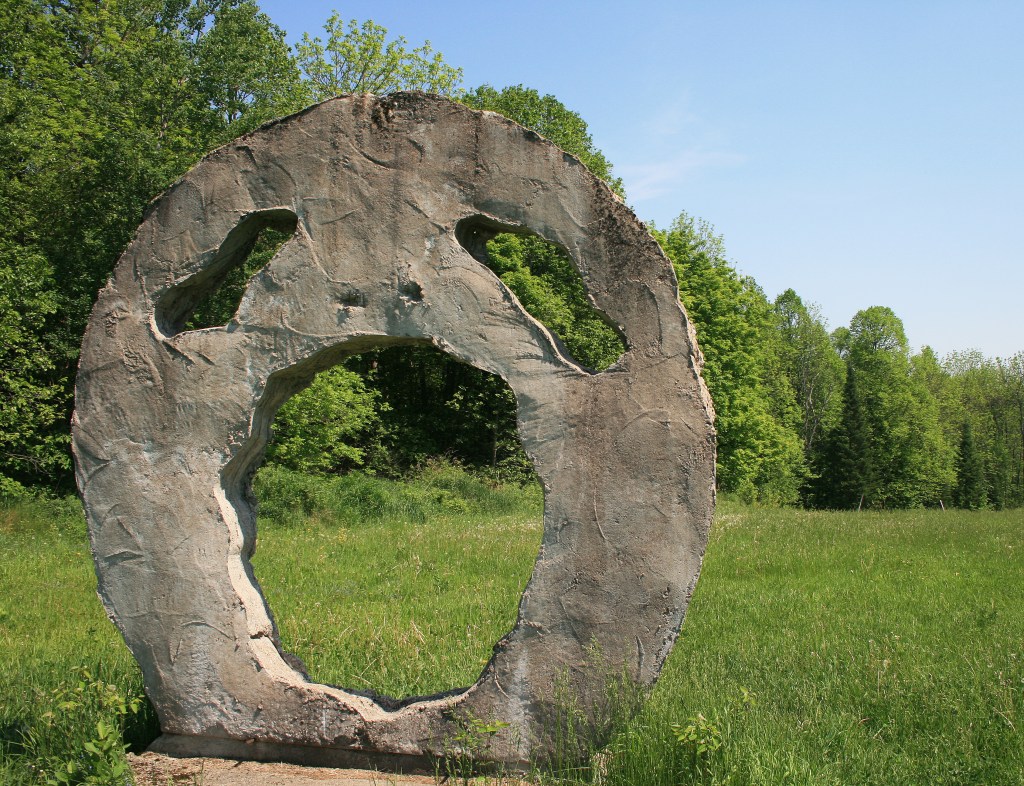
The Screaming Heads is an ever-growing art installation created by Peter Camani, a Canadian artist, sculptor, and retired art teacher. This public open-air art gallery dots the landscape of his 310-acre property.Living among his artwork, Peter lives in the Midlothian Castle, which was built upon a 19th-century derelict farmhouse. 

There is a giant spider web gate made of stone and rebar that surrounds the castle. If the gate is open, you may get a chance to look inside and visit the artist’s studio and living space. Everywhere you look there are interesting details to admire, from the metallic dragon that breathes smoke when the fireplace is lit, to a giant head that houses a studio space within it, to the rows of smaller screaming heads that line the top wall of the gate. 

Located on Midlothian Road, near the small town of Burks’s Falls, The Screaming Heads is an off-the-beaten-path roadside attraction. You know you are getting close if you start spotting smaller screaming heads; like at the Burk’s Falls visitor center and the Wiseman’s Corner Schoolhouse Heritage Centre. Peter opens his property to tourists year-round, from dawn till dusk. You’ll find much more at this attraction than just amazing artwork. The property is also home to about 300 species of birds, including peacocks. Their eerie calls can be heard all around you as you hike through the open fields and bush. There is a small gift shop that has some neat Screaming Heads merch, and on weekends you might also find a small farmers market.

The main attraction is of course The Screaming Heads. The artist has described these 20-foot-tall concrete sculptures as a warning against environmental degradation, “the earth rebelling against what we’re doing to the land.”2 Peter has transformed this once barren farmland, by planting many of the trees on his property and propagating spring-fed ponds. His large concrete structures are arranged in such a way that they form the shape of a dragon when viewed from the air, although today the trees are so large they obscure some of the statues.2

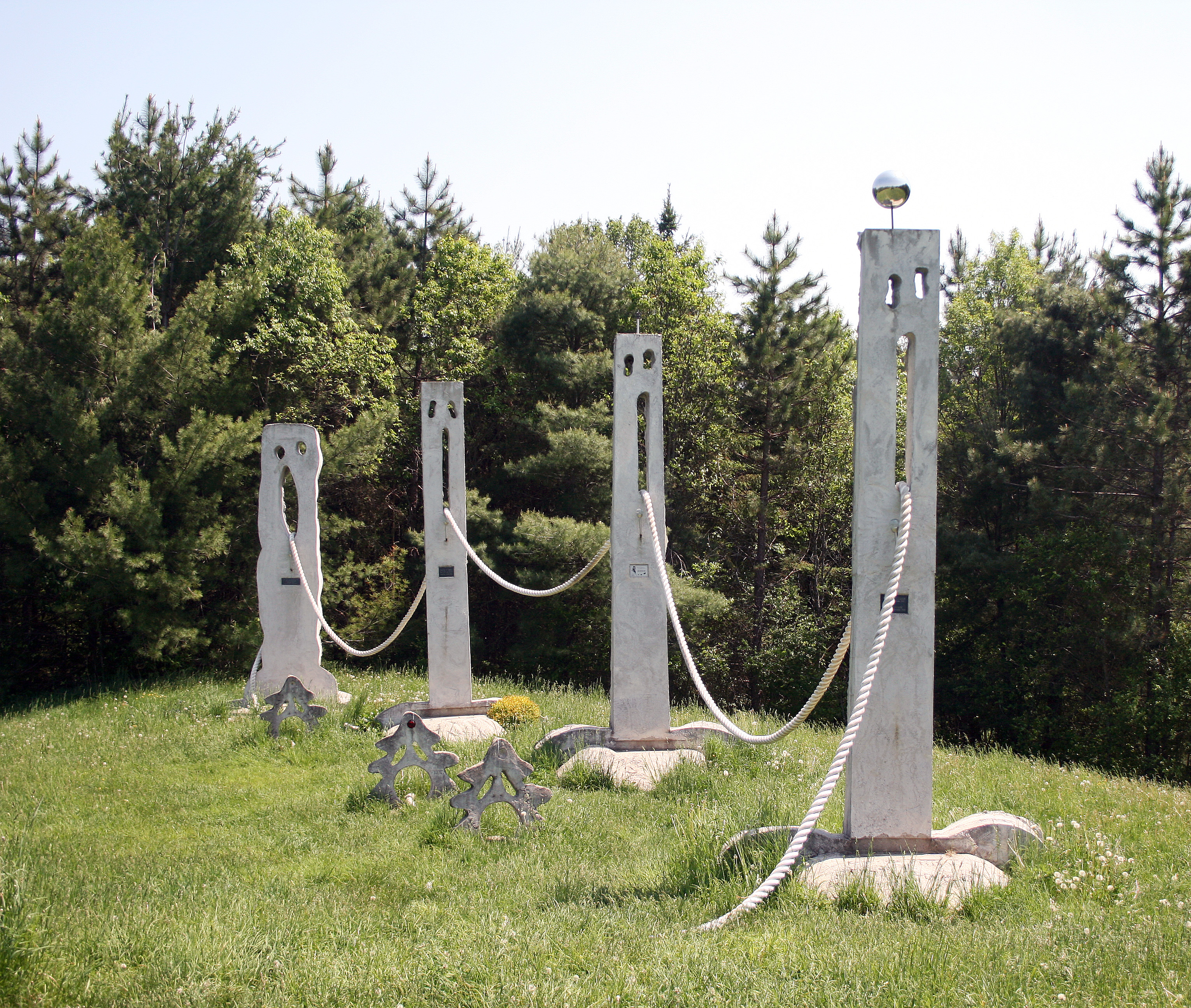
Along with being a unique roadside attraction, The Screaming Heads can also be considered a cemetery. A small grouping of Screaming Heads stand out among the other round Edvard Munch-like sculptures. These tall narrow creations have cremated remains mixed into the concrete. On his website, which now seems to be defunct, the artist had a creative suggestion for where your final resting place could be when you pass away; “Why settle for a small underground plot in the suburbs, when you have the option of joining a vibrant creation that fills the landscape?”3 At one time, If you wanted to be memorialized in this open-air art gallery, you would need $10,000 to reserve your spot.3 Since the website is now gone, I am uncertain if this option still exists.

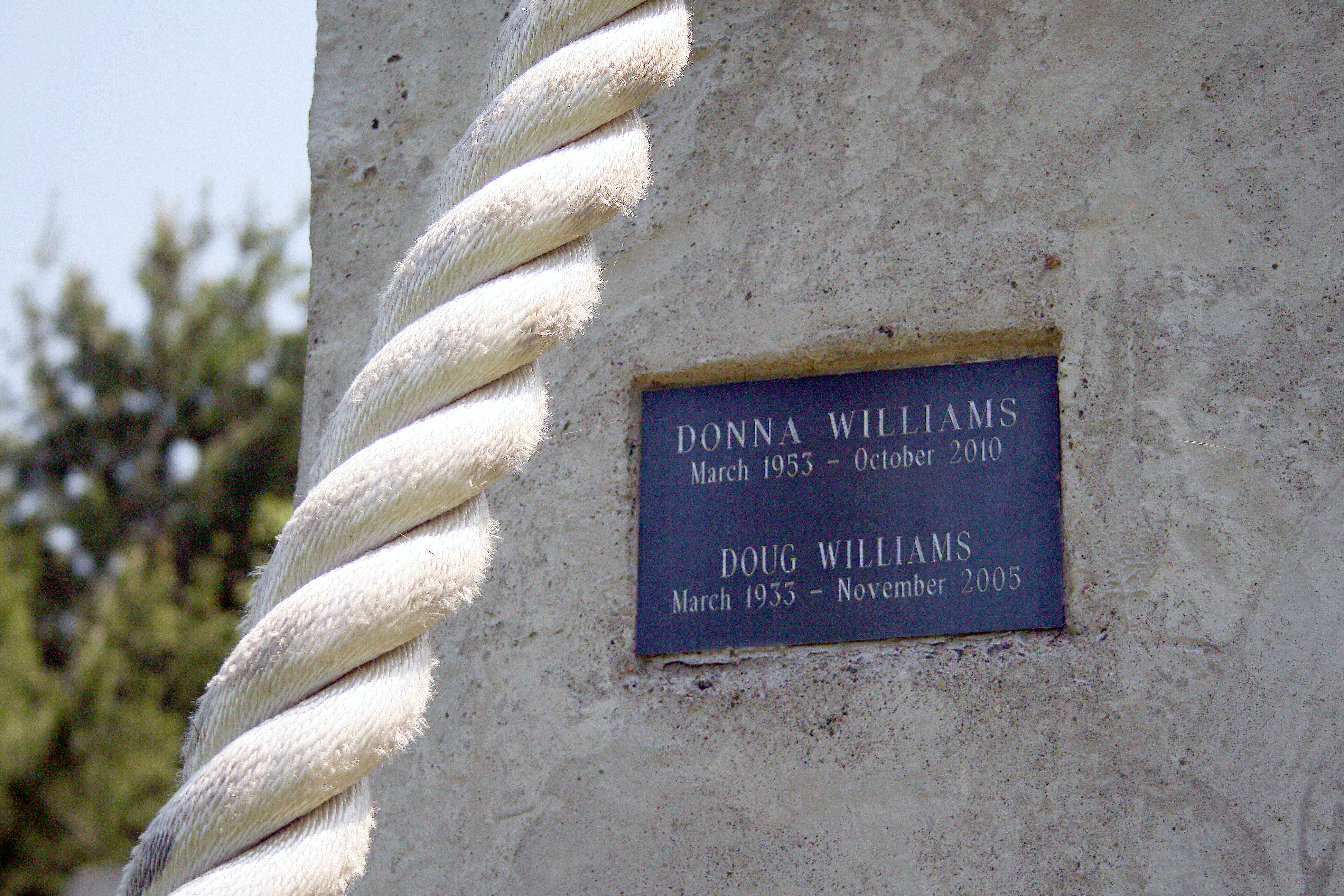
At the time of our visit, there were 4 human ash sculptures, with memorial plaques for 5 people.

“Gone but not forgotten” Memorial sculptures created with cremated remains. Artist: Peter Camani. Midlothian ON ©2023

Everyone’s experience with the Screaming Heads will be different, as there is no set way to explore the grounds. There is no trail map, and there are a few trailheads to choose from. When we visited, on an exceptionally warm day, we managed to come upon the memorial sculptures first. The photos don’t do them justice, as they are larger than life! We asked ourselves many times as we wandered the grounds, about the process of making these immense sculptures and what that might look like. 

There is something magical about this place. As you walk among these enormous, whimsical sculptures, it’s easy to feel like you are in a magical forest, where strange creatures may reveal themselves at any moment. I was filled with a sense of wonder as we walked through the woods and fields, discovering hidden sculptures as we got closer to them. The eerie sound of the peacocks also added to the experience. Their cries always seemed to surround us, and just when we thought we were close enough to see one, we would hear their scream from another direction. 

I can understand why someone would want their final resting place to be in such a magical place. The idea of becoming art, becoming part of something larger than yourself, to instill a sense of awe in others; that guarantees you will always be remembered.

Do you want to plan your own trip to visit The Screaming Heads? They are located in Midlothian, Ontario, close to the small town of Burk’s Falls. The grounds are open year-round, from dawn till dusk, and admission is by donation. Make sure to bring your camera, your water bottle, and LOTS of bug spray. Have you already visited? I would love to hear about your experience in the comments.

Thanks for reading! 


References:

  1. The Screaming Heads North of Muskoka | The Great Canadian Wilderness
  2. Peter Camani | Wikipedia
  3. How to Be Posthumously Transformed Into an 18-Foot Screaming Head | Slate

Additional Links:

Cemetery Road Trip: Graveyards in Grimsby

Today on the blog I wanted to share a little bit about my first cemetery road trip of the year! A couple of weekends ago, two of my best friends and I went on a fun-filled day of adventures to celebrate a birthday. We traveled over 900 km to visit Grimsby Ontario, in the Niagara Region—and it did not disappoint!

A month or so ago, my friend had asked to visit a graveyard for her birthday, as she had never visited one before. There are closer graveyards we could have visited, but since this was a special occasion I took some time to try and find the perfect spot. Weirdly enough, the internet provided the solution. Randomly, or not so randomly if you believe that technology listens to us, a video popped up in my Youtube feed by Canadian Cemetery History. I took the bait and watched the video. It showed a visit to Saint Andrew’s Anglican graveyard. This beautiful graveyard was just what we were looking for!

Not only does Saint Andrew’s Anglican Churchyard boast the 4th oldest church in the province, but it also has a lychgate and table stones. Both of which we have never seen before in person. So I began looking into what else we could visit in Grimsby; other cemeteries, museums, attractions, haunted locations, and of course interesting places to eat. I pitched the idea to the group, and they were as excited as I was to explore this beautiful little town. 

I continued to research things for us to do and managed to book us a private tour of the Nelles Manor Museum. We would be visiting the resting place of the Nelles family at Saint Andrew’s, so it made sense to visit their historic home and learn more about this prominent family. 

The day of the trip started bright and early. After picking up our first Starbucks of the day, we left Sudbury a little after 6 a.m. The plan was to drive straight to the graveyard, with a Starbucks stop along the way, to make the best time. Then we would take our time exploring, and visit the Nelles Manor at 3 p.m. for our private tour. 

We arrived at Saint Andrew’s Anglican graveyard at about 11 a.m. and got out to stretch our legs and explore. The graveyard was absolutely beautiful. As was the weather, we had a beautiful day for exploring. Right away we noticed the prominence of the Nelles family as they had their own family plot, as well as family members scattered throughout the graveyard. We would learn more about the Nelles family when we toured the Museum later in the day. 

Saint Andrew’s Anglican Churchyard, Grimsby ON ©2023

Saint Andrews Anglican Church and graveyard is located a stone’s throw away from the Nelles Manor. The current church building dates back to 1825. The graveyard is well-maintained and has a large number of historically important grave markings. The land for the church was originally donated by Colonel Robert Nelles.1 The Nelles family plot is closest to the church on the left side of the churchyard, enclosed by a chain with small cast iron tassels hanging from it.

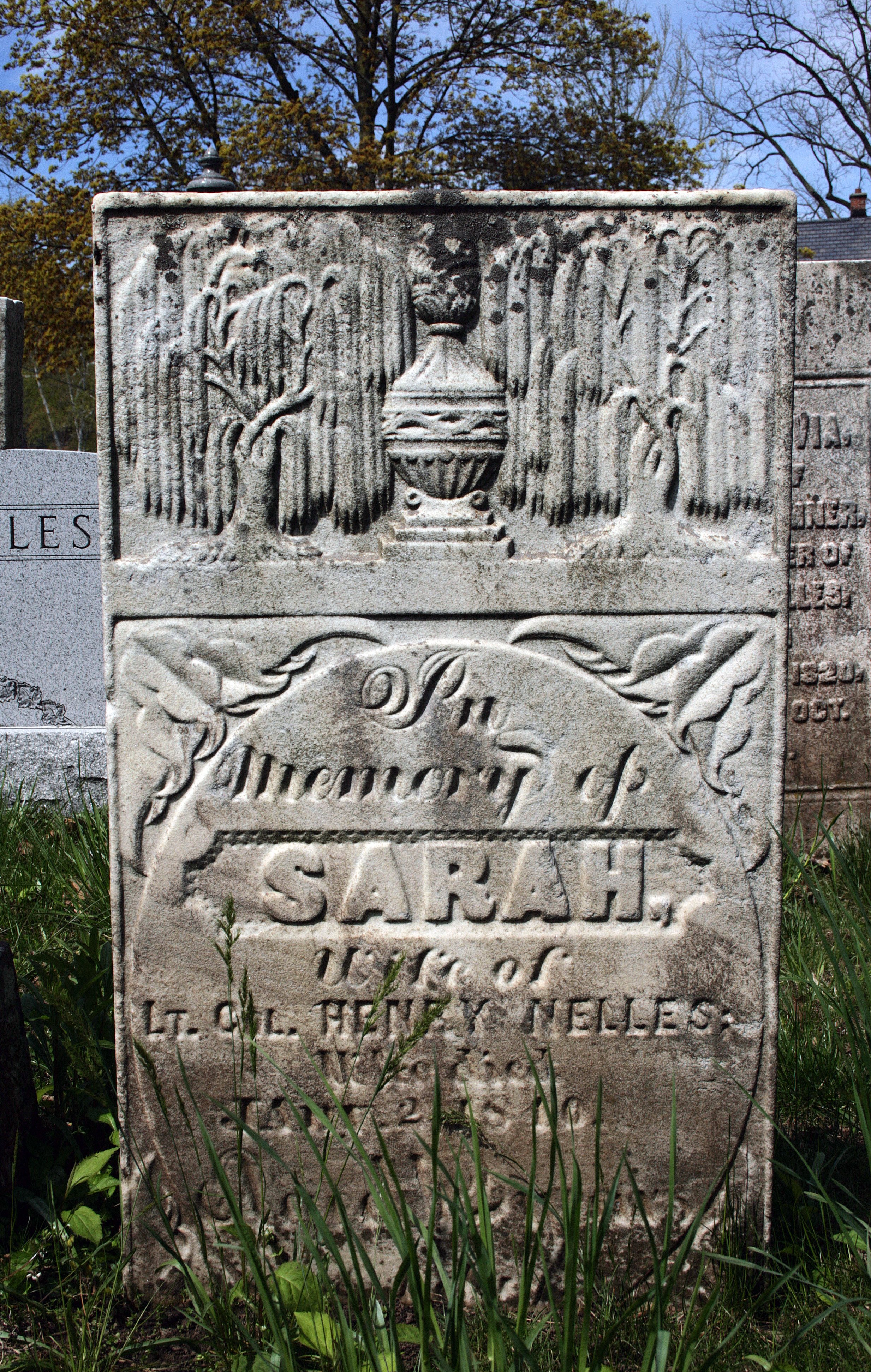
This graveyard also acts as an arboretum of sorts, with beautiful examples of different varieties of trees. Many were in full bloom when we visited. There is a lovely variety of gravestones to be found there as well, many of which I had not seen in person before, like the willow and urn motif, broken column symbolism, and closed books covered in cloth. It was curious to see the difference in popular cemetery symbols that we found. In the Sudbury area, lambs, doves, and hands are very common. There also stand the tallest tablet stones I have ever seen. They are taller than I am! The gravestones I was most looking forward to seeing in this graveyard were the table stones. I have not had the chance to see one in person yet, and I find them so unique and fascinating.

Table stones have an elevated ledger top, that provide space for a longer inscription, and is supported by four to six columns. This type of gravestone was popular during the first part of the 19th century.2 These types of stones were used for prominent people and were sometimes installed many years after the person’s death. In that instance, these stones would sometimes cover the original gravestone. These tabletop stones are often more worn, like the ones we saw, due to larger surface erosion, making the stones barely legible.3

After we wandered the entire graveyard, we took a break for lunch and then made our way back toward the Nelles Manor. We were a little bit early for our tour, but luckily there were a few points of interest in and around the Nelles Manor for us to explore while we waited. We visited the Trinity United graveyard, and the Grimsby Museum and grounds where we discovered more interesting Grimsby history. When it was time, we made our way a couple of houses over to visit the historic Nelles Manor Museum for our private tour. 

The Nelles Manor was built from 1788 to 1798, well before the American invasions in the War of 1812. The house was fully built and lived in by the Nelles family by the time the Americans declared war on the British. The Niagara Peninsula became a gateway for American fighting forces to work their way from the American frontier on the East side of the Niagara River as they reached for Burlington, York, and Kingston. Nelles Manor was occupied by British and local militia during the War of 1812, but on at least two occasions was also occupied by American forces that had moved up from Niagara.1

Nelles Manor Museum, Grimsby ON ©2023

We received a very warm welcome when we arrived at the Nelles Manor. Our tour guide Kate, and two other guides, were finely dressed in period clothing, which added to the authenticity of the experience. We started our tour outside, taking in the magnificent architecture of the building, as well as the warm weather. Our guide talked about the land where the Nelles Manor sits, and its connections to its surroundings. Our group found it very helpful that we had visited Saint Andrew’s, as well as the Grimsby Museum grounds before our tour. 

After moving inside, we were treated to a walking tour of the house; starting at the front door, touring through the sitting room parlor, and making our way upstairs. Every room is beautifully decorated for the time period, with great attention to detail. Along with period-specific furnishings, the house is decorated with some original pieces that belonged to the Nelles family, as well as original art from the period. It felt like we were stepping back in time. 

The guides are incredibly versed in the history of the house, the Grimsby area, and the Nelles family. They had no trouble answering our many questions. We had explained that we were in the area to visit the cemeteries and graveyards, and they kindly pointed out artifacts and related tidbits as they took us along the tour. At the end of our tour, they asked if we would also be interested to hear some of the haunted history of the house. We of course said yes! 

They shared stories of experiencing odd smells when there shouldn’t have been any, such as smelling a delicious roast or floral perfume, which was a favorite of Mrs. Nelles. They also shared some stories from paranormal investigations that have taken place in the manor. Paranormal teams have reported their fresh equipment batteries dying quickly and suddenly. They have also captured some eerie electronic voice phenomena (EVP). The staff now use some of these EVPs during their Halloween events, wherein they tell the haunted stories of the house. I would love to attend one someday. As we were discussing the spooky happenings, my friend happened to check her Apple Watch and noticed the battery was dead. Were the Nelles spirits letting us know they were with us?

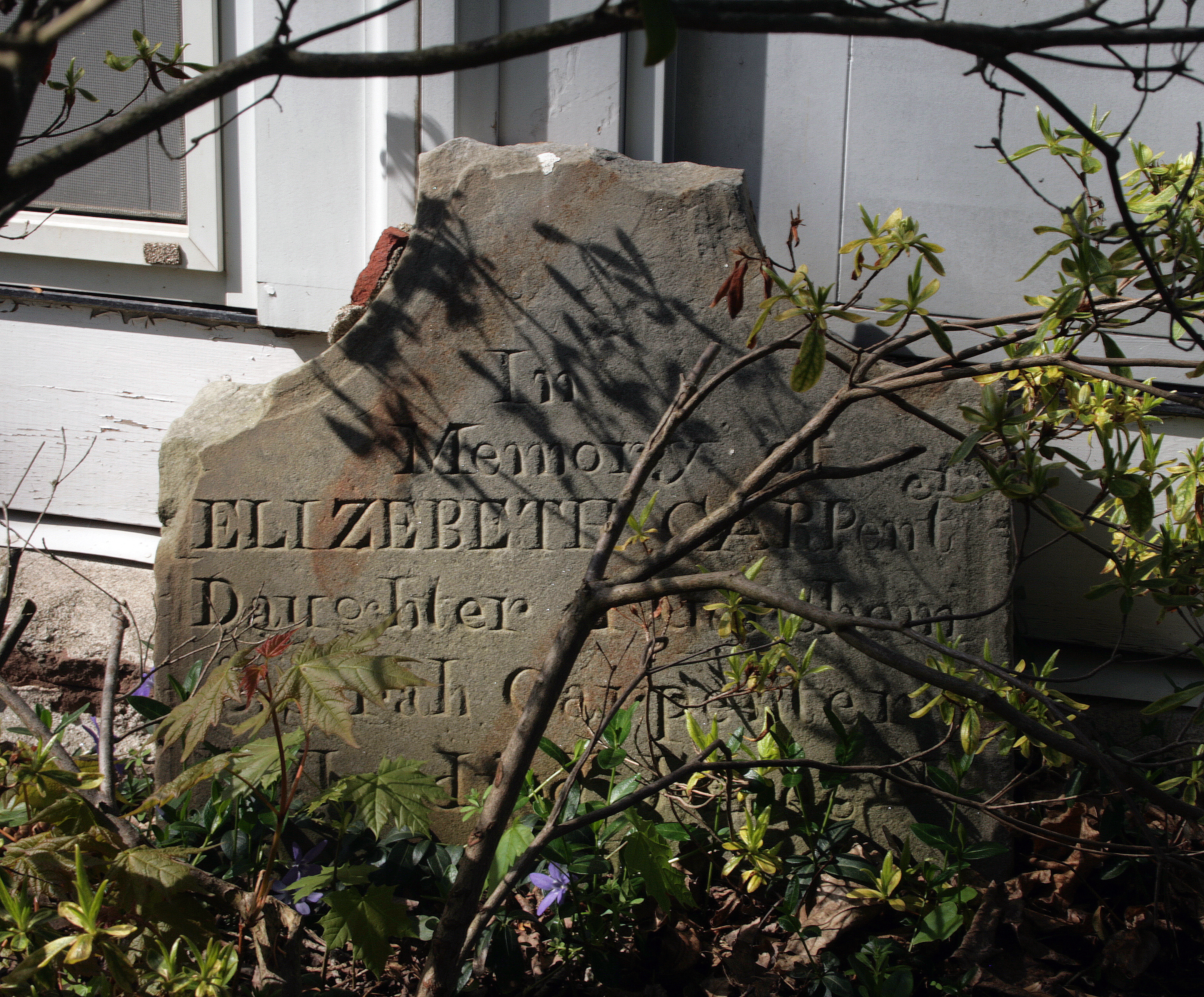
We thanked our tour guides for an amazing tour and made our way outside. They had one last interesting piece of history to point out as we were leaving. In the garden, leaning up against the house are two small gravestones, that are still very legible. Kate explained that these stones were originally at a graveyard close to the water’s edge, which has since eroded away. A cenotaph was erected at Saint Andrew’s Churchyard in memory of the souls that were washed away, and the original gravestones were moved; some ended up at the manor and used as flagstones for the walking paths. These two were preserved and now sit in the garden. You never know where you might find a gravestone.

Gravestones in the garden of the Nelles Manor Museum, Grimsby ON ©2023

There was so much we explored and experienced that day. As well as exploring the Nelles Manor Museum, we visited two graveyards, one cemetery, and one burial ground. We also stopped in at the Grimsby Museum and quickly visited the Grimsby Gingerbread houses. I’m sure I will write some more in the future about those visits. It was a very long day, but it was worth it.

If you ever get the chance to visit Grimsby, I highly recommend the Nelles Manor Museum. It’s a beautiful place to learn more about the history of the Niagara region and the War of 1812, and you might also have a paranormal experience. Don’t forget to also pay your respects to the Nelles family at Saint Andrews’s Churchyard.

Thanks for reading!


References: 

  1. History | Nelles Manor Museum
  2. Ledger, Box and Table-type Grave Markers | A Grave Interest
  3. Table Stone Gravestones | Cape Cod Gravestones

Records are meant to be broken

Over the weekend, my friends and I went on a cemetery road trip.

We had it planned and mapped out for a while now and were excited to spend the day together while exploring cemeteries. We started bright and early and fully caffeinated.

I just finished going through all the photos I took on our adventures, all 957 of them. The first thing I always do after a cemetery adventure is, upload my photos to my computer and file them accordingly and get the number of cemeteries visited.

If you have been following me for a little bit now, you may remember that our record for cemeteries visited in one day is 13. Well, Saturday was a full day of adventures, and we have a new record!

15!

A personal best. I have the best friends and travel companions a taphophile could ask for! I love that they love exploring cemeteries as much as I do, and enjoy a good challenge too.

It will take me a while to sort through my photos and get them posted. But they should be popping up on my social media channels and website soon. I will most likely write a more in-depth post about our day of adventures in the future as well. There were some fun surprises!

Thanks for reading!

Cemetery Road Trip: Searching in Spragge

I haven’t posted a road trip story in a little bit, so today I wanted to share my adventure of finding a cemetery via railroad tracks!

It was back in 2020, amid the COVID-19 pandemic. Social bubbles were very much in place and almost everything was shut down. There was not a lot to do that summer. BUT visiting cemeteries is always a viable option! My fiancé and I, and our close friends whom we had been bubbling with (that’s an odd to say), decided to go on a little adventure to try and find two cemeteries in Spragge, Ontario. 

The little town of Spragge found its beginnings in 1882 but was originally named Cook’s Mills. It was a self-sufficient town of about 350 residents all built around the sawmill. In 1895 the whole operation was sold, and the village was renamed Spragge, after the township. When the depression hit, the mill closed in 1932. That same year, there was a devastating fire that burned almost the entire village to the ground. This caused a lot of folks to leave town, although a few remained and tried to rebuild. The mill never did re-open, and now there only sit about a dozen homes within the small village limits of Spragge.1 Two cemeteries remain, the Spragge Catholic cemetery and the Spragge Protestant cemetery.

This adventure would take us a little over an hour and a half on the road to get to Spragge. Our little group made a day trip out of it. We stopped at a diner and safely had lunch outside on the patio. We asked some of the locals about the cemetery. The stories we heard were pretty interesting. We were told that the owners of the property where the cemetery sits, do not like visitors and consider them trespassers. They talked about how this causes some tension between the townsfolk who want to visit their relatives, but are barred from doing so. The community was trying to get free access to the cemeteries. We were also told that the property owner was known to brandish a shotgun! We were a little put-off by the stories, but we were determined to take a look for ourselves.

After our slightly uncomfortable lunch, we continued on our way with directions by Google Maps. We turned off the main road onto a side road and what looked like a parking area. My fiancé was completely put-off by the stories we were told, he was also not as enthusiastic about visiting the cemeteries as we were, so he waited in the car and played look-out. 

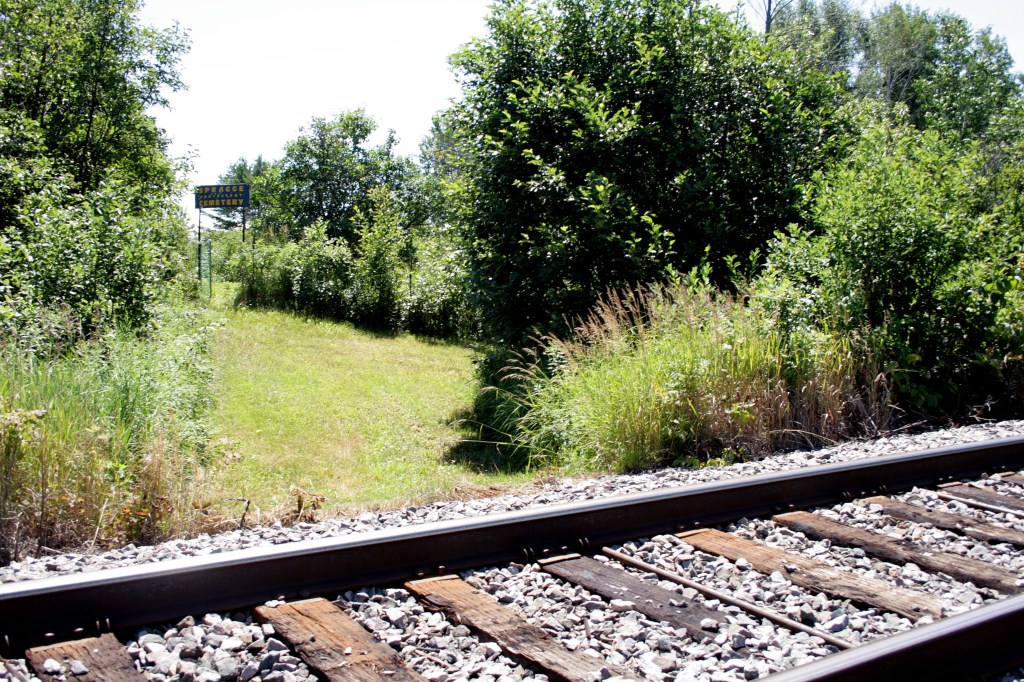
The rest of us began tentatively walking down the dirt road. When it opened up and we could see it was a driveway leading directly to a house, we decided to turn around and try a different approach. We had crossed a set of train tracks, that ran parallel with the main highway. After consulting Google Maps, it looked like we might be able to access the cemetery at a clearing just off the train tracks. We decided to try that. We chose a hot day to walk along the train tracks, but it ended up only being a short walk. On our left, a little clearing opened up which lead into the cemetery.

We had found the Spragge Protestant cemetery! We took some time to wander the grounds and look at the beautiful stones. It was a smaller cemetery and looked to be well-maintained. Not at all what we had pictured in our minds. We had been under the impression that the cemetery was abandoned and in disrepair. Some of the stones were too worn to be read, but some others were still in great condition. Some of the common cemetery symbols we found were clasped hands, obelisks, and little lambs.

After we explored a little bit, we tried to find the Spragge Catholic cemetery. According to my friend’s research, it should have been very close to where we were. We branched out a little, exploring the oddly well-kept lawn that snaked in between clumps of trees. We were nervous about getting too close to the house or going in full view of it. After a little more wandering, with no luck, we decided to turn back and reunite with my fiancé, who was patiently waiting in the car. 

We were very happy to have at least found one of the cemeteries, and we vowed to do a little more digging and return in the future to find the elusive cemetery. It was still a fun adventure, after all exploring is half the fun.

But that’s not the end of the story!

This past winter I was busy uploading photos to Find a Grave and uploaded some of my photos from Spragge. A woman reached out to me, looking for coordinates for the Spragge Catholic cemetery, as she has family there. I passed on all I knew, and let her know we were not able to find it. She had also heard about the access issues, but since she was a relative was hoping the property owner would be understanding. She later contacted me and gave me an update. She was able to locate both cemeteries and visit her family. It turns out the town of Spragge did not want the expense of maintaining the cemeteries, and a private owner requested to take it over and purchased the property. When he is not in town, he has entrusted maintenance and upkeep to another property owner in the immediate area—who also happens to have loved ones buried in the cemeteries.

I also had another person reach out about these cemeteries. They have turned out to be pretty popular locations. This time, the person who reached out was searching for the location of the Spragge Protestant cemetery. He had visited the Spragge Catholic cemetery but did not find the other. We exchanged information. I shared everything I knew about the one I had visited. In return, he shared the exact coordinates of the Spragge Catholic cemetery and the contact information of the property owners. If we had searched closer to the water’s edge when we were there, we would have found it. So close! 

I’m still a little confused about the stories that the folks at the diner told us, about the owners brandishing shotguns. From what I heard from both people who reached out, the owners seem very kind and willing to allow visitors into the cemetery. Although one had also heard about the access issues. Were there issues at one time? A misunderstanding maybe? Or maybe it was just some locals trying to scare away visitors? That mystery still remains…

Armed with all this new information, I will have to make another trip out to Spragge to visit the elusive Catholic cemetery. I love how this little adventure turned out because it showcases how interesting cemeteries can be. Cemetery mysteries are very much a part of the fun, and the fact that the cemetery community is so willing to share information and come together to solve these little mysteries is heartwarming.

Have you ever visited the cemeteries in Spragge? Do you have a cemetery mystery you would like to share? I would love to read about it in the comments. 

Thanks for reading!


References

  1. Spragge | Ontario Ghost Towns

Finding the abandoned Happy Valley cemetery

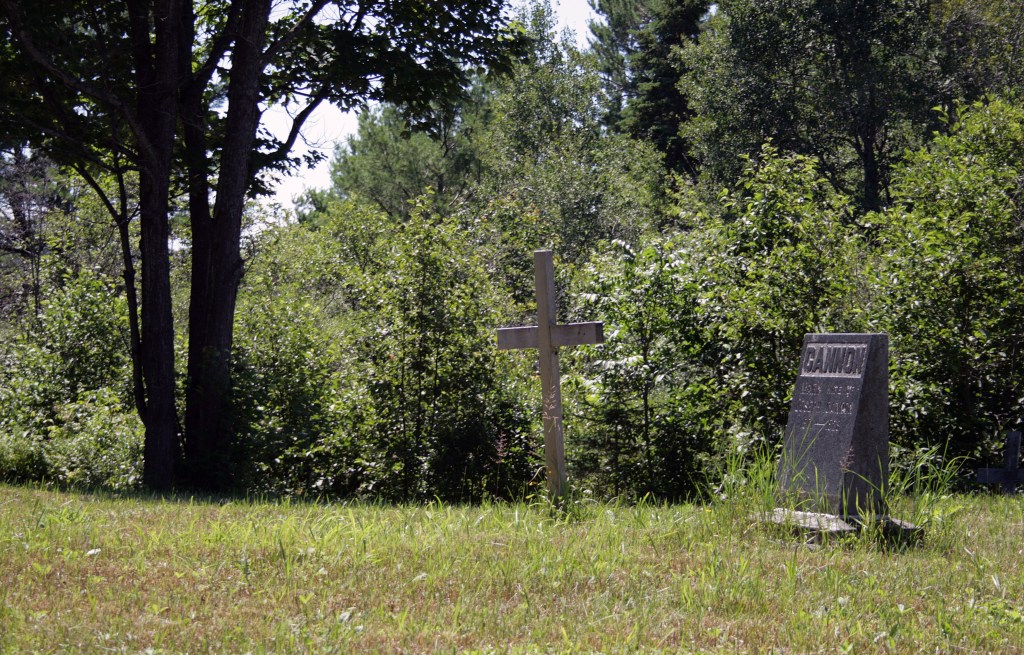
In August of 2020, a friend and I set out to find an abandoned cemetery. She had been to it before, having stumbled upon it while out and about on four-wheelers. She was excited to share it with me. She and I have been on many cemetery adventures, but this one was a bit different for us. Normally we would jump in the car and head for a destination while stopping at all the cemeteries we found along the way. This one was a bit closer to home and would need to be reached on foot. So with the camera in hand, we started walking. Have you ever seen the movie Stand by me? It sort of had that feeling, except we weren’t going to see a dead body, we were off to see a cemetery. 

Happy Valley is considered a ghost town. According to Ontario Abandoned Places, it never really was considered a town at all. 

“…more of a settlement which belonged to Falconbridge. Happy Valley consisted of residents who wanted to be separate and independent from the residents of Falconbridge…The residents were mainly farmers and mill-workers who worked at the sawmills by the lake. The children would have to endure a three-mile walk every morning to the nearest school (established in 1907) located in Garson…Other than the mills and homes, there were no stores or a post office to be found. Residents had to travel to Falconbridge Township for amenities…By 1970, the town was abandoned…almost. The last resident, “Gizzy”, left the town in the late ’80s.” – Ontario Abandoned Places

For more formation on the Happy Valley ghost town, visit Ontario Abandoned Places.

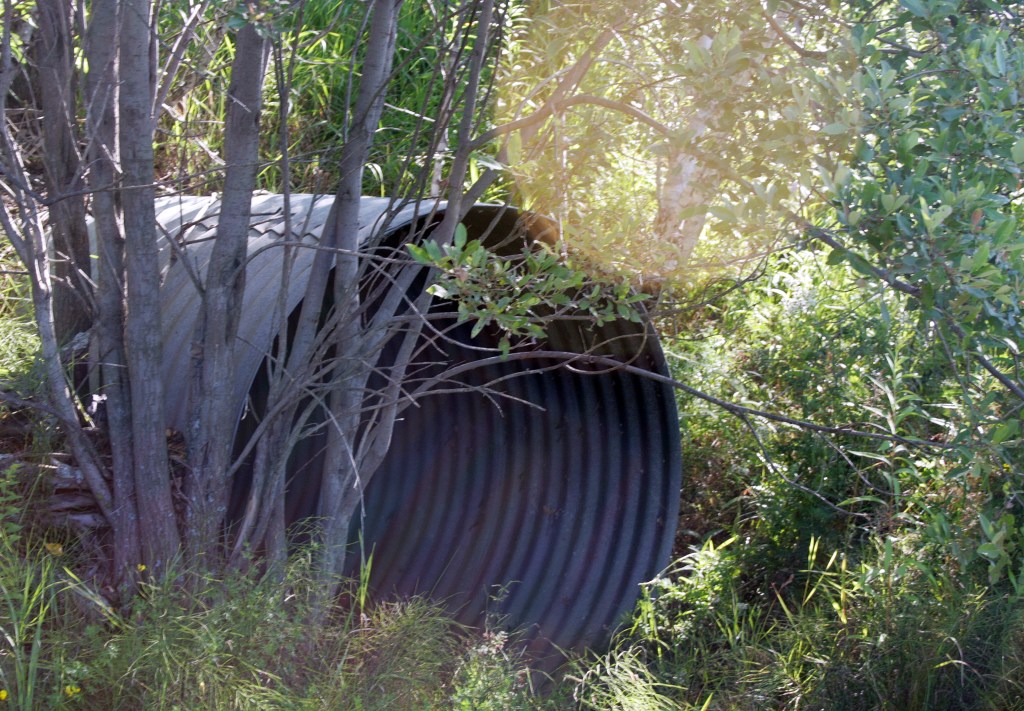
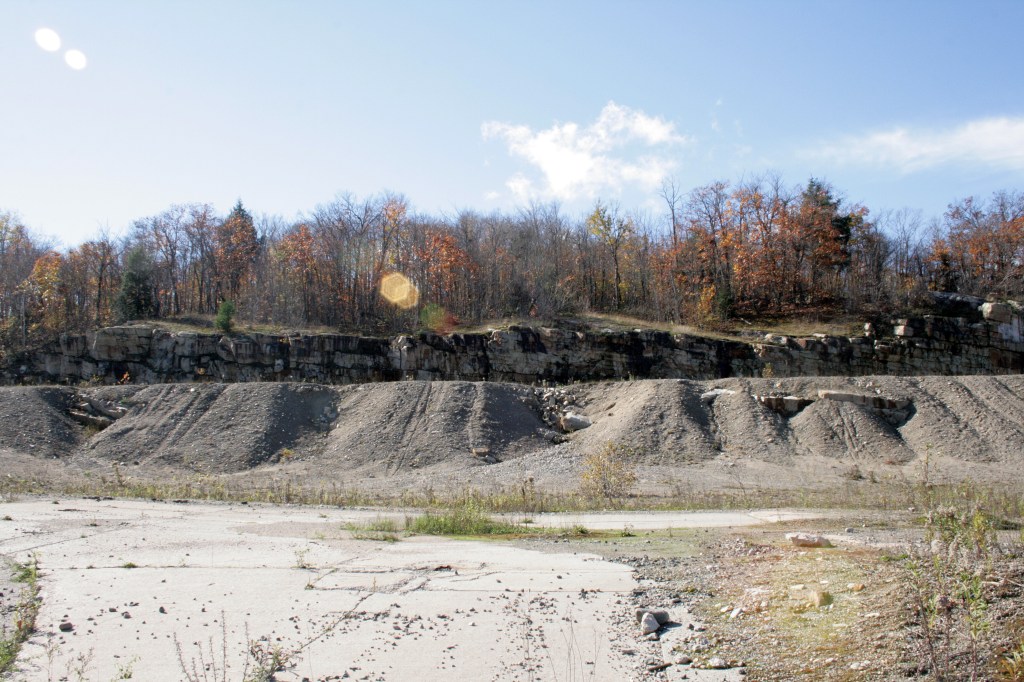
Our trip began by taking us into a more industrial part of the town. There were dunes everywhere and an old abandoned railway track. Small trees and bushes were growing from in between the railway ties. Those tracks had not seen much use in a while. We walked the train tracks for a little bit, but then found a dirt trail that took us more into the surrounding wilderness. We passed old culverts and a few small lakes. It was a beautiful day for a walk! 

The way to this cemetery wasn’t a straight shot, or well marked. We had a general direction and were using landmarks to help find our way. We referenced old photos from the first time my friend had been there. We seemed to have made our way into some backcountry, where there were sandy trails and lots of sandy hills, that would be great for four-wheeling. After climbing up into a rocky area we reached a plateau where it levelled off and there was a two-lane sandy road. It was nice to not have to watch our footing anymore for fear of catching a toe on a rock.

My friend felt we were getting close. We walked on, enjoying each other’s company and chatting about life. Now and then we would stop to assess how far we had gone. We were alone in the woods, having not seen anyone else out on the trails. After a while, we started to question if we had gone too far. We checked a side trail, but no, it was going off in the wrong direction. We took a small break to rest and re-evaluate. Luckily, we still were getting cell service in what seemed like the middle of nowhere. She was able to look at satellite photos on Google and find what looked to be our cemetery. We had gone too far! We had to backtrack a little way and take a dirt road that forked to the right. Our goal should be right around that corner. 

We found it! It’s a small cemetery, having been recently surrounded by a chain-link fence. We theorized that the fence was put up to protect the cemetery from people unintentionally running through it on quads and snowmobiles. There are about a handful of headstones, some up-right and a few flat to the earth. There seem to be more pioneers buried there than there are headstones.

Ruff Pioneer Cemetery, Garson ON ©2020

Having found the cemetery and being able to visit it was well worth the hike. It was super satisfying! Almost more rewarding than if we would have driven straight there. After spending some time among the tombstones, we made our way back the way we came. Through the woods, along the dirt paths, and along the train tracks, ending by having to climb back up a massive dune that we had first scaled down at the beginning of our journey. It was a great adventure! I am grateful that I have good friends who want to share these kinds of experiences with me! 

More recently, I was doing some pre-emptive cemetery road trip research, getting ready for this spring. I was going through all the cemeteries listed in my hometown, there are 25 in total. I have been to all but 3 of them, or so I thought. Based on my archived photos I had not visited Ruff Pioneer Cemetery, Chelmsford Protestant Cemetery, and St. Joseph Cemetery. As I did a bit more research into where these cemeteries are located, I got stuck on Ruff Pioneer Cemetery. It’s listed as being off of Goodwill Road, in Garson. As I searched Google Maps, it just was not making sense. I was able to zero in on its location using satellite photos. Low and behold—Ruff Pioneer Cemetery is our Abandoned Happy Valley cemetery!

Looking back at my photos, though, it all makes sense!

Goodwill road was most likely named after those pioneers buried in this cemetery.

Looking back at this cemetery adventure has me pining for summer and the opportunity to visit new cemeteries. I have a few road trips already planned and mapped out, but I may take a look for more abandoned cemeteries that are harder to find. Do you have a story about an abandoned cemetery? Share it in the comments!

Thanks for reading! 

Cemetery Road Trip: Elliot Lake

In October 2021, I took some time off to enjoy the autumn weather and some Halloween activities. I also took it as an opportunity to go on some cemetery road trips. I had the idea to visit Elliot Lake during the summer, but my nephew suggested we wait till the fall, to take advantage of the fall colors. My mother and I both thought that was a great idea. I will admit, we may have gone a bit later than we should have, as we missed peak leaf-peeping colors, but it was still a beautiful drive. 

I have wanted to visit Elliot Lake and its cemetery for a while now. It seemed a perfect fit for a cemetery road trip. It’s only about 3 hours away, and I have family that is buried there. I remember visiting when I was very young for my uncle’s funeral, but that was many years ago. We made sure to visit him and his wife in the cemetery, while we were there. Since my mother accompanied me on this trip, we tried to pack as much as we could into this one day trip, visiting some cemeteries and getting in some hiking.

We stopped at couple of cemeteries along the way, spending 10 to 20 minutes at each one. Roadside cemeteries I explored myself, while my mother waited in the car eating breakfast and enjoying her coffee. She was more interested in visiting Woodlands Cemetery. 

There were two must-see locations on this trip for me, Woodlands Cemetery and the site of the former Algo Centre Mall. You may have heard of it. On June 23rd in 2012, a section of the roof collapsed, injuring 22 people and killing two, Lucie Aylwin and Doloris Perizzolo.

For more information on what happened at the Algo Centre Mall, there is a short documentary on Youtube by Fascinating Horror that tells the whole story: The Algo Centre Mall Collapse.

I familiarized myself with the location using Google Maps before we visited. You can still see online, what the mall used to look like before the collapse. From the street, the parking lot looked the same but the mall has been completely demolished. All that is left is a parking lot and empty space filled with sandy mounds. The area seems small to have held a multi-level shopping center. My mother stayed in the car, while I stepped out to survey the area. Behind where the mall had stood, stands some sandy cliffs that look like they meld into the sandy mounds of the demolished building. As I looked around, taking in the sandy scenery, I thought about how this spot used to be a space full of life. I also thought about Lucie and Doloris, and how terrifying it must have been for them. Even though it was a bright sunny day, I felt a chill run through me. 
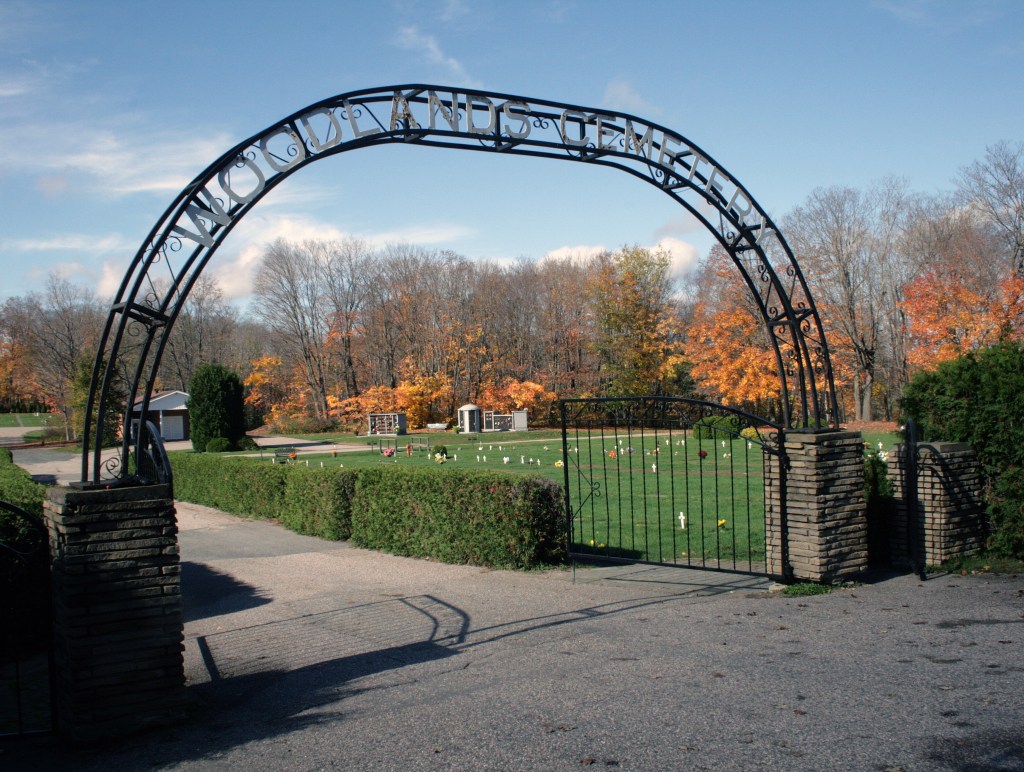
Before visiting the mall collapse site, we had stopped at Woodlands Cemetery. Woodlands is a very large non-denominational cemetery. The first thing I noticed as I walked among the tombstones, is that there are no upright stones. All the grave markers are flat to the ground. There are also a few small columbariums for cremated remains, or cremains. One section was particularly beautiful. Surrounded by tall trees and a layer of fallen leaves lies a large crescent-shaped columbarium. It’s away from the rest of the graves, in an almost wooded area, giving it peaceful seclusion.

I found my uncle almost immediately, buried beside his girlfriend. I remember going to his funeral when I was very young but had no recollection of the cemetery. My mother did remember, and talked about how there were not as many internments at the time. It made finding my aunt, my uncle’s first wife, a bit of a challenge. We didn’t end up finding her at all. We hope to go back this summer and try again. There were two more graves I was looking for while we were there; Lucie Aylwin and Doloris Perizzolo. I found Doloris, in the upper portion of the cemetery, which looked to be a new addition. She is buried next to her husband Giuseppe, who passed in 2011. Their marker is large, with ceramic photos. In her photo, she is holding a small dog and has a bright smile. I read their names out loud. It’s something I always do when visiting a cemetery. My little way of remembering them. Unfortunately, I was not able to locate Lucie Aylwin’s grave to pay my respects.

Next, we stopped at the Miners Memorial at Horne Lake. It’s a great place to stop and stretch your legs. It has multiple life-size statues and monuments, honoring the mining history of the town. We read each one and admired the artistry of the statues. The last monument we looked at, consisted of 3 large marble pillars that listed all the names of miners who had lost their lives on the job. As we stood taking in the lake view and the monuments, my eyes landed on a name. It jumped out at me. Giuseppe Perizzolo – Doloris’s husband. He had been a miner. It felt like a very serendipitous moment. I recognized his name from having just visited the cemetery. It was nice to see that he was memorialized.

Miner Memorial, Elliot Lake ON ©2021

After that discovery, we took a walk on the Horne Lake trail, which circles the lake. It looked to be a long trail, so we only walked half of it. We made a mental note to visit the Miner Memorial again and walk the whole trail when we return. We had one more stop on our list—visiting the fire tower. It was not at all what I had expected. I expected a tower with many stairs to reach the top. Thankfully, that was not the case. Only a few stairs lead to the top for a magnificent view of the land. We noticed more trails while we were there. Elliot Lake has an extensive trail system that gives access to all the beautiful views it has to offer.

On our way home, we stopped at a couple more cemeteries. We ended up visiting five cemeteries that day. It did make for a long day, but it was a day full of adventure. During a pandemic, visiting places close to us has been a great way to get out of the house, and have a change of scenery. Even a few hours can make a big difference. I enjoyed my visit to Elliot lake and look forward to going back this summer.

Thanks for reading!