Cemetery Book Review: Sacred Ground Loyalist Cemeteries of Eastern Ontario

Last month, I was pleasantly surprised when an author reached out to me and asked if I would be interested in reading and reviewing his new book. Based on the title alone, I was very interested!

The book is called Sacred Ground: Loyalist Cemeteries of Eastern Ontario, Volume One by Stuart Lyall Manson. This book, published in 2021, focuses on Loyalist cemeteries in Eastern Ontario, and the stories behind the Loyalists buried there. 

For the book review this month, I wanted to share my thoughts about Sacred Ground. Canadian cemeteries and history is something I am always interested in reading about. I will also admit that while I read along, I created a map of all the cemeteries explored in this book. I would love to visit them all one day! So who or what are loyalists, you may be asking. Loyalists were American colonists who supported and fought for the British cause in the American Revolutionary war. Thousands of these Loyalists settled in British North America during and after the war. They left an indelible mark on Canada.

From Global Genealogy: “This book describes six notable loyalist cemeteries situated in the Eastern Ontario counties of Stormont, Dundas and Glengarry. They are: Trinity Anglican (Cornwall); St. Andrew’s Roman Catholic (St. Andrew’s West); Iroquois Point (Iroquois); Knox-St. Andrew’s United (Bainsville); Maple Grove (Cornwall), and the Pioneer Memorial (South Dundas). 

In each chapter the author discusses in depth, an individual cemetery containing United Empire Loyalist mortal remains. Numerous cemeteries in this region contain many such burials… all of the sites described in this book also contain non-loyalist burials. An historical overview of each of these burial grounds, along with biographical information on specific loyalists with particularly-remarkable stories. The locations chosen for this volume are based on geographic distribution, religious diversity, and other factors. The book is based on rigorous primary and secondary source research.

Sacred Ground: Loyalist Cemeteries of Eastern Ontario complements other publications that list burials or transcribe tombstone inscriptions. Those publications are important resources. This book supplements that basic data with greater historical context and additional research into the lives and experiences of these men, women and children who laid the foundations of modern Ontario.” 

As mentioned above, the book is broken down into six chapters, each focusing on one loyalist cemetery. Each chapter provides an interesting look at the cemetery itself, and it’s history, along with the history of the notable loyalists buried within it. The stories of the cemeteries themselves are fascinating, and made me want to visit them to experience them for myself. The history of the cemeteries are deeply explored, delving into the history of the Loyalists laid to rest within them. In the life stories of the loyalists, we also get a look at broader historical aspects, such as slavery and colonialism. This book is extensively researched and it shows; it’s filled with old illustrated maps, letter samples, and many lovely gravestone photographs. 

I enjoyed this book immensely, and found it very engaging. There are some incredibly interesting histories and stories in this book, like the Pioneer Memorial in South Dundas. It isn’t a cemetery per say, but a memorial made from bricks collected from the buildings demolished before the flooding for the Seaway project. This memorial is the new home for the tombstones of those who are buried in the now sunken cemeteries. They moved the headstones, but didn’t move the bodies! There are quite a few historical gems like that to be found in this book. I am looking forward to the next volume. I would highly recommend this book to those interested in Canadian and Loyalist history, as well as genealogists and those interested in tombstone mysteries. 

I am always searching for cemetery-related book recommendations. Please feel free to share in the comments. If you are an author and have a cemetery-related book you would like me to review, please reach out at hello@chantallarochelle.ca. I would love to hear from you.

Thanks for reading!

25 Cemeteries in the City of Greater Sudbury

A couple of weekends ago I was able to cross something off my cemetery bucket list—visiting all 25 cemeteries in the care of the City of Greater Sudbury. For today’s blog post, I thought it might be interesting to take a closer look at some of these cemeteries. 

The City of Greater Sudbury is centrally located in Northeastern Ontario. It sits on the Canadian Shield in the Great Lakes Basin and is composed of a combination of urban, suburban, rural, and wilderness environments. Greater Sudbury is 3,627 square kilometers in area, making it the largest municipality in Ontario, geographically.1 Making up this municipality are many small communities that over time, have been amalgamated into the City of Greater Sudbury. Almost all of these little communities have their own cemeteries, that now fall under the care of the city.2

Each of these cemeteries has their own charm and has been very interesting to visit. Some are newer cemeteries with very modern stones, that are still very active, like Valley East and Park Lawn cemeteries. Some of them have tombstones marking persons who are still living. Those always make me think—do the owners visit their gravestones? Other cemeteries are pioneer cemeteries, like Ruff Pioneer Cemetery. Those types of cemeteries hold a lot of history. I wrote about my visit to the Ruff Pioneer Cemetery, you can read it here

Two of the oldest of these cemeteries, I believe, are the Eyre and Anglican cemeteries. They are directly beside each other, and there is no distinct line to separate the two. The earliest grave is from 1890.3 Both of these cemeteries can tell you a lot about our city. You can find the namesakes for the Gatchell and Lockerby areas of town, as well as the grave of Frederick J. Eyre, who discovered one of the first mines for the Canadian Copper Company.3 Sudbury, at its roots is a mining and railroad town.

Some of these cemeteries were a challenge to find and can be hard to access. Ruff Pioneer Cemetery would be more easily accessible with a four-wheeler. Make sure you have plenty of water with you for that adventure in the woods. The Coniston Cemetery is a little bit more accessible now, as a cemetery trail has been created, linking it to the Jean Tellier hiking trail. The first time I visited that one, we searched for a while before deciding to ask for directions from some locals at a convenience store. They were more than happy to help and even drew me a map. They also shared some stories from their childhood, of how they would play in the cemetery and nearby woods. Coniston Cemetery is particularly interesting because there are no more headstones. There may have originally been wooden markers or fieldstones there that have since deteriorated or have been moved. It was an active cemetery from 1914 to 1926, when the parish that was taking care of the cemetery announced they could no longer do so.4 In 1997 a memorial plaque was installed honoring the deceased known to have been buried there. Another hard-to-find cemetery is the Wahnapitae Public Cemetery. This one is located on a hillside with seemingly hidden access. I tried to find it again recently, but with no luck. 

There are a few cemeteries on this list that I have visited many times, either due to their size or proximity to me. Lasalle Cemetery for instance is one of the largest cemeteries in the area. So large in fact that every time I have visited I have focused on a different section to photograph. Another large one, that just so happens to be down the street from me, is Civic Cemetery. This is an active cemetery, and I think has changed the most over time. It has a large columbarium, as well as some lovely winding paths. It’s a lovely rural cemetery. I have many friends of the family that are buried here.

I have enjoyed seeking out all these cemeteries. I feel like I can now say that I have truly explored my city. All these cemeteries hold small threads, connections, that all lead to the creation and growth of my hometown. I have learned a lot about the history of Sudbury, like the stories of some of its founders, the history behind street names, and much more. I would love to spend more time in some of them, to fully explore the grounds, look for specific graves and to see what else I can learn. 

Thanks for joining me, as I look back on this bucket list milestone. Do you have a bucket list? What’s on your list? I would love to read about it in the comments.

Thanks for reading! 


The full list of Greater Sudbury cemeteries:
  1. Anglican Cemetery
  2. Beaver Lake Cemetery
  3. Blezard Valley Cemetery
  4. Capreol Cemetery
  5. Chelmsford Protestant Cemetery
  6. Civic Memorial
  7. Coniston Cemetery
  8. Eyre Cemetery
  9. Good Shepherd Cemetery
  10. Grassy Lake Road Cemetery
  11. Lasalle Cemetery
  12. Long Lake Cemetery
  13. Maplecrest Cemetery
  14. McFarlane Cemetery
  15. Ruff Pioneer Cemetery
  16. St. Jacques Cemetery
  17. St. John’s Cemetery
  18. St. Joseph Cemetery
  19. St. Stanislaus Cemetery
  20. Valley East Cemetery
  21. Wahnapitae Catholic Cemetery
  22. Wahnapitae Public Cemetery
  23. Waters Cemetery
  24. Whitefish Catholic Cemetery
  25. Whitefish Public Cemetery

References:

  1. Greatersudbury.ca
  2. Cemeteries | Greatersudbury.ca
  3. Tales of lives lived | Sudbury.com
  4. Historical mystery: Just how many people were buried at the old Coniston cemetery? | Sudbury.com

A Collection of Books

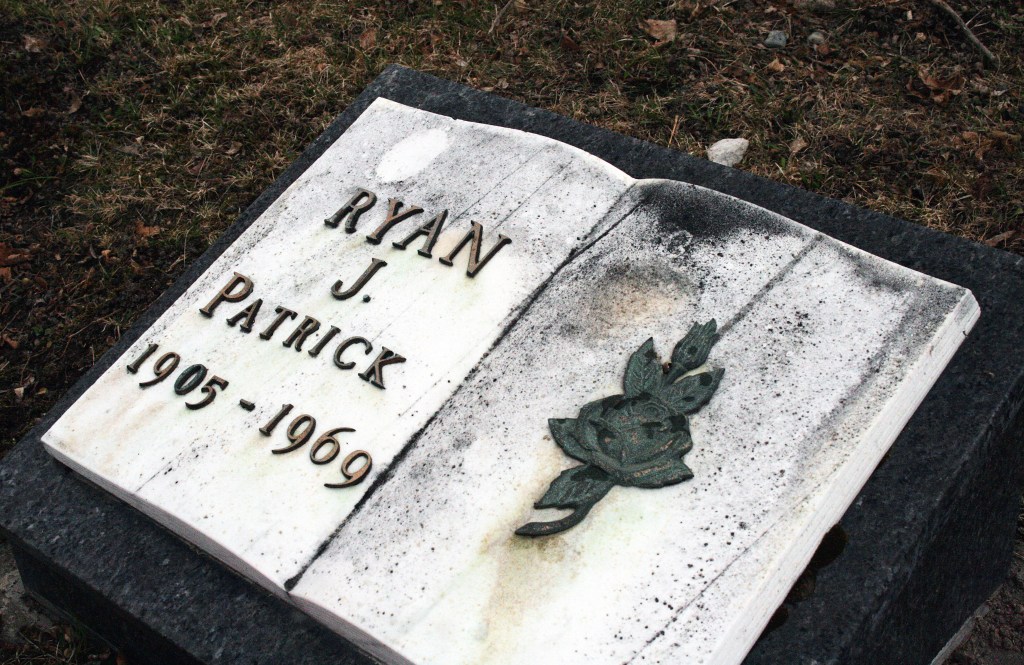
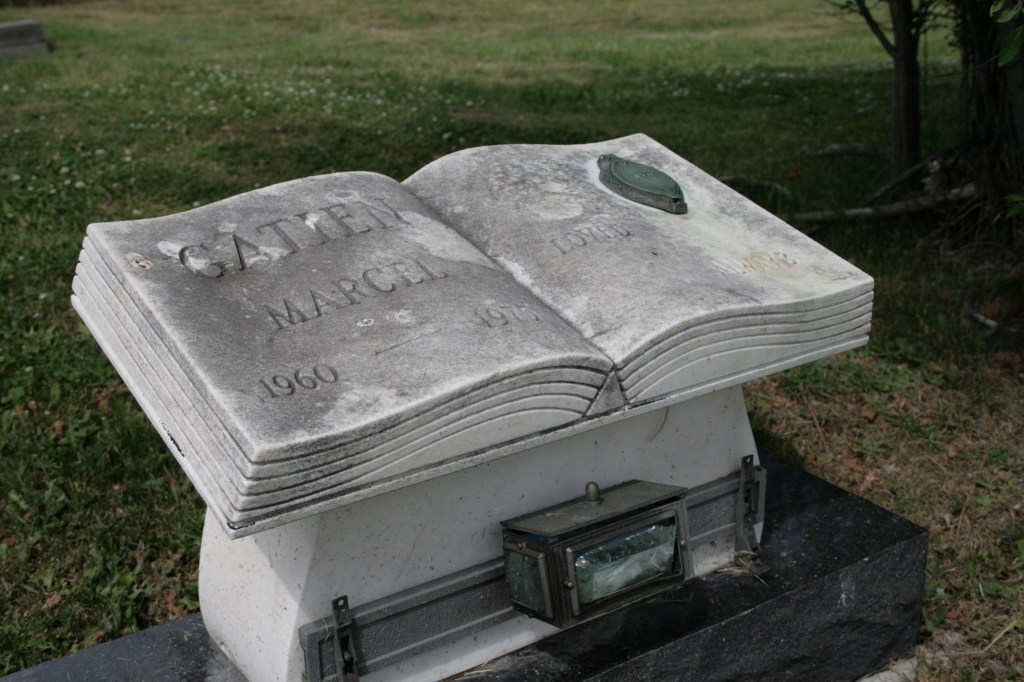
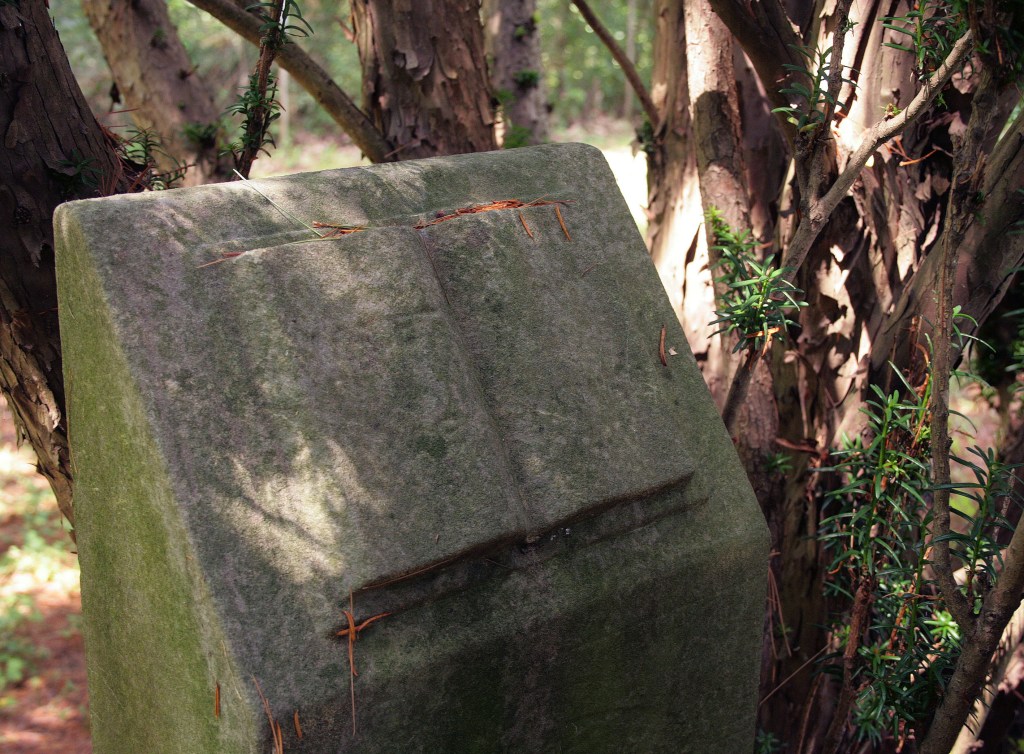
I love books! I am a big reader and have a large book collection at home, but I love finding stone books among the tombstones while wandering a cemetery. I find them very interesting and love trying to interpret what they mean.

Books can be both decorative or a representation of something. You can sometimes find a book being used as a decorative device to display the name of the deceased along with the birth and death dates. An open book can sometimes represent the human heart, as in it’s emotions are open to the world. An open book may also symbolize a life that has been cut short, before getting to the last page. Another variation of this is an open book with a cloth draped across it. This also represents a life cut short, the veil of death having bookmarked the person’s last chapter before the book is finished being written. A closed book might represent a long life, lived to the last chapter.

Any book found in a cemetery may represent the bible. Sometimes you may even find the words “Holy Bible” engraved on the book.

In my experience, books are not as common as some other funerary symbols, like hands and lambs. I love to photograph them when I do find them. I wanted to share some of my favorites with you today.


References:

  1. Understanding Cemetery Symbols: A Field Guide for Historic Graveyards by Tui Snider
  2. Stories in Stone: The Complete Guide to Cemetery Symbolism by Douglas Keister

Visiting cemeteries during a pandemic

I wrote this post around this same time, in 2020, but it never made it to the blog. At that time, the pandemic would have been in full force, just at the beginning of our quarantine. This would also have been one of the first cemetery trips of that year, after a long winter. I think I was just beginning to seriously focus on my website and blog, and I’ll be honest – it was off to a slow start with sporadic posting. That’s probably why this was never posted. I figured since this was written around the same time, only a couple of years ago, it is worth posting now.


Last weekend, I ventured outside to explore a couple of my local cemeteries. It has been a long winter of being cooped up inside, dreaming about summer cemetery road trips. We had our first sunny weekend, so I took advantage. I figured it is also a safe place to practice physical distancing during these weird times.

The first stop I made was at the Civic Memorial Cemetery, also known as Sudbury Municipal Cemetery. This cemetery is right down the street from me, and the one I have spent the most time in. As a kid, I would spend a lot of time walking around this cemetery looking for ghosts. It’s a newer cemetery, with modern stones and newly built mausoleums. The entrance to this cemetery was recently renovated when they widened Second Avenue. They installed a shiny new archway, similar to the archway at Lasalle Cemetery. They also cleaned up the winding path that leads into the cemetery. I have close family and friends in this cemetery, so I paid them a visit. I also stopped to take some photos of one of the more interesting monuments in this cemetery. The resting place of, I think, the founder of Ellero Monuments, a local headstone maker. The monument is a very detailed sculpture of a man sitting on a rock-cut with tools in his hands, working on breaking the stone. It’s very large and encased in a plexiglass box. To really see the detail, you need to almost press your face against the plexiglass. Over the years the box has become clouded, giving it a spooky silhouette.

The second cemetery I visited was the Lasalle Cemetery. One of the larger cemeteries in my city. I try to visit different parts of the grounds every time I visit since it is so large. This time, I focused on the stones closest to the street. There are many smaller statues among the stones there. Unfortunately, this cemetery has the most toppled stones, either because of vandalism or ground shift. There is a mix of modern and old stones here, and many feature cameos; ceramic photographs of the deceased.

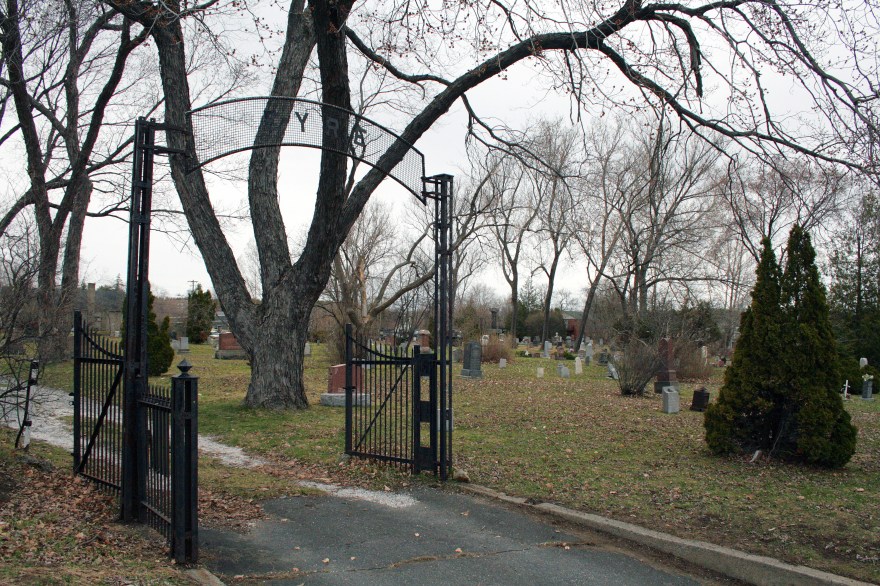
My last stop of the day was Eyre Cemetery, the oldest and my favorite of my local cemeteries. It’s a smaller one, filled with only older stones. At this point, the weather had changed on me and was drizzling a little bit, but I did not let that stop me. I wandered the entire left side of the grounds, in search of a few Find a Grave requests. I came up empty-handed though. Some of the stones are so worn that they are not legible. I hope that I did not pass them by because of this. I will need to go back and make some inquiries with cemetery staff, to make sure they are not forgotten. The rain started to pour down more heavily so I decided to pack it in at that point.

Overall it was a lovely outing. I got some exercise and fresh air, as well as some new photos. Surprisingly, I did see a lot of people out and about. The groundskeepers were busy maintaining the grounds at each cemetery I visited, and there were visitors at each cemetery as well. I guess in these quarantine times, cemeteries, which are usually quiet and mournful, are being used more as a green space. I saw an elderly couple strolling arm in arm and people walking their dogs. It was different for me, as I tend to be the only living person when I visit.


Looking back, it seems as though many people were discovering cemeteries. I hope those who may have thought it taboo to visit cemeteries, found that they are beautiful green spaces and outdoor art galleries. I think a lot of people were forced to look into their own backyards during quarantine, to find outlets while things like travel were not possible. I know I was very grateful that one of my favorite pass times was still available to me. I was even able to share my love of cemeteries with my mother! Even though COVID-19 restrictions have been lifted in my area, I think I will be staying close to home again this summer.

Did you spend a lot of time in cemeteries during the height of the pandemic? Did you discover any new cemeteries? I would love to hear your thoughts in the comments.

Thanks for reading!
A Collection of Lambs

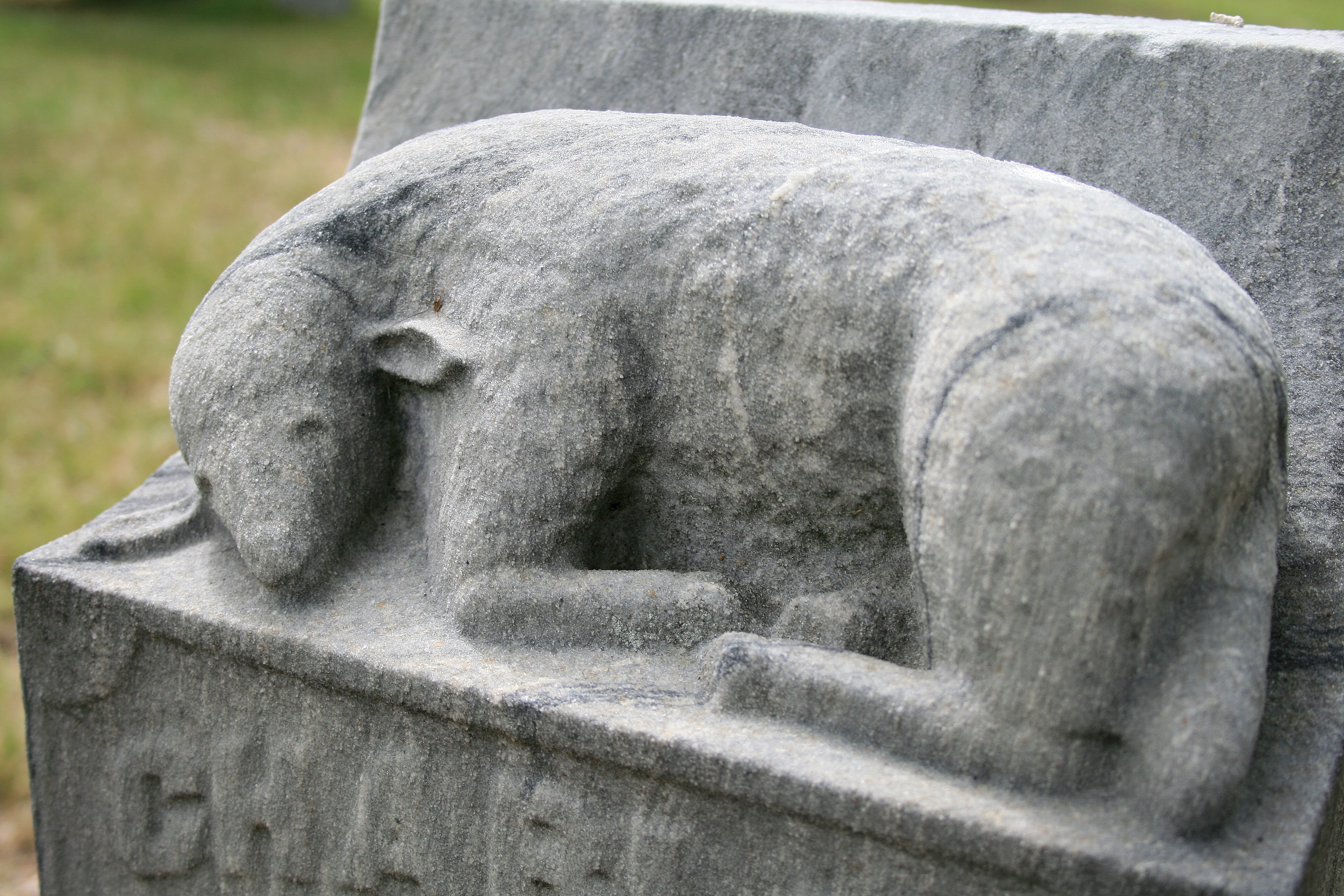
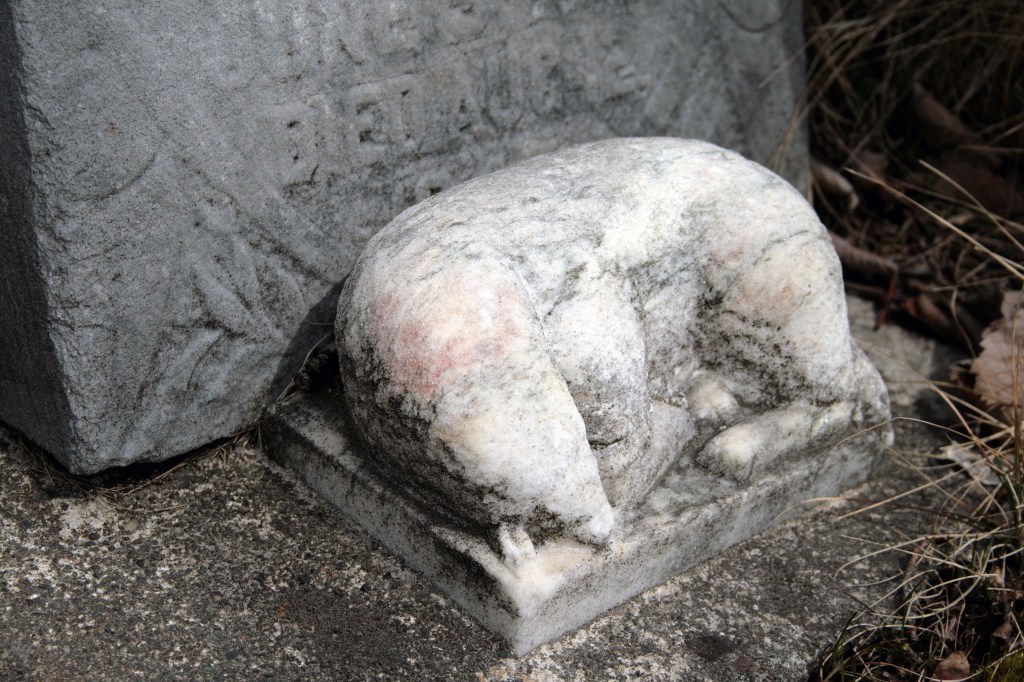
I love exploring cemeteries and looking at the different symbols used on tombstones. If you spend a lot of time in cemeteries, especially in Northern Ontario, you will start to notice the repetition of certain symbols and motifs. One of the most common symbols I find, is the lamb.

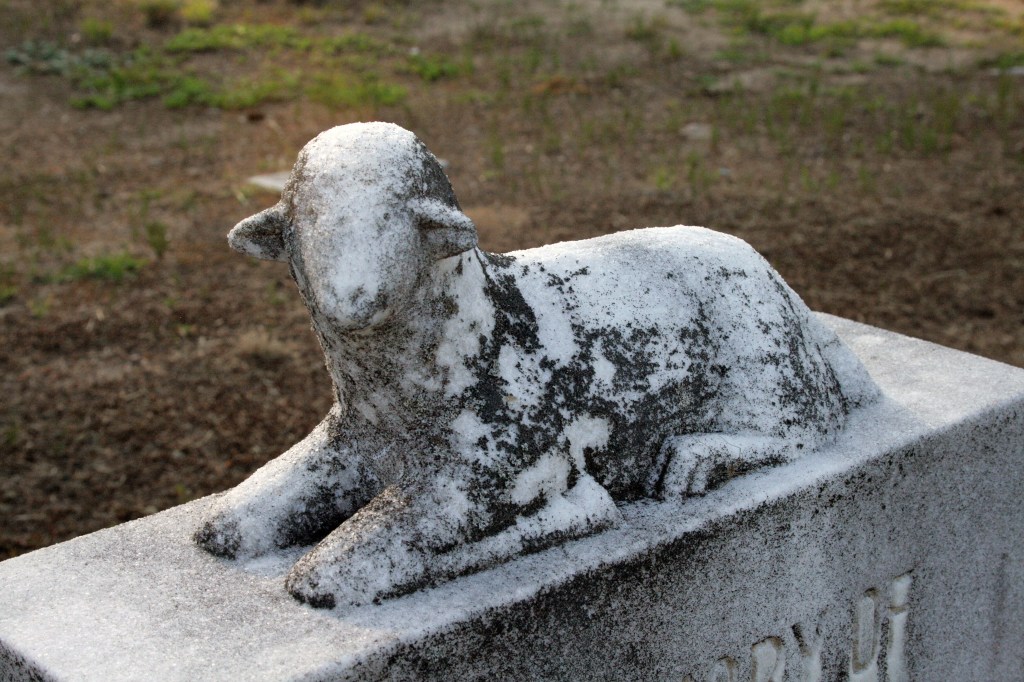
Lambs represent innocence and sacrifice, as they were often used in sacrificial ceremonies in ancient times1. Most often you will find lambs on the gravestones of infants and children, as Jesus is often depicted as a Shepherd, and also known as the “lamb of God”. Some variations can be found with lamb symbolism. A robed figure with a standing lamb beside it most often represents John the Baptist, who had called Jesus the “lamb of God”1. A lamb with a cross is known to represent the Lamb of God or Agnus Dei2, symbolizing the suffering of Christ as he sacrificed himself for the sins of mankind. Several other symbols may be found with a lamb to symbolize the lamb of God – such as a banner, halo, shepherds crook, and alpha and/or omega symbols2. A single seated lamb symbolizes an innocent soul. A seated lamb can sometimes be found sitting in front of a tree stump, this often symbolizes a life cut short. 

Finding lambs is often sad, but they are a beautiful symbol. I have photographed many over the years and wanted to share some of them with you today. 

Eyre Cemetery, Sudbury ON ©2011


References:

  1. Understanding Cemetery Symbols: A Field Guide for Historic Graveyards by Tui Snider
  2. Stories in Stone: A Field Guide to Cemetery Symbolism and Iconography by Douglas Keister

Finding the abandoned Happy Valley cemetery

In August of 2020, a friend and I set out to find an abandoned cemetery. She had been to it before, having stumbled upon it while out and about on four-wheelers. She was excited to share it with me. She and I have been on many cemetery adventures, but this one was a bit different for us. Normally we would jump in the car and head for a destination while stopping at all the cemeteries we found along the way. This one was a bit closer to home and would need to be reached on foot. So with the camera in hand, we started walking. Have you ever seen the movie Stand by me? It sort of had that feeling, except we weren’t going to see a dead body, we were off to see a cemetery. 

Happy Valley is considered a ghost town. According to Ontario Abandoned Places, it never really was considered a town at all. 

“…more of a settlement which belonged to Falconbridge. Happy Valley consisted of residents who wanted to be separate and independent from the residents of Falconbridge…The residents were mainly farmers and mill-workers who worked at the sawmills by the lake. The children would have to endure a three-mile walk every morning to the nearest school (established in 1907) located in Garson…Other than the mills and homes, there were no stores or a post office to be found. Residents had to travel to Falconbridge Township for amenities…By 1970, the town was abandoned…almost. The last resident, “Gizzy”, left the town in the late ’80s.” – Ontario Abandoned Places

For more formation on the Happy Valley ghost town, visit Ontario Abandoned Places.

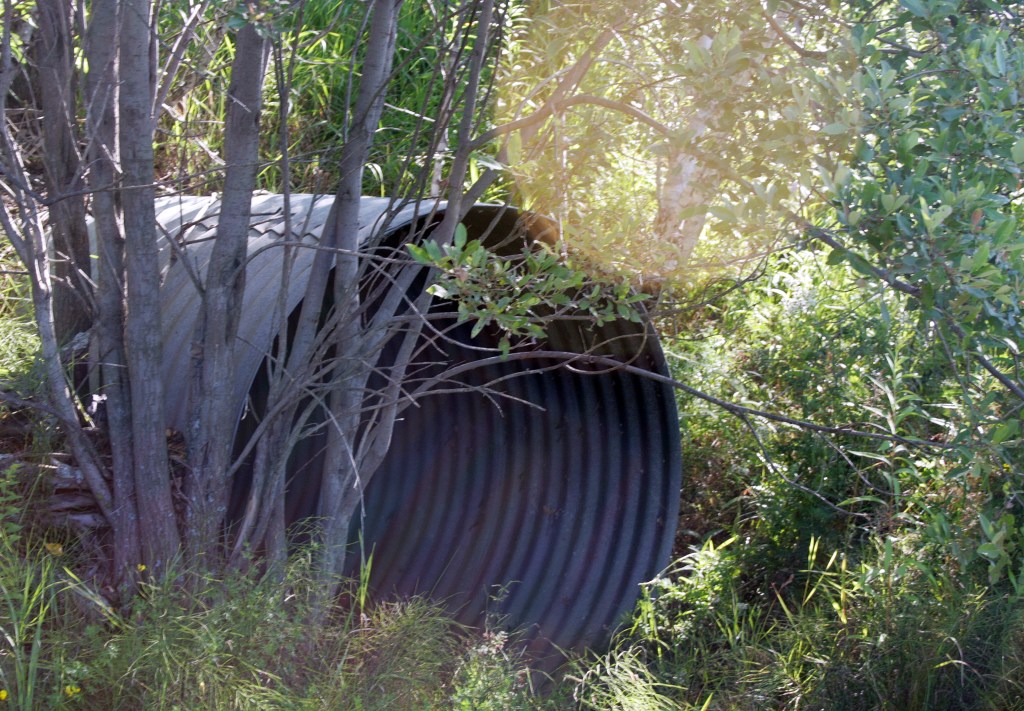
Our trip began by taking us into a more industrial part of the town. There were dunes everywhere and an old abandoned railway track. Small trees and bushes were growing from in between the railway ties. Those tracks had not seen much use in a while. We walked the train tracks for a little bit, but then found a dirt trail that took us more into the surrounding wilderness. We passed old culverts and a few small lakes. It was a beautiful day for a walk! 

The way to this cemetery wasn’t a straight shot, or well marked. We had a general direction and were using landmarks to help find our way. We referenced old photos from the first time my friend had been there. We seemed to have made our way into some backcountry, where there were sandy trails and lots of sandy hills, that would be great for four-wheeling. After climbing up into a rocky area we reached a plateau where it levelled off and there was a two-lane sandy road. It was nice to not have to watch our footing anymore for fear of catching a toe on a rock.

My friend felt we were getting close. We walked on, enjoying each other’s company and chatting about life. Now and then we would stop to assess how far we had gone. We were alone in the woods, having not seen anyone else out on the trails. After a while, we started to question if we had gone too far. We checked a side trail, but no, it was going off in the wrong direction. We took a small break to rest and re-evaluate. Luckily, we still were getting cell service in what seemed like the middle of nowhere. She was able to look at satellite photos on Google and find what looked to be our cemetery. We had gone too far! We had to backtrack a little way and take a dirt road that forked to the right. Our goal should be right around that corner. 

We found it! It’s a small cemetery, having been recently surrounded by a chain-link fence. We theorized that the fence was put up to protect the cemetery from people unintentionally running through it on quads and snowmobiles. There are about a handful of headstones, some up-right and a few flat to the earth. There seem to be more pioneers buried there than there are headstones.

Ruff Pioneer Cemetery, Garson ON ©2020

Having found the cemetery and being able to visit it was well worth the hike. It was super satisfying! Almost more rewarding than if we would have driven straight there. After spending some time among the tombstones, we made our way back the way we came. Through the woods, along the dirt paths, and along the train tracks, ending by having to climb back up a massive dune that we had first scaled down at the beginning of our journey. It was a great adventure! I am grateful that I have good friends who want to share these kinds of experiences with me! 

More recently, I was doing some pre-emptive cemetery road trip research, getting ready for this spring. I was going through all the cemeteries listed in my hometown, there are 25 in total. I have been to all but 3 of them, or so I thought. Based on my archived photos I had not visited Ruff Pioneer Cemetery, Chelmsford Protestant Cemetery, and St. Joseph Cemetery. As I did a bit more research into where these cemeteries are located, I got stuck on Ruff Pioneer Cemetery. It’s listed as being off of Goodwill Road, in Garson. As I searched Google Maps, it just was not making sense. I was able to zero in on its location using satellite photos. Low and behold—Ruff Pioneer Cemetery is our Abandoned Happy Valley cemetery!

Looking back at my photos, though, it all makes sense!

Goodwill road was most likely named after those pioneers buried in this cemetery.

Looking back at this cemetery adventure has me pining for summer and the opportunity to visit new cemeteries. I have a few road trips already planned and mapped out, but I may take a look for more abandoned cemeteries that are harder to find. Do you have a story about an abandoned cemetery? Share it in the comments!

Thanks for reading! 

A Collection of Handmade Stones

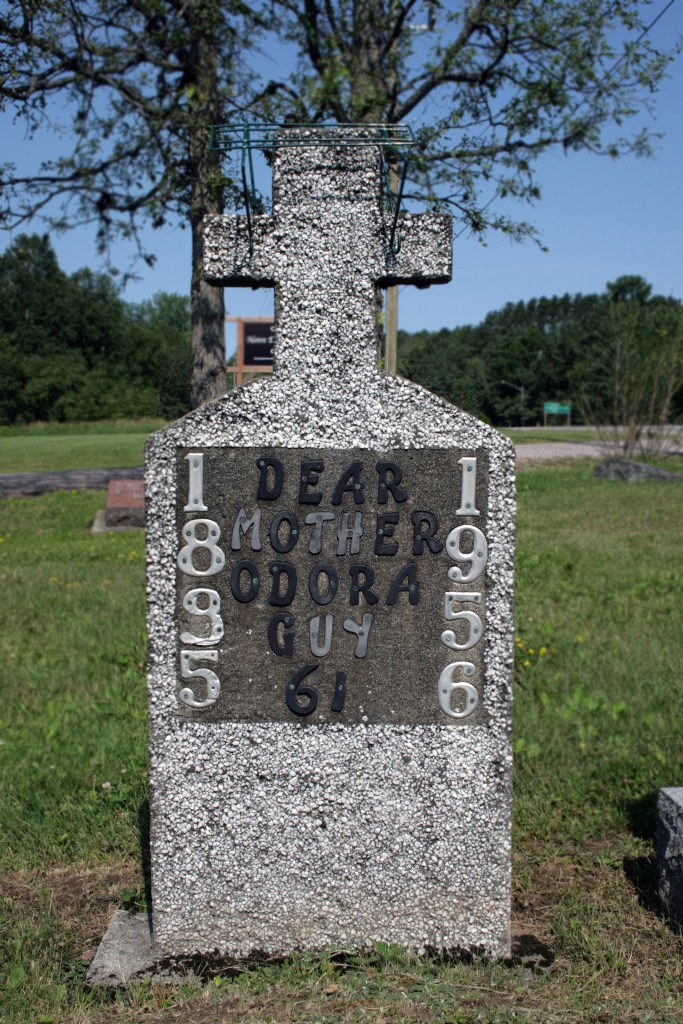
If you spend a lot of time in cemeteries, especially in Northern Ontario, you will start to notice the repetition of certain symbols and motifs. In Ontario and Quebec, something I have come across frequently is handmade stones.

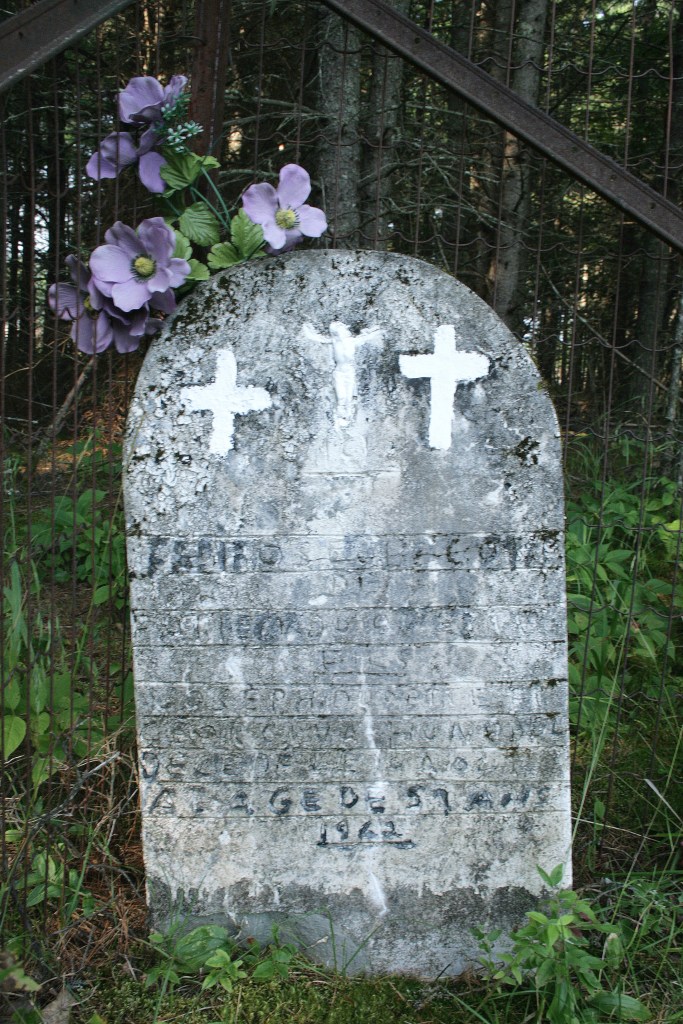
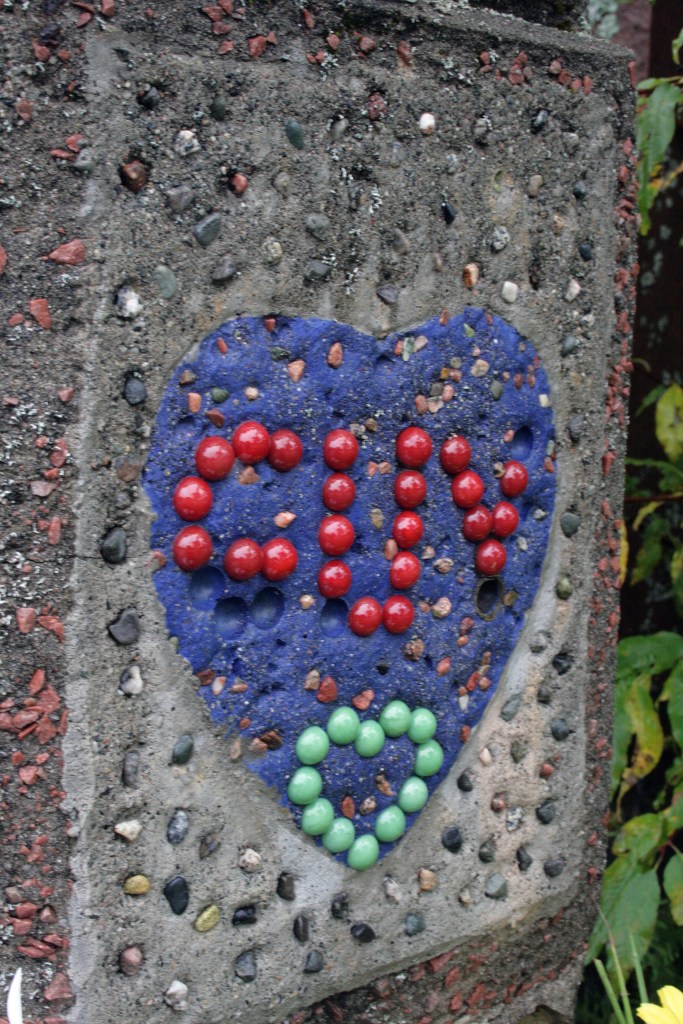
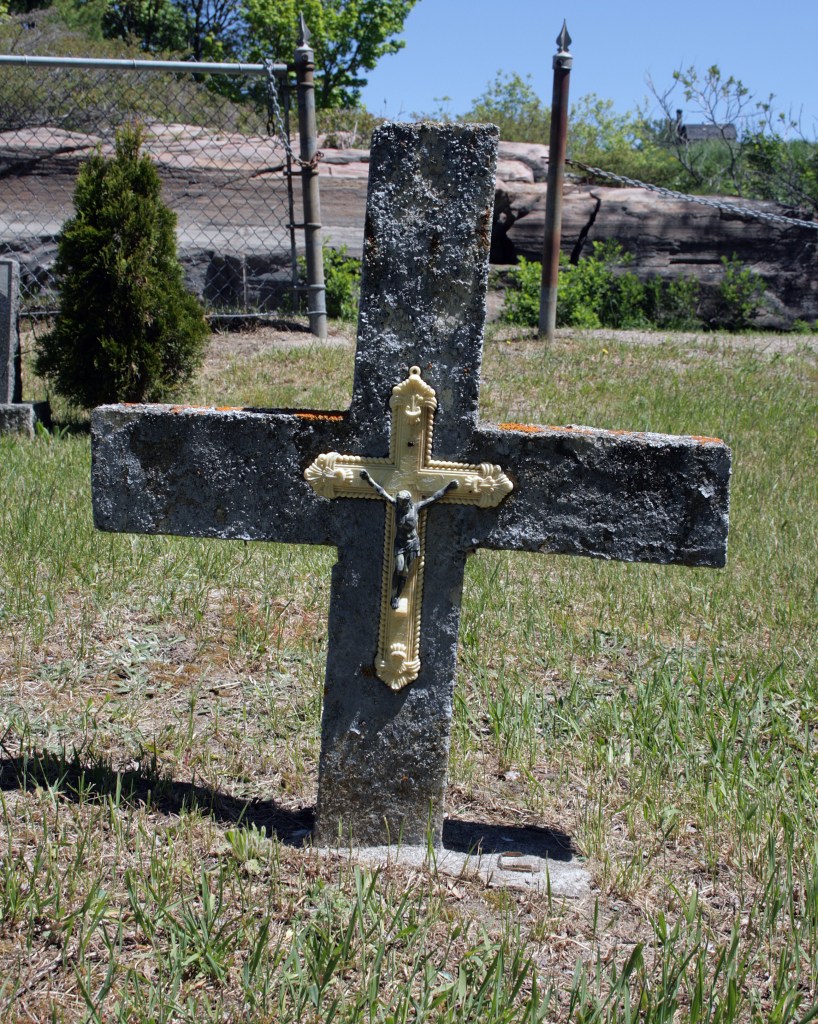
These stones have been lovingly hand-poured in cement, adorned with crucifixes, stones, and other baubles, and usually have hand lettering. They are beautiful representations of love for those who have passed. There could be many reasons why a handmade stone was created, and each one is unique and beautiful with its own charm.

I love finding handmade stones and have photographed many over the years. I wanted to share some of them with you.

Cemetery Road Trip: Elliot Lake

In October 2021, I took some time off to enjoy the autumn weather and some Halloween activities. I also took it as an opportunity to go on some cemetery road trips. I had the idea to visit Elliot Lake during the summer, but my nephew suggested we wait till the fall, to take advantage of the fall colors. My mother and I both thought that was a great idea. I will admit, we may have gone a bit later than we should have, as we missed peak leaf-peeping colors, but it was still a beautiful drive. 

I have wanted to visit Elliot Lake and its cemetery for a while now. It seemed a perfect fit for a cemetery road trip. It’s only about 3 hours away, and I have family that is buried there. I remember visiting when I was very young for my uncle’s funeral, but that was many years ago. We made sure to visit him and his wife in the cemetery, while we were there. Since my mother accompanied me on this trip, we tried to pack as much as we could into this one day trip, visiting some cemeteries and getting in some hiking.

We stopped at couple of cemeteries along the way, spending 10 to 20 minutes at each one. Roadside cemeteries I explored myself, while my mother waited in the car eating breakfast and enjoying her coffee. She was more interested in visiting Woodlands Cemetery. 

There were two must-see locations on this trip for me, Woodlands Cemetery and the site of the former Algo Centre Mall. You may have heard of it. On June 23rd in 2012, a section of the roof collapsed, injuring 22 people and killing two, Lucie Aylwin and Doloris Perizzolo.

For more information on what happened at the Algo Centre Mall, there is a short documentary on Youtube by Fascinating Horror that tells the whole story: The Algo Centre Mall Collapse.

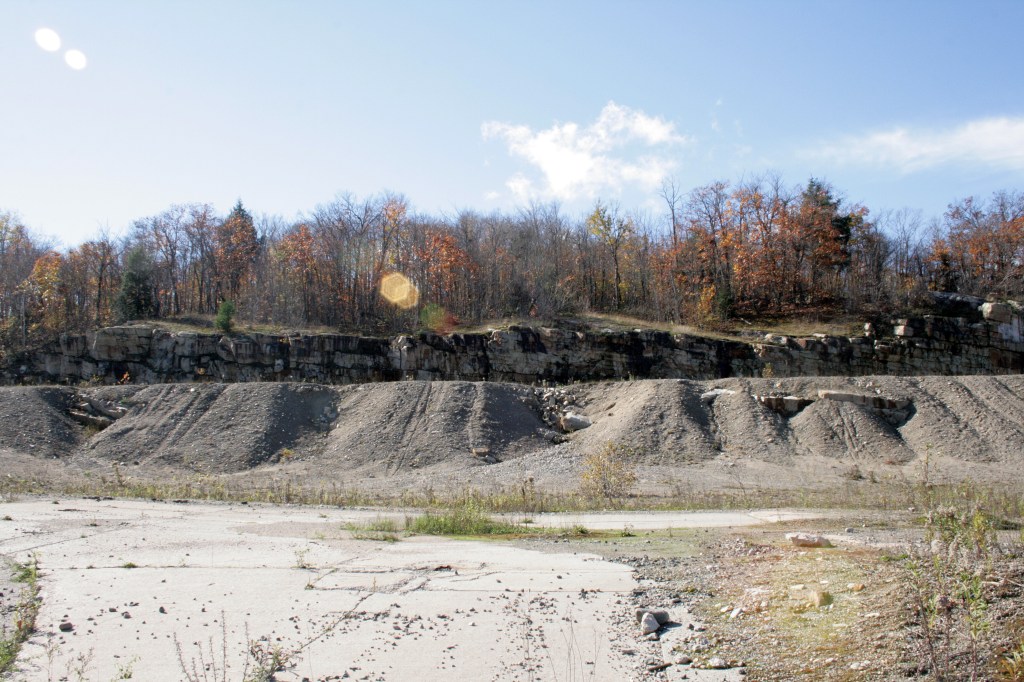
I familiarized myself with the location using Google Maps before we visited. You can still see online, what the mall used to look like before the collapse. From the street, the parking lot looked the same but the mall has been completely demolished. All that is left is a parking lot and empty space filled with sandy mounds. The area seems small to have held a multi-level shopping center. My mother stayed in the car, while I stepped out to survey the area. Behind where the mall had stood, stands some sandy cliffs that look like they meld into the sandy mounds of the demolished building. As I looked around, taking in the sandy scenery, I thought about how this spot used to be a space full of life. I also thought about Lucie and Doloris, and how terrifying it must have been for them. Even though it was a bright sunny day, I felt a chill run through me. 

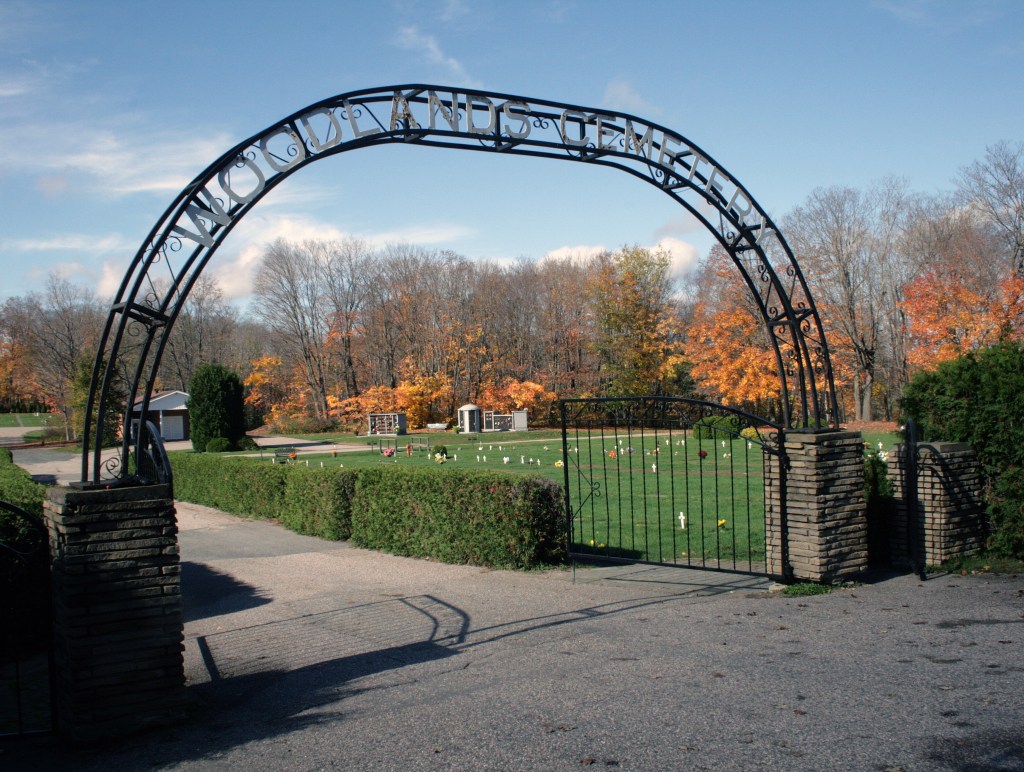
Before visiting the mall collapse site, we had stopped at Woodlands Cemetery. Woodlands is a very large non-denominational cemetery. The first thing I noticed as I walked among the tombstones, is that there are no upright stones. All the grave markers are flat to the ground. There are also a few small columbariums for cremated remains, or cremains. One section was particularly beautiful. Surrounded by tall trees and a layer of fallen leaves lies a large crescent-shaped columbarium. It’s away from the rest of the graves, in an almost wooded area, giving it peaceful seclusion.

I found my uncle almost immediately, buried beside his girlfriend. I remember going to his funeral when I was very young but had no recollection of the cemetery. My mother did remember, and talked about how there were not as many internments at the time. It made finding my aunt, my uncle’s first wife, a bit of a challenge. We didn’t end up finding her at all. We hope to go back this summer and try again. There were two more graves I was looking for while we were there; Lucie Aylwin and Doloris Perizzolo. I found Doloris, in the upper portion of the cemetery, which looked to be a new addition. She is buried next to her husband Giuseppe, who passed in 2011. Their marker is large, with ceramic photos. In her photo, she is holding a small dog and has a bright smile. I read their names out loud. It’s something I always do when visiting a cemetery. My little way of remembering them. Unfortunately, I was not able to locate Lucie Aylwin’s grave to pay my respects.

Next, we stopped at the Miners Memorial at Horne Lake. It’s a great place to stop and stretch your legs. It has multiple life-size statues and monuments, honoring the mining history of the town. We read each one and admired the artistry of the statues. The last monument we looked at, consisted of 3 large marble pillars that listed all the names of miners who had lost their lives on the job. As we stood taking in the lake view and the monuments, my eyes landed on a name. It jumped out at me. Giuseppe Perizzolo – Doloris’s husband. He had been a miner. It felt like a very serendipitous moment. I recognized his name from having just visited the cemetery. It was nice to see that he was memorialized.

Miner Memorial, Elliot Lake ON ©2021

After that discovery, we took a walk on the Horne Lake trail, which circles the lake. It looked to be a long trail, so we only walked half of it. We made a mental note to visit the Miner Memorial again and walk the whole trail when we return. We had one more stop on our list—visiting the fire tower. It was not at all what I had expected. I expected a tower with many stairs to reach the top. Thankfully, that was not the case. Only a few stairs lead to the top for a magnificent view of the land. We noticed more trails while we were there. Elliot Lake has an extensive trail system that gives access to all the beautiful views it has to offer.

On our way home, we stopped at a couple more cemeteries. We ended up visiting five cemeteries that day. It did make for a long day, but it was a day full of adventure. During a pandemic, visiting places close to us has been a great way to get out of the house, and have a change of scenery. Even a few hours can make a big difference. I enjoyed my visit to Elliot lake and look forward to going back this summer.

Thanks for reading!
White bronze, also known as Zinkys

Have you ever heard of Zinkys? You may have come across one or two in your cemetery travels. I know I have, but it has only been until recently that I discovered what these beautiful gravestones are. That is one of the many things I love about my cemetery community, I am always learning new things from my fellow taphophiles.

Zinkys as they are lovingly referred to, is also known as white bronze. They look very similar to carved stone headstones, but they are made from a zinc alloy and are hollow. These monuments were generally less expensive than carved stone, and are a lot more durable. You will often find intricate designs on white bronze headstones, that are still perfectly legible. You can recognize a white bronze headstone by its bluish-grey color, and giving it a gentle tap should produce a hollow sound.

According to Understanding Cemetery Symbols by Tui Snider, in the United States during the prohibition era, it was claimed that bootleggers would sometimes pry the panels off of these metal monuments to hide their booze.

Here in Canada, the White Bronze Company of St. Thomas, Ontario produced zinkys from 1883 to 1900. It was a child company of Monumental Bronze Co. of Bridgeport, Connecticut.1 According to Connecticuthistory.org, Monumental Bronze Co. only produced white bronze between 1874 and 1914. In 1914, World War I saw the facilities turn from creating pure zinc tombstones to creating gun mounts and munitions.2 After the war, it seemed that tastes had changed, and public demand shifted to other natural materials for grave markers.

These blue-grey markers are truly beautiful in person. They range in size and detail, but I always find myself fascinated by how perfectly intact they are. I have come across a couple of broken ones, where a cross or spire has been broken off, but the names of the deceased are always legible.

Since learning about them, I have kept an eye out for them in my cemetery travels, and have been rewarded a few times this summer. I look forward to finding more in my travels.

Have you come across and zinkys in your cemetery travels? I would love to read about it in the comments.

Thanks for reading!


References:

  1. The St. Thomas White Bronze Company: A Diffusion of Innovations Perspective | ResearchGate
  2. Monumental Bronze Company | Connecticut History

Winding down for Winter

The leaves have almost all fallen and the icy weather is making its cold return. Winter is almost here!

It’s been a great summer and fall season for cemetery visits. I hit my target and surpassed it—visiting over 100 cemeteries! But, I am not a fan of winter and trudging around in the snow, so I mostly hibernate in winter. I plan on taking full advantage of cozy-couch-time to catch up on my reading; the AGS Quarterly, back issues of Markers, and my ever-growing to-be-read-pile of fiction and non-fiction. Now that I have a better handle on my blogging and social media schedule, I want to take advantage of this downtime and introduce some new things on the blog.

For one, I would like to start a book review series, featuring reference material and cemetery-related books. I’ll take a look at some of my favorite past reads and reference books, as well as document what I am currently reading. I am always looking for recommendations as well, so feel free to post them in the comments!

Secondly, I also want to take this time to do some much-needed portfolio updates. I have collected a lot of new photos this year, that need sifting through and editing. I will flag these updates on my social channels when there are new photos up. I may also play with the layout of my portfolio section on the website—we’ll see!

Thirdly, I will be planning more road trips for next year! I have gotten into the habit of using Google’s My Maps to create maps for cemetery road trips. I love researching areas and discovering abandoned and hidden cemeteries, as well as roadside attractions and oddities. All this research may spawn some blog posts along the way as well.

Speaking of which, expect more posts on the blog! I have a lot of posts on the back burner right now. Many were started months ago but were put aside because I was busy with road trips or personal matters. Many posts are half-started, or just bare-bones at the moment. Some are just ideas floating around in my head. I had planned a few spookier posts for the Halloween season, but unfortunately, they never came to be. October is always super busy for me, and those posts just got away from me. I’m hoping to get those specific posts polished and ready for next Halloween season.

If you have any blog topics you would like to see me cover, please send me a note or post in the comments. I am always looking to hear feedback from readers.

Thanks for joining me on my cemetery adventures!