This week, I had originally planned on posting a cemetery recipe for Red Lantern Cheese dip, from the gravestone of Debra Ann Nelson. But, I had some issues finding the correct ingredients and the recipe didn’t turn out as expected. So I will continue my hunt for the elusive ingredients.
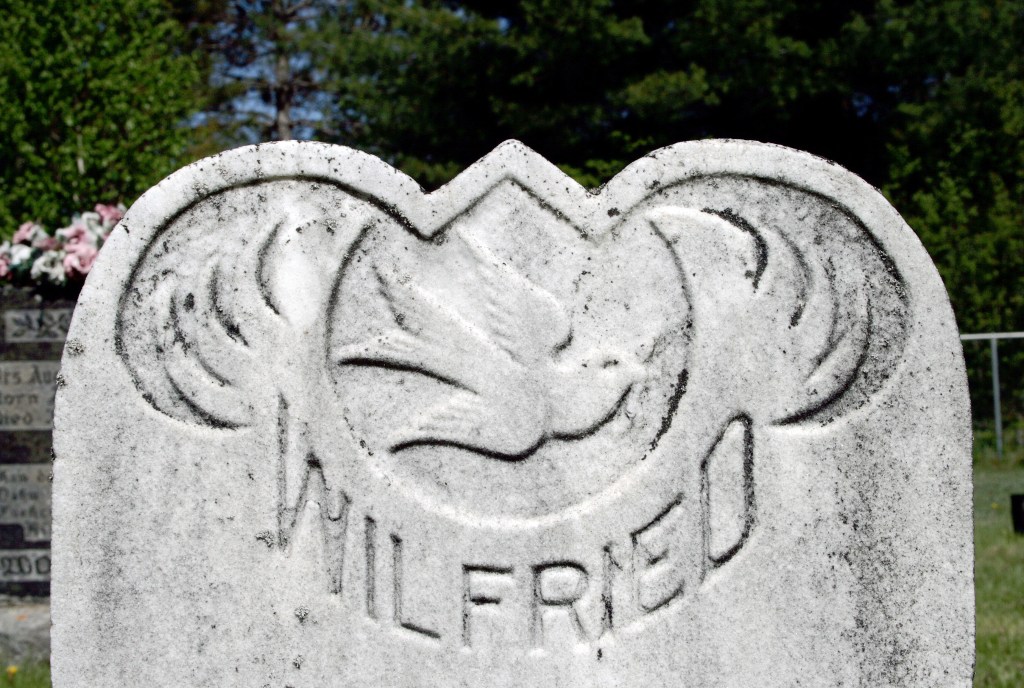
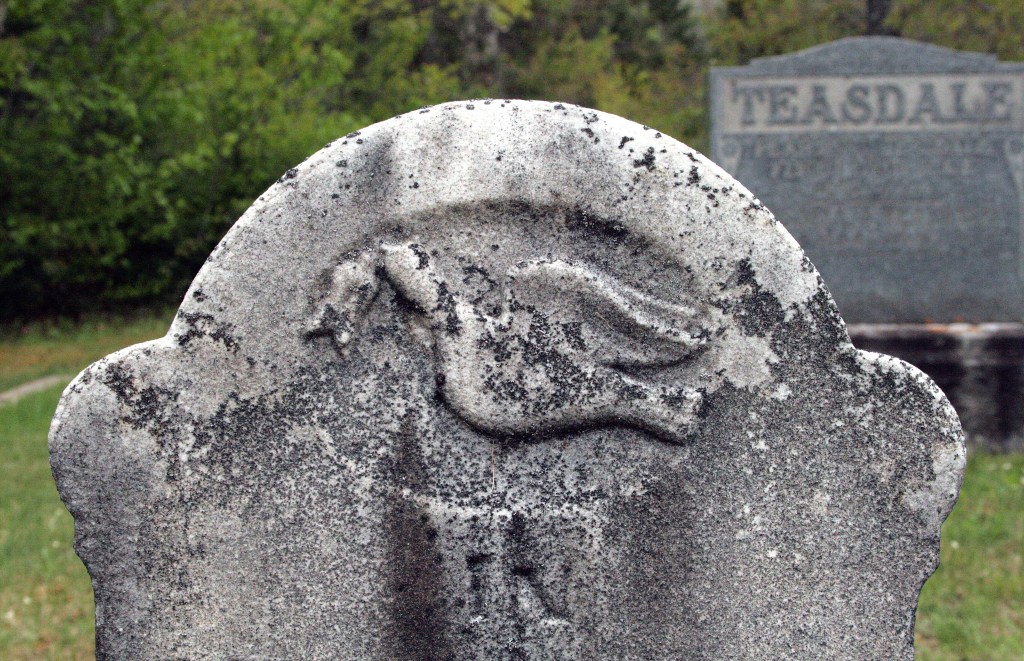
Instead, this week I will share a collection of Dove’s. If you have been following this blog for a little while, you may have noticed that I sometimes like to share collections of my favorite photos of some of the cemetery symbols I find on my cemetery walks. I have been photographing cemeteries for over 15 years, and in that time I have noticed some repetition of certain symbols and motifs. I find cemetery symbolism so interesting and love looking at what the different variations of a symbol mean.
Doves are not as common a symbol as lambs in Northern Ontario, but they represent similar ideas. Doves commonly are a symbol of peace, but when used in funerary art, they also represent innocence and the Holy Spirit. Doves may appear in many forms, such as sculpture or bas-relief. There are also different variations of doves, and each carries additional meaning.
Sometimes a dove may be depicted carrying something in its mouth. A dove with an olive branch in its mouth may represent peace. This symbolism also can be traced to Ancient Greece. A dove carrying a broken flower bud in its mouth often symbolizes a life cut short.
The position and angle of the dove may have some significance as well. A dove flying downward is thought to represent the Holy Spirit coming down from heaven.
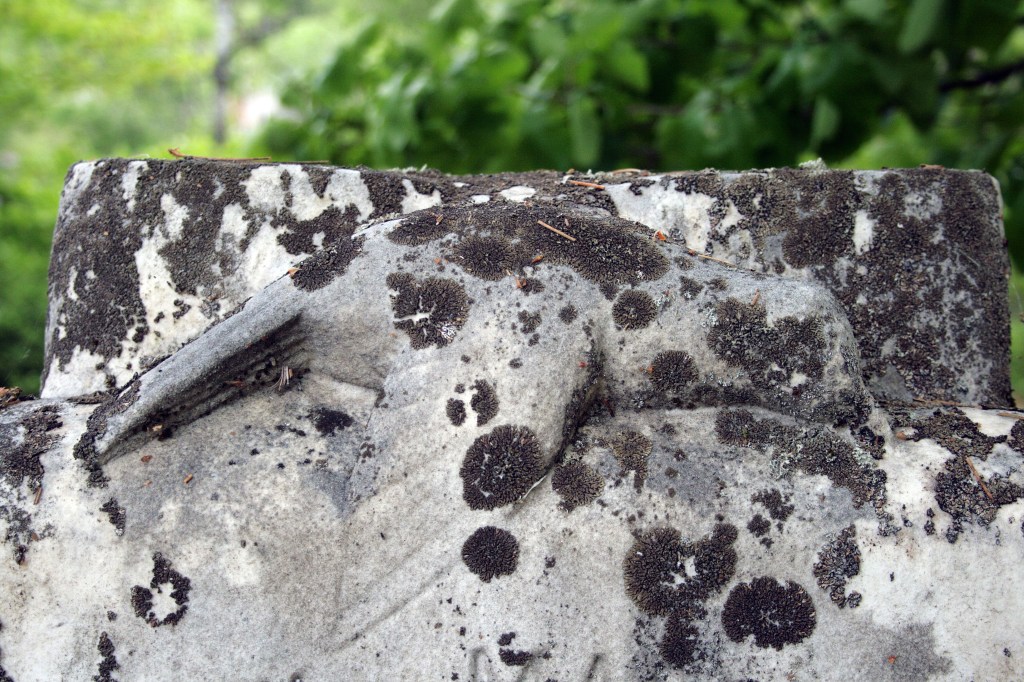
Another variation of a dove you might find, is a dove that looks like it might be dead. A dead dove sadly represents a life cut short. This variation may also be found lying in front of, or on top of a tree stump; which is also a symbol of a life cut short.
Today on the blog, I wanted to share a cemetery road trip from Autumn 2022. I have been thinking about this place a lot lately and wanted to share my experience. Visiting the Asylum Point Cemetery was high on my to-do list when my fiancé and I visited Penetanguishene for our haunted holiday. I talked Chris’s ear off on the drive up about what I could remember of its history. My interest in the place was even more peaked when we got to our Airbnb. On one of the white boards in the main entranceway, someone had written in red marker; “Visit the Asylum Cemetery!”
Asylum Point Cemetery is located on the grounds of what is known today as the Regional Division of the Waypoint Centre for Mental Health Care.1 Over the years it has seen many different forms. It began as a Reformatory for Boys in 1859 and operated for 44 years.2 In 1904 it saw new life as the Asylum for the Insane.3 1933 saw the addition of Oak Ridge, also referred to at the time as the Criminally Insane building.4 All the buildings are fairly close together, creating a small campus. As we toured the campus in search of the cemetery, I noticed a few white houses lining the road to the cemetery. One was directly across from it. I’m not sure what these buildings had once been used for, but now they looked abandoned and boarded up.
Many of the original buildings are no longer standing, as the center has modernized its facilities. But, there are still some remnants from the Asylum’s past that can be found; like the cemetery, and the original Oak Ridge gates. The gates now open to an empty road, that leads I’m not sure where. I didn’t have much time to explore the grounds on our visit, aside from the cemetery, but I did get a chance to stop and admire the entrance gates, which are said to have been built by the patients themselves.
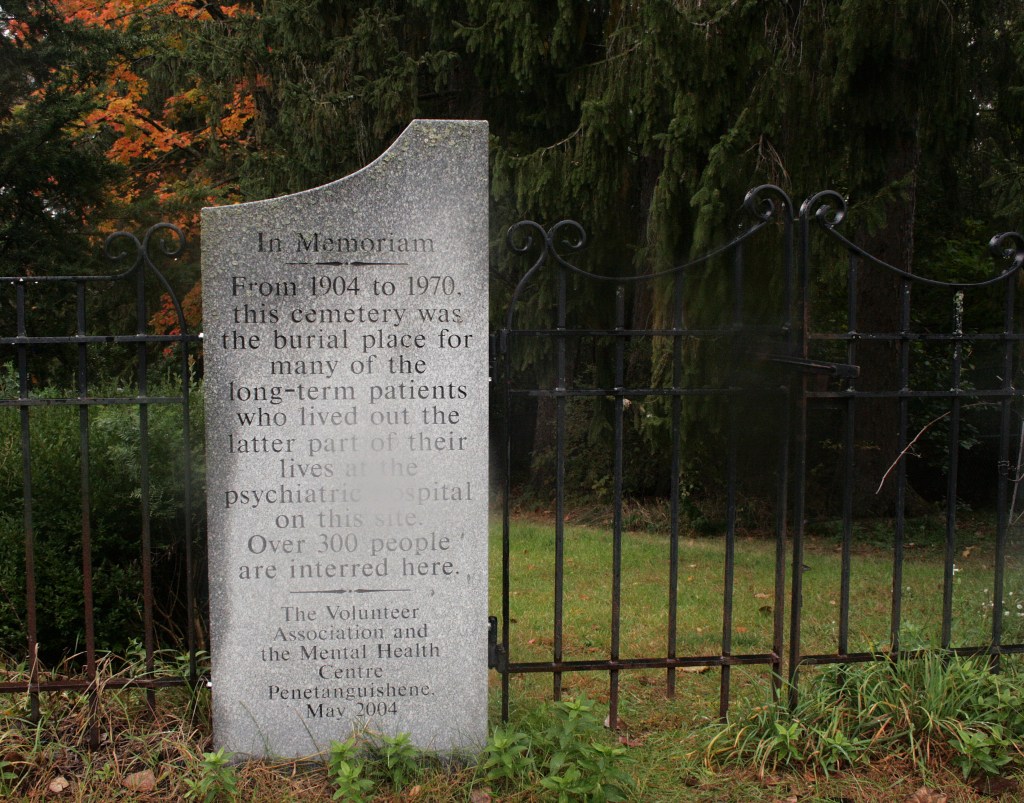
According to the inscription on the gate of Asylum Point Cemetery, the cemetery was in operation from 1904 to 1970 and is the final resting place of over 300 long-term patients. Commemorative stones were erected at the cemetery detailing its history in 2004, the 100th anniversary of the Psychiatric Hospital and its cemetery.
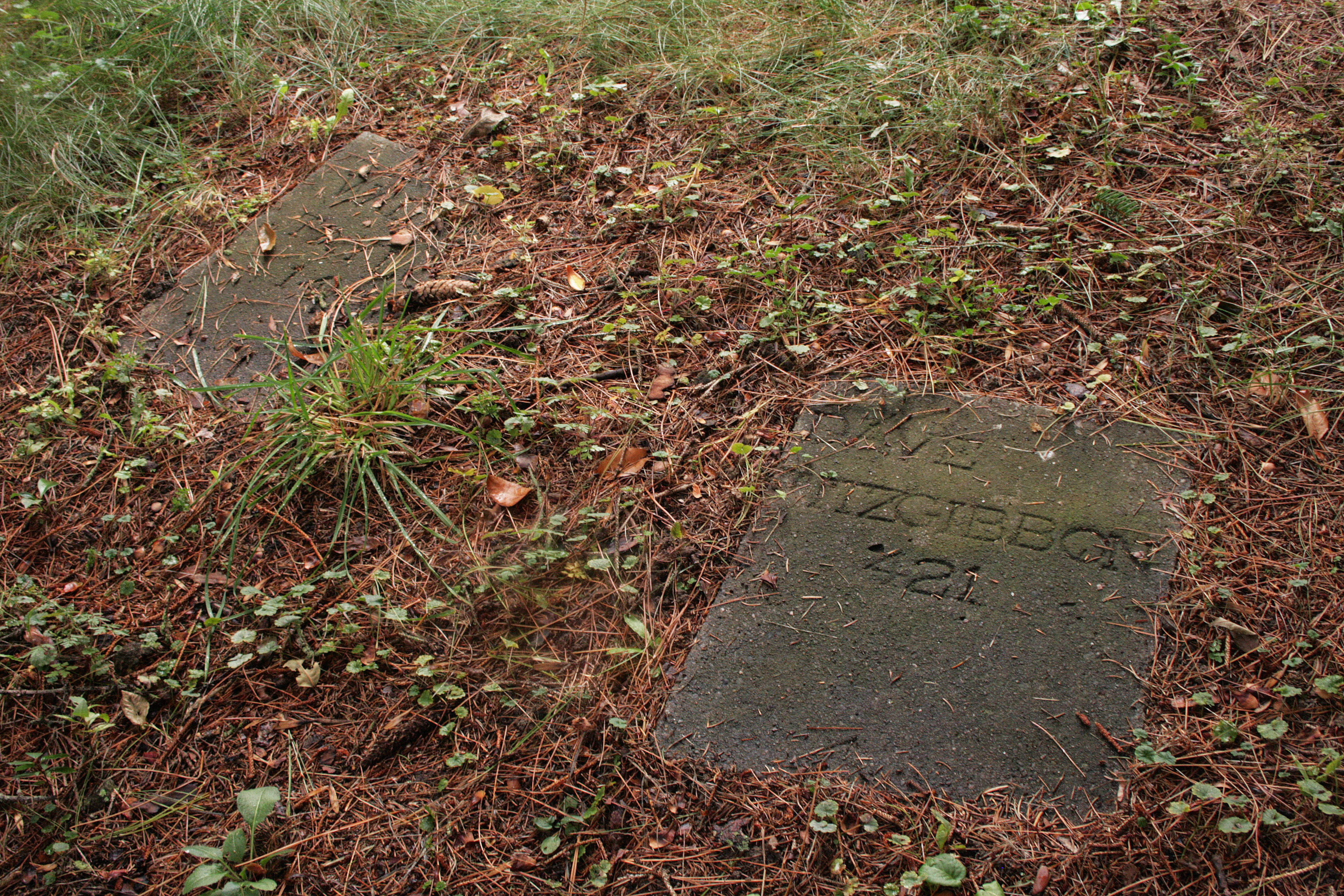
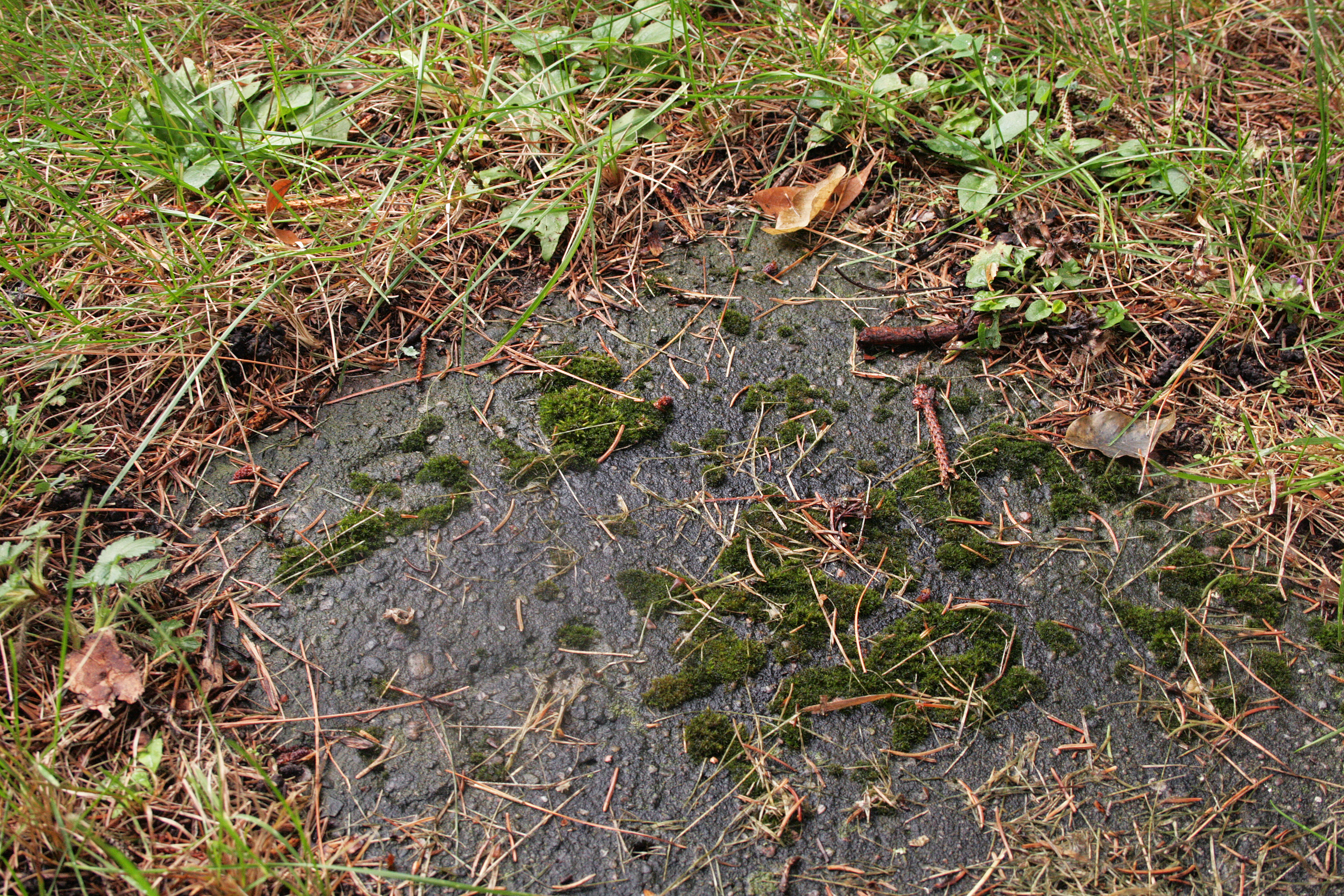
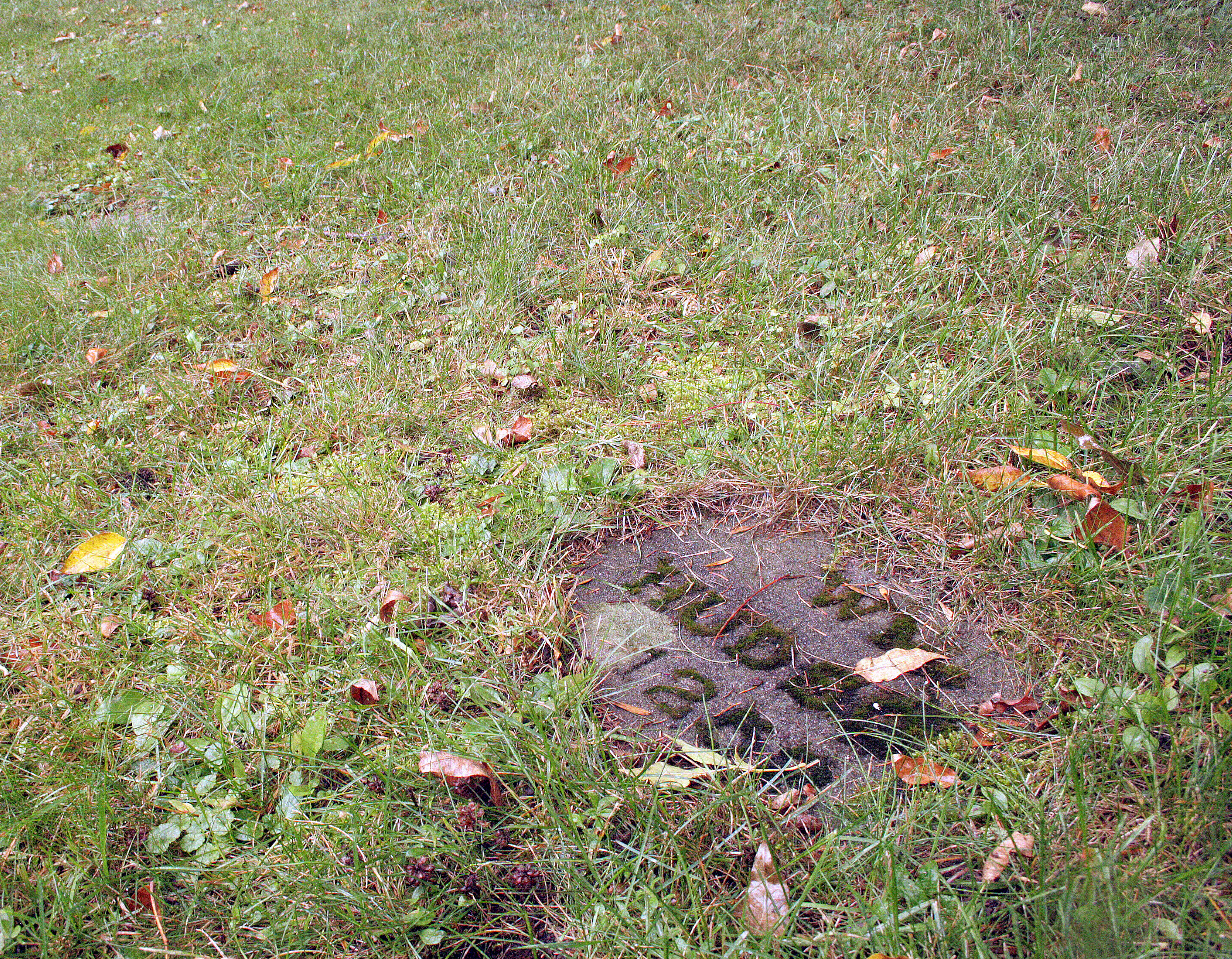
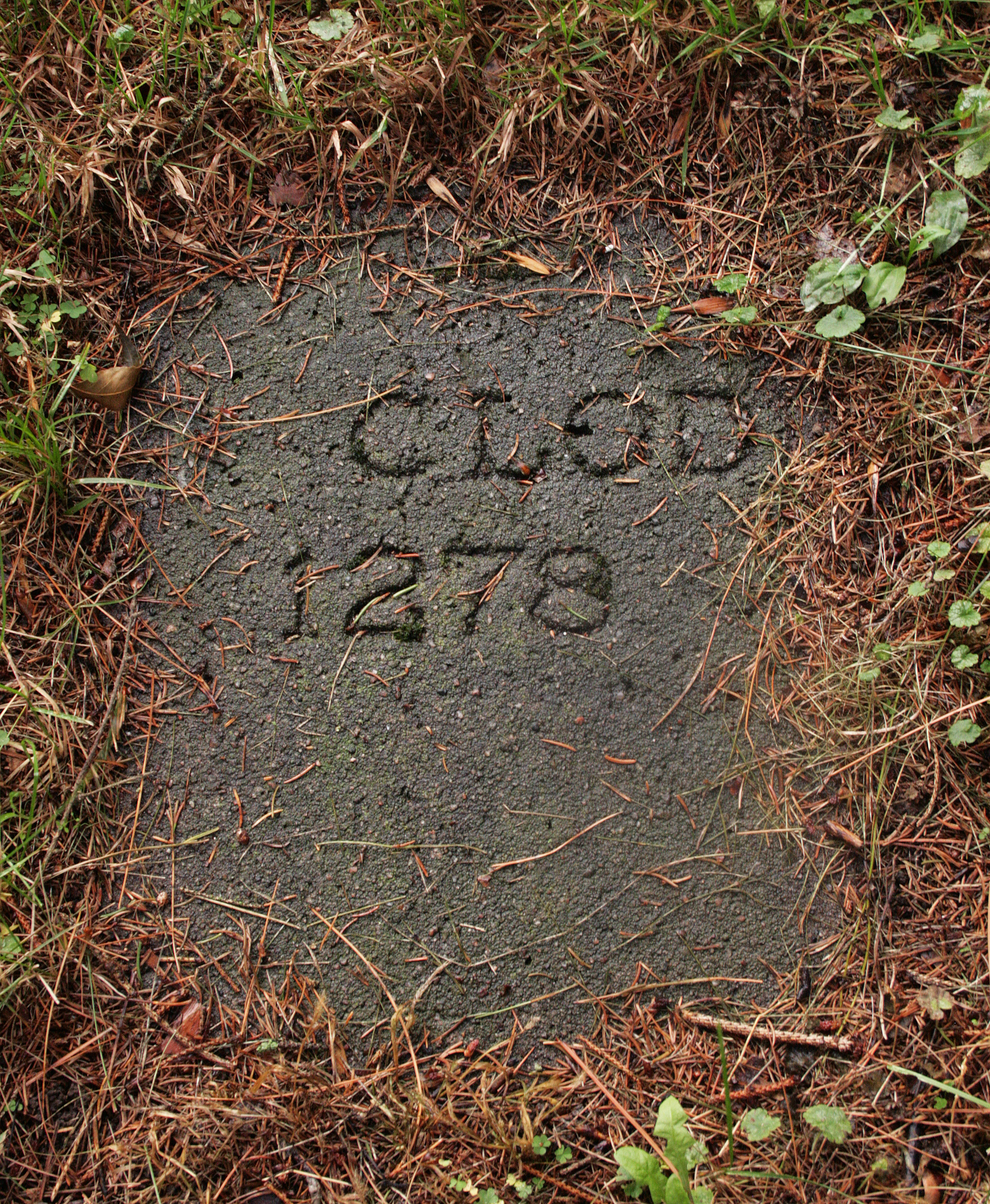
It was a grey and dreary day when I visited the cemetery, but I didn’t let that deter me. When I walked through the gates, after stopping to read the inscription, I was a little surprised by what I found. The cemetery seemed to be just a sprawling green lawn, with no markers aside from the stone at the entrance that bares the cemetery name. There is a large weeping willow tree on the right side of the cemetery, so I walked underneath it to stay out of the drizzling rain. I scanned the grass for anything that might resemble a grave marker. I had read that the grave markers in this cemetery, in the early years, had been created by the patients using wood and brass stamps to mark the names and dates.5 I was about to start making my way back to the car when I noticed a small slab of cement covered in leaves and debris. It wasn’t an empty green space after all. After I spotted one, I was able to spot them more clearly and found more and more small rectangular grave markers dotting the lawn. The rain had darkened the cement making them blend in with the autumn leaves. Many markers were becoming overgrown with moss, while others were slowly being swallowed up by the earth.
This was my first time visiting an Asylum cemetery, and I was very touched by the handmade markers. I tried to put myself in the place of the patients that would have been making these gravestones. I was very mindful as I made my way back to the car.
I have only briefly touched on the history of Oak Ridge here, but if you are interested in some further reading, there is a great resource curated by Jennifer L. Bazar. It’s called the Remembering Oak Ridge Digital Archive and Exhibit. It features in-depth looks at the history and timeline of Oak Ridge, and includes photos. I would highly recommend checking it out if you are interested in this side of Canadian history.
Thanks for reading!
References:
Origins | Remembering Oak Ridge Digital Archive and Exhibit
The holidays are almost upon us! We’ve been blanketed by a lot of snow recently, here in Northern Ontario, so it definitely looks and feels like a winter wonderland. My neighborhood has been transformed into a little Christmas village with many of my neighbors decorating their front lawns with holiday blow-up characters, red and green candy canes, and twinkling lights galore. I am not one for Christmas decorations, I haven’t put up a Christmas tree in years, but I do enjoy the twinkling lights.
I don’t have a long post for you today, as I’m thick in the middle of that holiday hustle and bustle that always seems to hit immediately before the holidays. So for my last blog post before Christmas, I thought I would share some of the Christmas-themed grave goods I have found while wandering my local cemeteries.
If you have been following me on social media at all, you most likely have seen me talk about grave goods. I often share some of the more unique things I have found on my cemetery travels.
Grave goods is a term used to describe items that have been left at a graveside by mourners.
I always find it heartwarming when I see Christmas spirit spread to a cemetery. Although seeing candy canes and Christmas trees in July is always a surprise.
For me, symbolism is one of the many things that make visiting cemeteries so interesting. I have been photographing them for over 15 years, but I still continue to find unique symbols that have me reaching for my reference books. I have lived in Sudbury almost all of my life, so I have spent a fair amount of time traveling in Northern Ontario to visit cemeteries. I have yet to visit ALL the cemeteries in the Sudbury district, but as of May of this year, I can now say that I have visited all 25 in the Greater City of Sudbury. I have noticed a repetition of certain symbols and motifs and wanted to share some of my findings.
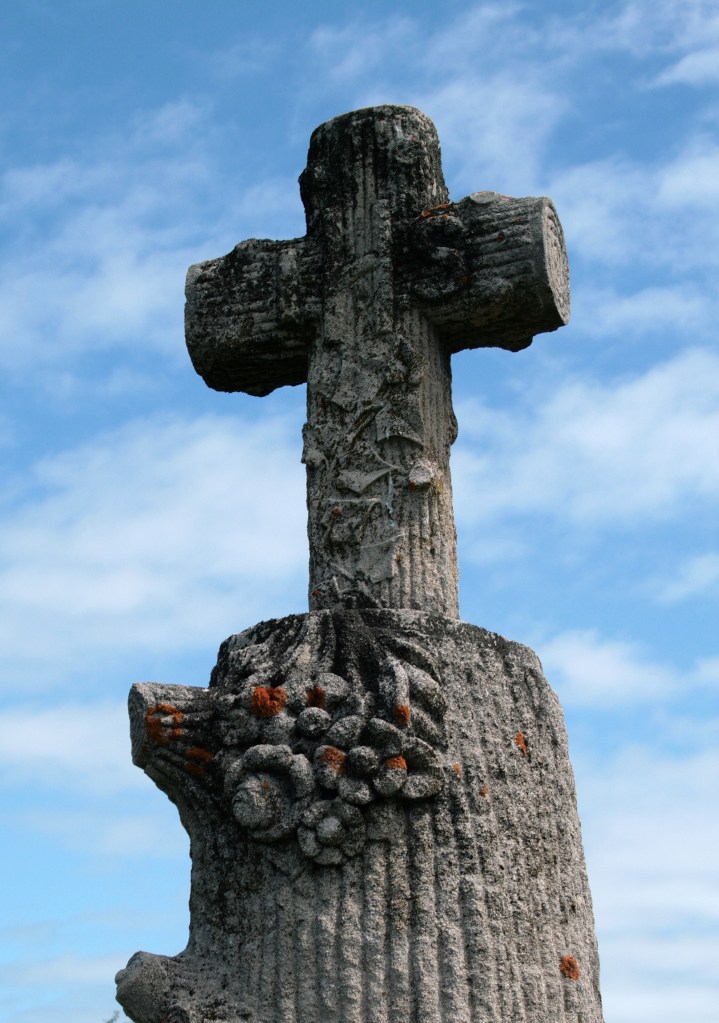
The majority of the cemeteries found here are of a religious denomination. You can often find a variety of human statues in these cemeteries, representing Saints and Angels or symbolizing grief and mourning. Another common religious symbol is the cross. There are so many varieties of crosses, each with various meanings. You could write a whole book on just cross symbolism alone! Some of the more common crosses you can find are the Agony cross, with its pointed ends that represent the agony of the crucifixion, or the Glory or Rayed cross, its rays representing the glory of God.
I have also noticed quite a few handmade stones. I find handmade stones to be beautiful, full of love, and have a unique charm. They come in all shapes and forms. Some are hand-poured cement, with stones and tokens embedded in them. They are usually adorned with hand lettering, either hand painted or hand carved, or might have handmade plaques affixed to them.
Another common symbol you will find in the area is the lamb. This is another religious symbol, representing the “lamb of God”, as well as innocence and sacrifice. Lambs are most commonly found on the graves of small children and infants. Lambs are often depicted laying down, sometimes in front of a tree stump. The tree stump symbolizes a life cut short.
Another common symbol found on children’s graves in the Sudbury district is the dove. Similar to the lamb, a dove represents peace, innocence, and purity. One of the variations on the dove symbol you might find is a dove that looks dead. This symbolizes a life cut short.
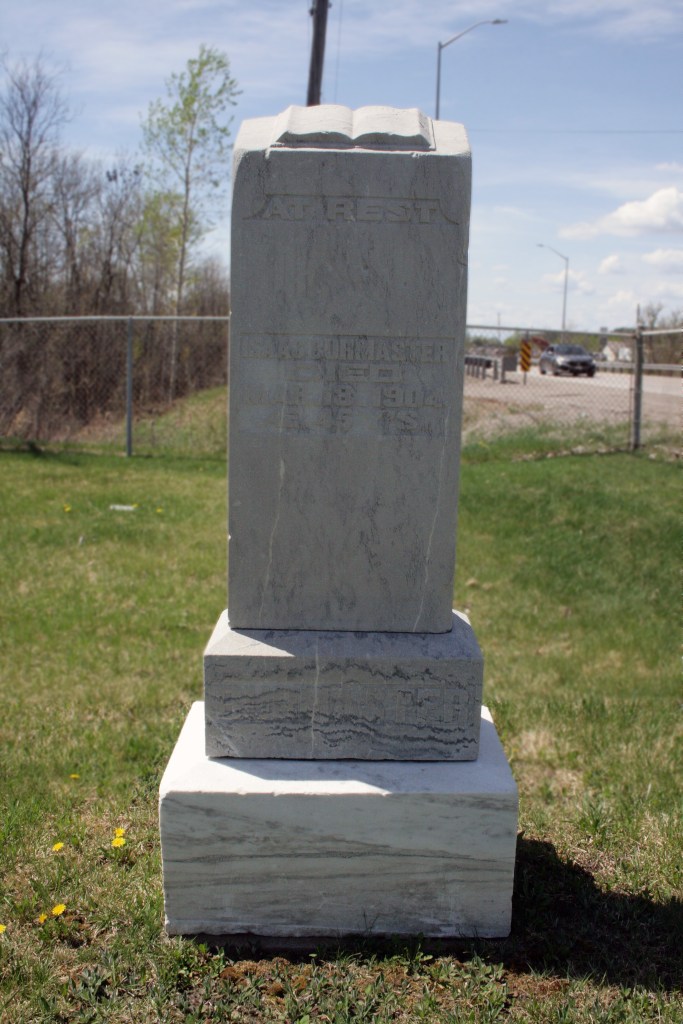
In my experience, books are not quite as common as some other symbols in our area, but they are still one of my favorite cemetery symbols. I’m an avid reader, so seeing a book on a gravestone always makes me smile. I have seen many variations of books in the area. Books can be decorative or symbolic. Some gravestones use a book as a device to display the name of the deceased, along with dates. An open book can sometimes represent emotions, open to the world, or symbolize a life that has been cut short, before getting to the last page. Another variation you might find, is a closed book, usually at the top of a truncated obelisk. A closed book symbolizes a long life, lived to the last chapter. Some books represent the Holy Bible and might be labeled as such.
This is just a small sampling of the more common cemetery symbols you will find in our local cemeteries. I look forward to seeing what other common symbols might be found in our district cemeteries, as I continue to explore them.
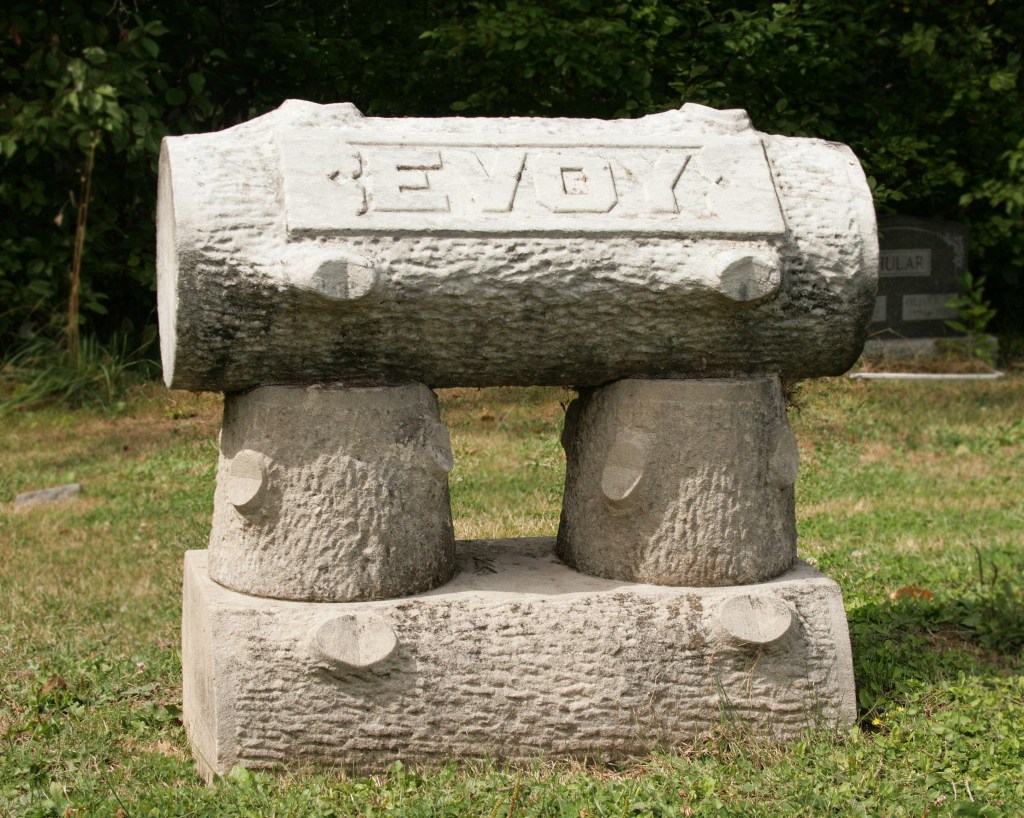
While wandering a cemetery, have you ever come across a monument that is shaped and textured to look like a tree? Today, I want to take a closer look at these types of grave markers, called tree stones. Although they are a bit harder to come by in Northern Ontario, you can find them, and they are usually very easy to spot since they are so unique!
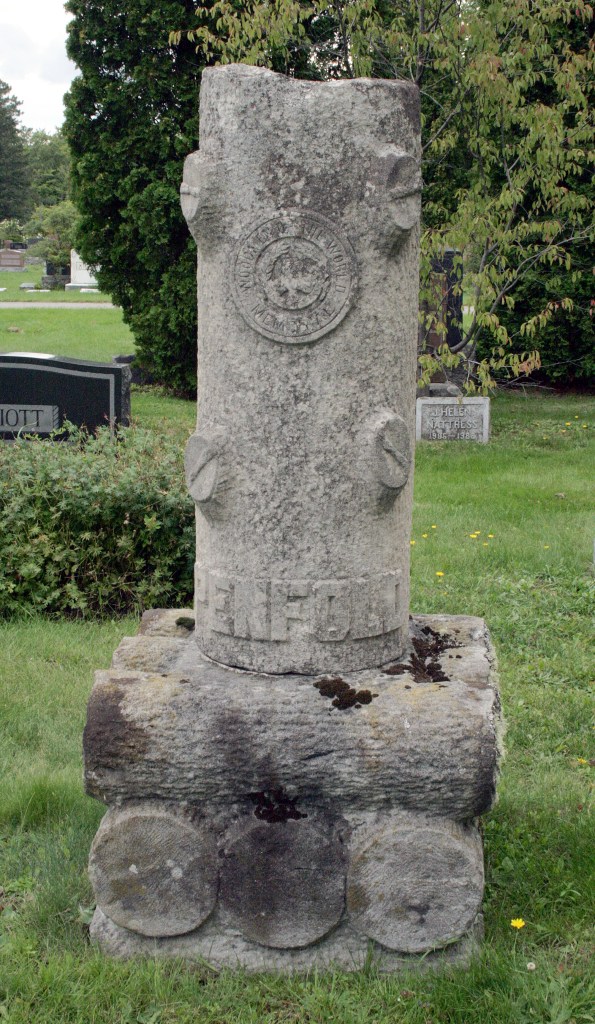
Tree stones are often used as memorials for members of the Woodmen of the World, a fraternal organization. This fraternal order was started in 1890, and membership included those who worked in particularly dangerous professions. The organization offered health insurance and death benefits to its members, which included a tree stone tombstone.1
Woodmen of the World tree stones, often bare the Woodmen crest, as well the tools of the trades like an axe and sledgehammer, representing the works of man. You may also find other symbols on tree stones like ivy or doves, representing friendship and peace, respectively.
The severed branches or tree stump of a tree stone, Woodmen of the World or otherwise, often represents a life cut short. We often see this combined with other symbolism, like a lamb or dove laying in front of a stump. Lambs and doves are often found on the graves of small children, symbolizing innocence and purity.
Sometimes the number of logs on a tree stone can be symbolic of the number of children the deceased had. A tree stone can also be seen as a representation of the tree of life, symbolizing knowledge.
Christmas time is almost here! For me, Christmas is synonymous with holiday baking! What better time of year to warm the house with the sweet smell of cookies in the oven? So, I thought it’s the perfect time to try out another tombstone recipe. I have been saving this one specifically for this time of year—Mom’s Christmas Cookies.
This cookie recipe can be found on the backside of a beautiful, large black marble tombstone. This is the gravestone of Maxine Menster.1 It can be found in Cascade Cemetery, in Cascade Iowa. The front of the stone has a beautiful sand-blasted winter scene, of a lovely detached house surrounded by forest. You can view the front of the stone on Maxine’s memorial page on Find A Grave.
Maxine’s family wanted to do something special to remember their mother and chose the sweetest way—with the family sugar cookie recipe. Jane Menster, Maxine’s daughter has said that when they were trying to think of something specific to her mother to put on her stone, “It was her cookies.”2
Maxine passed away in 1994, so this recipe has marked her grave for decades. According to Atlas Obscura, this recipe was part of a long-standing family tradition, where they would bake this cookie recipe on Christmas Eve, then hang the sugar cookies on the Christmas tree. They would be an early morning treat on Christmas Day.3
The backside of Maxine Mensters’ gravestone. Photo taken by Find a Grave contributor Cheryl Locher Moonen. (Used with permission)
Here’s the recipe:
Mom’s Christmas Cookies
Cream:
1 cup sugar
1/2 cup oleo
Add:
2 beaten eggs
1 tsp. vanilla
Add:
3 cups flour
3 tsp. baking powder
1 tsp. salt
Add alternately with 1 cup cream.
Chill and roll out with flour.
Bake 350 degrees oven, and frost.
Most tombstone recipes use short form when it comes to the instructions. Instead of turning to Google, I thought I would ask my Mom. We went through the recipe together and talked about each step, and how long to chill the dough. My mom is an avid baker, especially at this time of year. We had a nice chat about baking instructions and tombstone recipes in general. I have yet to find a Canadian one.
I was also surprised to find out that my mom was familiar with the tradition of baking cookies to put on the tree for Christmas morning. It’s not something we ever did when I was growing up. We also had dogs. She recounted a story about putting candy canes in the tree one year and coming home one day to find the tree on the floor. My dog Shadow had gotten a little too excited about finding candy in the tree. No foodstuffs ever went into our tree after that.
After our chat, I got to baking cookies! This recipe is very straightforward. There is one ingredient that some people might question, the 1/2 cup of oleo. What is oleo? Turns out that it is just an older term for margarine. Mixing everything was a breeze and didn’t take that long at all. The biggest question I had about the recipe was how long to chill the dough. My Mom had suggested an hour. After an hour in the fridge, I got to work on cutting out the shapes.
I am not a traditional Christmas person and don’t actually own any Christmas cookie cutters. I choose to go with a skull, tombstone, and bat for my shapes. I also didn’t have any frosting on hand, so instead, I opted to use sprinkles. My usual go-to for baking is cupcakes, so I have a lot of sprinkles on hand—just not Christmas ones. So I used black sanding sugar, red and black nonpareils, black bats, and purple, red and black sprinkles.
I left the cookies in the oven for about 10-14 minutes and ended up baking 4 trays of cookies. This recipe makes a pretty big batch.
They turned out delicious! I think this will be my go-to sugar cookie recipe moving forward. They are very easy to make and so tasty, especially right out of the oven. I ate way more of them off the cookie sheet than I should have, but I just couldn’t resist. I also really enjoyed making this recipe because it prompted some good conversations with my Mom. Usually, when I make tombstone recipes, I talk out loud to the deceased, talking through the recipe. This time around it made more sense to talk about Mom’s Christmas cookies with my own Mom.
Thank you, Maxine, and the Menster family for sharing this delicious recipe with the world!
Have you made this recipe before? Or do you have a go-to Christmas cookie recipe? I would love to hear about it in the comments.
It’s almost Christmas time, and the hustle and bustle of Christmas dinners and get-togethers are right around the corner. I love finding unique and meaningful gifts for my loved ones. It’s a great feeling to see someone close to you, open up a unique gift that you know they are going to love! These types of gifts also don’t need to cost a fortune, and supporting a small business is always a bonus. I have been eyeing a few fun and interesting cemetery-related items online myself. Unfortunately, I don’t have any taphophiles in my family to buy for, but I thought maybe some of you might.
So this year, I thought I would try my hand at writing a little gift guide for those looking for some inspiration for your cemetery loving friends and family, or maybe your own Christmas wish list.
Below is my round-up of some unique, beautiful and practical cemetery-related items that I think any taphophile would love!
Cemetery Photography by Chantal Larochelle is not affiliated with these brands and artists. I do not receive any proceeds from sales. Just sharing products I love!
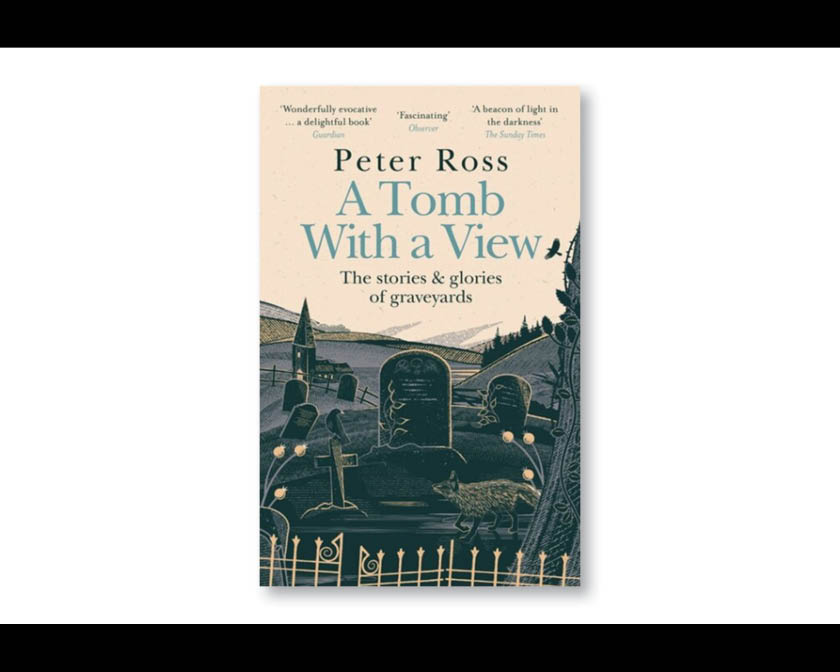
If your taphophile friends and family like to read, you can’t go wrong with a cemetery book. I’ve heard excellent things about Peter Ross’ new book, and hope to pick myself up a copy if I don’t get one for Christmas. “A book for anyone who has ever wandered through a field of crooked headstones and wondered about the lives and deaths of those who lie beneath.” – Indigo.ca
A Tomb With A View By Peter Ross. (Photo from Indigo.ca)
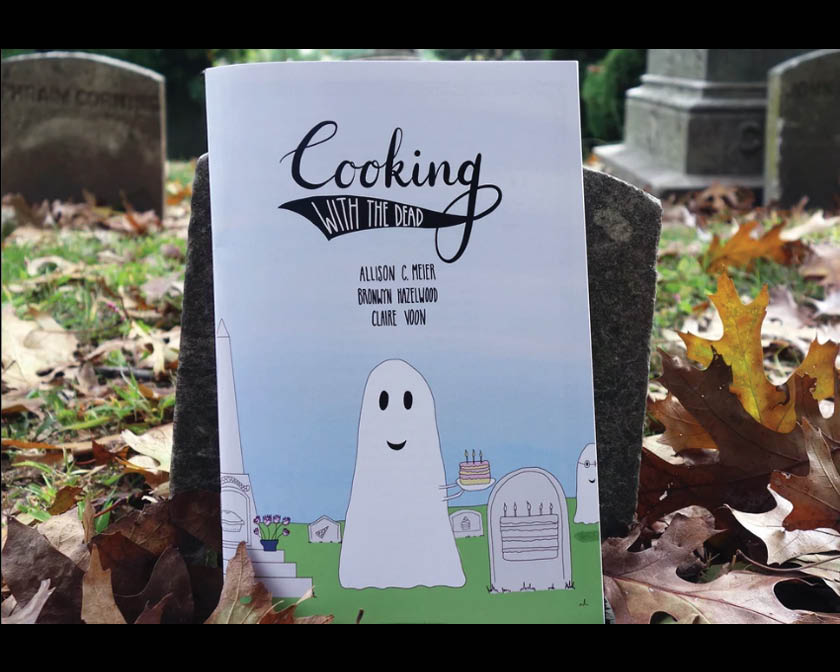
A unique full-color illustrated zine by Reading Reliquary. This 20-page booklet features recipes found on tombstones from “Alaska to Israel”. There are a bunch of other spooky-cute items available in their Etsy shop, such as stickers, bookmarks, and another zine about the language of floral symbolism on tombstones. Unfortunately, some items don’t ship to Canada.
Cooking with the Dead: A zine of Tombstone Recipes by Reading Reliquary. (Photo from Etsy)
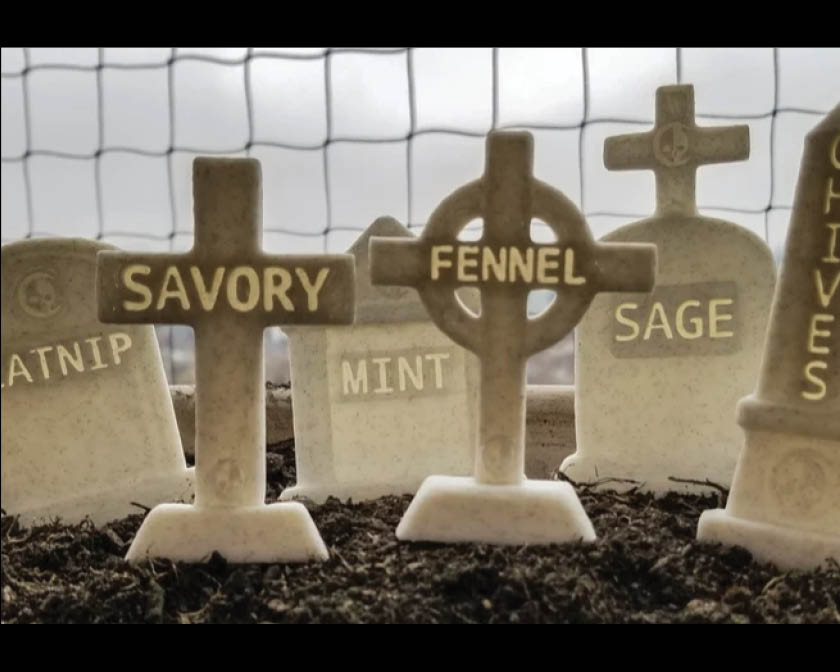
Cursed by Design offers a set of 6, 3D printed garden stakes. You can customize them with any of the 40 available herb names, or you can personalize them with your own names. They would be perfect for a taphophiles herb garden!
Custom Graveyard Garden Stakes by Cursed by Design. (Photo from Etsy)
This new book of essays, edited by Loren Rhoads, illuminates the reason why people visit cemeteries. This collection features 40 personal essays, written by cemetery tourists, genealogists, geocachers, anthropologists, and more. A great addition to any taphophiles library.
Death’s Garden Revisited: Personal Relationships with Cemeteries edited by Loren Rhoads. (Photo from Blurb)
This gorgeous 1.5” soft enamel Deaths Head pin, by Verona Black, would look striking on a jacket, camera bag, or anywhere really. It also has some interesting symbolism behind it. A Deaths Head or Skull effigy is a form of Momento Mori, a reminder of your mortality.
Deaths Head Enamel Pin by Verona Black. (Photo from Etsy)
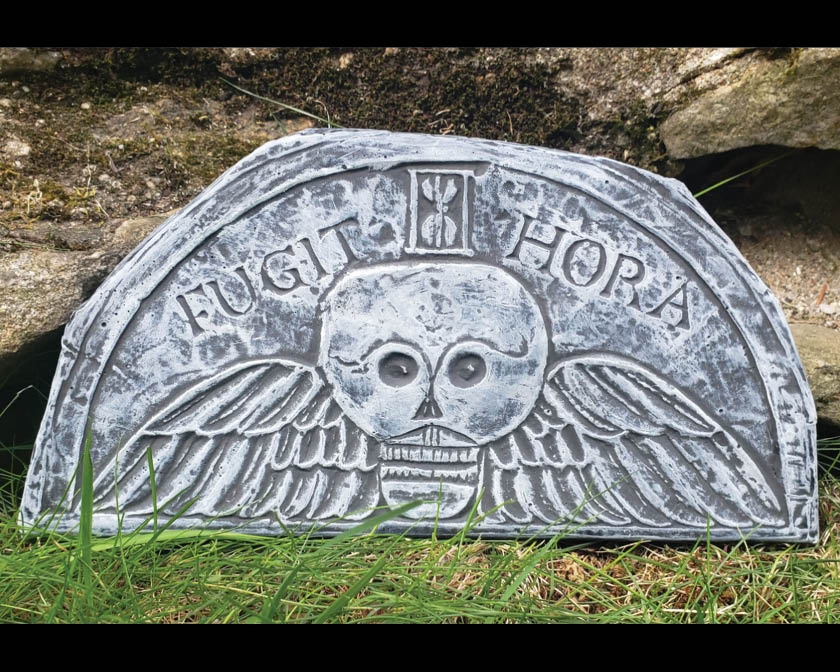
Their online store is filled with beautiful castings of old New England gravestones. Their pieces range from small magnets to large castings. They all feature unique gravestone symbolism. The Gravestone Girls, who are fellow taphophiles, have over 30 years of experience working in old cemeteries. So you can be certain that these beautiful gravestone castings have been made with every precaution taken to not harm the gravestones.
Gravestone Casting Wall Art (Don’t Run A-Fowle) by The Gravestone Girls. (Photo from the Gravestone Girls website)
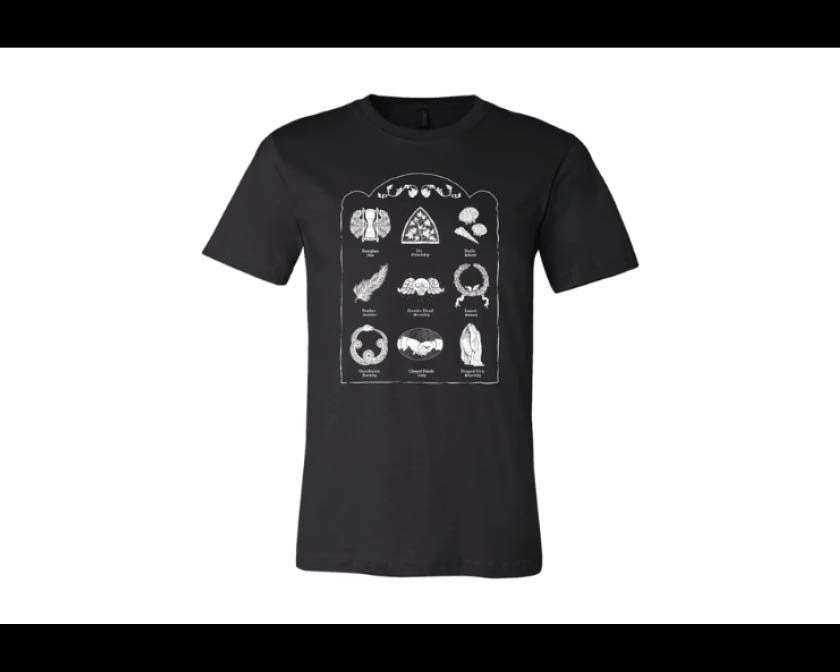
This unisex t-shirt features some beautiful gravestone symbolism, illustrated by Meagan Meli. The symbols are also accompanied by their meanings. Perfect for those who would rather be visiting a cemetery. I know I would personally try to find all the symbols on it if I ever wore this while visiting a historic cemetery.
I feel like t-shirts are always a safe bet, especially if they have some cool graphics. This t-shirt by Shaded Grove Art on Red Bubble features a bold, but simple design that lists different types of gravestones. It’s a little bit classic, and a little bit nerdy, a great combination.
Gravestone Types Classic T-Shirt by Shaded Grove Art. (Photo from Red Bubble)
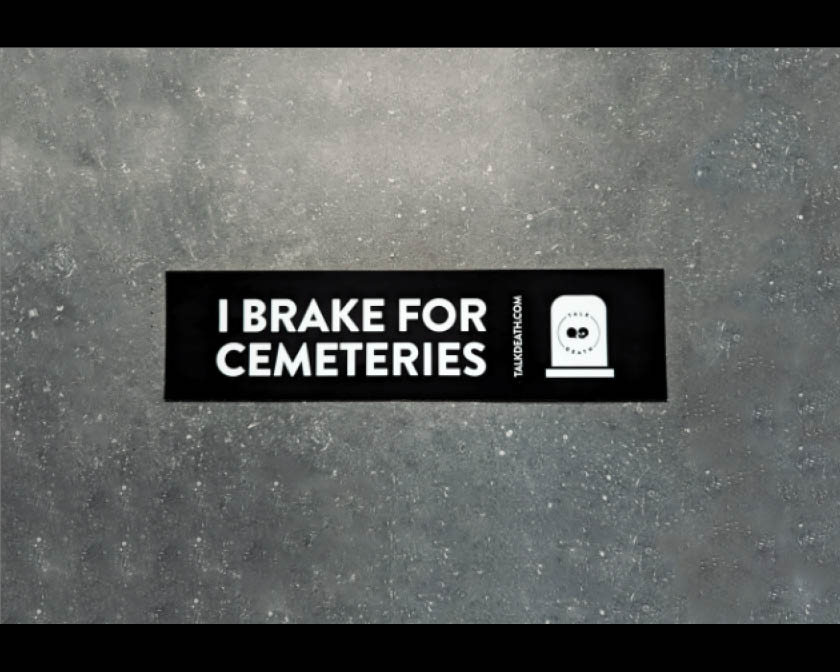
Does your vehicle brake for cemeteries? This is a fun novelty accessory, but I can see how this would come in handy on cemetery road trips. Other drivers should be warned!
I brake for Cemeteries bumper sticker by TalkDeath (Photo from the TalkDeath website)
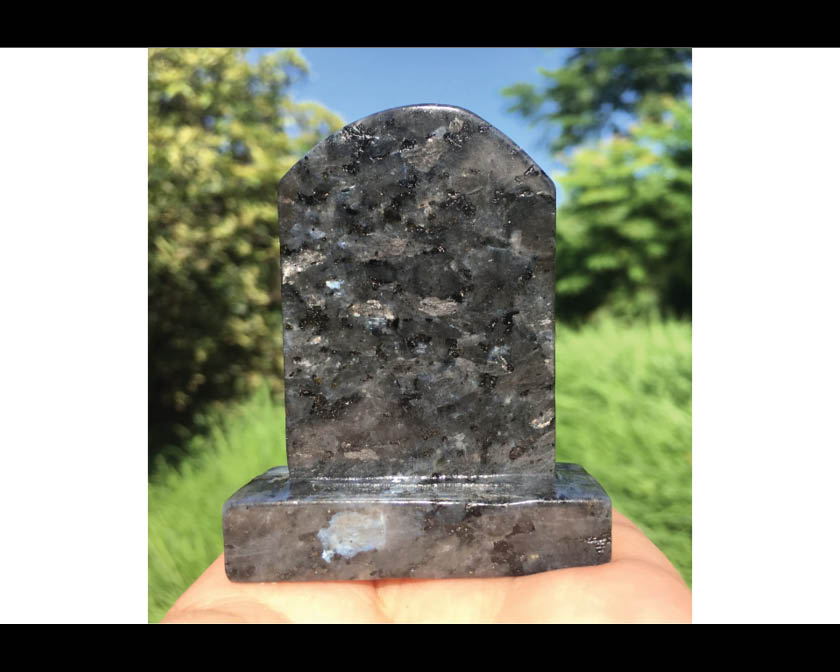
These beautiful miniature tombstones from WHCrystal are made from spectrolite minerals that flash beautifully in the sunlight. These would be a very unique addition to someone’s rock and mineral collection, or as a stand-alone piece. I just love the look of these little gravestones.
Natural Spectrolite Tombstone from WHCrystal (Photo from Etsy)
A one-year membership to AGS is a gift that keeps on giving! Members receive some great benefits throughout the year, like The AGS Quarterly, filled with cemetery and gravestone-related articles. They also receive the monthly e-newsletter that features special announcements, news articles, and event information. Membership also includes the next published issue of Markers, their annual journal full of definitive cemetery and gravestone articles. You also get member pricing for the AGS Annual Conference, that’s also known as Cemetery Camp.
Logo for the Association for Gravestone Studies (from the AGS website)
Landis Blair is an amazing illustrator and is offering pre-orders of this beautiful Pocket Cemetery booklet. “A convenient reminder of your pending mortality.” This 24-page booklet contains 21 black & white illustrations of a variety of cemeteries and is estimated to ship by the end of November. They also offer prints and stickers in their Etsy shop.
Pocket Cemetery with illustrations by Landis Blair. (Photo from Etsy)
Did you know that Find a Grave has an online store? My favorite item in their shop is this grey zip-up hoodie, perfect to keep you warm while you wander cemeteries and fulfill photo requests.
Tombstone Zip Hoodie from Find A Grave. (Photo from the Find a Grave Store)
There you have it, 13 gift ideas for the taphophiles in your life.
It’s been a little while since I shared a book review on the blog. I have some catching up to do on my reading. There are a lot of cemetery-related books in my to-be-read pile! Now that October has come to an end, I should have a bit more time to read through them. There are quite a few I am really looking forward to getting into.
I did manage to get some reading in last month, so today I wanted to talk about The American Resting Place, by Marilyn Yalom, with photography by Reid S. Yalom. “Four hundred years of history through our cemeteries and burial grounds.” This book, published in 2008, by Houghton Mifflin Company, boasts 64 pages of beautiful black and white cemetery photographs and traces a path across America, looking closely at the ever-changing ideologies on death, burial practices, and history.
“Cemeteries and burial grounds, as illuminated by an acclaimed cultural historian, are unique windows onto our religious, ethnic, and deeply human history as Americans.
The dedicated mother-son team of Marilyn and Reid Yalom visited hundreds of cemeteries to create The American Resting Place, following a coast-to-coast trajectory that mirrors the vast historical pattern of American migration.
Yalom’s incisive, often poignant exploration of gravestone inscriptions reveals changing ideas about death and personal identity and demonstrates how class and gender play out in stone. Rich particulars include the story of one seventeenth-century Bostonian who amassed a thousand pairs of gloves in his funeral-going lifetime, the unique burial rites and funerary symbols found in today’s Native American cultures, and a “lost” Czech community brought uncannily to life in Chicago’s Bohemian National Columbarium.
From fascinating past to startling future–DVDs embedded in tombstones, “green” burials, and “the new aesthetic of death”–The American Resting Place is the definitive history of the American cemetery.”
The first 64 pages of the hardcover version of The American Resting Place consist of glossy black-and-white photos. They range from lovely landscapes to detailed close-ups. It’s a feast for the eyes before you even get into the meat of the book. The book chapters are broken down into geographical locations, but there are also a couple of chapters on the history and evolution of death and burial practices. Because the photos are presented at the front of the book, it requires some flipping back and forth to reference them when they are mentioned in the text. That would be my only negative critique of the book.
Otherwise, Marilyn and her son Reid take the reader on a very well-researched and informative trip across the state, taking us along with them on their journey, as they explore funerary art and burial practices. I was a little afraid when I started reading this book that it would be incredibly dry and academic, but the information is presented in a tone that is relatable and keeps you interested. I would love to see something similar written about Canadian cemeteries and burial grounds.
This would be a great read for anyone looking for information specifically on American burial rites and practices. It is very fascinating stuff, so I think any taphophile would love this book for their bookshelf. The copy of The American Resting Place I found was a previously loved library book. I am a bit sad it was retired and will no longer be discovered by curious readers, but I am very happy to have it now in my collection. I hope there are many more copies of it out there, in other libraries that are piquing the interest of budding taphophiles.
As usual, I am always on the hunt for cemetery-related book recommendations. Please feel free to share in the comments. If you are an author and have a cemetery-related book you would like me to review, please reach out at hello@chantallarochelle.ca. I would love to hear from you.
October is coming to an end. This post-pandemic Halloween season has felt a bit more normal because of all the fun spooky activities happening. It’s been a whirlwind of a month for me, between pumpkin patch activities, a haunted holiday, watching way too many horror films, and visiting cemeteries. I even put up my own little front lawn cemetery for the trick-or-treaters on Halloween night.
This year, I was able to visit some cemeteries a little farther away from me, in Cobalt, Haileybury, Huntsville, and Penetanguishene. I am looking forward to sharing more about those visits in upcoming posts. You can read about my visit to the Beck House and the Presbyterian Cemetery here.
I also had a chance to participate in this year’s Cemetery Scavenger hunt, put on by TalkDeath. I wrote a bit about TalkDeath and their annual event last week. You can read it here, in case you missed it. This cemetery scavenger hunt takes place globally, so you can participate from anywhere. All you have to do is visit a local cemetery. In some areas, you can participate with TalkDeath members in person. This year there were members at Graceland Cemetery in Chicago, Green-Wood Cemetery in Brooklyn, Mount Royal Cemetery in Montreal, and General Protestant Cemetery in St. John’s, Newfoundland.
My mother and I joined in from Park Lawn Cemetery in Sudbury, Ontario. It was so much fun! Although we were the only ones in the cemetery searching for clues, it was still a nice way to spend some time on a Sunday afternoon. Park Lawn Cemetery is not the oldest cemetery in the city, as it was established in 1924. But it is a large one, which I thought would be an advantage to searching for clues. I may have been half right. We started strong, finding a few clues pretty quickly, but we started getting stumped. We fanned out and as I searched I fell into my normal cemetery photography mode, which is a little bit slower-paced. I did eventually manage to find 12 of the 20 clues, but it was way too late to place in the top 5. I think the fastest time may have been 12 minutes!
I was no where close to that time, but that’s ok! It was a great opportunity to get outside, enjoy one of the last beautiful weekends of October, visit a cemetery and spend some time with my mother. We spent about an hour in the cemetery. After I submitted my photos, we wandered around a little bit, enjoying the weather and looking at the beautiful stones. We also found some interesting epitaphs that I think will require some research, later on, to learn their story.
I think this years Scavenger Hunt was a success! I can’t wait to participate again next year! It was a really fun way to close the cemetery season for me.
If you are not aware, November usually brings with it some pretty cold weather here in Northern Ontario, and that means lots of snow. I’m not fond of winter, so I tend to stay indoors during the colder months. That means my cemetery visits are pretty much done for this year.
That doesn’t mean that you will stop seeing content from me!
In the colder months, I focus on editing the monstrous number of photos taken over the summer. I’ll be doing portfolio updates in the coming months, adding to what’s currently on the website. I’ll also be doing more work uploading memorials to Find a Grave, helping clean up their cemetery map information for Ontario, and transcribing photos. I’ll also be sharing more cemetery road trip stories from over the summer, and cemetery book reviews. I’ll also be taking some time to bake and share some more tombstone recipes. I don’t think I have made one since the spring!
That being said, I hope that you have had a wonderful October, were able to enjoy some fun activities throughout the month, and got to visit a cemetery or two! I would love to hear about your October adventures in the comments.
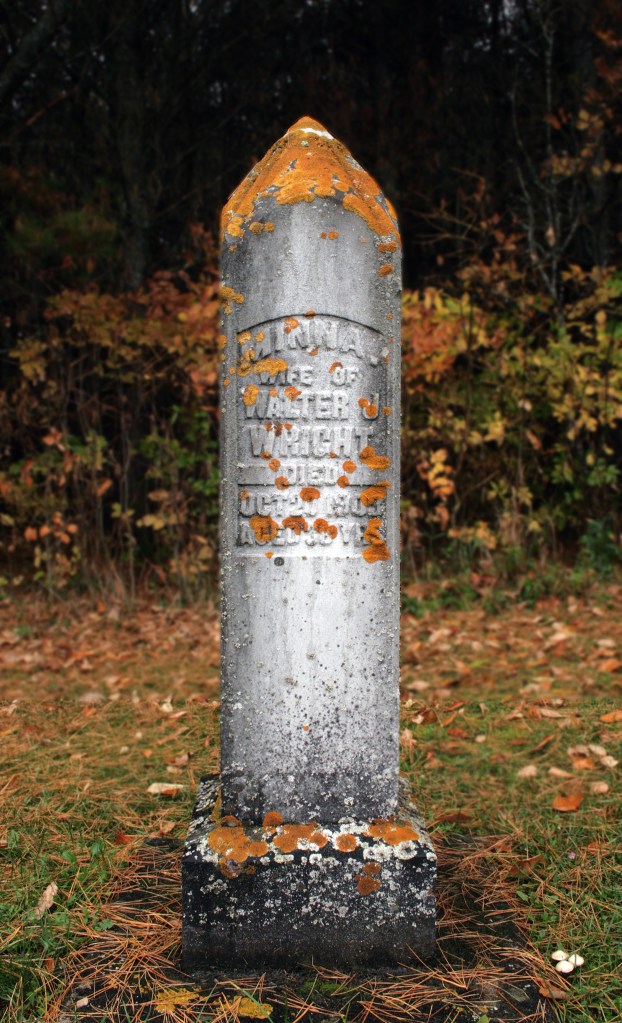
I am in the midst of working on a blog post about my adventures searching for the grave of Tom Thomson in Algonquin Park. I’m hoping to have it up in the next week or two. In the meantime, I thought I would take a look at some Egyptian revival architecture that can sometimes be found in cemeteries, more specifically—obelisks.
Obelisks are Egyptian in origin, but became a popular Christian funerary symbol. They are now a common sight in most cemeteries. I have found quite a few in my cemetery travels and wanted to share some of them with you today.
In Understanding Cemetery Symbols, Tui Snider notes that obelisks became popular symbols after Napoleon invaded Egypt in the late 1700s. An obelisk is thought to represent a ray of light, but it can also symbolize focused spiritual goals, with the wide base narrowing to a point, symbolizing the deceased reuniting with God at death, and the two becoming one.
Different variations of obelisks can be found throughout a cemetery. For example, Truncated obelisks do not come to a sharp point at the top, but are flat or topped with another symbol like a cross, urn or an orb.
Obelisks can sometimes be found at the center of a family plot, representing the family’s connection to God. They are particularly well suited for this, as there is generally a lot of room on all four sides of the stone to inscribe the names of family members.