For this month’s cemetery book review, I wanted to share a unique photography collection that brings together two of my favorite things—cemeteries and cats!
Cemetery Cats by Owen Phillips is a charming photography book that highlights the whimsical world of cats hanging out in cemeteries around the globe.
Independently published in 2021, Cemetery Cats offers a visual journey made up of photos taken by Phillips over the past 20 years. He’s visited cemeteries across three continents, capturing the quiet moments between cats and the peaceful cemetery spaces they call home.
“Over the past 20 years, the author has made thousands of photographs of cats in dozens of cemeteries in numerous countries on three continents. This book is a collection of some of the best of those photographs.”
Cemetery Cats by Owen Phillips
This softcover, full-color book features lovely photos that capture everything from playful kittens among the gravestones to calm, watchful cats perched thoughtfully on monuments.
There’s a great mix of moods throughout the pages—some moments are silly or sweet, others are more quiet and contemplative. A few of the photos even feature cats as part of cemetery symbolism and statuary, which I really enjoyed seeing. Those little touches made me think about the special way cats, and animals in general, fit into our ideas of death and remembrance.
That said, I did find myself wishing that each photo had been given its own page. It would have really let the mood and composition of each image stand out more. I would’ve also loved a little storytelling to go with the photos—maybe a few notes about the cemeteries, or what it was like to encounter each cat. That extra bit of context would’ve made the collection feel even more personal.
I haven’t run into any cats in a Northern Ontario yet (though I did meet a friendly dog once who seemed very happy to welcome us!), but flipping through this book has me hopeful I’ll spot one someday.
So, if you love cemeteries, cats, or photography collections, I’d definitely recommend adding Cemetery Cats to your collection. Plus, buying a copy helps support Phillips’s future photography adventures in search of more feline graveyard friends!
Thanks for reading!
I am always on the hunt for cemetery-related book recommendations. If you are an author and have a cemetery-related book you would like me to review, please reach out at hello@chantallarochelle.ca. I would love to hear from you.
A few weeks ago, I took a trip to Little Canada in Toronto. While most people go there to see the miniature landmarks, I was there with a slightly different goal in mind: finding the cemeteries!
Little Canada is a truly unique attraction that shrinks down the Great White North into incredibly detailed miniature scenes. Using intricate models and lighting effects, this ever-growing miniature world brings Canadian landmarks, cities, and culture to life. It’s a love letter to the country, built on a foundation of storytelling.
On our visit, my fiancé and I were lucky enough to get a personal tour from Heidi, a senior leader in marketing, who shared behind-the-scenes insights that made the experience even more special.
The story behind Little Canada is charming in its own right. On our tour, we met the founder, Jean-Louis Brenninkmeijer who was inspired to start this project after helping his son with a school assignment about Canada. That seed of an idea grew into the sprawling, detailed world you can visit today.Everything in the exhibit—from the fishing boats in Little East Coast to the recognizable Parliament buildings in Little Ottawa—is designed with storytelling in mind. Even the hidden details, like the many Easter Eggs scattered throughout each scene, tell their own whimsical stories.
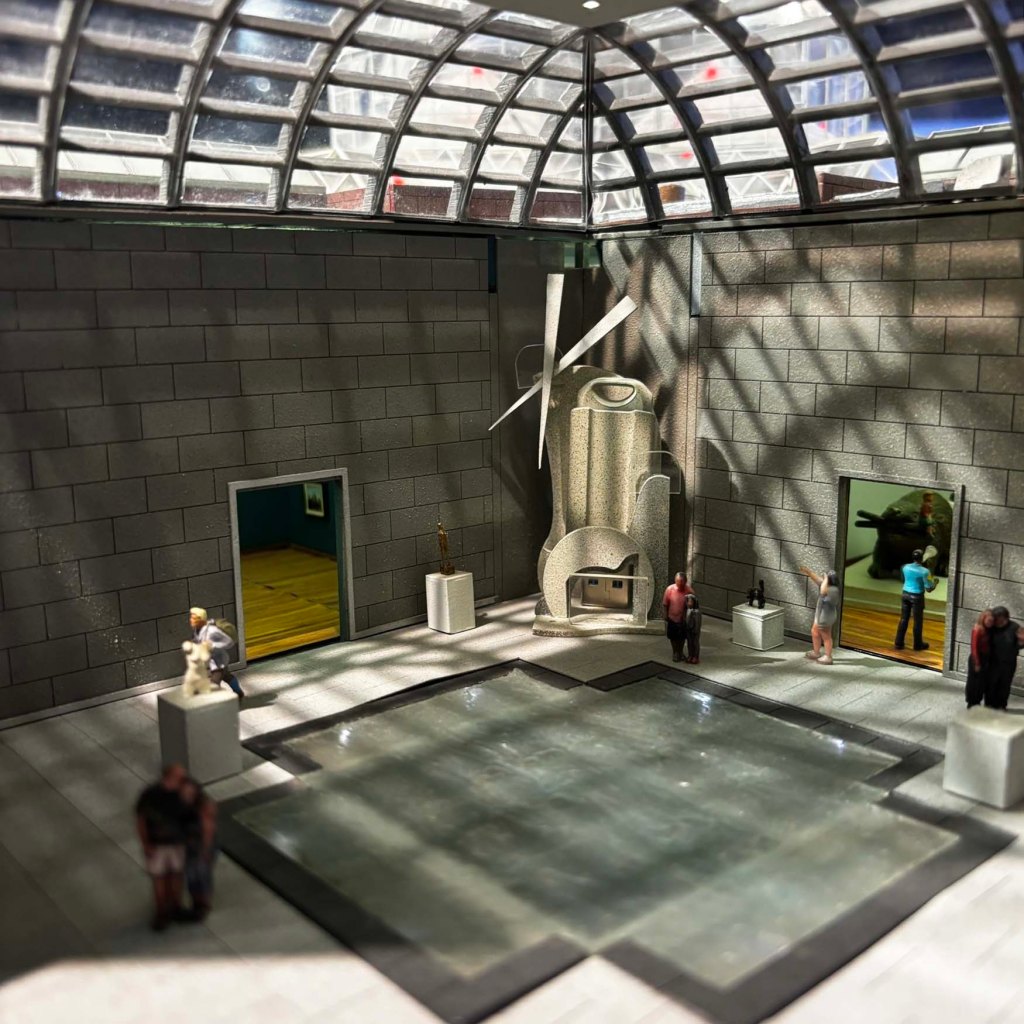
What’s my favourite Easter Egg? Besides Bigfoot? (Look for him in Little Quebec!) I’d have to say the time capsule that is hidden in the National Gallery in Little Ottawa. Jean-Louis shared the story behind this Easter Egg with me.
The day before Little Canada opened its doors, the entire team contributed something to a USB stick, and sealed it away in this tiny gallery space, masquerading as a sculpture. The plan is to open this tiny time capsule when the building lease is up—20 to 30 years from now! I love the idea of a time capsule, it’s a moment frozen in time, much like a cemetery is.
Speaking of cemeteries, Heidi was very kind, making sure to point them out as we travelled through all the exhibits.
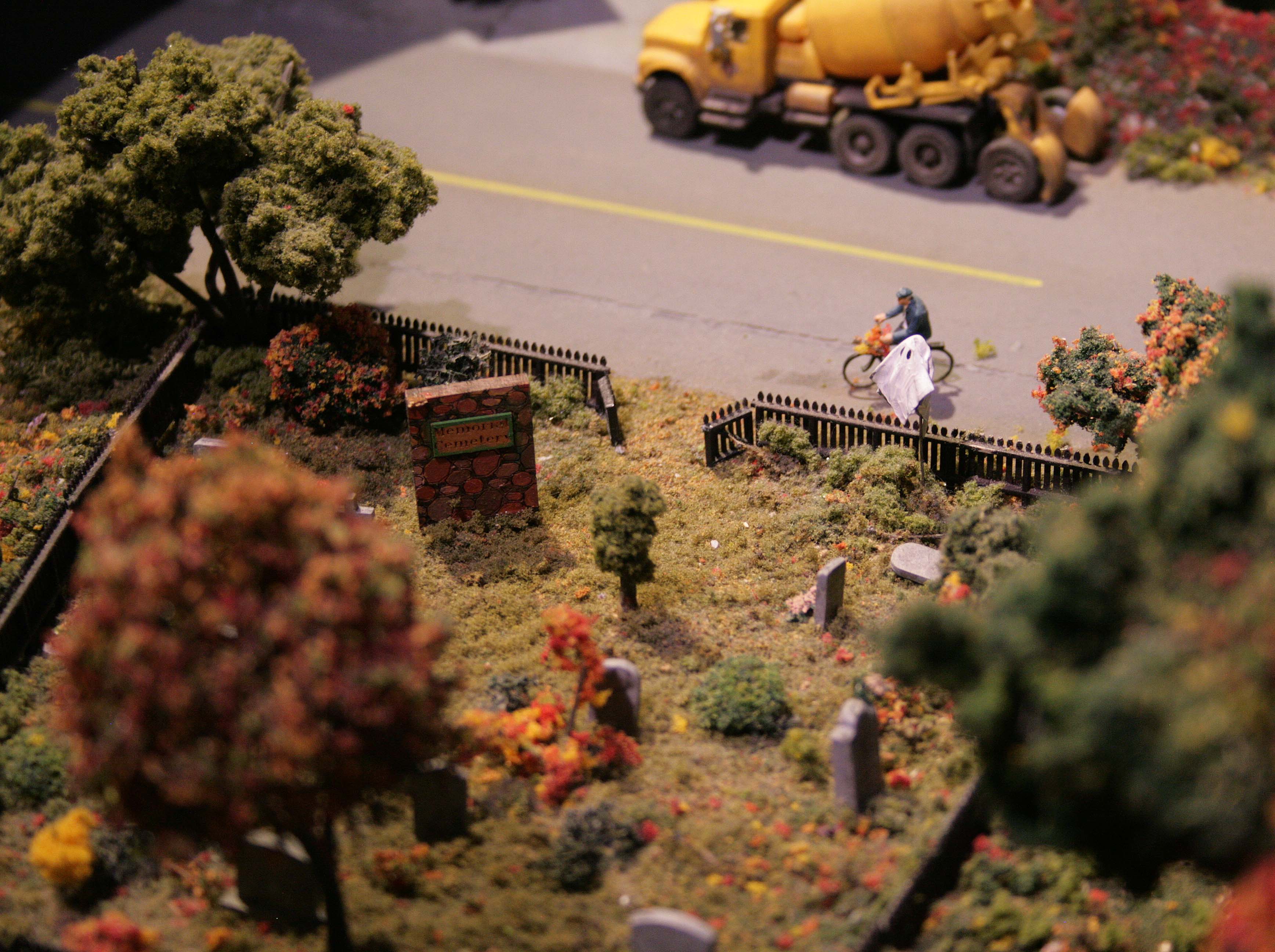
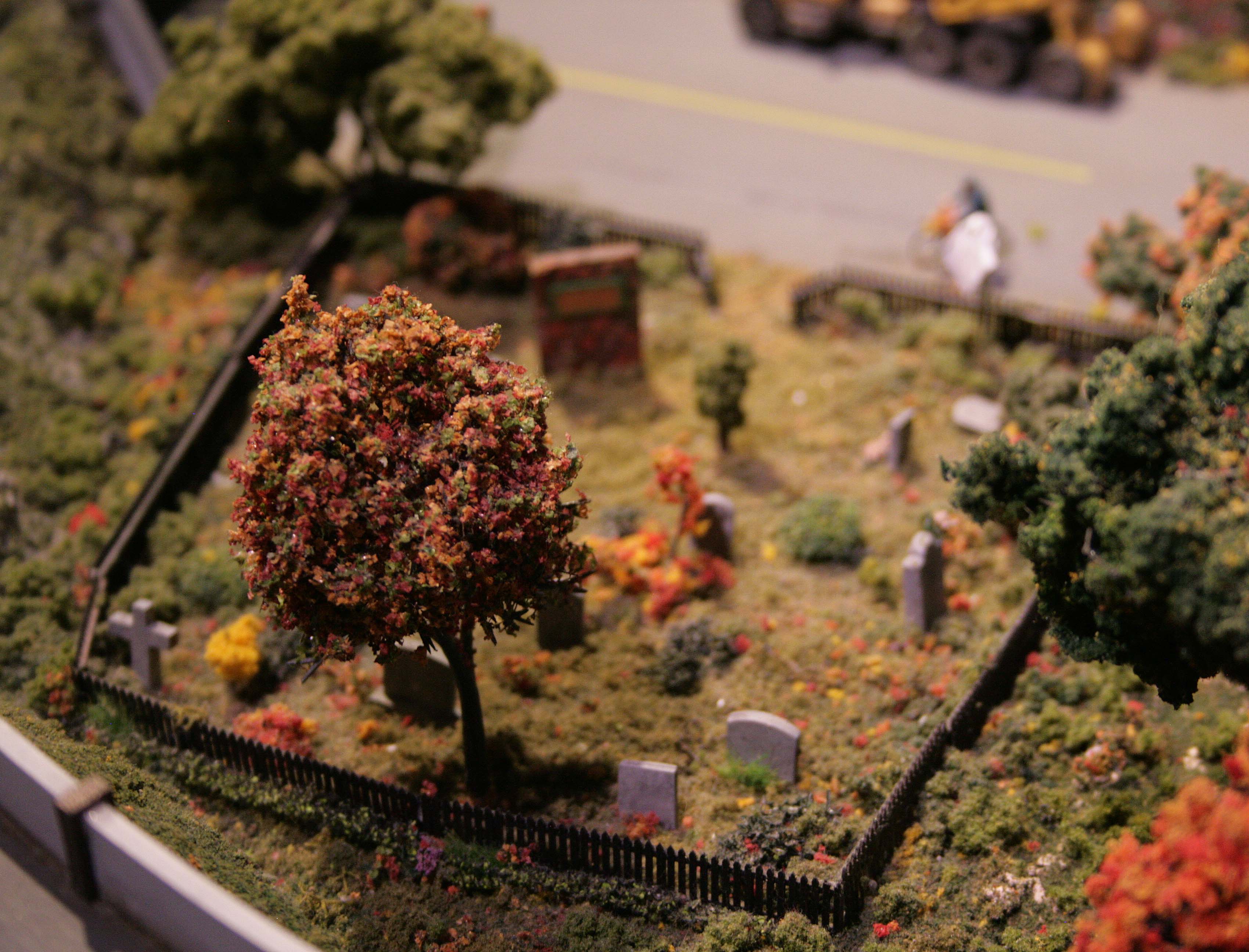
The first cemetery was tucked in among the highway in the Little Golden Horseshoe. A little stone cairn sits at the entrance, with the name Memory Cemetery carved into it. A handful of gravestones sit within a fence, surrounded by trees in full autumn colours. This little cemetery is not based on any real-world cemetery but is an example of a small rural cemetery, with its own resident ghost that sits on one of the fence posts. A good example of some of the whimsy that can be found throughout Little Canada.
Memory Cemetery in Little Canada
The second cemetery we found was in Little East Coast. This rural cemetery is based on Cavendish Community Cemetery, in Prince Edward Island. It features a replica gravestone of Lucy Maud Montgomery, the Canadian author best known for her Anne of Green Gables book series. Surrounded by fall colours and marked by a replica cemetery sign, that even includes “Resting Place of L.M. Montgomery” in impossibly small type. This cemetery is also a busy one, with some people paying their respects, and others having what I first thought was a picnic—until I looked closer at my photos and realized it was a Ouija board session! Another example of the unexpected storytelling hidden in these tiny scenes.
Both of the cemeteries were small, but incredibly detailed—down to the engraved names and the uneven ground. I can’t say I ever photographed a cemetery in a 1:87 scale before!
Cavendish Community Cemetery in Little Canada
Scattered throughout all the little scenes were also tiny monuments and war memorials, similar to what you would find while wandering a small town or city. It’s interesting to note how prevalent these places of memorial and remembrance really are.
As we explored the display wall, where some of the 5-inch Little Me figures are displayed, there is also a small section devoted entirely to the Vimy Ridge Memorial. Even scaled down, it’s a striking memorial. Designed to commemorate Canadians who fought and died in World War I, the real Vimy Ridge Memorial in France is a place of reflection and national pride. I was struck by the thought that cemeteries and monuments—no matter their size—inspire memory, honour, and connection.
Vimy Ridge Memorial in Little Canada
It’s easy to see how much heart goes into every scene and detail. At the Maker’s Window, we had the chance to speak to some of the lovely women who bring these miniature scenes to life. The attention to detail, and at such a small scale, is amazing! Talking to them made me realize that this isn’t just about scale and architecture. It’s about the people behind the scenes, pouring care, creativity, and pride into every tiny building, street, and story.
Of course, I couldn’t visit Little Canada without getting Littlized!
The Littlization process allows you to have a 3D scan of yourself turned into a miniature figurine, a Little Me, to take home or be placed somewhere in the display. It’s a fun nod to personal storytelling and a reminder that all these little pieces make up something much bigger.
We spent about three hours exploring the exhibits, and I could easily see myself going back again and still not spotting every detail. There’s history, humour, sentimentality, and a strong sense of community behind it all.
Little Ottawa in Little Canada
Little Canada may be small in scale, but its message is big: Canadian stories matter. Whether that’s the story of a national battle memorial, a hidden USB time capsule, or a tiny cemetery, each piece tells us something about who we are, and what we value.
And, if you’re someone like me, drawn to hidden stories, Little Canada has no shortage of tiny wonders to explore.
I’m a bit late to the party with this one, as Wish You Were Here: Adventures in Cemetery Travel by Loren Rhoads was published back in 2013. However, with the rising interest in cemetery tourism in recent years, this book feels more relevant than ever.
Cemetery tourism has grown in popularity as people seek unique, history-rich travel experiences. Whether it’s the quiet beauty of historic graveyards, the famous resting places of notable figures, or the tragic pasts embedded in cemeteries worldwide, visiting burial grounds has become a meaningful way to connect with the past. As more travellers incorporate cemeteries into their itineraries, Rhoad’s collection of essays serves as a perfect companion, offering a mix of history, personal reflection, and travel inspiration.
“Nearly every tourist destination has a graveyard. Yosemite National Park has a graveyard. The Arizona Memorial in Pearl Harbor and the Hiroshima Peace Memorial Park: both graveyards. The #1 tourist destination in Michigan has three cemeteries. America’s best-preserved Gold Rush ghost town has five. Gettysburg is a National Park because it has a graveyard. Some graveyards are even tourist destinations in themselves: the Old Jewish Cemetery of Prague, the colonial burying grounds of Boston, and Kennedy’s eternal flame in Arlington National Cemetery. Jim Morrison’s grave in Pere Lachaise Cemetery ranks in the top five tourist sites of Paris and draws a million visitors a year. Wish You Were Here: Adventures in Cemetery Travel contains 35 graveyard travel essays, which visit more than 50 cemeteries, churchyards, and grave sites around the world.“
Wish You Were Here is an enjoyable read that explores more than 50 cemeteries, churchyards, and grave sites across the world. From the somber Arizona Memorial in Pearl Harbour to the hauntingly beautiful Pere Lachaise Cemetery in Paris, Rhoads captures the stories, significance, and atmosphere of each location.
One of the things I loved most about this book is how immersive it felt. Rhoads is an excellent storyteller, blending her personal experience with the history of each site that makes you feel as though you’re right there with her. Each essay transports you through time and emotion, weaving together moments of awe, reverence, and curiosity. I definitely feel that we are kindred spirits—though she is far more well-travelled than I am!
If you’re interested in cemetery travel, whether as a history lover, a genealogy researcher, or simply someone who appreciates the artistry of old gravestones, Wish You Were Here is a must-read. It offers a wonderful mix of adventure, history, and reflection that makes for an engaging and thought-provoking journey.
And if you enjoy this book, there is good news! Rhoads is currently working on a sequel, Still Wish You Were Here, which is set to be published this year, with the Kickstarter campaign beginning this month. I’m already looking forward to seeing where her travels take her next!
Have you read Wish You Were Here or visited any of the cemeteries mentioned in the book? I’d love to hear your thoughts!
Thanks for reading!
I am always on the hunt for cemetery-related book recommendations. If you are an author and have a cemetery-related book you would like me to review, please reach out at hello@chantallarochelle.ca. I would love to hear from you!
Last Summer, my mother and I took a trip to Wellington County, thanks to a surprise road trip from Guess Where Trips. You might remember the blog post I wrote about the whole experience last year.
One of the most memorable stops on our adventure was the Wellington County Museum and Archives, a place that doesn’t just preserve history, but really brings it to life. Nestled between the charming towns of Fergus and Elora, this museum isn’t just a collection of artifacts—it’s a storyteller, sharing the life stories of the people who once walked its halls.
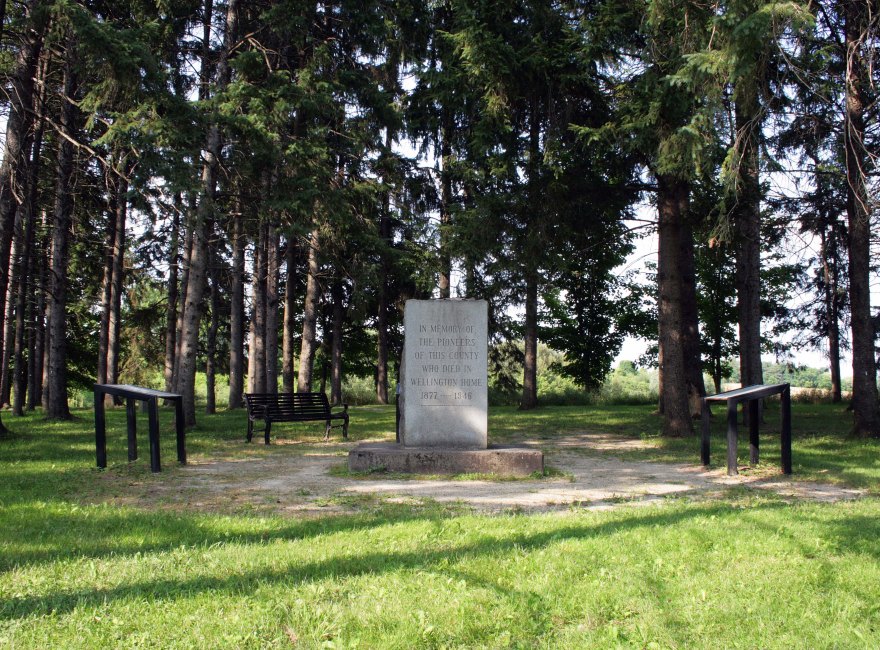
But the museum wasn’t the only thing that left an impact on us. Today, I want to share a bit more about our experience—both visiting the museum, and the cemetery were some of the House of Industry and Refuge residents were laid to rest.
The Wellington County Museum and Archives is housed in a building with a fascinating and, at times heartbreaking history.
Designated as a National Historic Site, this building holds the title of the oldest remaining rural House of Industry and Refuge in Canada.1 Established in 1877, it originally provided a home for the poor, homeless, and destitute of Wellington County. Over the years, approximately 1,400 men, women, and children sought refuge within these walls.1
Today, the museum has taken on a whole new role. Instead of providing shelter, it now shares knowledge, offering programs, exhibits, and resources that dive into local history, art, and culture.2
And the grounds? Well, they have their own stories to tell.
When my mother and I visited, we started exploring the top floor and made our way down. Although there were many exhibits at the time, including one about 19th-century fashion, I was most drawn to the history of the Poor House itself and the people who had lived there.
Wellington County Poor House
Back in the 19th century, poverty was seen as a moral failing rather than an unfortunate circumstance. That’s where places like the Wellington County House of Industry and Refuge came in.3 Also known as the Poor House, it was one of several institutions across Ontario designed to provide shelter and work for those in need. Life here wasn’t easy, but the goal was to make the Poor House as self-sufficient as possible.3
The facility operated as an industrial farm, with thirty acres of land used to grow oats, turnips, wheat, and even apples from a 100-tree orchard.3 Livestock provided eggs, meat, and fresh butter, while any surplus goods were sold in town to help cover the cost of necessities like sugar, coffee, and bread.3
Life in the Poor House was structured and demanding. Residents—often referred to as “inmates”—had to work to earn their keep.3 The strict rules and expectations reflected the era’s attitudes toward poverty and self-sufficiency. It wasn’t until 1947 when the facility was renamed the Wellington County Home for the Aged, that things started to shift.3 The term “inmate” was finally dropped and replaced with “resident”—a small but important change.3
The Home remained in operation until 1971 when its last residents were moved to Wellington Terrace, a new senior home in Elora.3 Just a few years later, in 1975, the building reopened as the Wellington County Museum.3
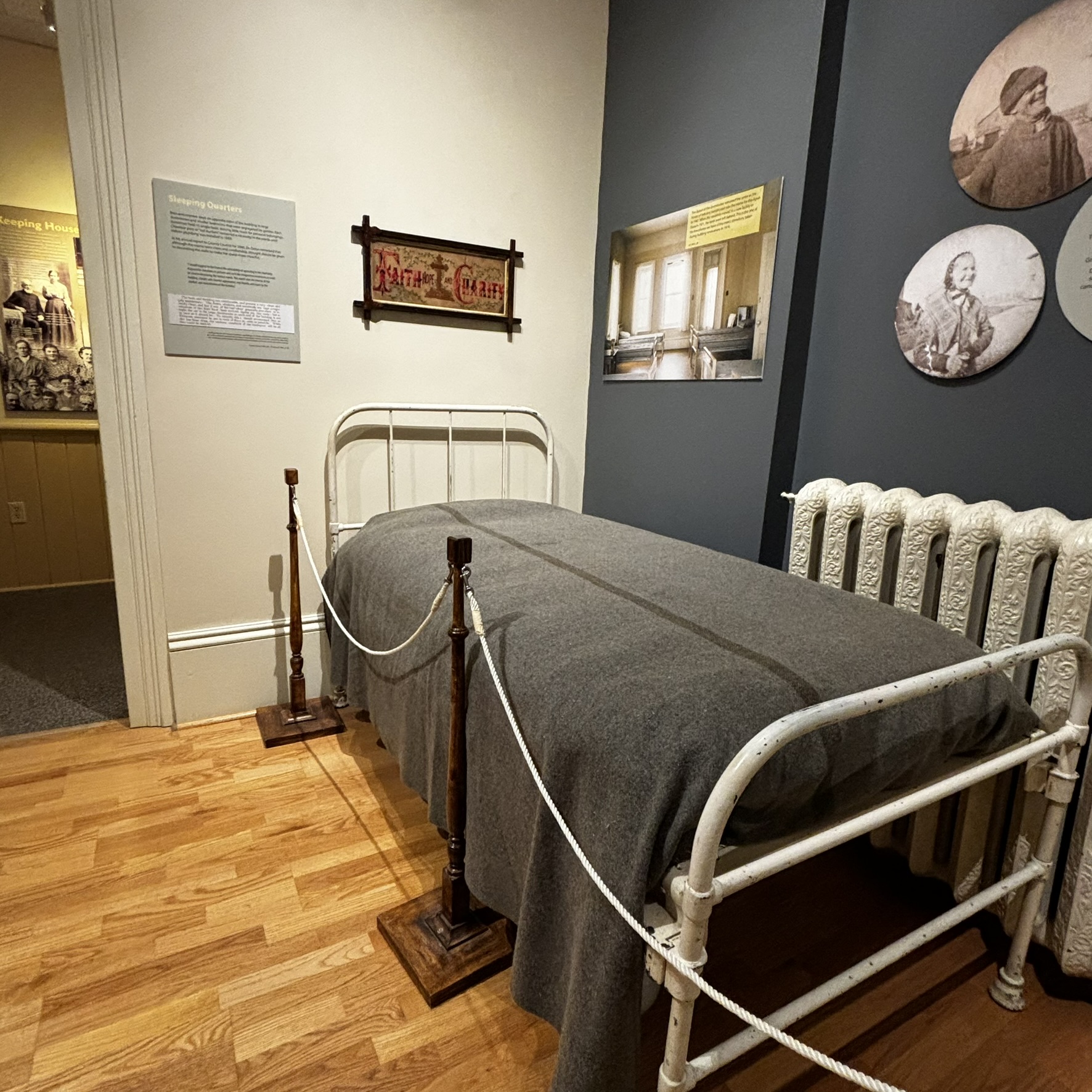
Walking through the museum, I couldn’t help but feel the weight of its history. Panels line the walls, sharing stories of past residents, and exhibits display artifacts that once belonged to them. Although the items were simple—a worn bed, an old suitcase—they evoked so much emotion. These weren’t just objects, they were pieces of someone’s life.
Considering the hardships experienced by its former residents, it’s no surprise that some people believe the museum is haunted. Visitors and staff alike have reported seeing shadowy figures, hearing unexplained footsteps, and even witnessing elevators moving on their own.4
The most well-known spirit is said to be that of a former resident named Anna. People have claimed to hear women arguing in empty rooms, or furniture being rearranged.4 Is it just an old building settling? Or is history lingering in more ways than one?
House of Industry and Refuge Cemetery
When the museum closed for the day, my mother and I made our way to the cemetery—a quiet but powerful reminder of the lives that once filled the Poor House.
A short drive took us to a small parking lot near the cemetery entrance. From there, a scenic trail led to a repurposed train bridge that spans the highway. It was a beautiful day, and the surrounding forest was lush and green. After crossing the bridge, we descended a staircase with informational panels that peeked out from behind the foliage. The staircase led us down to a clearing, where tall trees provided shade over a few gravestones.
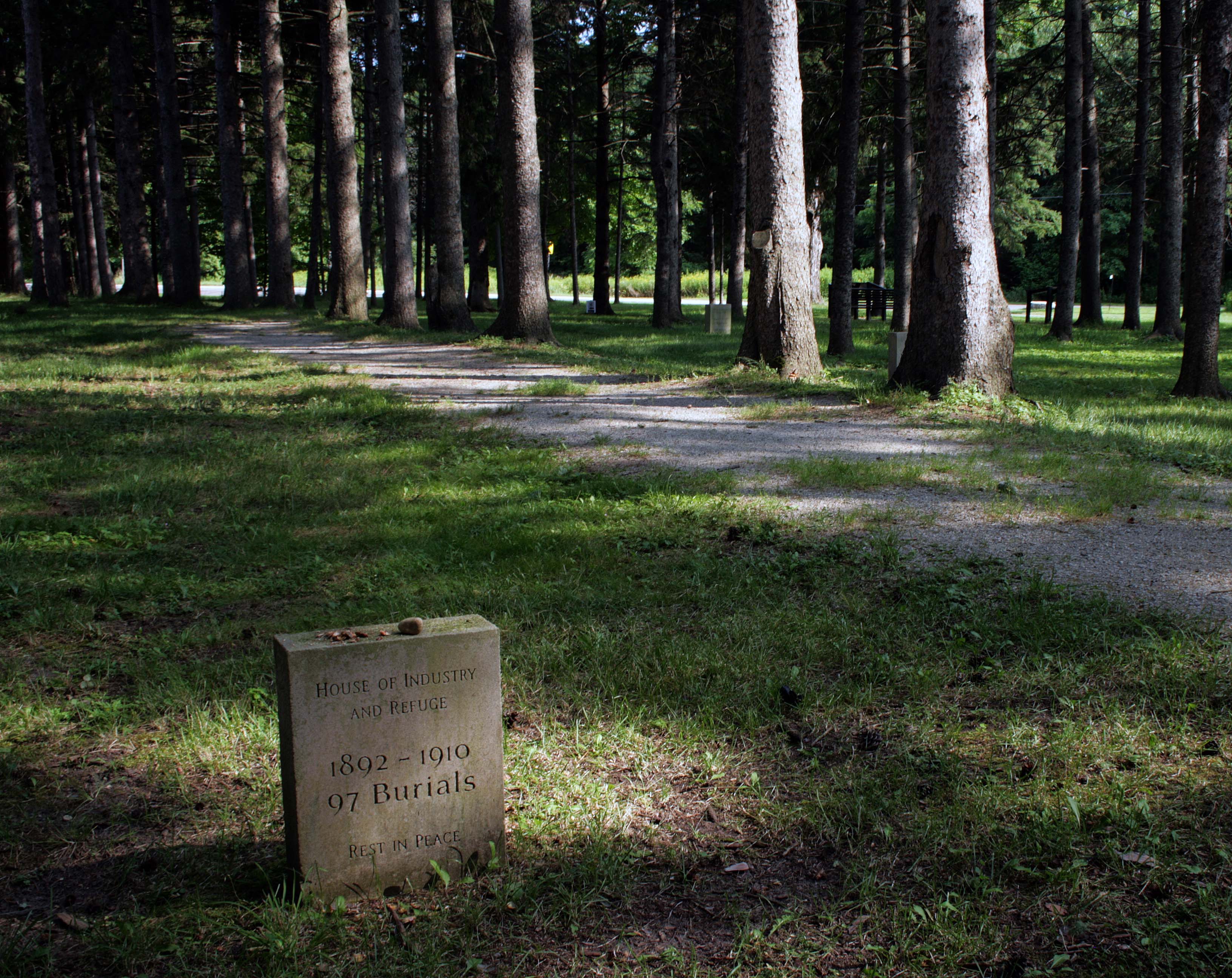
The cemetery is the final resting place for 271 men, women, and children who had no family to claim them.5 Originally, the graves were marked with simple wooden crosses, but over time, those markers deteriorated and disappeared. Today, small gravestones mark the sections of the cemetery, and a larger central monument lists the names of those buried here.
James Burk was the first to be buried in the cemetery on December 21, 1877.5 Often only the gravedigger, clergyman, and undertaker were present for the burials.5 The oldest person to be buried in the cemetery was 106 years old, while the youngest was under a year old.5 The last burial to take place here was for Samuel Nichols who passed away on December 14, 1946.5
Standing in that clearing, surrounded by the names of those who had lived and died here was quite moving. The stories of some of these individuals might have been lost to time, but the community has worked hard to ensure that they are remembered.
Visiting the Wellington County Museum and the House of Industry and Refuge Cemetery was like stepping back in time. It gave me a glimpse into a world where life was unimaginably hard, but also where people persevered against the odds.
The transformation of the Poor House into a museum and cultural hub is a great example of how we can honour the past while also moving forward. History isn’t always easy to confront, but it’s essential to remember—because it shapes who we are today.
Have you ever visited a historic site that really stuck with you? I’d love to hear your thoughts in the comments. If you’re ever in Wellington County, I highly recommend stopping by this museum and its cemetery. It’s a place that truly brings history to life.
For this month’s cemetery recipe, I am stepping away from baked goods and trying out something savory. When I came across this simple dip recipe, I knew it had to be my next kitchen adventure.
Nelson passed away on March 8, 2021, at the age of 56. She was a beloved wife, and community member, known for her warm personality and her love of cooking.1 She had a passion for bringing people together, whether through scouting, teaching water aerobics, or sharing her famous homemade pickles.1
One of the many places where Nelson left her mark, was the Red Lantern Steakhouse in Denison, where she worked and made large batches of their well-loved Red Lantern Cheese Dip.
Now, thanks to this recipe etched in stone, her legacy continues for future generations to enjoy.
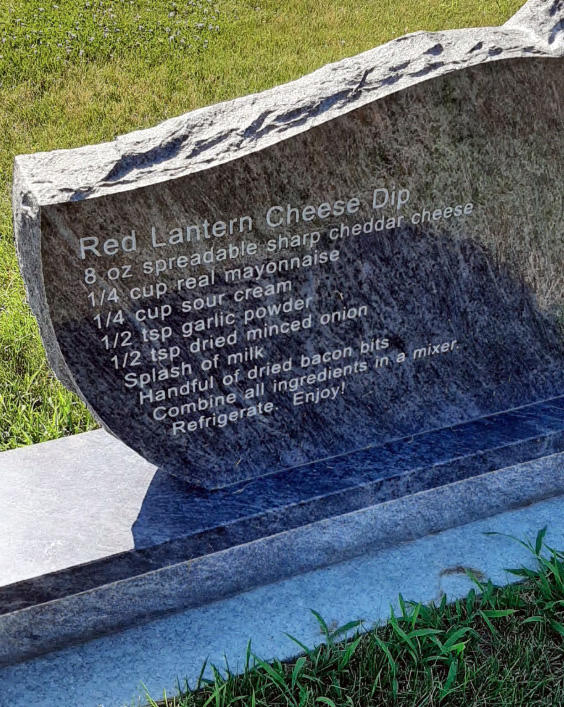
Red Lantern Cheese dip gravestone recipe. Photo by Find a Grave contributor, Christine.
Here is the recipe, as engraved on the tombstone:
Red Lantern Cheese Dip
8 oz spreadable sharp cheddar cheese
1/4 cup real mayonnaise
1/4 cup sour cream
1/2 tsp garlic powder
1/2 tsp dried minced onion
Splash of milk
Handful of dried bacon bits
Combine all ingredients in mixer. Refrigerate. Enjoy!
In the Kitchen
My first attempt at making this dip came with a bit of a challenge. I had trouble finding the exact spreadable sharp cheddar cheese called for in the recipe.
It’s an issue I have run into before. Being in Canada, our products and brands are a bit different from what can be found in the United States, where most of the recipes I have tried come from. I have made do so far, but for this one, I scouted the grocery store to no avail.
I settled on a spreadable aged cheddar, which was all I could find, and hoped it would be a close match.
The process itself was incredibly simple—just a quick mix of ingredients and into the fridge it went! However, the consistency turned out to be a little runnier than I had expected, likely due to the cheese substitution. While the flavours were delicious, the aged cheddar had a much stronger taste, that overpowered the garlic and onion flavours. I had a feeling that it wasn’t quite the taste that Nelson had intended.
Since I didn’t think I had done this recipe justice, I put it aside until I could try again with better success.
And that’s when I got the idea. Could Cheese Whiz be the answer? It’s definitely more in line with the smooth spreadable consistency I was looking for.
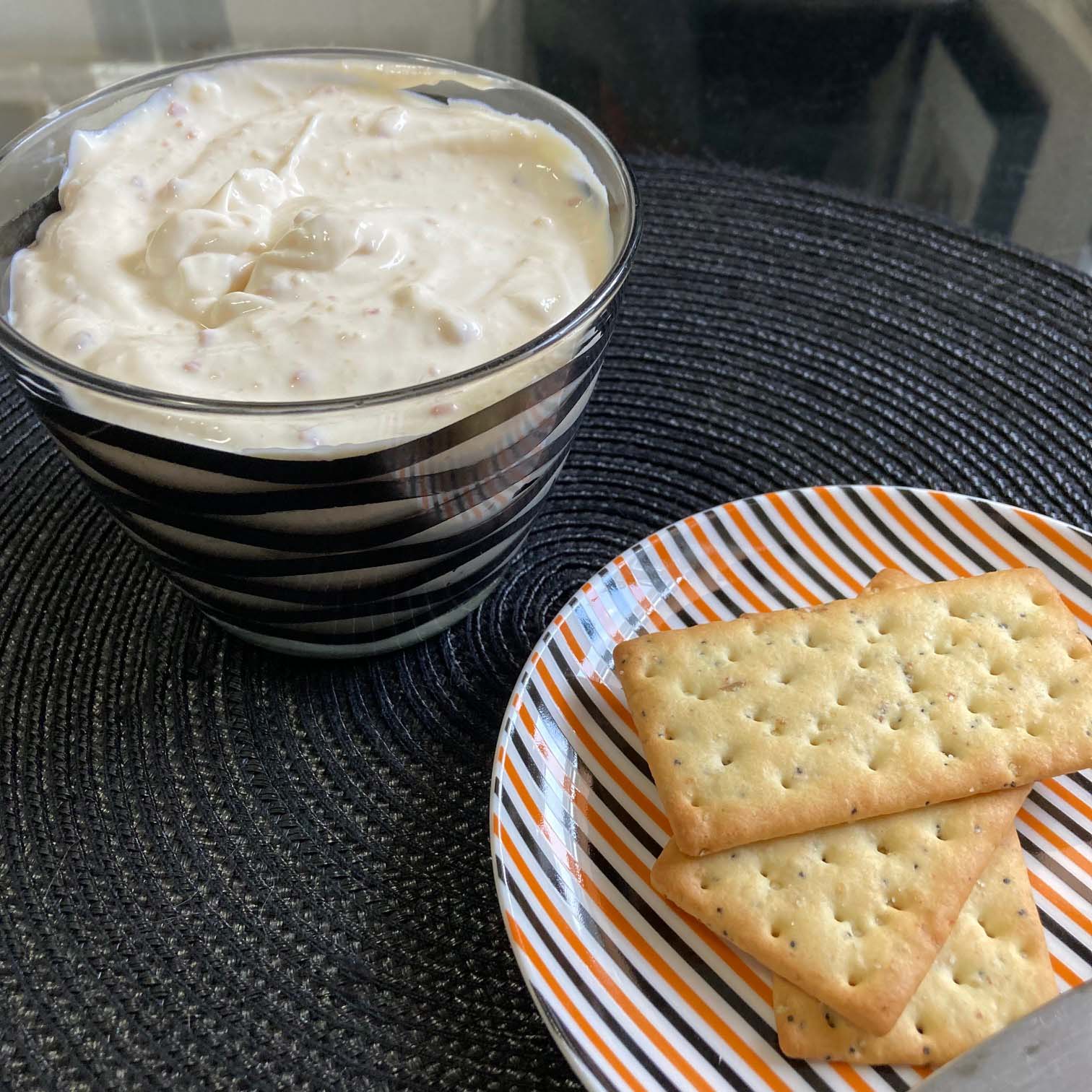
My second attempt at making this recipe went just as quickly as the first, thanks to its simplicity. I gathered my ingredients, this time using a cup of Cheese Whiz in place of the spreadable sharp cheddar cheese. I then mixed them together in a bowl and set the dip aside. This time, I decided to make something special to go with it—I didn’t have any crackers or chips on hand, so I made my own!
Using a pizza cutter, I sliced up two flour tortillas, then coated them in some avocado oil, salt, and pepper before baking them in the oven at 350°F for about 10 minutes. I kept a close eye on them to prevent them from burning, and once they were golden and crisp, they were ready to go.
Excited to taste the dip, I scooped up a bite with one of my freshly baked chips—only to realize I had skipped an important step: refrigerating it! My initial taste was overwhelmingly Cheese Whiz-forward, without the blended flavours I was hoping for. So, I saved some of my homemade chips, and let the dip chill overnight.
The extra time made a big difference. By the next day, the flavours had blended nicely, mellowing out the strong processed cheese taste and bringing out the garlic and onion flavours. This version felt much closer to what I imagined the original dip would taste like.
I would definitely make this recipe again, especially for a family gathering or cozy movie night—it makes a great snack!
There’s something special about making a recipe like this, one tied to a person’s life and memories, and in this case a restaurant. Whether served up at a steakhouse or shared around a family table, this dip is a nice reminder of how cooking is community.
Will you give this recipe a try? I would love to hear how it turned out for you!
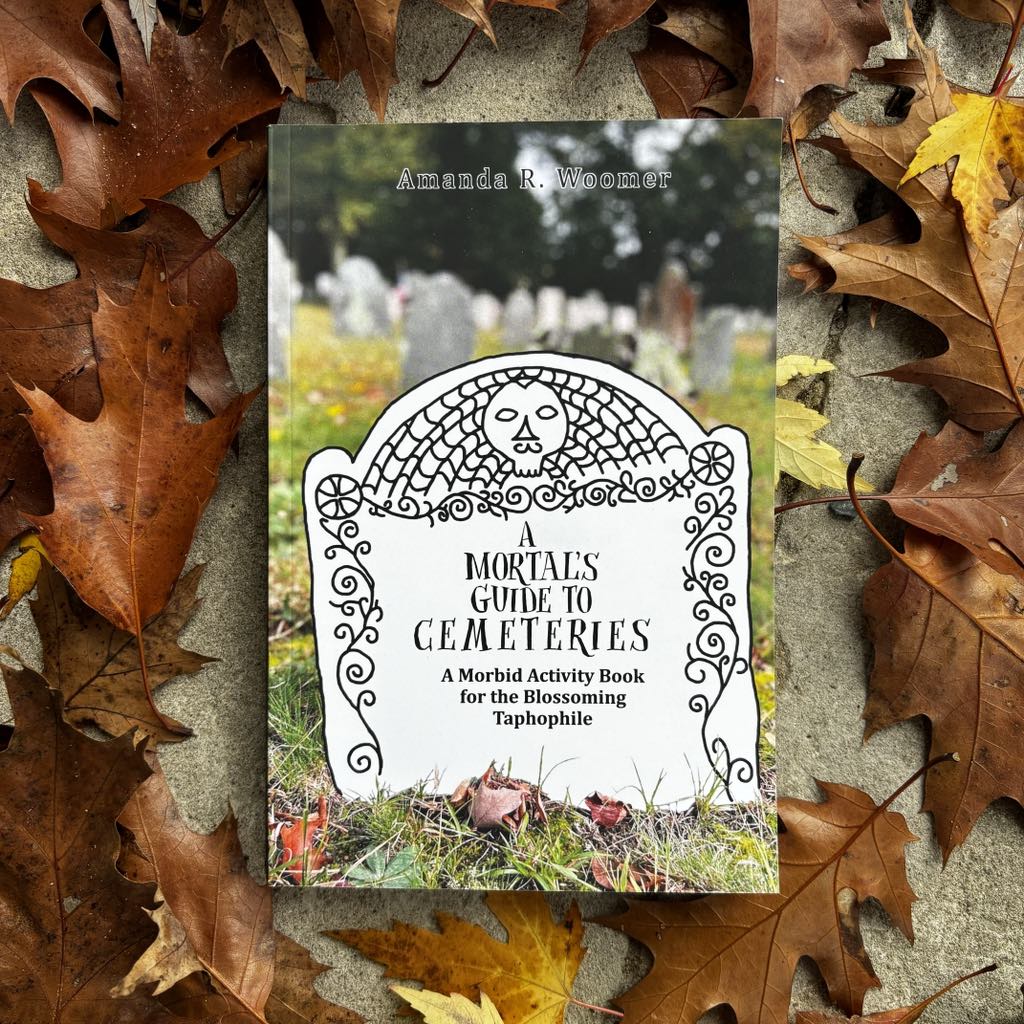
For this month’s cemetery book review, I wanted to share something a little different. A Mortal’s Guide to Cemeteries: A Morbid Activity Book for the Blossoming Taphophile by Amanda R. Woomer is not your typical history book—it’s an interactive, hands-on guide designed to turn every cemetery visit into an adventure.
Published by Spook-Eats Publishing, this unique book blends history, symbolism, and engaging activities, making it a great read for anyone looking to deepen their cemetery appreciation in a fun and personal way. Whether you’re a seasoned taphophile or just beginning to explore the world of gravestones, this book provides plenty of ways to interact with the past.
“Part history book, part symbolism guide, and part activity book, A Mortal’s Guide to Cemeteries encourages readers to break the binding, dog-ear their favorite pages, and take notes as they start wandering through their local cemeteries in an attempt to better acquaint themselves with the concept of death.
Armed with this book, readers will be able to understand the seemingly secret language of gravestones while also respectfully interacting with the graves they find with such activities as Spot a Grave, Sketch a Grave, and the Cemetery Bucket List.”
This softcover book is divided into three sections; history, symbolism, and the largest section—activities. Woomer does a great job of providing a concise yet fascinating introduction to burial practices before diving into the meanings behind common gravestone symbols. But where this book really shines, is in it’s interactive elements—things like Sketch a Grave and the Cemetery Bucket List make exploring cemeteries like a treasure hunt for history lovers.
One of my favorite aspects is how the book encourages you to take notes, sketch what you see, and truly engage with your surroundings. The black-and-white photographs sprinkled throughout are especially helpful for identifying gravestone symbols, making it a useful companion for cemetery visits.
If I had one small critique, it would be the layout. I found myself flipping back and forth between the symbolism section and the activity pages quite a bit. It might have been a little more user-friendly if the symbol descriptions were integrated directly into the activities to save time.
That being said, the Cemetery Bucket List is such a fun addition! I would’ve loved a few blank spaces to add personal cemetery bucket list items, but it’s still a great way to track your explorations.
Overall, if you have even the slightest curiosity about cemeteries, symbolism, or just looking for something interactive, A Mortal’s Guide is a great starting point. It’s a creative, hands-on way to make your cemetery visits more meaningful—and a great addition to any taphophiles collection.
Thanks for reading!
I am always on the hunt for cemetery-related book recommendations. If you are an author and have a cemetery-related book you would like me to review, please reach out at hello@chantallarochelle.ca. I would love to hear from you!
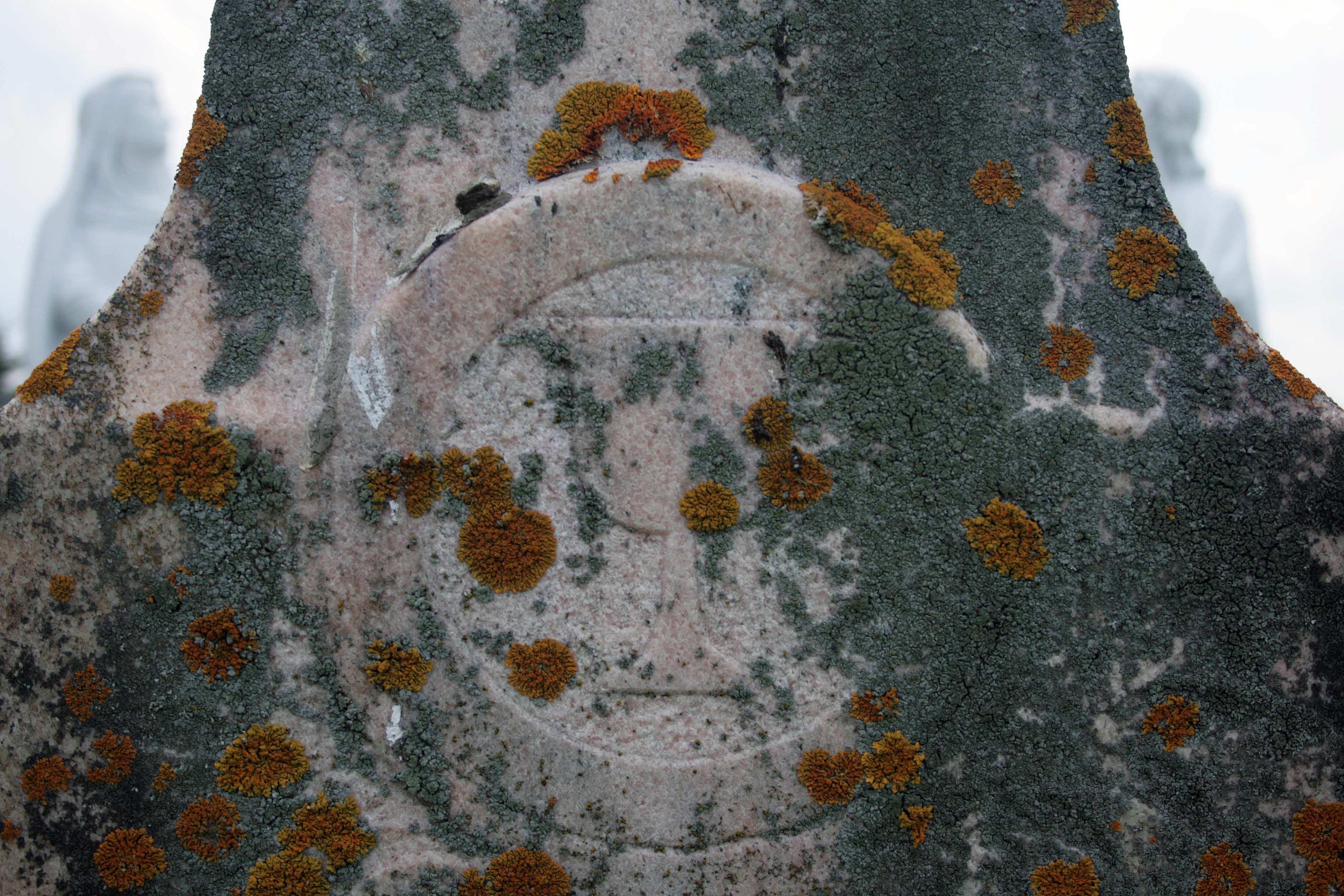
One of my favorite things about wandering through cemeteries is discovering unique gravestone symbols. Over the years, I have noticed that certain motifs pop up again and again. It’s so interesting to see how these symbols can change depending on where you are.
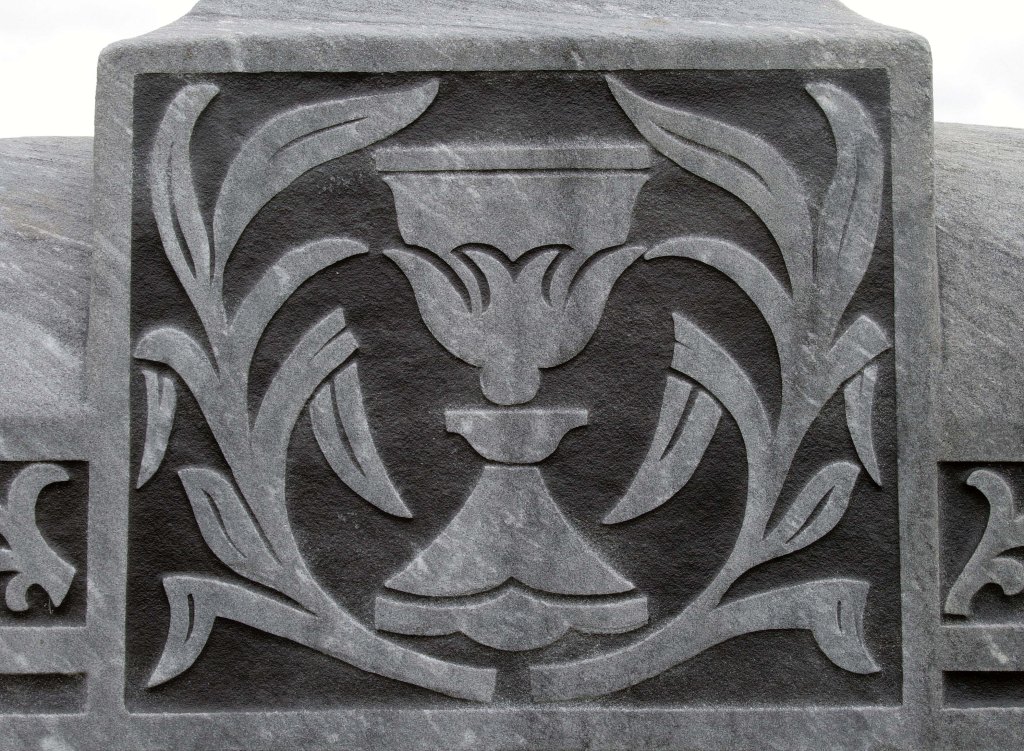
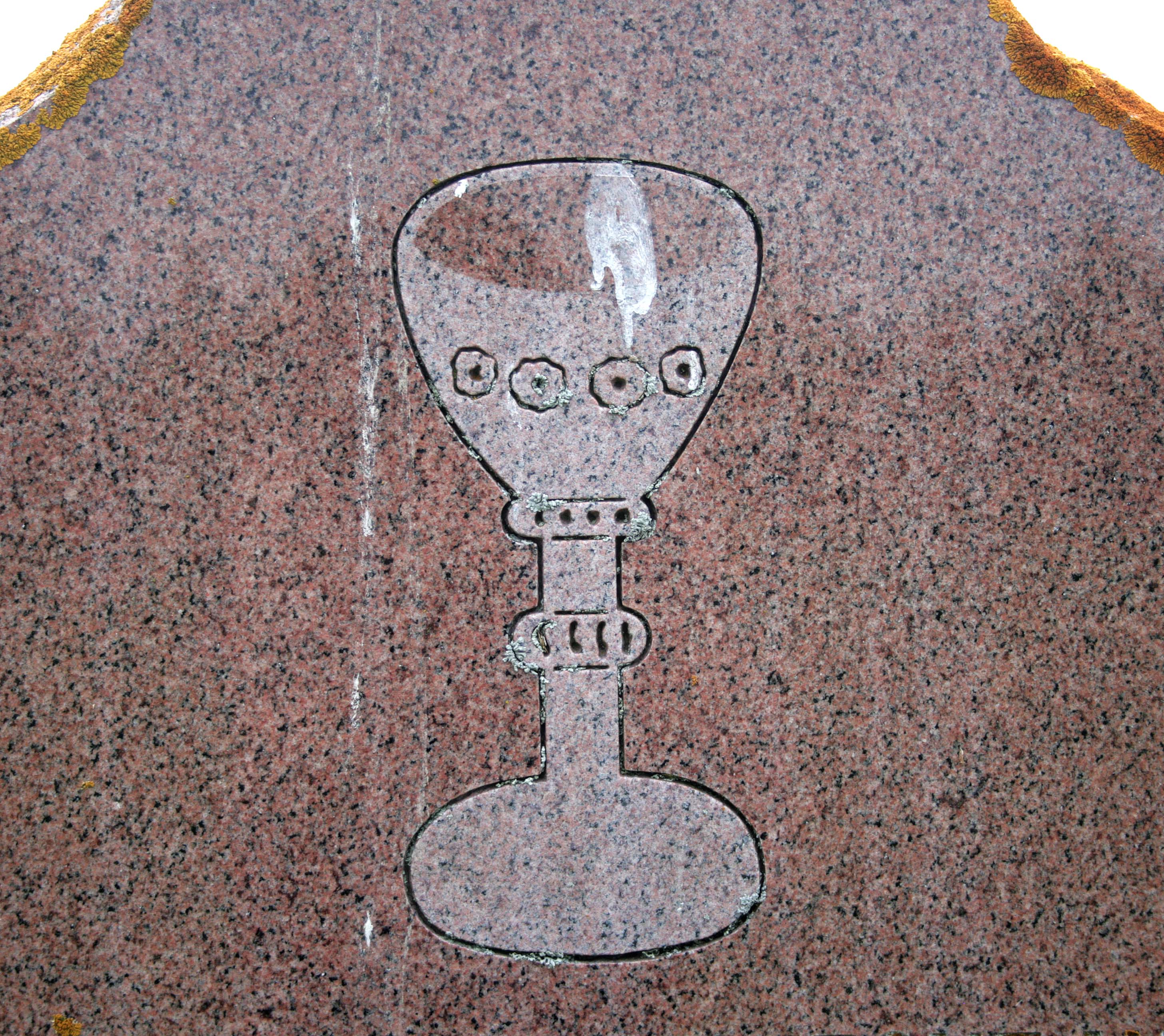
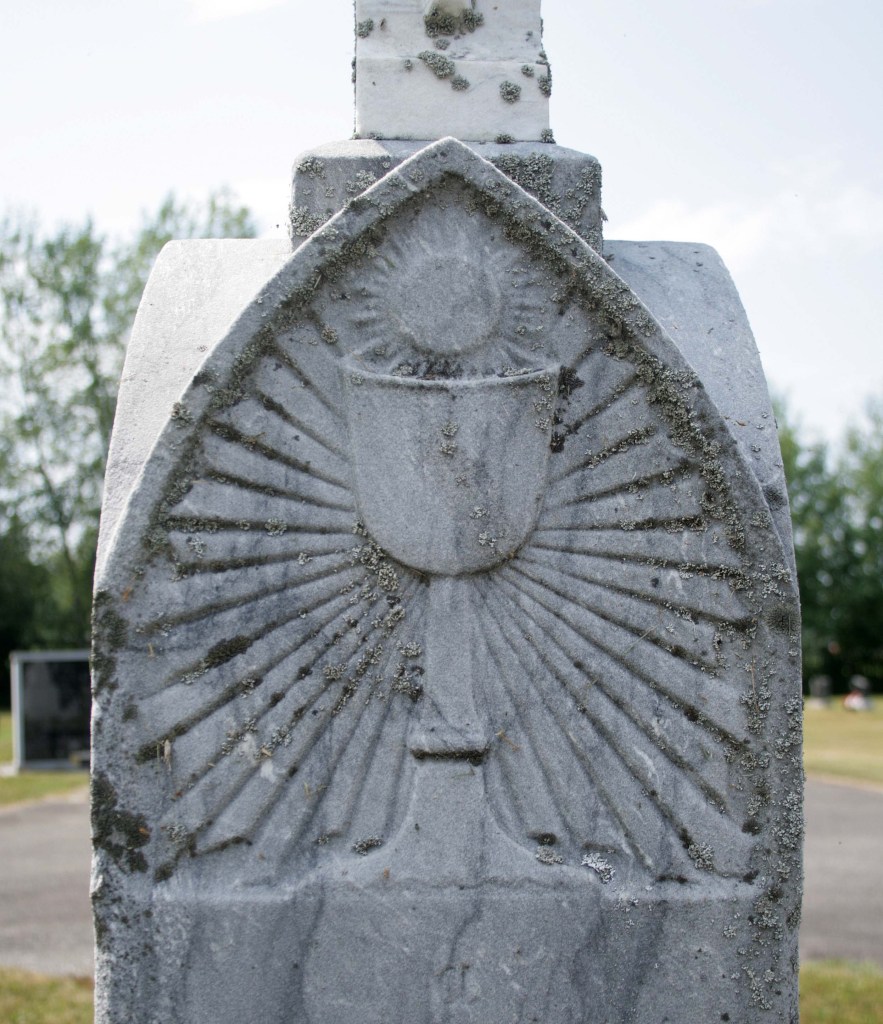
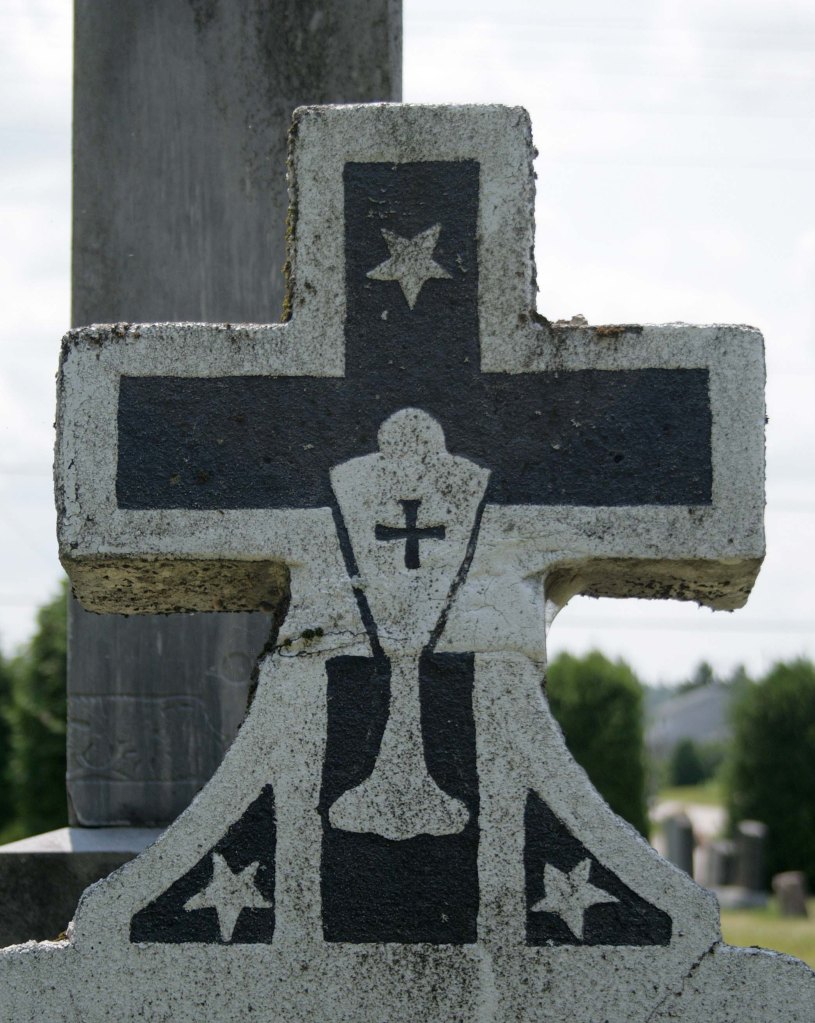
Today, I want to take a closer look at the chalice as a gravestone symbol—what it represents and how it’s been depicted in different places. The variations I have found over the years show just how much it can change depending on location. It’s interesting to note that the chalice is a very common symbol in the Abitibi-Temiscamingue region of Quebec.
The chalice is a Christian symbol, that is commonly depicted as a cup with a stem, similar to a wine glass. It is thought to symbolize Christianity’s holy sacrament and the act of communion. It can also represent mankind’s deep yearning to be filled with Christ’s divine teachings and grace.1
Sometimes the chalice is depicted with a circle above it, symbolizing the consecrated Eucharist, which represents the Catholic rite of Holy Communion. This combination of symbols is often found on the gravestones of priests.2
Have you come across a chalice symbol on your cemetery walks? Or noticed any other symbols that pop up often in your local cemeteries? I’d love to hear about it in the comments.
Thanks for reading!
References:
Understanding Cemetery Symbols: A Field Guide for Historic Graveyards by Tui Snider
After visiting both of Tom Thomson’s graves, I was inspired to visit the graves of all the members of the Group of Seven.
As a graphic designer, I have a little background in art history and I have long admired their work. Standing at Thomson’s first resting place at Canoe Lake sparked a desire to pay my respects to the others who also helped shape Canadian art.
So today on the blog, I want to share my visit to the grave of Franklin Carmichael in Orillia, Ontario.
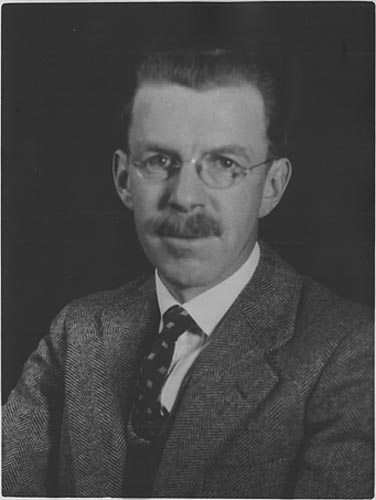
M.O. Hammond (1876–1934), Public domain, via Wikimedia Commons
Franklin Carmichael
Born in 1890 in Orillia, Franklin Carmichael showed early signs of artistic talent, which his mother quickly nurtured by enrolling him in music and art lessons.1 In his teenage years, he worked in his father’s carriage-making shop, where he honed his skills as a designer, striper, and painter.1 By 1910, Carmichael moved to Toronto to attend the Ontario College of Art, where he studied under renowned instructors.1
In April of 1920, Carmichael found his place within the emerging Group of Seven, joining artists like A.Y. Jackson, Lawren Harris, and J.E.H. MacDonald in their mission to capture Canada’s untamed wilderness.1 Despite being the youngest member of the group, Carmichael’s work, particularly his depictions of Ontario’s northern landscapes, were just as striking and bold as those of his peers.1 His travels to Lake Superior and the La Cloche Mountains were the backdrop for some of his most celebrated works, where watercolors became the defining feature of his style.1
Carmichael would go on to teach at the Ontario College of Art and later founded the Canadian Group of Painters, after the Group of Seven disbanded in 1933.1
Orillia Museum of Art & History
The Orillia Museum of Art & History sits in the heart of downtown Orillia and is housed in the historic Sir Samuel Steele Memorial Building. My mother and I parked the car on a side street and slowly walked along the sidewalk to the museum as we took in the views of the downtown core. It was a beautiful fall day when we visited, so the streets were bustling with activity.
We began our museum visit on the top floor and slowly made our way back down, through the myriad of exhibits. The museum’s collection intertwines local history with artistic expression.
When we visited, the Teachers and Their Enduring Impact—The Legacy of Jose Salas exhibit had just opened. This exhibit featured artwork by Jose Salas, an art teacher at the local college, as well as artwork from of his students.2 It was a lovely exhibit that showcased the profound influence a teacher can have on their student’s creative journeys.
While viewing this exhibit, I couldn’t help but think about Carmichael and what kind of influence he had on his students when he taught at the Ontario College of Art. Having taken quite a few art classes myself, I wondered what it may have been like to be taught by one of the famous Group of Seven.
The museum also has a permanent exhibit that features some of the more prominent figures from Orilla, like Gordon Lightfoot, Stephen Leacock, and of course—Franklin Carmichael.
Untitled (Waterfall, South River) by Franklin Carmichael. 1990.2.1 Watercolor, n.d 12.75 x 11 Donated by the Simcoe College Foundation. Orillia Museum of Art & History
After taking in everything the museum had to offer, it was time to make our way to the cemetery to pay our respects.
St. Andrews and St. James Cemetery
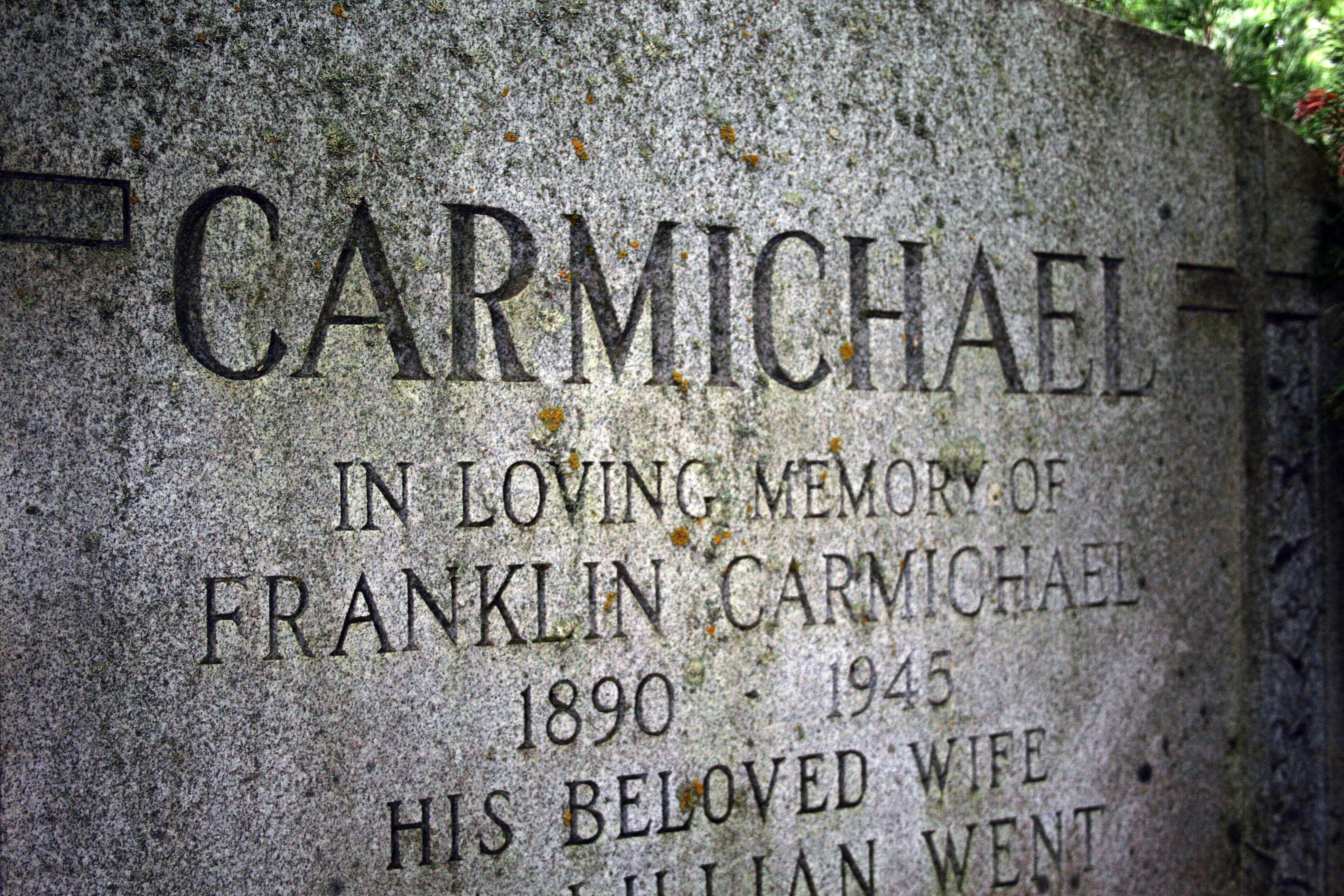
Franklin Carmicheal passed away in Toronto, on October 24, 1945, following a regular day of teaching classes. As he began his drive home, he suffered a heart attack in his car; he was only 55 years old.3
Carmichael is laid to rest in St. Andrews and St. James Cemetery in his hometown of Orilla. His final resting place is marked with an elegant grey granite stone, that is engraved with ivy and crosses. He is laid next to his beloved wife, Ada Lillian Went Carmichael, who passed away in 1964.
Buried alongside Carmichael in the family plot, are his daughter Mary Franklin Carmichael Mastin, and her husband. Mary dedicated much of her life to preserving her famous father’s legacy.4 She was also a writer and journalist, writing about nature and conservation.4 She passed away in 2012, at the age of 91 at St. Gabriel’s Villa, in Chelmsford, Ontario.4
In contrast to the busy streets, the cemetery was very quiet. My mother and I were the only visitors. As I stood at Carmichael’s graveside, I reflected on how his contributions to the art world have influenced and inspired countless generations of Canadian artists. I was a little surprised, though, to find that no flowers or grave goods had been left at his grave, something I had expected for an artist of his caliber. It made me think about how a person’s life story can sometimes be quietly forgotten, and the importance of remembrance.
I really enjoyed my visit to Orillia. Exploring Franklin Carmichael’s legacy was a unique opportunity to reflect on the power of art and how it connects us to the land and each other. From the Orillia Museum of Art & History to his gravesite, it was a lovely trip that gave me a deeper appreciation for Carmichael’s work and the lasting impact he had on Canadian art.
For this month’s cemetery recipe, I decided to venture back into the world of cookies. After recently finding this recipe etched in stone, I thought it would be a perfect time to try another Snickerdoodle recipe.
This will be the second Snickerdoodle gravestone recipe I have tried, and I was curious to see how this version would compare.
Sharon passed away on May 25, 2020, at the age of 73, after a sudden illness. A beloved mother, grandmother, and member of the community, Sharon was known for her love of gardening and spending time with her family—especially her grandchildren.1
Her obituary also mentions how much she enjoyed baking and cooking for her family, which makes this recipe engraved on her tombstone even more special.1
This snickerdoodle recipe is now forever part of her legacy, engraved on her tombstone for future generations to discover and enjoy. It’s a beautiful memorial, accented by the lovely image of a cookie jar and plate of cookies.
Snickerdoodles recipe on the gravestone of Sharon Faye Johnson Lawrence. Photo by Find a Grave contributor M’lynne Snyder.
Here is the recipe, as written on the gravestone:
Snickerdoodles
1 cup soft shortening (part butter)
1 ½ cups sugar
2 eggs
2 ¾ cups gold medal flour
2 tsp cream of tartar
1 tsp soda
¼ tsp salt
Heat oven to 400° degrees. Mix shortening, sugar, and eggs thoroughly. Measure flour by dip-level-pour method or by sifting. Blend all dry ingredients. Stir in. Roll into balls the size of small walnuts. Roll in mixture of 2 tbsp sugar and 2 tsp cinnamon. Place 2 apart on ungreased baking sheet. Bake 8-10 minutes. (These cookies puff up at first then flatten out)
In the Kitchen
In my kitchen, the baking experience was straightforward and fun. This gravestone recipe was more detailed than most, so it was very easy to follow. Mixing the ingredients was a breeze, and I loved the smell of cinnamon that filled the air. Rolling the dough into small balls and rolling them in the sugar mixture was my favorite part of the process.
I didn’t have the exact flour that Sharon’s recipe called for, but I used the Great Value all-purpose flour I had on hand. Even though it wasn’t the Gold Medal brand specified, the cookies still turned out wonderfully.
I did learn that there is a name for the way I usually measure out dry ingredients. I was curious about the dip-level-pour method that was named in the directions, so I did a quick Google search.
Apparently, this is a common measuring technique, where you scoop the flour into a measuring cup till it’s slightly mounded at the top, then you level it off with a flat edge, like a knife, and then pour that into your mixing bowl.2
The recipe made a big batch of cookies. I ended up baking two and half trays full. I think I maybe should have spaced them out a wee bit more, as most of them spread out into each other. In the end, that wasn’t a big deal, though.
The smell as they baked was lovely, and the warm, slightly crunchy cookies that emerged from the oven were just perfect!
There is something really heartwarming about baking a recipe with such a personal story behind it. Sharon’s love for baking and sharing meals with her family lives on in this recipe. It’s easy to imagine her making these delicious Snickerdoodles for her grandchildren, sharing the happiness and comfort that only homemade cookies can bring.
Will you give this recipe a try? I’d love to hear how they turned out! Whether you enjoy them with a glass of milk (my favorite) or as a treat to share with friends, they are a sweet way to remember Sharon’s love for her family and her passion for baking.
But recently, I became curious about what kind of cemetery podcasts might exist. As someone who has always been fascinated by the history, culture, and stories buried within cemeteries, I figured it was time to explore what podcasts had to offer.
From eerie tales of haunted burial sites to deep dives into sustainable burial practices, there’s a whole world of interesting cemetery content out there.
Here are 13 cemetery podcasts you should check out this year.
This short podcast series explores the many ways people have commemorated their dead—whether through gravestones, memorials, or historical markers. Unfortunately, there haven’t been any new episodes since 2019.
Hosted by the Necro Tourist this podcast covers famous graves, infamous hauntings, and all the graveyard gossip. Although there have not been any new episodes since 2023, the early episodes are filled with interesting cemetery stories.
Hosts Lori, Hannah, and Sheena casually chat and share cemetery stories that are sometimes incredible, sometimes eerie, and always interesting. Fair warning though, it can take a while for them to get into the good stuff.
Hosted by Caitlin Howe and Frances Ferland, Grave Escapes brings the voices of the departed back to life. Each episode uncovers a new life story, offering a deep dive into the lives of those now at rest.
Grave Matters dives into the complex connections between death, cemeteries, and culture. Episodes cover sustainable burial practices, the rise of natural burial grounds, and shifts in how we think about death care with thought-provoking discussions.
For those who enjoy a good historical ghost story, The Grim offers well-researched spine-chilling tales of haunted cemeteries and eerie graveyard legends from around the world.
Hosts Jennie and Dianne explore old cemeteries, their preservation, and the lives of those buried there. Their deep dives into these sometimes forgotten histories are both fascinating and informative.
This podcast explores cemeteries and burials worldwide, uncovering the inspiring stories and eerie legends that have grown from these final resting places.
Hosted by Liz Clappin, Tomb With A View offers an insightful exploration of American cemeteries, focusing on their history, preservation, and cultural significance.
This podcast is primarily focused on the funeral industry, Undertaking regularly explores topics involving cemeteries and burial practices. Filled with insightful interviews with industry professionals, each episode offers a unique and cultural look at death.
While these next three podcasts aren’t solely focused on cemeteries, each features episodes that delve into cemetery-related topics or are closely related to cemeteries and graveyards.
Created by The Order of the Good Death, this podcast explores the history of death, burial, and mourning practices across different cultures and eras. While not specifically focused on cemeteries, it often touches on fascinating stories and histories that are closely connected to them.
The official podcast of The Haunted Walk, Haunted Talks explores the paranormal, dark history, and ghostly tales. Some episodes venture into haunted cemeteries and the eerie legends that surround them.
Author J.W. Ocker is all about visiting strange and unusual places. Cemeteries and burial grounds sometimes make their way into episodes, as Ocker visits and explores the stories behind odd and interesting sites.
Whether it’s the history, the stories, or the spooky tales—there’s sure to be a podcast on this list to satisfy your curiosity.
Is there a podcast I should add to the list? Let me know in the comments.
























 Cemetery Photography by Chantal Larochelle