Stone Stories: The Screaming Heads

Writing these weekly blog posts, I often feel like a travel writer. Cemetery tourism is one of my favorite things! For this week’s blog post I wanted to share another cemetery road trip destination—The Screaming Heads.

At the beginning of June, I went on another Birthday weekend road trip. This trip was a mix of cemetery visits, museums, and attractions. We visited 15 cemeteries, played a game of Cemetery Bingo, and visited the Wiseman’s Corner Schoolhouse Heritage Centre, which happened to have a gravestone on its grounds. 

The main attraction of this trip, and the whole reason we visited Burk’s Falls, was to finally visit and experience The Screaming Heads, in Midlothian. We had talked about visiting for about the last 2 years but never managed to make our way there. So this year we made a special birthday trip to visit this unique resting place. You never know where you might find a cemetery.

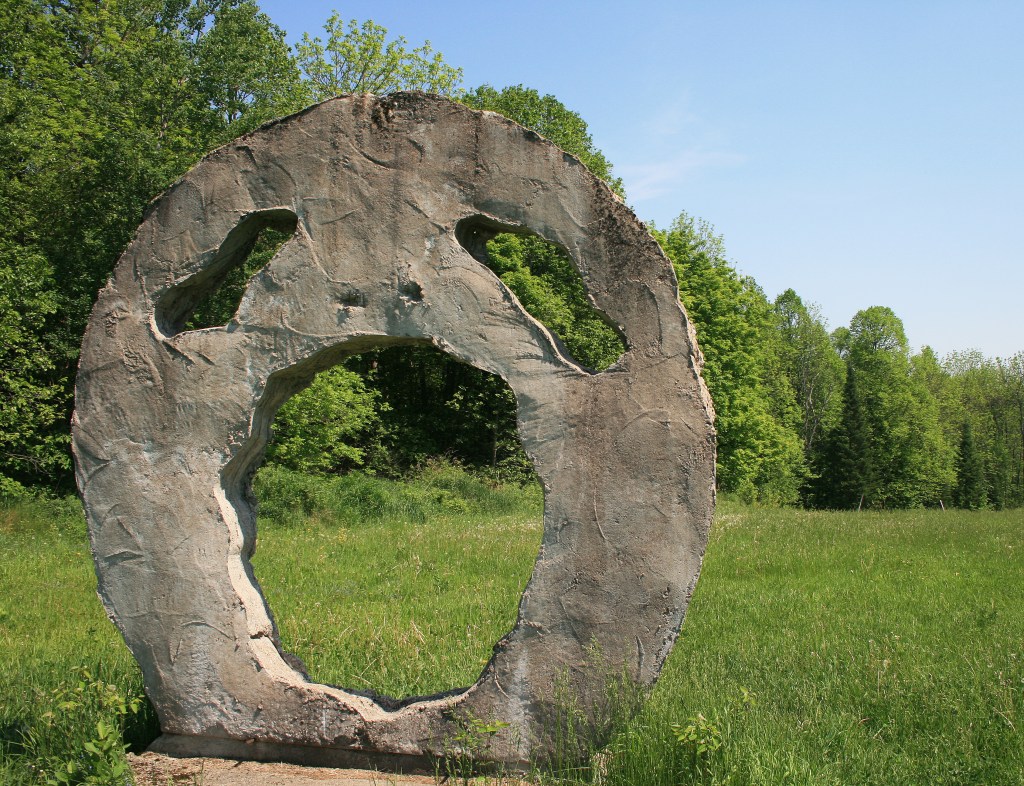
The Screaming Heads is an ever-growing art installation created by Peter Camani, a Canadian artist, sculptor, and retired art teacher. This public open-air art gallery dots the landscape of his 310-acre property.Living among his artwork, Peter lives in the Midlothian Castle, which was built upon a 19th-century derelict farmhouse. 

There is a giant spider web gate made of stone and rebar that surrounds the castle. If the gate is open, you may get a chance to look inside and visit the artist’s studio and living space. Everywhere you look there are interesting details to admire, from the metallic dragon that breathes smoke when the fireplace is lit, to a giant head that houses a studio space within it, to the rows of smaller screaming heads that line the top wall of the gate. 

Located on Midlothian Road, near the small town of Burks’s Falls, The Screaming Heads is an off-the-beaten-path roadside attraction. You know you are getting close if you start spotting smaller screaming heads; like at the Burk’s Falls visitor center and the Wiseman’s Corner Schoolhouse Heritage Centre. Peter opens his property to tourists year-round, from dawn till dusk. You’ll find much more at this attraction than just amazing artwork. The property is also home to about 300 species of birds, including peacocks. Their eerie calls can be heard all around you as you hike through the open fields and bush. There is a small gift shop that has some neat Screaming Heads merch, and on weekends you might also find a small farmers market.
The main attraction is of course The Screaming Heads. The artist has described these 20-foot-tall concrete sculptures as a warning against environmental degradation, “the earth rebelling against what we’re doing to the land.”2 Peter has transformed this once barren farmland, by planting many of the trees on his property and propagating spring-fed ponds. His large concrete structures are arranged in such a way that they form the shape of a dragon when viewed from the air, although today the trees are so large they obscure some of the statues.2

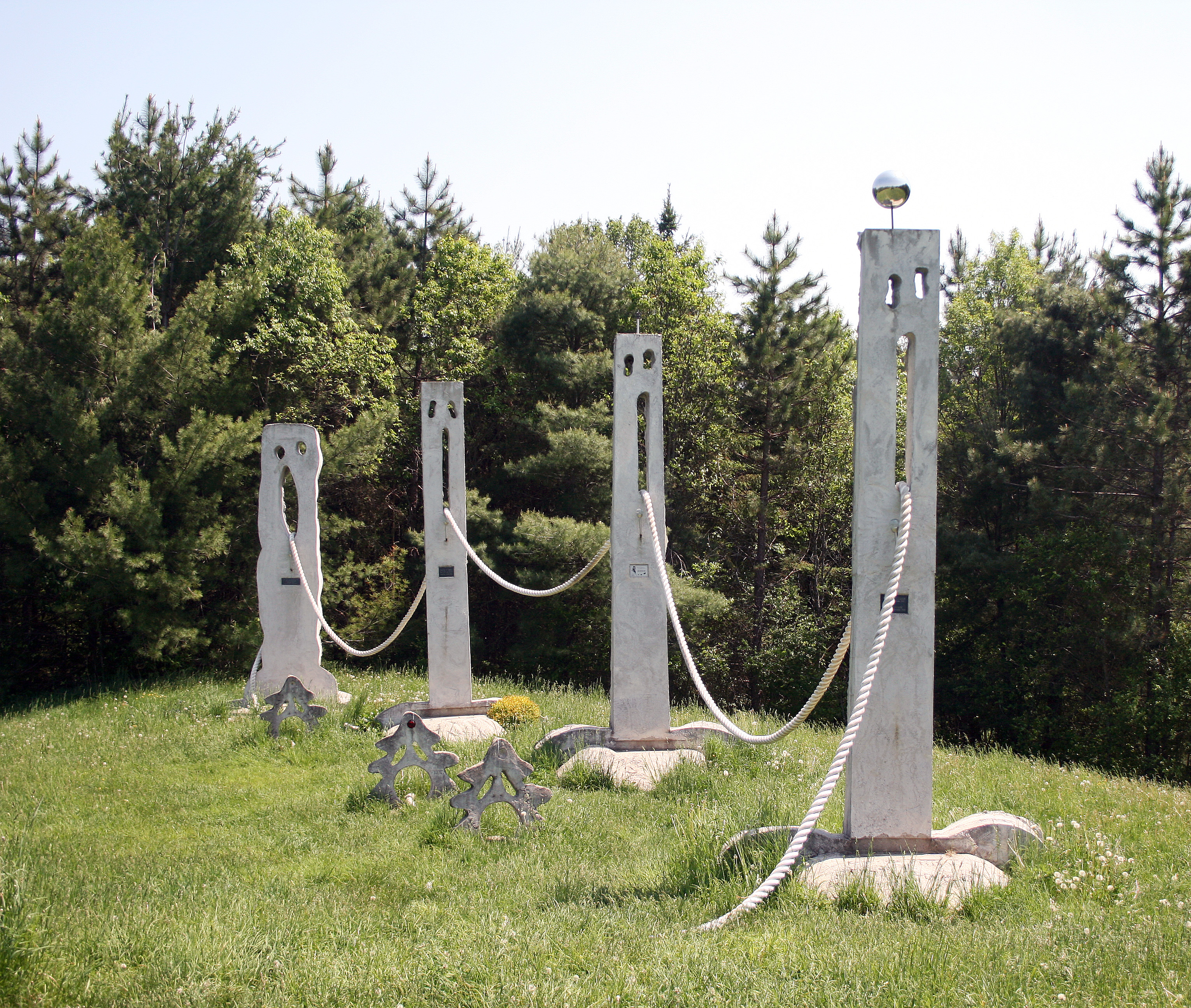
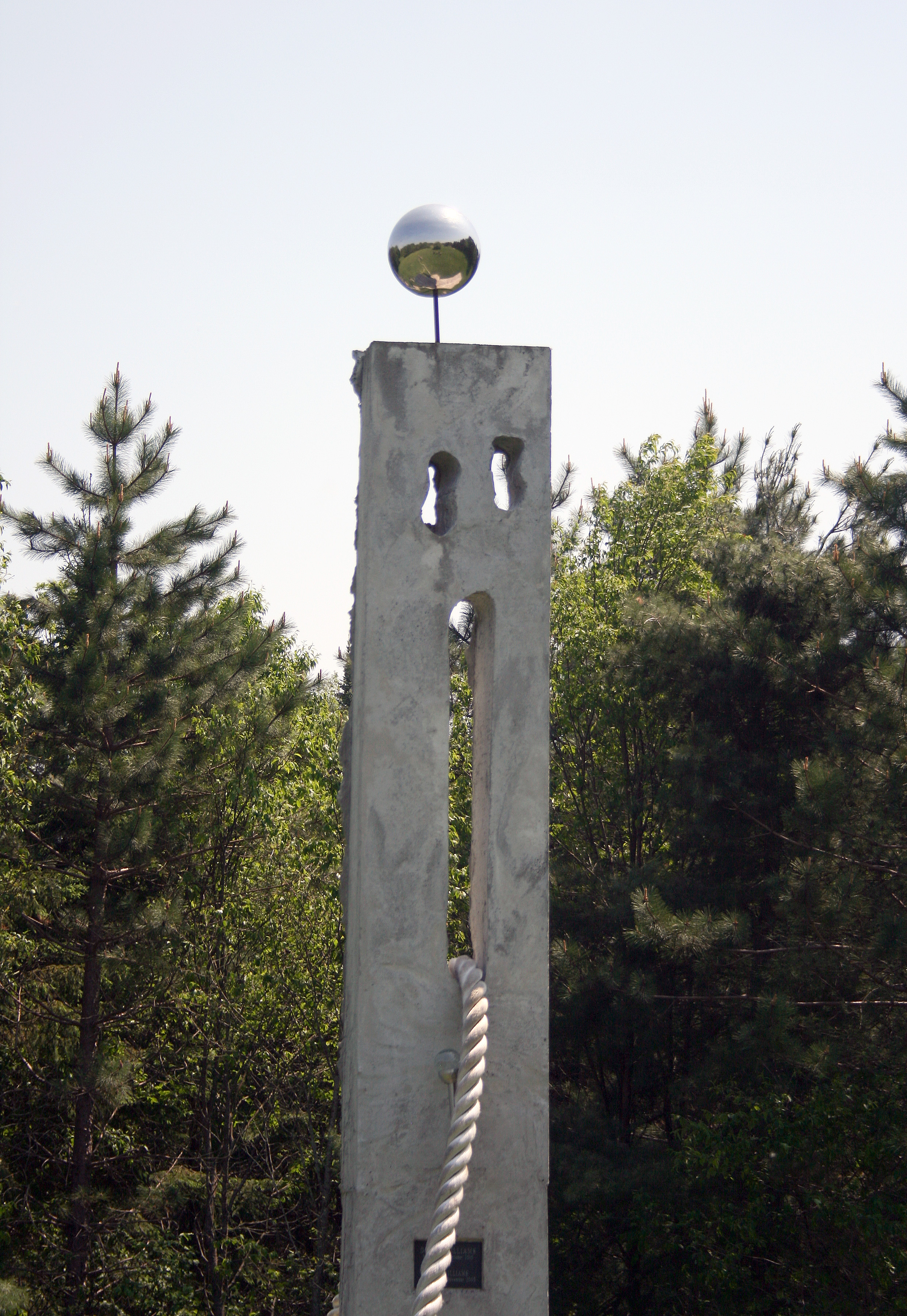
Along with being a unique roadside attraction, The Screaming Heads can also be considered a cemetery. A small grouping of Screaming Heads stand out among the other round Edvard Munch-like sculptures. These tall narrow creations have cremated remains mixed into the concrete. On his website, which now seems to be defunct, the artist had a creative suggestion for where your final resting place could be when you pass away; “Why settle for a small underground plot in the suburbs, when you have the option of joining a vibrant creation that fills the landscape?”3 At one time, If you wanted to be memorialized in this open-air art gallery, you would need $10,000 to reserve your spot.3 Since the website is now gone, I am uncertain if this option still exists.

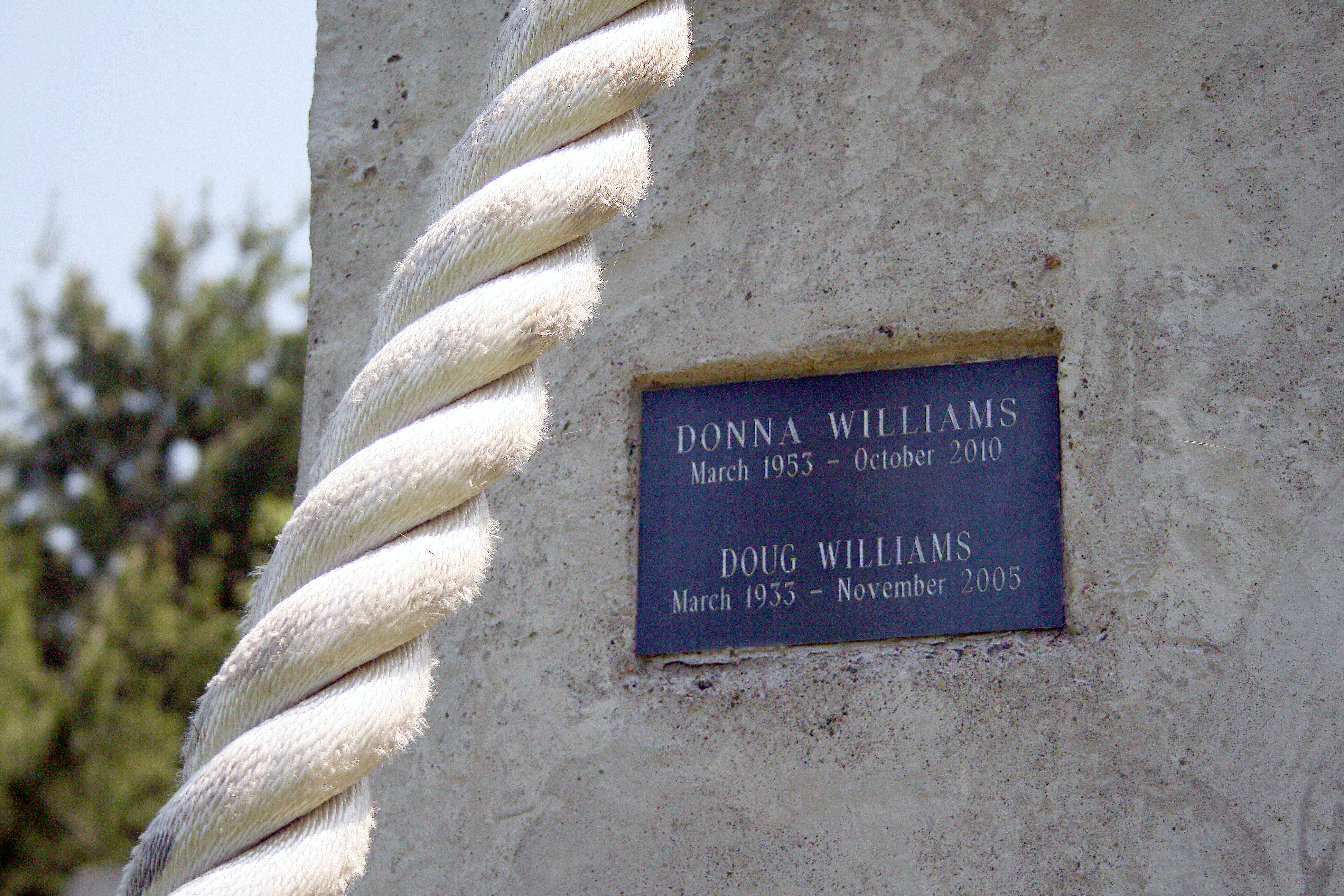
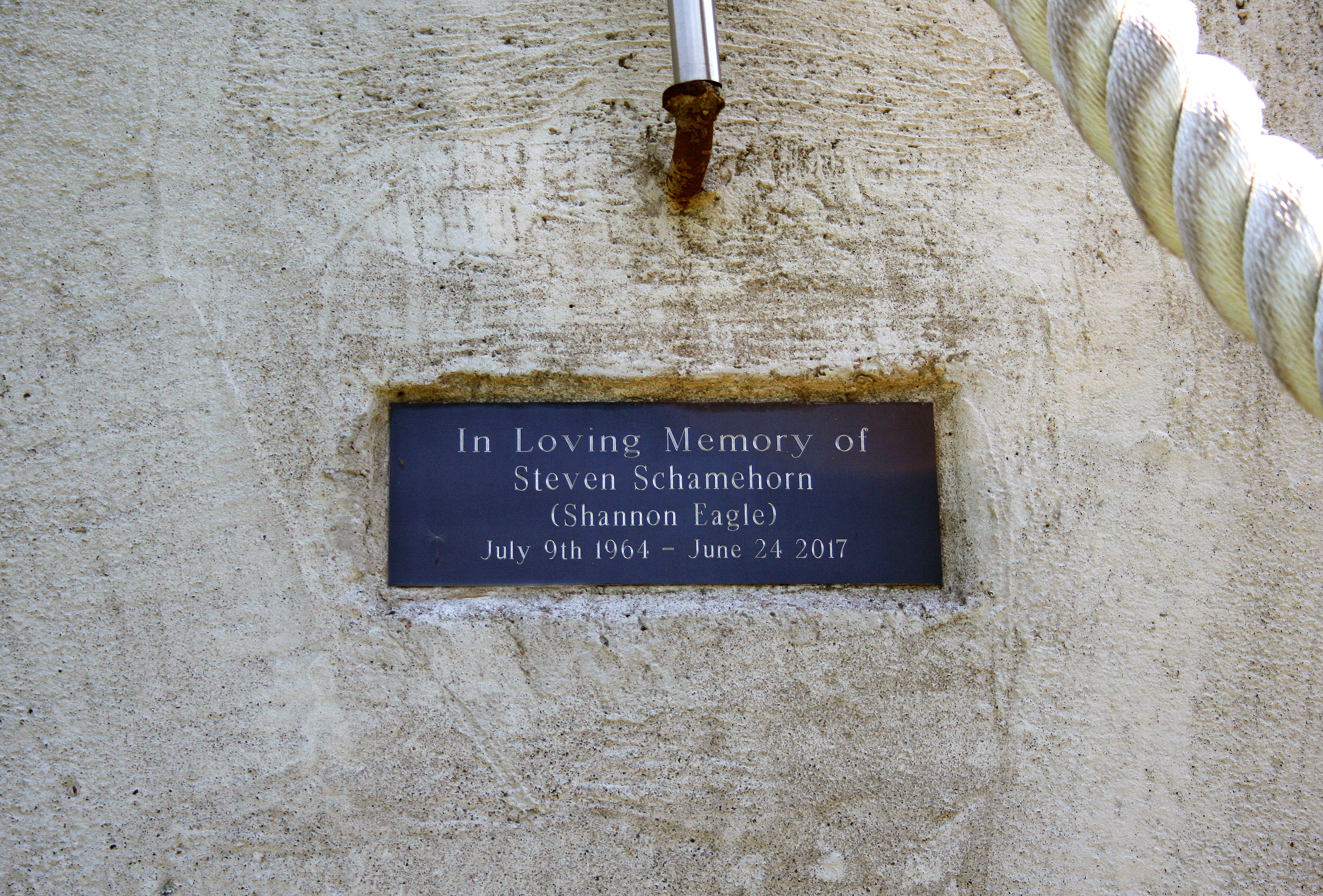
At the time of our visit, there were 4 human ash sculptures, with memorial plaques for 5 people.

“Gone but not forgotten” Memorial sculptures created with cremated remains. Artist: Peter Camani. Midlothian ON ©2023

Everyone’s experience with the Screaming Heads will be different, as there is no set way to explore the grounds. There is no trail map, and there are a few trailheads to choose from. When we visited, on an exceptionally warm day, we managed to come upon the memorial sculptures first. The photos don’t do them justice, as they are larger than life! We asked ourselves many times as we wandered the grounds, about the process of making these immense sculptures and what that might look like. 

There is something magical about this place. As you walk among these enormous, whimsical sculptures, it’s easy to feel like you are in a magical forest, where strange creatures may reveal themselves at any moment. I was filled with a sense of wonder as we walked through the woods and fields, discovering hidden sculptures as we got closer to them. The eerie sound of the peacocks also added to the experience. Their cries always seemed to surround us, and just when we thought we were close enough to see one, we would hear their scream from another direction. 

I can understand why someone would want their final resting place to be in such a magical place. The idea of becoming art, becoming part of something larger than yourself, to instill a sense of awe in others; that guarantees you will always be remembered.

Do you want to plan your own trip to visit The Screaming Heads? They are located in Midlothian, Ontario, close to the small town of Burk’s Falls. The grounds are open year-round, from dawn till dusk, and admission is by donation. Make sure to bring your camera, your water bottle, and LOTS of bug spray. Have you already visited? I would love to hear about your experience in the comments.

Thanks for reading! 


References:

  1. The Screaming Heads North of Muskoka | The Great Canadian Wilderness
  2. Peter Camani | Wikipedia
  3. How to Be Posthumously Transformed Into an 18-Foot Screaming Head | Slate

Additional Links:

A Personal Cemetery Mystery

I have been thinking a lot lately about my connection to cemeteries. I recently read Death’s Garden Revisited, edited by Loren Rhoads. It’s a collection of 40 personal essays by people from all walks of life, regarding their own connections with cemeteries. I saw a lot of myself in those essays, and it has encouraged me to look back on past events in my own life that have attributed to my love of cemeteries. 

One of those moments that stand out, is a family story that has been passed down by my mother. I was too young at the time, so I have no memory of it, but my mother has told me the story many times.

When I was a child, I saw an angel in a cemetery.

Now you may be thinking, well yes, there are lots of angels in cemeteries! And yes, this is very true. Angel statues are a very common sight in Catholic cemeteries. Children are also known to have overactive imaginations, and I was no exception. I did have an imaginary friend growing up. But I am curious and wanted to learn more about the circumstances of this cemetery visit.

One of my earliest memories is of attending my uncle’s funeral in Elliot Lake. I was very young, maybe 5 or so, but I vividly remember the funeral parlor. I remember the smell of the parlor, as well as seeing many somber family members, sitting in dark leather armchairs. I don’t remember the cemetery though. Was this the same moment? Were we visiting the cemetery after the funeral service? 

In 2021, my mother and I took a drive to Elliott Lake to do some hiking and cemetery wandering. We visited my uncle in the cemetery. I had no recollection of being there, but my mother had vivid memories of the place. She said it looked a lot different; there had not been as many graves in the section where my uncle was laid to rest. Over the years it had become a very popular section. It was so full that the cemetery opened another section at the back, which was now about half full. The cemetery has no standing gravestones, only flat grave markers. No angel statues here. My Mom confirmed this was not the cemetery where I saw an angel.

It turns out there is MUCH more to this story. 

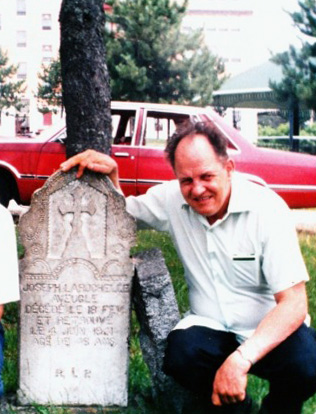
In the summer of 1987, My mother, father and I were visiting my uncle in Quebec for a family reunion. I would have been about 3 years old. It was planned to be a big reunion of my father’s side of the family. Unfortunately, only we showed up. My uncle was a bit dismayed but decided to not let that ruin our visit, so there was a change of plans. Since we were close to Quebec City we would visit some old stomping grounds and visit some cemeteries to visit family. There was one family member in particular that my dad and uncle wanted to find—their uncle Joseph Larochelle.

The story goes that my great-uncle, Joseph Larochelle who was blind, went out into a snowstorm with his dog. His Family members told him not to go out, because of the blustery winter weather—but he went anyway. He said he would be fine since he had his dog with him. Unfortunately, he lost his way in the storm and went missing. Tragically, both he and his dog perished in the storm. He had gotten stuck on a fence and was not able to break free. He was not found until the late spring. 

My dad and uncle did manage to find the grave of Joseph. They took a picture with the gravestone that has some details of what happened to him. The gravestone states he was blind, died February 18, and was found June 4. I don’t know the year, as the photo is a little hard to read. It was while visiting this cemetery that I saw an angel. 

The gravestone reads: “Joseph Larochelle / Blind / Died February 18 / And Found / June 4, 19_1 / Aged __ Yrs. / R.I.P”

I have reached out to my aunts and uncles to see if they have more information, or know which cemetery he is buried in. I have not been able to find anything much so far. My searches on Find a Grave and Ancestry have not turned up anything yet. I have an idea where to look—Quebec City, but I don’t have much more than that at the moment. I would love to learn more about my great-uncle, as well as the cemetery where he is laid to rest. Is it filled with stone angels? 

When I started looking into this story, I didn’t expect to uncover a cemetery mystery. I love a good cemetery mystery, and it’s even more intriguing to have a family connection to one. I will keep researching and maybe will have an update on this story in the future. In the meantime, I will continue to go down cemetery rabbit holes looking for answers. Maybe I’ll also get closer to answering my question about my cemetery angel. 

Thanks for reading!

Stone Stories: Coniston Train Crash Memorial

Last February, I learned about a local tragedy that has left a hole in the community of Coniston. A heart-felt roadside memorial was erected, to ensure that the men who were lost that day are never forgotten. This monument sits at the train crossing where the tragic events took place. Last spring, my mother and I visited the memorial to pay our respects. 

This past Thursday, February 9th, marked the 72nd anniversary of the train crash in Coniston.

The monument reads: “This monument has been / erected to remember the / nine men who lost their / lives, and the many who were / injured at the train / crossing in the tragic / bus and train accident / on February 9, 1951. / Primo Creama / Herbert Conlon / Alex Beauparlant / David Martin / Eugene Leclair / Joseph Tremblay / Paul Sharko / Ernie Cooper / Never to be forgotten”

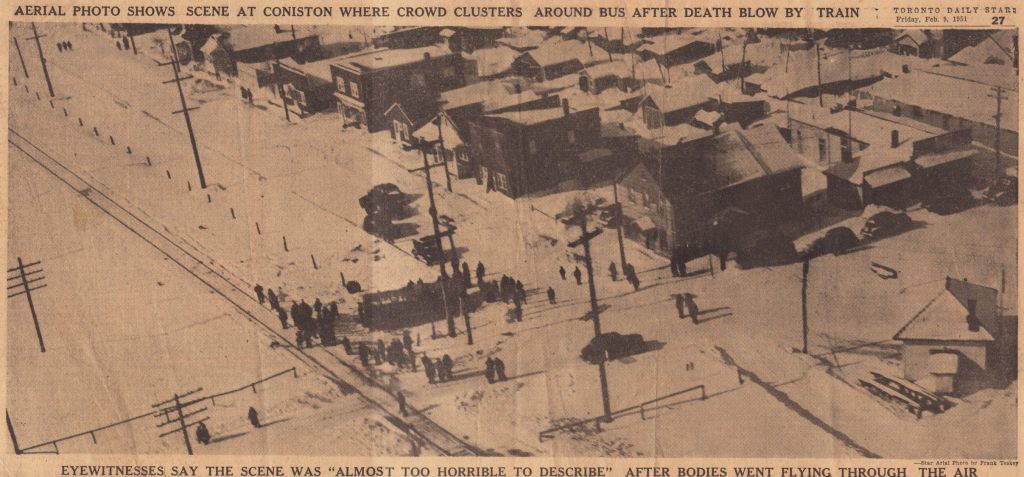
The early morning, of February 9th, had been incredibly cold. According to the Coniston Historical Group, the temperature had dropped to 48 degrees below zero that morning, which caused low visibility. The passenger train was also running late that morning.1 Between 8 and 8:15 a.m. tragedy struck—a CPR passenger train collided with a local bus at the railway crossing in Coniston. 31 people were injured, and 9 were dead.2 The bus had been carrying residents as well as smelter workers on their way home from a graveyard shift. The 9 men who lost their lives that day were from the same shift at the INCO smelter.1 

The monument sits beside the railway tracks on the corner of Government Road and Edward Avenue, at the site where the horrific accident took place. I haven’t been able to determine exactly when the monument was erected, but from what I have read it was possibly erected by the Lions Club, in the early 2000s, and is now maintained by the Coniston Historical Group.

On the anniversary of the accident, a candlelight vigil is erected in the early morning at the monument. A custom-made INCO triangle candle holder, holds nine lit candles, one for each of the men who sadly lost their lives that day. 

Alex Beauparlant 

Herbert Conlon 

Ernie Cooper 

Primo Crema 

Lucien Landriault 

Eugene Leclair 

David Martin 

Paul Sharko 

Joseph Tremblay 

At the peak of the triangle is a 10th candle, that is lit in memory of the 31 who survived the crash, and for those in the community who were left behind, to mourn their friends’ families, and colleagues. It’s a beautiful memorial, that brings the community together, to share memories of their loved ones and make sure that they will never be forgotten. 

My mother and I visited the memorial in late May of 2022. It was a very sunny and beautiful day. As we drove to Coniston, only a short drive away from our home, I remember wondering why I had never heard of this tragic event before. I had only learned about it after having seen a Facebook post from the Coniston Historical Group, earlier that year. 

The monument sits very close to the railway tracks, if you didn’t know it was there—you might miss it. There is a small parking area right next to the monument, with a little walkway that leads up to the memorial. The site is very well taken care of, and you can feel the love the community has for this memorial and what it symbolizes. I think what makes this memorial a bit surreal, is the fact that it sits right next to the train tracks where the accident happened so many years ago. I know it must have looked a lot different then, but it’s a very somber feeling to look at the railway tracks just behind the monument and know that that is where it happened.

This monument is a cenotaph, a marker where the deceased have been laid to rest elsewhere. As I read and researched I became curious as to where these 9 men now rest. I have been able to locate the resting place of three of them; Alex Beauparlant, David Martin, and Paul Sharko. I hope to find the other 6 and visit them this summer to pay my respects.

I always find roadside memorials incredibly moving. This was a tragic accident that changed the fabric of the small town of Coniston forever, but it will never be forgotten. I’d like to thank the Coniston Historical Group for all the good work they do to maintain this memorial, and for their educational posts on Facebook, as they continue to share the history and story of Coniston. So much history could be lost if it wasn’t for groups like theirs.

Thanks for reading.


References:

  1. Canadian Disaster Database | Government of Canada
  2. Facebook post | Coniston Historical Group
  3. Toronto Star
  4. Madera Tribune

Stone Stories: The Dyer Memorial

Winter is slowly starting to tighten its grip on us here in Northern Ontario. My road trips are done for the year, now that it’s getting colder and the snow is getting deeper. I like to take this time to sort through my photos, update my photography portfolios and upload images to Find a Grave. I also like to reminisce on all the cemeteries I have visited during the year. Today, I wanted to share my experience visiting the Dyer Memorial Nature Reserve.

Every October I take some time off to enjoy the crispy weather and changing colors in Ontario. Hiking and visiting cemeteries in the fall are my absolute favorite. This past October, my mother, and hiking buddy visited Huntsville to do some leaf peeping and hiking with some cemetery visits along the way. One of the must-do’s on this trip was visiting the Dyer Memorial. I had read online that this memorial site and nature reserve was a monument of love, in memory of a loving Wife. When we arrived at the site, I was surprised to find out that the Dyer Memorial is also the final resting place of Betsy and Clifton Dyer.

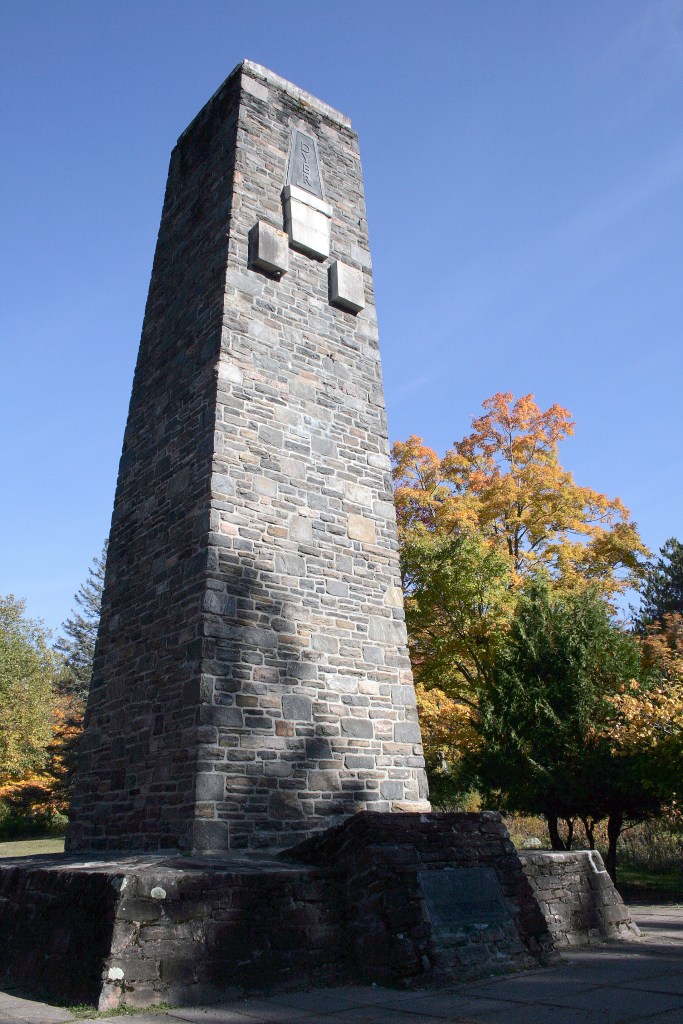
This beautiful monument was erected in 1956 by Clifton G. Dyer, a Detroit lawyer, for his wife Betsy Browne Dyer.1 It sits about 10 minutes outside of Huntsville, in the small hamlet of Williamsport. They were frequent visitors to the area, having first honeymooned in the Muskokas in 1916. They loved the outdoors and would often tent or stay in a cabin above the Big East River, close to the spot where the memorial now sits. In the 1940s they had a permanent cottage built and visited every summer.2 Betsy passed away in 1956, and Clifton, in his mourning, had the memorial built so Betsy could be laid to rest in the place she loved so much.1 Her ashes were placed in a copper urn at the top of the memorial.2 Clifton passed away 3 years later, and his ashes were also placed within the monument.1  

The road to the monument site is not paved and snakes its way up to a small car park area. There is some signage but it might be missed if you’re not paying close attention. The trail from the car park to the monument doesn’t seem like much, but once you turn the corner on the flagstone path and see the monument come into view, it’s quite impressive.

The obelisk stretches high into the sky, with a plaque near the top that reads “Dyer”. The monument is surrounded by footpaths leading every which way around the monument. Some small wooden bridges extend over a small pond with trails that curve around small clumps of trees. The lone monument stands like a sentinel in the center of it all. 

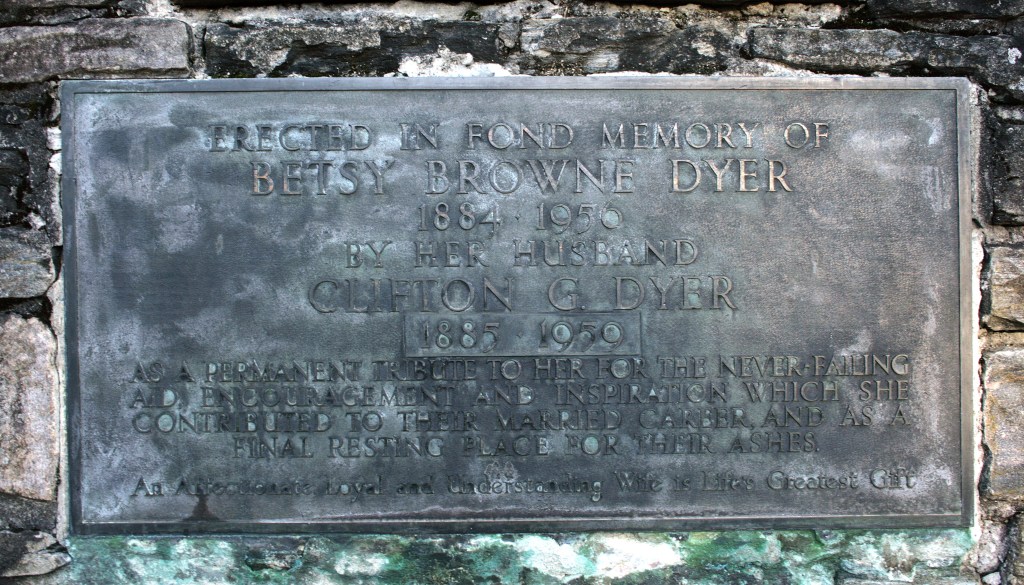
At the base of the monument there is a plaque that reads:  

“ERECTED IN FOND MEMORY OF / BETSY BROWNE DYER / 1884-1956 / BY HER HUSBAND / CLIFTON G. DYER / 1885-1959 / AS A PERMANENT TRIBUTE TO HER FOR THE NEVER-FAILING / AID, ENCOURAGEMENT AND INSPIRATION WHICH SHE / CONTRIBUTED TO THEIR MARRIED CAREER AND AS A / FINAL RESTING PLACE FOR THEIR ASHES. / An Affectionate, Loyal and Understanding Wife is Life’s Greatest Gift”

We were the only ones on the grounds when we visited, so we took our time to explore the area. There was no trail map to show how far the trails went, so we kept our bearings and didn’t stray too far from the monument. We crossed a small bridge and wandered around the small pond, reflecting the bright fall colors. We also explored a small clump of trees on the other side of the monument, again deciding to stay close to the stone obelisk and not walk too far down the trails. 

I circled the obelisk a few times, in awe of its stature and what it represents. It was first built as a loving tribute but now stands as a memorial to both Husband and Wife.

It’s lovely to see this site so well taken care of, not just the memorial, but also the surrounding trails. I love the idea that this nature reserve preserves the area so others can experience the beauty of it, just as the Dyers did in their lifetimes. 

Thanks for reading!

References: 

  1. Muskoka’s Hidden Gems – Dyer Memorial, Huntsville | CLRM
  2. Dyer Memorial | Huntsville Adventures

Stone Stories: Chasing Tom Thomson

Summertime is meant for road trips! In July, I went on a two-week vacation full of adventures. One of the trips I was looking forward to most on my vacation was visiting Algonquin Provincial Park. Algonquin is Canada’s first Provincial Park, having been founded in 1893.1 It’s a large and beautiful piece of wilderness, that also holds a mystery.

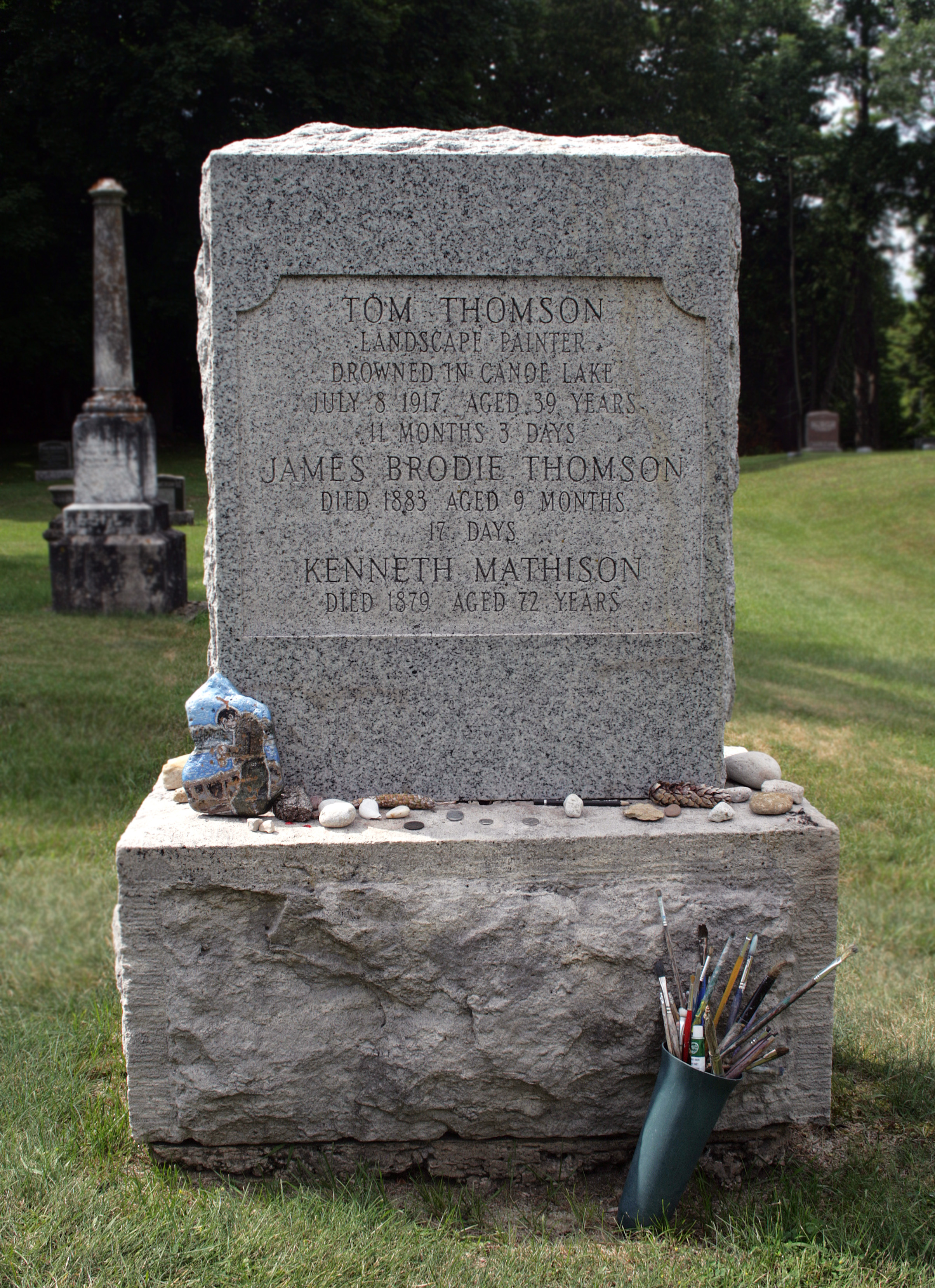
My 80-year-old mother joined me on this camping trip. It had been about 40 years since she last went camping, so I made sure we did all the fun camping things; sleeping in a tent, cooking on a fire, and making s’mores. There were a couple of other things on our to-do lists: visit Canoe Lake, search for Mowat Cemetery, and find the grave of Tom Thomson.

The story of Tom Thomson is an interesting one. Today, he is often referred to as the Canadian Van Gogh.2 And rightly so, his use of color and thick strokes vividly bring the northern landscapes to life. Thomson spent a lot of time painting and fishing in beautiful Algonquin Park. His love of the area must have been contagious as he soon had other painters joining him on his painting excursions. They even had a name for themselves, the “Algonquin Park School of painters”.3 You might recognize them more now as the Group of Seven. Unfortunately, Tom wouldn’t live long enough to see that recognition as he died mysteriously, two years prior. I would consider him a founding member, of the now famous group of painters.

There have been many things written about what happened to Tom Thomson on that fateful day in July. But to this day, no one knows for sure what happened. With so many varying accounts over the years, speculating what may have happened, the details of the events don’t seem to add up. We do know that Tom’s canoe was found on July 8th, but he was not. His body was found in Canoe lake, 8 days later on July 16th.4 He was found with bad bruising on his face and head, with a fishing line wrapped around his left or right ankle, depending on which account you read. In most accounts, the fishing line is seen as an indication of foul play. I don’t agree. I have been doing a lot of reading about this mystery and one thing that always stands out to me is the fishing line.

Tom’s body was found floating in the lake. Many people speculate that something heavy was tied to the fishing line to weigh the body down, that he was purposely drowned. BUT all the accounts mention that the body was tethered to the shore, and not removed immediately from the water. I think it would make sense that they would have used a fishing line to tether the body to the shore, which would account for the fishing line. One blog post I found corroborates this thought, but for some reason has not been looked at more closely. The blog post comes from a professional journalist, Robert Reid. In his blog post, Epistles from the Grave, Robert talks about letters that were written in the 1970s by Jack Wilkinson. He would have been six years old at the time of Tom’s death. These letters were written to correct some inaccuracies in the accounts that were circulating, most notably the fishing line. In the letters, Wilkinson confirmed that the fishing line was merely used to tether the body to the shore, so it would not float away until the coroner could be alerted and come collect the body.5 This would mean the fishing line had nothing to do with Tom’s death. Still, the questions persist—was it murder? Or was his death an accident? These details we may never know.

Tom was hastily buried at Mowat cemetery, sometimes referred to as Canoe Lake cemetery. This is not what his family wanted. They wanted him brought home. So his remains were exhumed the next day and transported to Leith, Ontario, near Owen Sound. There his remains were buried once again, and a proper headstone was erected.1 Here lies another facet of the mystery—many people claim his body was never moved.

Is that why people also claim to see a ghost in the early morning fog on Canoe lake? Over the years, many people have reported seeing a man slowly paddling a distinctive grey canoe through the still waters of the early morning.6 What’s interesting about these sightings is that in life Tom Thomson had painted his canoe a unique dove-grey color, that he had mixed himself from his paints. This dove-grey canoe stood out among the identically colored canoes of the local lodges.1 Unfortunately, I was not able to find anyone in the park who had experienced any sightings firsthand. 

Our search for his grave began on the morning of July 17th, which just so happened to be the 105th anniversary of Tom’s burial at Mowat Cemetery. We drove into Algonquin Park that morning, and after stopping in to check on our campsite at Tea lake, we decided to try and find the cemetery. I had been planning this trip since the early spring of this year and had been researching how to find the hidden cemetery. In early June, Back Road’s Bill, a local adventure/nature writer, published an article about the two graves of Tom Thomson, so I reached out to him about directions for reaching the cemetery. He was very helpful. With the coordinates locked into my Google Maps, I felt pretty confident that we could reach the cemetery. 

That confidence wavered a little though when we visited the Canoe Lake Access Point Permit Office. We stopped in, after taking in the view of the infamous Canoe Lake, to buy some firewood and talk to the staff. The clerk was a young man, who had just started working at the permit office. He didn’t have any personal stories to share about the haunting of canoe lake but did have some interesting ideas about where Thomson may actually rest. He shared an interesting theory that the gravedigger that was hired to move the body had sent a coffin filled with dirt and rocks to the family, to approximate the weight of a body. He also told me that the cemetery can only be accessed by canoe and that the back roads I had pointed out are actually the train line, not a road. I was a little dismayed, but I had faith in Back Roads Bill and his map, so we continued on.

And good thing we did! The rail line the Permit office staff talked about was now a camp road. We followed it as far as we could, safely by car. At one turn-off the road became quite rough so we decided to park the car on the side of the road and continue on foot. This would turn out to be our hike for the day. It was a very nice walk in the lush woods of Algonquin Park. After walking for a time, we came upon some cottages on the lakefront. One cottage had a large family gathering outside, so we stopped and asked them for directions to make sure we were on the right path. They assured us we were and gave us some landmarks to go by, as there is no sign marking the cemetery. We continued on our way, trying to align ourselves with Canoe lake, and picture what it would look like to travel the route by canoe. We couldn’t easily see the lake. Unfortunately, the landmarks the cottagers gave were not the most helpful and we got a little turned around.

For an area that seems incredibly remote, there are a fair number of family cottages out there. We happened upon another cottage where it looked like they were packing up to go home. We asked again for directions. The gentleman we had asked was kind enough to walk with us to the entrance of the cemetery trail. We had gone a bit too far, having stayed to the left when we should have taken a right at the fork in the trail. His german shorthaired pointer puppy joined us, zooming back and forth past us as we walked. He told us how that day was the anniversary of Tom’s burial and how his family sometimes walked up to the cemetery to pay their respects. He didn’t have any ghost stories to share though. He brought us to the start of the cemetery trail, a small almost hidden trail that veers again to the right off of the bigger trail. We thanked him and continued on our way. This part of the trail was more rugged, with felled trees and a faint trail that was sometimes hard to distinguish in the wild forest. My mother said she was starting to have doubts at this point in our adventure, but those doubts faded when we came to a hill. 

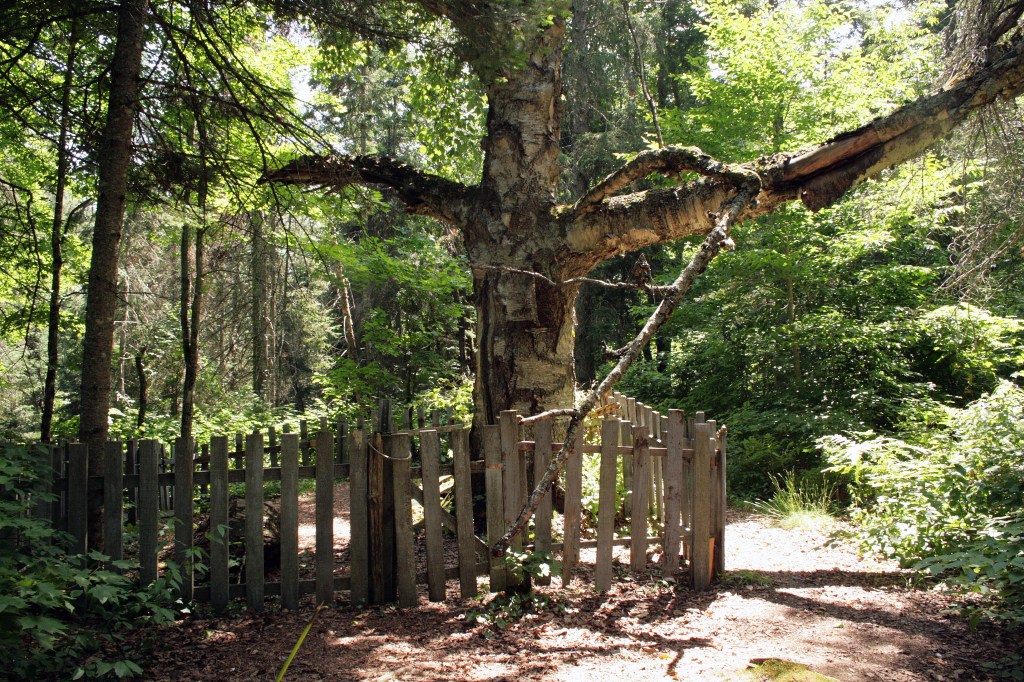
Sitting at the top of the hill we could see an old weathered fence and the supposedly 500 year old birch tree. It’s the largest birch tree I have ever seen! We happily climbed to the top and walked into Mowat cemetery. This small pioneer cemetery is a small remnant of the town of Mowat. This mill town was the largest in Algonquin Park and had about 500 residents in its heyday. The town included a hospital and school, as well as recreational lodges. Tom Thomson often frequented Mowat Lodge. The town began to dwindle, after the lumber recession.7 Today, all that remains of Mowat is the cemetery and a few cement foundations. 

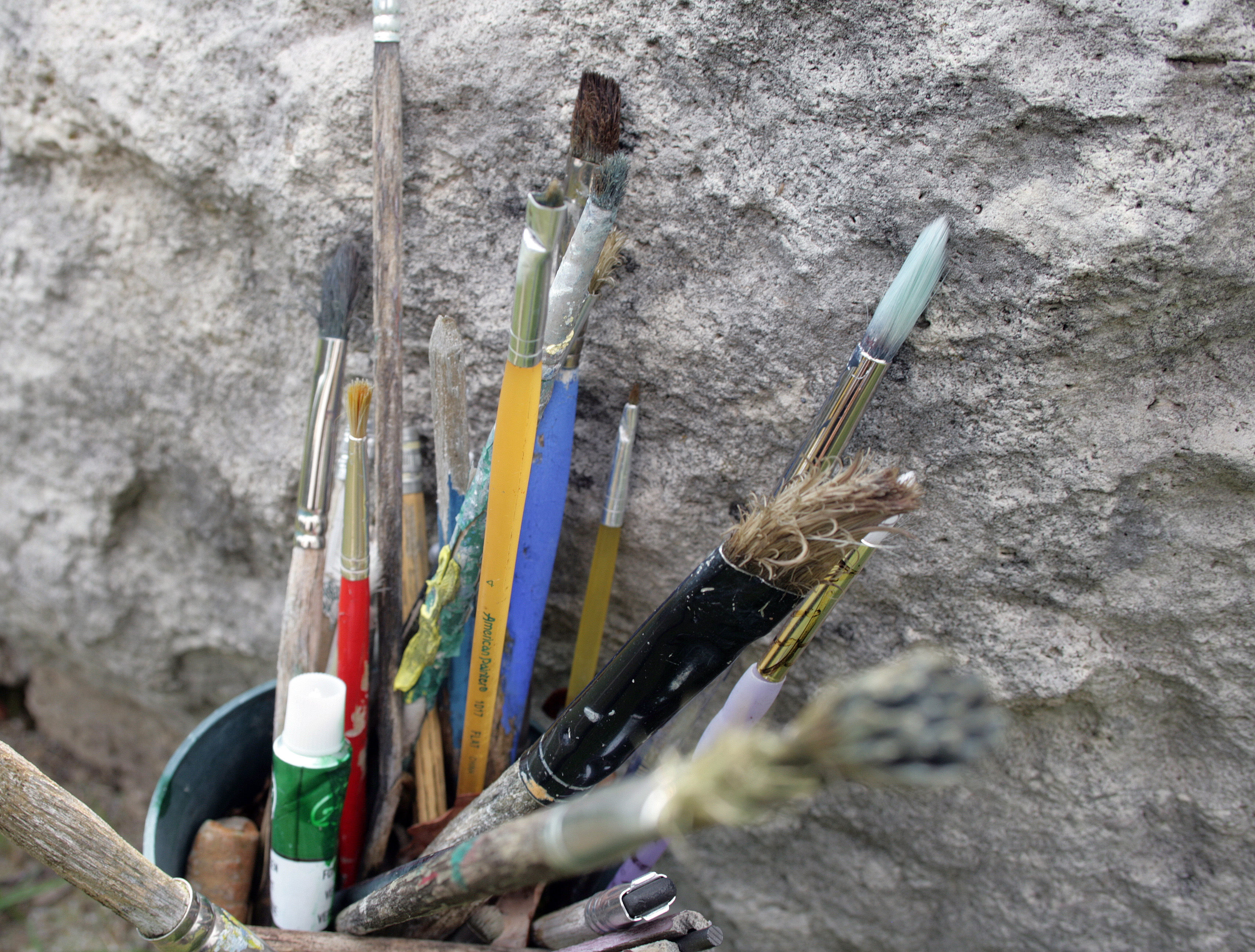
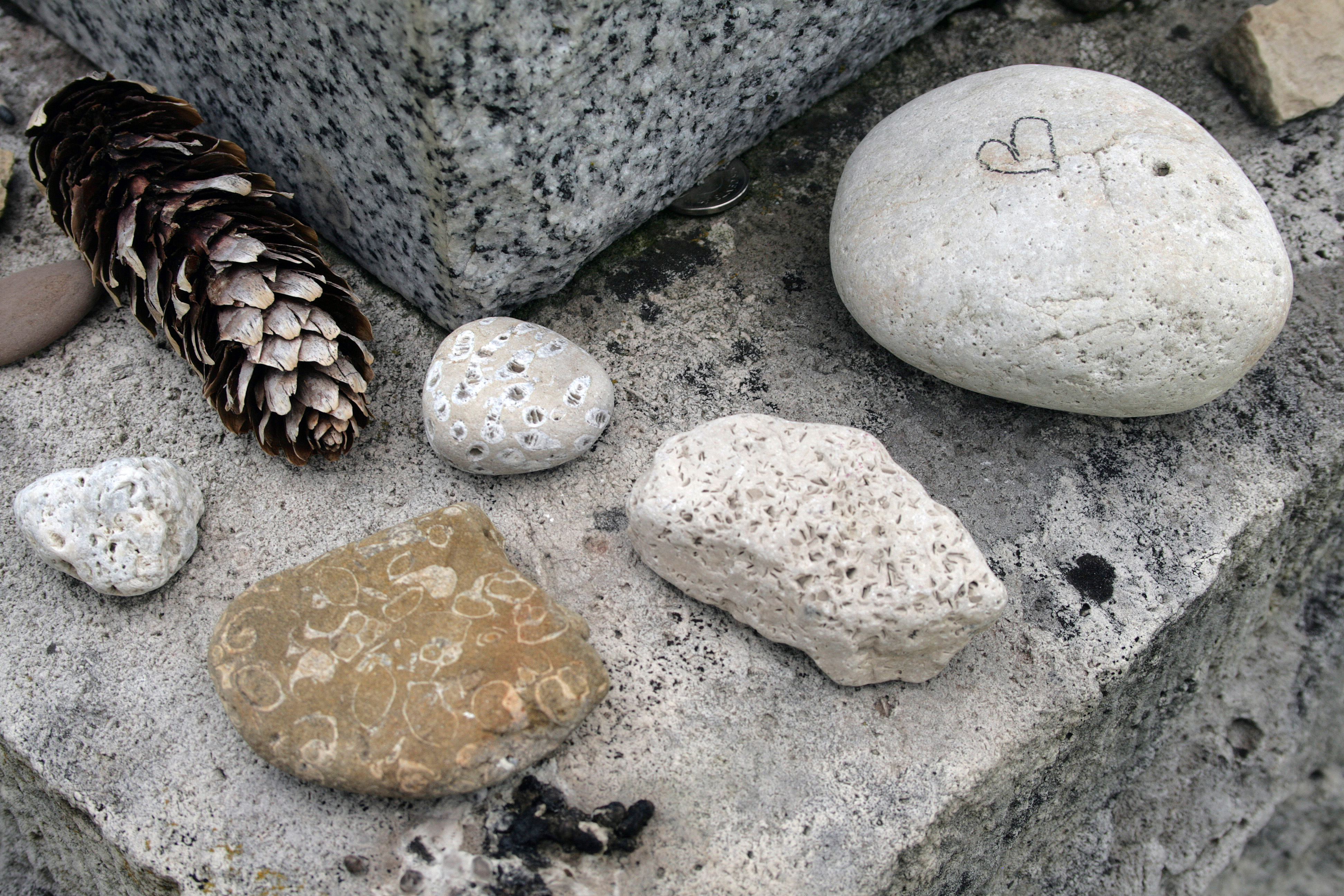
The cemetery is very small, with only a handful of grave markers. There is one field stone, and two engraved headstones within the picket fence. There is also a white wooden Latin cross, that marks the grave of Tom Thomson. It is thought that the cross was placed by the CBC in the 1960s for a documentary. There also seems to be a depression in the ground at his grave. There were a few grave goods left for Tom; a small electric tea light, some paint brushes and a fishing lure. There was no one at the cemetery when we visited, but I think Tom still receives his fair share of visitors. 

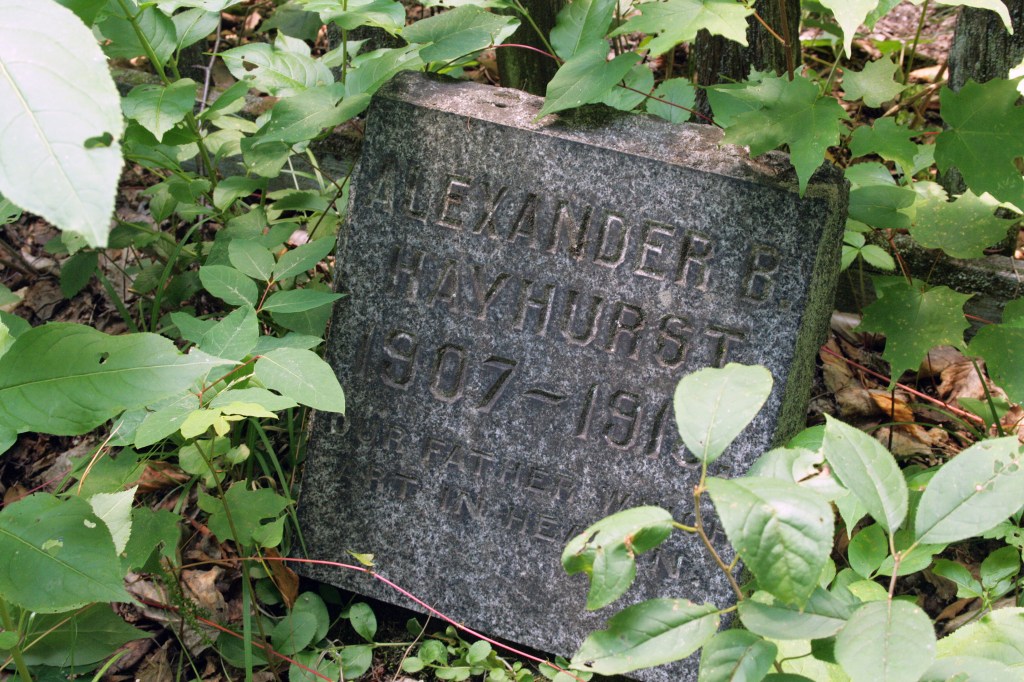
Within the cemetery fence, there is a small grave marker for Alexander B Hayhurst, a child who died of diphtheria in 1915. 

There is also a large flat gravestone for Ja’s Watson who is thought to be the first person buried at Mowat Cemetery. His stone is hardly legible now, but records say that the epitaph reads:

“In Memory of Ja’s Watson / The First White Person Buried / at / Canoe Lake / Died May 25 1897 being one of / about 500 employed at this Camp by / the Gilmour Lumbering Co. Aged 21 yrs / Remember Comrades (when passing by) / As you are now so once was I / As I am now so you shall be / Prepare thyself to follow me.”8

We spent a lot of time in the cemetery, trying to decipher the stones and admiring the enormous birch tree, and paying our respects to Tom Thomson. We tried to imagine what the cemetery would have looked like in 1917 when he was laid to rest. After a time we decided to head back down the hill and retrace our steps back to the car. It was a bit of a long journey, but it was incredibly rewarding. Back at our campsite we had a nice campfire supper of burgers and corn on the cob and talked about our visit to Mowat cemetery. We speculated on what might have happened to Tom and whether or not he was still laid to rest on that hill. My mother was very adamant that he was still there. After supper, we made some s’mores for dessert and enjoyed the campfire as it lit up the darkness of the night.

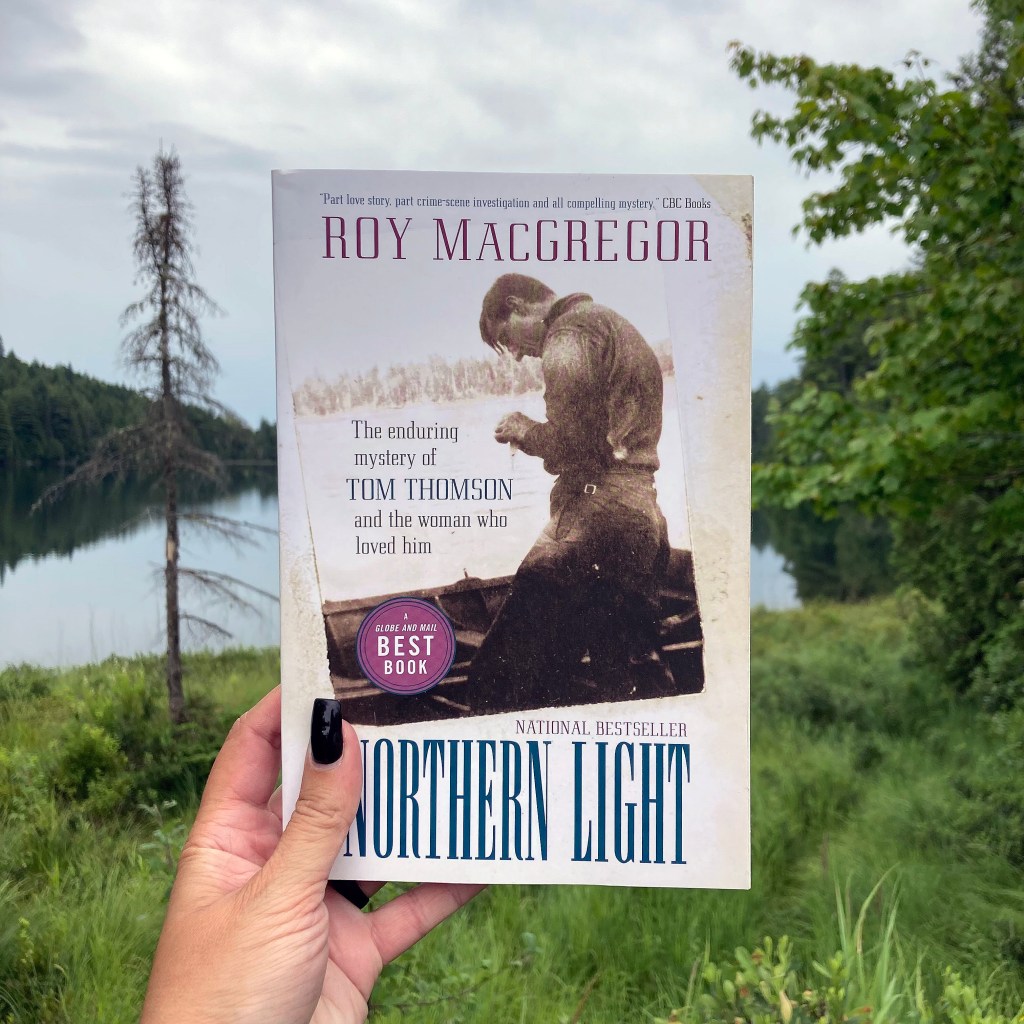
The next morning we decided to explore the park a little more before heading home. We stopped in at the Algonquin Art Centre to look around. This world-class art gallery showcases some of Canada’s foremost wilderness and wildlife artists.9 Outside, on the Centre grounds, we took a look at a set of plaques celebrating Tom Thomson. They told the story of Thomson as a painter, his attraction to Algonquin Park, his body of work, and his legacy as an artist. We also viewed an outdoor exhibit of painted canoes, called Tom Thomson’s Canoe Murals. We spent some time inside the gallery as well, taking some time to admire the gorgeous art gallery and browsing the gift shop. This is where I purchased my copy of Northern Light by Roy MacGregor.

Northern light: The enduring mystery of Tom Thomson and the woman who loved him by Roy MacGregor is a very good read. It presents some really interesting theories as to what may have happened to Thomson, and also suggests that his body never left Mowat Cemetery. In the 1950s, a small group of men took it upon themselves to prove whether Tom was still buried in the cemetery on Canoe lake. They took some shovels, went up to the cemetery, and started digging. I think to even their surprise, they did find human remains. They took a few bone samples, including the skull, and sent them for analysis. The results were not what they expected and seemed to raise more questions.1 More recently, a facial reconstruction was attempted using photographs of the unearthed skull. The face that emerged was pretty uncanny, but does that mean the mystery is solved?10

I don’t think the mystery will ever truly be solved. I believe the truth of what happened to Tom Thomson went to the grave a long time ago. But that doesn’t mean people will stop trying to solve it. Stories will continue to be told about his tragic life, cut short. As much as Algonquin Park was a part of Tom’s life, his artwork is now a part of it as well. You can find his artwork at the Art Centre. You can see the inspiration for his art in the beauty of the wilderness. You can learn more about his life in the Visitor Centre, alongside the history of the land and the evolution of the communities within the park. Tom Thomson, whether it be his artwork, his story, or his ghost will continue to be a big part of Algonquin Park. 

I really enjoyed my time exploring the park and searching for the grave of Tom Thomson. It was a rewarding trip, that let me explore nature while also learning more about art and Canadian history. It was one of the more challenging cemeteries to find, but it was a beautiful place to visit and photograph. My mother enjoyed this trip immensely. She was a bit leery at first, but the history drew her in. She talks about our trip often. Coincidentally, I started writing this blog post on what would have been Tom’s 145th birthday, August 5th, 2022. My mother shares his birthday. 

Have you ever been to Algonquin Park? Have you seen the ghost of Tom Thomson? I would love to read your stories in the comments. If you are interested in reading more about the mysterious death of Tom Thomson, check out the links below. 

Thanks for reading! 


References:

  1. MacGregor, R. (2010). Northern light: The enduring mystery of Tom Thomson and the woman who loved him. Vintage Canada. 
  2. A break in the mysterious case of Tom Thomson, Canada’s Van Gogh | The Globe and Mail
  3. Algonquin Art Centre 
  4. Tom Thomson | The Canadian Encyclopedia
  5. Epistles from the Grave | Reid between the lines
  6. Is Tom Thomson Haunting Algonquin Park? | Haunted Walk
  7. Mowat (Tom Thomson murder) | OAP Urban Database
  8. Ja’s Watson headstone, Mowat cemetery | Canadian Mysteries.ca
  9. About | The Algonquin Art Centre
  10. Skull recreation attempts to solve ‘perfect mystery’ behind untimely death of artist Tom Thomson | National Post

More interesting links:

  1. 100 years of haunting by Tom Thomson’s ghost | Toronto Star
  2. Death on a painted lake: The Tom Thomson tragedy | Canadian Mysteries.ca
  3. What REALLY Happened to Tom Thomson? | The Country Connection Magazine
  4. Why the 100-year-old mystery of Tom Thomson’s death lives on | CBC
  5. Tom Thomson’s mysterious death just won’t die | The Globe and Mail

Stone Stories: Visiting the Dionne Quintuplets

On my vacation, my Mother and I took a road trip to North Bay, Callander, and Corbeil Ontario to explore and experience the story of Canadian folk figures, the Dionne Quintuplets.

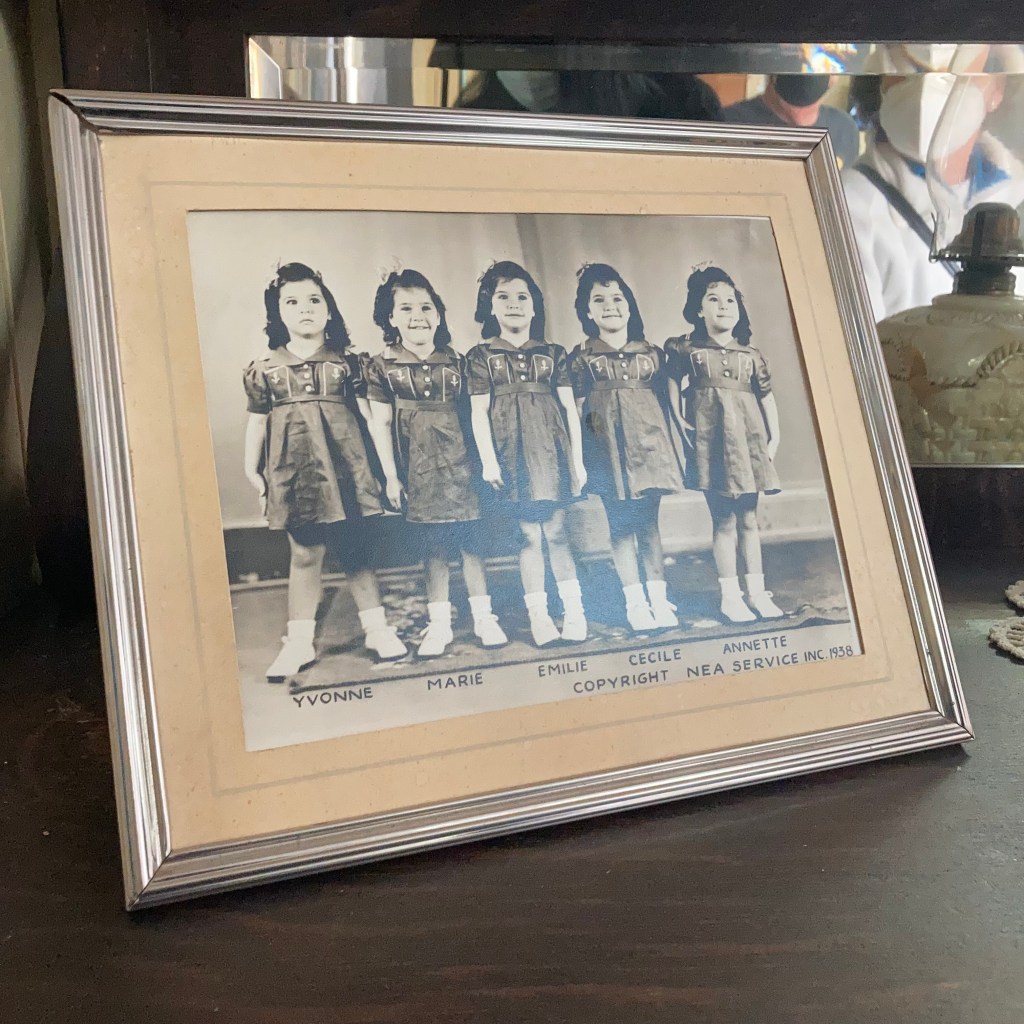
“On May 28, 1934, five identical girls were born to Oliva and Elzire Dionne, a Franco-Ontario family in the tiny community of Corbeil, Ontario. Their births were a miracle of its time during the difficult Depression, the only quintuplets to survive more than a few days. Midwives Douilda (Donalda) Legros and Mary-Jeanne Lebel delivered the first 3 of the quintuplets, and Dr. Allan Roy Dafoe assisted with the final 2 births. The five girls – Yvonne, Annette, Cécile, Émilie, and Marie – became a “good news” story in this challenging time, drawing worldwide attention to the area, and attracting 3 million people to “Quintland” to see and hear the girls at play. Hollywood told their story in 3 movies, while endorsements for commercial products became commonplace.” – Dionne Quints Heritage Board website

In North Bay, we visited the Quint House Museum. This was the actual family home where the quintuplets were born. It houses a lot of original artifacts; such as the bed where they were born, cribs, children’s beds, children’s clothing, and their baby carriages. It also contains a lot of original photos of when the children were born, while they were growing up at Quintland, and also a lot of the advertising that was created using their image. Everything from baby food to GM motors was advertised using the Dionne Quintuplets. Dr. Dafoe profited from the twin’s fame. At the Quint house museum, we were given a tour of the house and memorabilia by an actual relative of the quintuplets, their nephew. His mother was one of the siblings of the quintuplets, making Elzire Dionne his grandmother. He spoke about the quintuplets and what happened to them as a tragedy and preferred to not mention the doctor, as he sees him as a villain in their story.

The Dionne Quintuplets were separated from their family and exploited by the “good” Doctor. As well as extensive advertising using the girl’s image, Quintland was built. A large building complex where people from all over the world came to see the quintuplet girls. The courtyard of Quintland was encircled by two-way mirrors, where visitors could pay a fee to watch the girls as they played. After about 9 years, the girls left Quintland and returned to live with their parents. They had other siblings, as the Dionne’s had had 14 children in total. The quints were essentially strangers to their own family, after having been separated from them for so long. It must have been just as strange for their siblings, hearing about their famous sisters, but not knowing them at all. I can only imagine the strain that would put on the family.

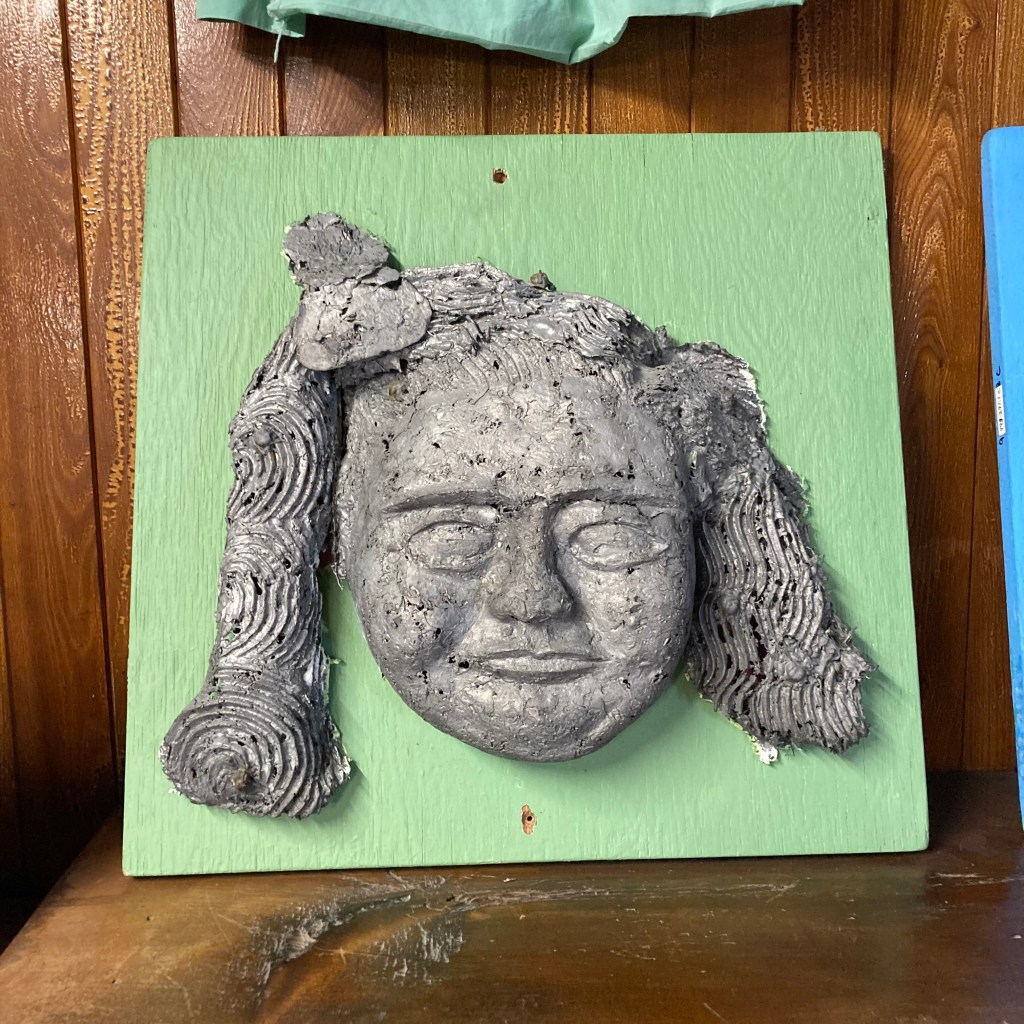
After visiting the Quint House Museum, we traveled a little bit down the road to Callander to visit the Callander Bay Heritage Museum and Alex Dufresne Gallery. This museum is housed in what was once the office of Dr. Alan Roy Dafoe. A turnstile that was used to admit and count attendees to Quintland sits outside. The Quint House Museum also has one of these turnstiles. The house is very rustic and feels like a home office. It would be really interesting if they had a floor plan of what the office looked like when it was in use. This museum also contains a lot of memorabilia of the quintuplets. Some of the more interesting items include lead sculptures of the quintuplet’s faces that were mounted on a clock tower. The sculptures are quite terrifying. There are other exhibits at this museum as well, such as a 1920s barbershop, some military items, as well as logging and mining history.

Visiting the Quint House Museum first made walking around Dr. Dafoe’s office a little awkward. Knowing the pain and strife he had put the family through, made the experience a tad unpleasant. The Callander Bay Heritage Museum also holds an art gallery. We took a little detour from the quintuplet exploration and looked at the beautiful artwork they had on display. We also visited the gift shop and purchased a few things; in particular a recent book on the history of the quintuplets called The Miracle & Tragedy of the Dionne Quintuplets by Sara Miller.

After grabbing some lunch at a delicious little chip stand in Callander, we made our way to Corbeil to visit the Sacred Heart cemetery. As we traveled down a little dirt road and came to the entrance of what looked like the driveway to a farm, I started to realize something.

I had been to this cemetery before!

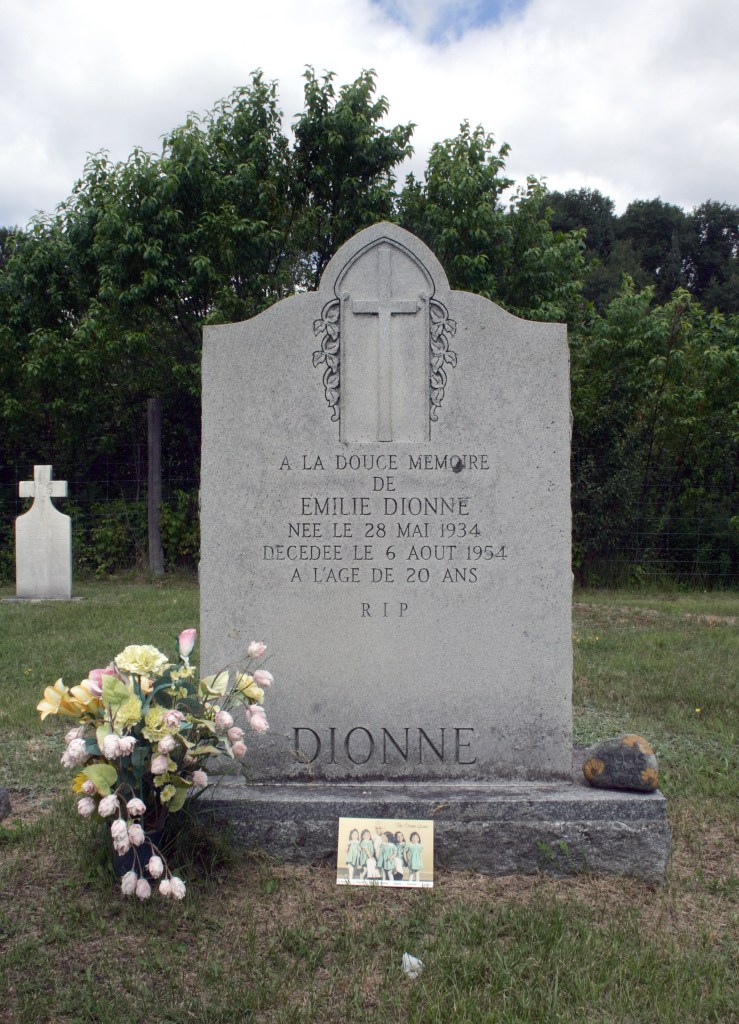
The cemetery is on farm land. Next to the chicken coops and tractors is a fenced-in cemetery with a bright orange diamond sign that says “cemetery entrance”. As we drove up, a man was outside working on his tractor. I rolled down my window and asked if it would be OK if we visited the cemetery. He smiled and nodded, saying that it was fine, so we proceeded to go in. It’s a medium-sized cemetery with a mix of older and newer stones. It looks like it is still an active cemetery as well. The Dionne’s have a small family plot. Oliva and Elzire, the Father and Mother of the quintuplets are buried there. Along with four of their children, one of which is one of the quintuplets Emilie. FindaGrave.com lists two of the quintuplets as being buried here, but I was only able to find the headstone of Emilie.

I have photographed this cemetery before. In 2019 some friends and I did a road trip to North Bay and the area, where we visited the local cemeteries. I’ve even taken pictures of Emilie’s stone. At the time, I recognized the name Dionne, which is why I took the photo. But I never made the connection between the two.

This time I had a postcard with me from the Callander Bay Heritage Museum that showed the quintuplets with Dr. Dafoe. I took photos of the postcard with Emilie’s stone, with no issue. I attempted to take a photo with the postcard on the tombstone for Oliva and Elzire Dionne. The wind was not cooperating and blew the postcard away. After several attempts of trying to get a shot with the postcard, I put it away. Maybe it was the wind, whipping up at an in-opportune moment, or maybe it was the spirit of Oliva and Elzire, refusing to take a photo with an image of the man who took their children away.

There are only two of the quintuplets still living, Annette and Cécile. Emilie and (supposedly) Yvonne are the only quintuplets buried in Corbeil, their home town. The rest of the quintuplets are buried in Montreal. I was curious as to where Dr. Dafoe was laid to rest—he is buried in Toronto.

This was a very educational trip. It was interesting to dive a little deeper into the true story of the Dionne quintuplets. Being able to speak to a blood relative and learn how the family was affected by what happened was truly heart-wrenching and eye opening. The Dionne Quintuplets still draw a crowd, but now for a different reason. In the 1930s it was seen as a miracle and amazing, and no one batted an eye at the fact that these children were taken away from their parents. Today, people are still interested in the Dionne Quintuplets, but the narrative is much different.

If you are interested in learning more about the story of the Dionne Quintuplets, you can visit these links below:

Stone Stories: A life cut short

A couple of weekends ago I visited the grave of Renée Sweeney. 

While planning out a hike that weekend, I checked which cemeteries would be along the way. One of them just so happened to be her resting place. 

I usually don’t spend as much time in newer cemeteries because the stones and symbolism are much more modern and not as nuanced. This cemetery is full of some very interesting stones and stories. Because I was searching for one grave in particular, I took my time walking through the rows, examining every stone. I came across some lovely stones and epitaphs, as well as some heartbreaking ones.

But none as heartbreaking as the family plot of Renée Sweeney. 

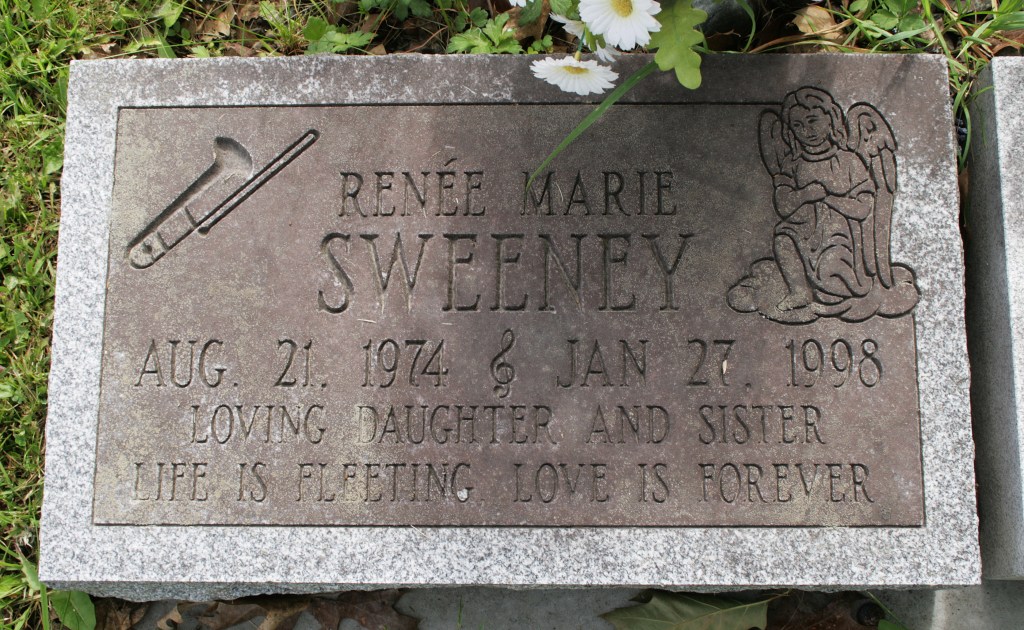
Her grave marker is small, laying flat to the earth, but it tells a story of a life cut short, that had a lot of love yet to give. The epitaph reads “Loving Daughter and Sister, Life is fleeting Love is forever” A trombone is engraved on her stone, as well as a treble clef and an angel. She is buried beside her mother.

What happened to Renée is terrifying and heart-wrenching. She was 23 years old when she was brutally murdered in 1998. She was stabbed at least 30 times while working at Adults Only Video. 

Her murder went unsolved for 20 years.

In 2018, Robert Steven Wright was arrested. He faces a second-degree murder charge. Due to the pandemic, he is still awaiting trial. His new trial date as of this writing is October 25th, 2021. The trial is expected to last 5 weeks.

Renée’s story can be found in more detail in Unsolved Sudbury: Missing. Murdered. Unexplained. by Sarah May. Books are available locally at Bay Used Books, Jan Browning Boutique, and Sudbury Paint and Custom Framing.

If you are interested in learning more about this tragic history, you can read more about it at these links: