With my birthday coming up at the end of the month, I thought it would be fun to try out a cake recipe for this month’s gravestone recipe. I found the perfect fit with this Texas Sheet Cake.
This recipe can be found on the gravestone of Helen Rose (Keathley) Sweers, who is laid to rest in Blain Cemetery in Cutlerville, Michigan.
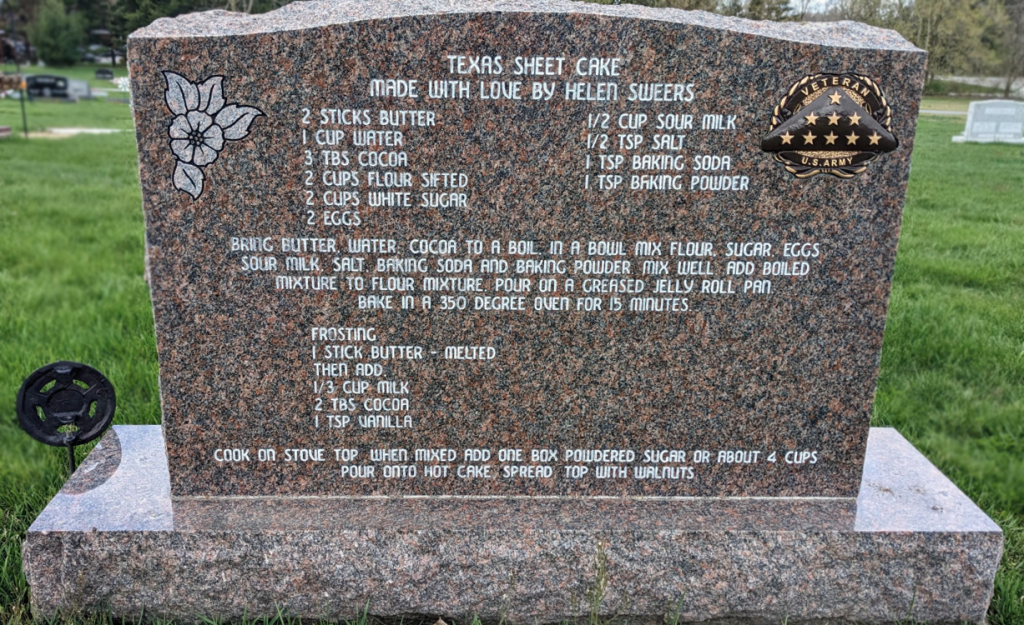
Gravestone of Helen Sweers. Photo by Find a Grave contributor, Photograver Lori.
Sweers passed away on December 30, 2017, at the age of 77. Her brief obituary describes her as a wife, mother, and grandmother, who deeply loved God, her family, and everyone in her life.1
While her obituary doesn’t mention a passion for baking, the recipe engraved on the back of her gravestone tells a different story.
“Made with Love by Helen Sweers”
Texas Sheet Cake Recipe. Photo by Find a Grave contributor, G.
Texas Sheet Cake
(As inscribed on the gravestone of Helen Sweers)
Made with Love by Helen Sweers
2 Sticks Butter
1 Cup Water
3 Tbs Cocoa
2 Cups Flour, Sifted
2 Cups White Sugar
2 Eggs
1/2 Cup Sour Milk
1/2 Tsp Salt
1 Tsp Baking Soda
1 Tsp Baking Powder
Bring butter, water, cocoa to a boil. In a bowl mix flour, sugar, eggs, sour milk, salt, baking soda and baking powder. Mix well. Add boiled mixture to flour mixture. Pour on a greased jelly roll pan. Bake in a 350 degree oven for 15 minutes.
Frosting
1 stick butter – melted Then add: ⦁ 1/3 cup milk ⦁ 1 Tbs cocoa ⦁ 1 Tsp vanilla
Cook on stove top. When mixed add one box powdered sugar or about 4 cups. Pour onto hot cake. Spread. Top with walnuts.
In the Kitchen
I had never heard of Texas Sheet Cake before, so I did learn something new with this recipe. A Texas Sheet Cake is a chocolate cake, baked in a jelly roll pan (which is a pan similar to a cookie sheet, but deeper). This gives the cake its signature large, thin shape.
I ended up purchasing a jelly roll pan specifically to make this recipe. It could double as a cookie sheet if needed, but I think I’ll use it again for future baking, so I will get some use out of it either way.
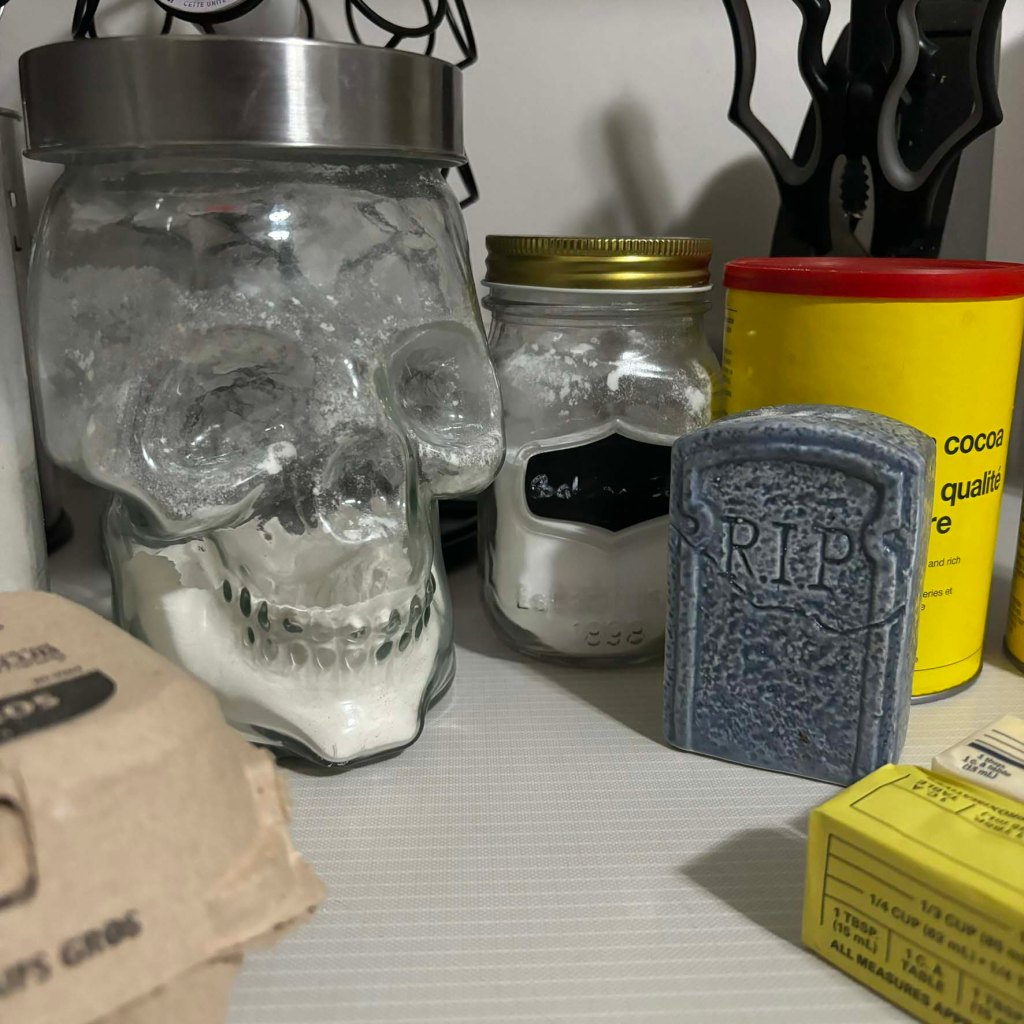
The ingredients for this recipe are mostly staples, so I didn’t need to make an extra grocery trip. However, I did have questions about the sour milk.
Sour milk has a tart taste, either because it’s just starting to spoil or because it was soured on purpose.2 This made me think that this might be a Depression-era recipe, as many recipes of that time were designed to avoid food waste and used sour milk.2 Buttermilk could be a good substitute for sour milk, but I opted to make my own. I found sour milk recipes online that called for 1 tablespoon vinegar or lemon juice, for 1 cup of milk. This recipe only calls for a 1/2 cup of sour milk, so I used a 1/2 tablespoon of vinegar.
I let the sour milk sit for a few minutes to curdle while I gathered the rest of my ingredients and preheated the oven.
The recipe instructions are clear so I didn’t have any trouble mixing everything together. I was a bit concerned when it came time to pour the batter into the jelly roll pan. I voiced those concerns to Helen, while I poured in the batter. Talking to the person whose recipe I’m following makes me feel like they’re with me in the kitchen. It can sometimes be a comforting reminder to trust the process.
The pan was quite full, but I had faith that it would work out. And it did—well, sort of. I put the pan in the oven and let it bake for the full 15 minutes. I used the classic toothpick test to see if it was ready, but ended up needing to bake it for 5 more minutes, and then another 5 minutes after that. The center was quite thick and needed a bit more time to bake all the way through.
While the cake baked, I worked on the frosting. Since I had to bake the cake a little longer, I kept the frosting on low heat so it would be ready when the cake was done.
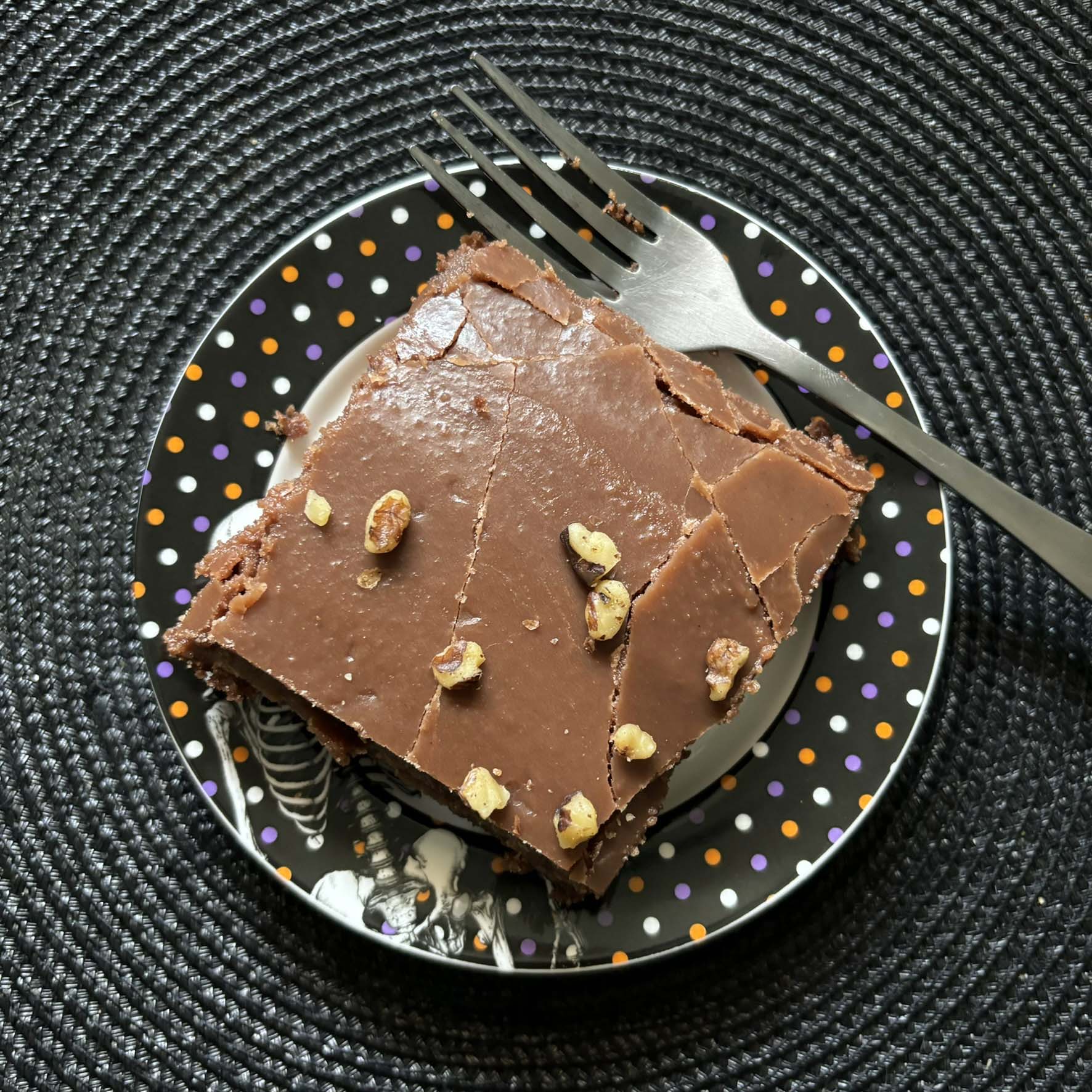
The recipe says to pour the frosting onto the hot cake. The cake didn’t rise, but it didn’t have a lot of room for icing either and I was afraid it would spill over the sides and make a big mess. To avoid that, I used a spatula to carefully spread small amounts at a time. In the end, I was able to cover the whole cake without any issues. I then topped it with a handful of walnuts.
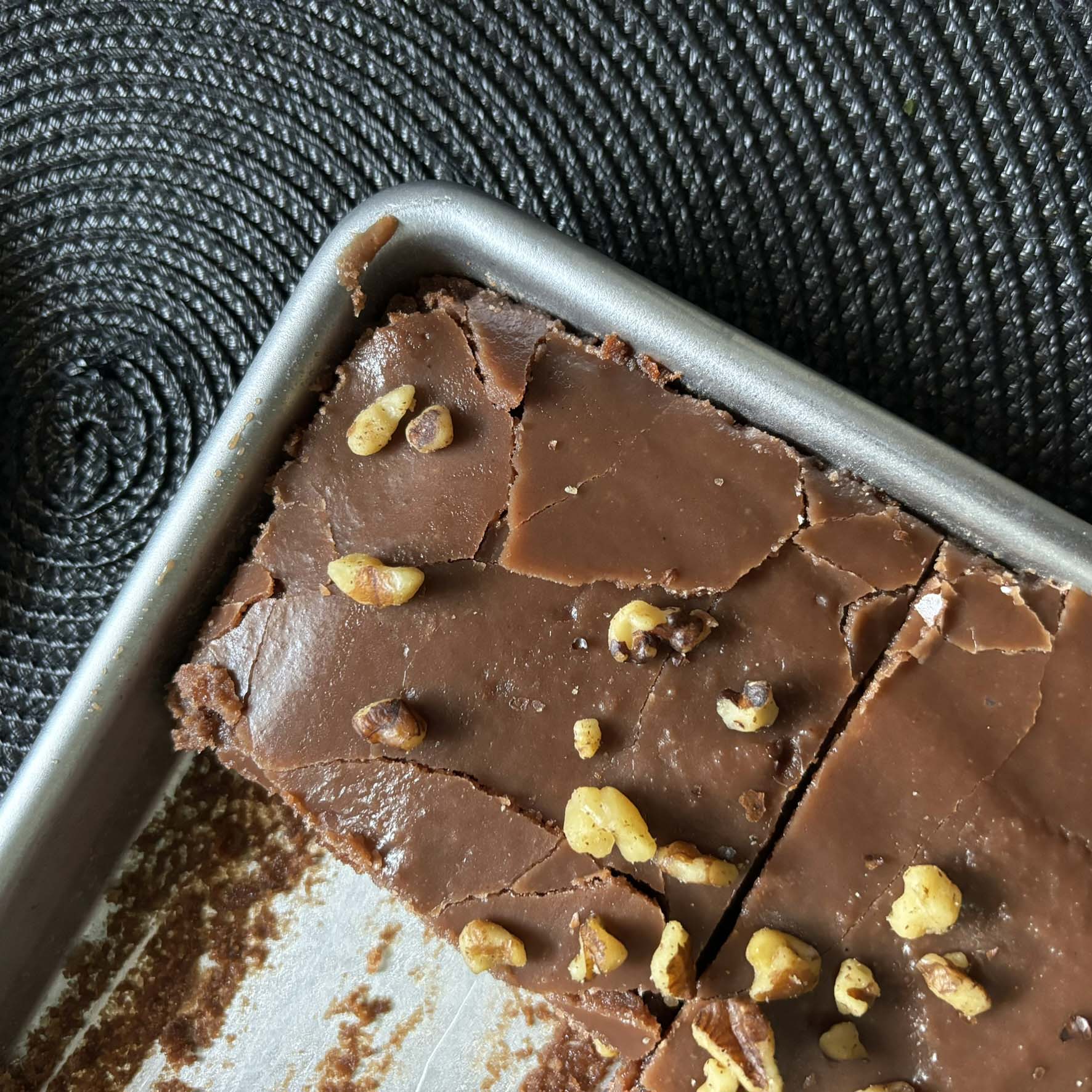
After it cooled, the frosting firmed up a bit, creating a nice crackle when you sliced through the cake.
Texas Sheet Cake, recipe from the gravestone of Helen Sweers.
I love the way this Texas Sheet Cake turned out!
It’s chocolatey and moist, but the real highlight is the frosting. It adds just the right sweetness, although I’ll warn you—it’s really sweet, so a little slice goes a long way.
This cake is big, making it perfect for sharing at a family gathering or other special occasion. I made it to celebrate my birthday, and it was perfect for sharing with loved ones.
Recreating these gravestone recipes has become a meaningful way for me to connect with those whose stories live on in such a personal way. It’s a comforting reminder that food has a power that can bring us together, even across time. I always say that recreating these gravestone recipes really is the sweetest way to remember someone.
Will you be giving this recipe a try? I’d love to hear your thoughts, and experiences in the comments.
In honor of Remembrance Day this year, Monday, November 11th, I want to take a moment to reflect on the significance of this solemn occasion and the powerful symbol of sacrifice that is the Tomb of the Unknown Soldier.
This day, which marks the end of hostilities during the First World War and honors all who have served in times of conflict, holds deep meaning for Canadians. While Remembrance Day has been observed since 1919, its evolution over the years—from its origins as Armistice Day to the shift in date and name in 1931—demonstrates its lasting importance in our collective memory.1 In this week’s post, I want to delve into the history behind the Tomb of the Unknown Soldier, a tribute that today stands as a symbol of the many soldiers who gave their lives without recognition.
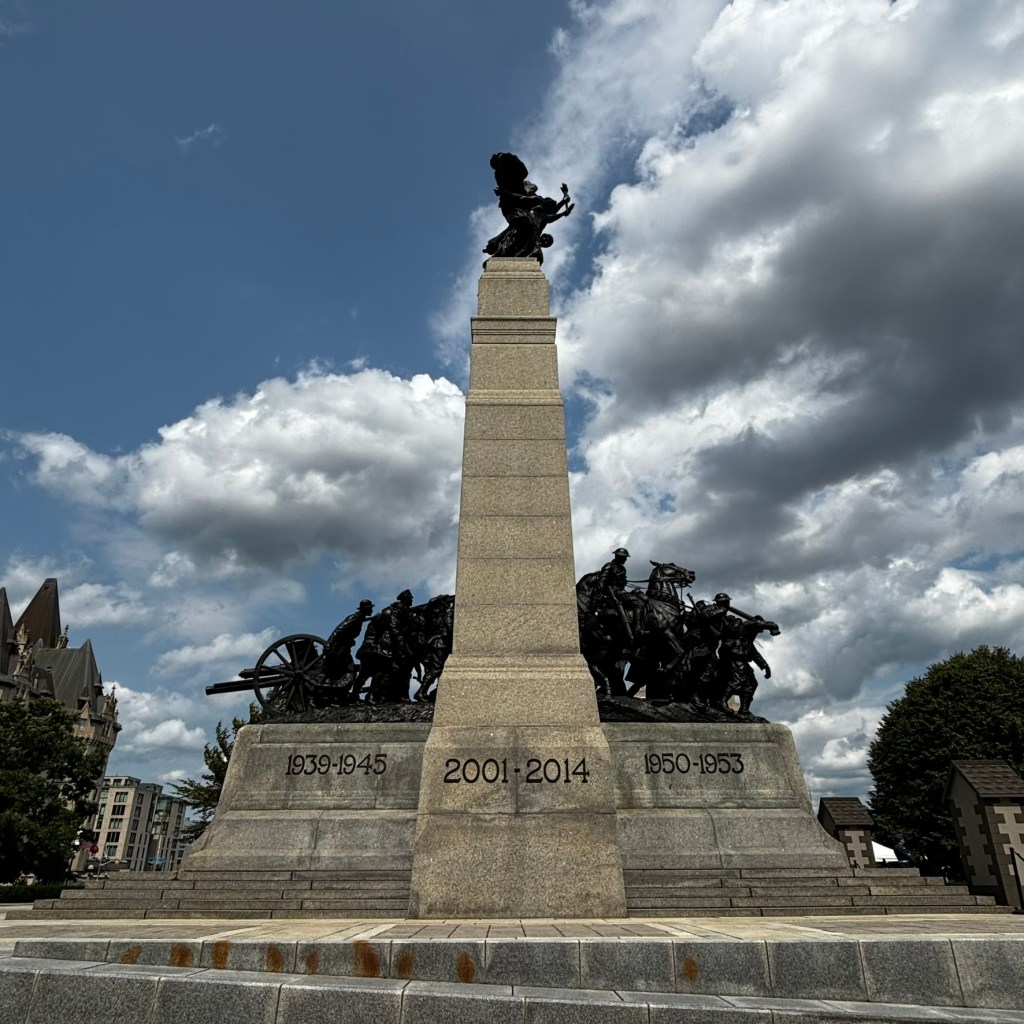
The tomb of the unknown soldier lies in front of the National War Memorial at Parliament Hill. The large monument, a cenotaph, was unveiled in 1939 to commemorate the Canadian response to the First World War. It has grown to symbolize the sacrifice of all Canadians who have served in times of war.2
The Royal Canadian Legion, with help from Veteran’s Affairs Canada, began work to bring the Unknown Soldier home in the spring of 1998.3 As a Millenium project, this undertaking was not an easy task and many veterans were anxious to see this tomb built, as a reminder for new generations of the cause and consequences of war.3,4
Exhaustive work was completed to choose the remains that would be repatriated. The remains were selected from among 6,846 unknown soldiers of the First World War.5 The set of remains that now lie at rest in the sarcophagus at the base of the war memorial comes from Cabaret-Rouge British Cemetery, in Souchez, France.4
The Unknown Soldier’s remains were exhumed on May 25, 2000, by the Commonwealth War Graves Commission. The remains were then repatriated to Canada in a Canadian Forces aircraft, where they would lay in state for three days in the Hall of Honor in the Centre Block of Parliament.5 On May 28, 2000, the remains were laid to rest in a sarcophagus made of granite, during an interment ceremony. Soil from each Canadian province and territory was placed on the casket. They also included some soil from France.6
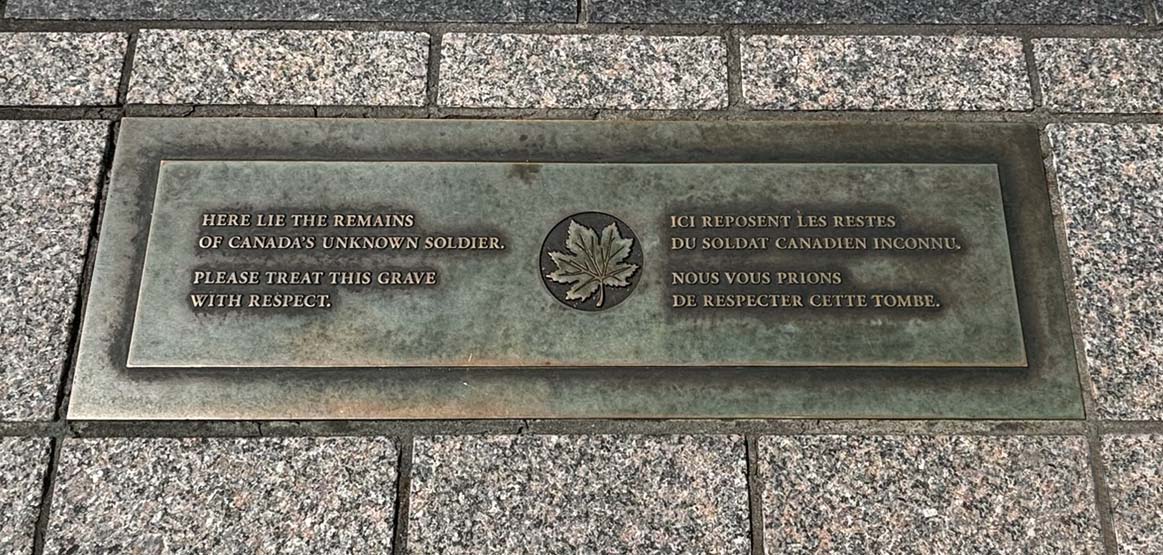
The inscription on the tomb reads “The Unknown Soldier / Le Soldat inconnu”. There is also a brass plaque embedded in the ground in front of the tomb which reads: “Here lie the remains / of Canada’s Unknown Soldier. / Please treat this grave / with respect.”
The tombstone marking the first resting place of our unknown soldier, in France, was also brought to Canada and now hangs in the Memorial Hall of the Canadian War Museum in Ottawa.
The inscription reads: “A Soldier / of the Great War / A Canadian Regiment / Known Unto God”
Original gravestone of the Unknown Soldier, Canadian War Museum. Photo by Craig Baird, Canadian History Ehx https://canadaehx.com/ Photo used with permission.
The Memorial Hall of the Canadian War Museum has a unique design feature, where every year on November 11th, at 11 a.m. the sun filters through a window in the hall, directly illuminating the headstone.7
A new gravestone was placed to mark the original burial site, now empty, in Cabaret-Rouge British Cemetery. The stone, similar in appearance to the original gravestone, is engraved with a maple leaf and the following epitaph, “The Former Grave Of An / Unknown Canadian Soldier / Of The First World War. / His Remains Were Removed / On 25 May 2000 And Now / Lie Interred At The / National War Memorial / In Ottawa Canada.”4
The Changing of the Guard
This summer, while I was visiting family in Ottawa, I had the opportunity to visit the Tomb of the Unknown Soldier and witness the changing of the guard.
Since 2007, the Canadian Armed Forces have posted sentries to stand guard at the tomb, with a rotation of personnel from the Royal Canadian Navy, Canadian Army, Royal Canadian Air Force, and Canadian Ranger units from across the country.8 During the summer months, the changing of the guard ceremony occurs every hour, on the hour, between 9 a.m. and 5 p.m.
The ceremony is a somber occasion that reflects respect for Canada’s fallen soldiers. As the sentries execute their precise and disciplined movements, the atmosphere was heavy with reverence. The ceremony serves as a powerful reminder of the sacrifices made in the name of freedom and those who gave their lives in service.
While visiting the tomb, I was struck by the weight of history and felt the significance of honoring those whose identities may be lost, but whose sacrifices will never be forgotten.
We will never know the identity of the Unknown Soldier—but that’s the point.
In war, the remains of soldiers may be badly damaged, or destroyed. Even though a great effort was made to find and identify remains, many were not found at all. Almost 20,000 Canadians who died in the First World War have no identifiable graves.4 Some could only be identified as Canadians, by uniform buttons or badges, and were buried with a simple military marker, like our unknown soldier.4
So this Remembrance Day, as we pause to honor the sacrifices of those who served, remember also the unknown soldier—the many who gave their lives, whose identities are now lost to history.
A few years ago, my fiancé and I started a new October tradition. We were engaged in October, and to celebrate we planned a cute weekend getaway at a haunted hotel. We visited a haunted pub and enjoyed the small-town charm and fall weather.
We had so much fun that we started thinking about other haunted hotels we could visit—and the tradition was born!
This year, our Haunted Holiday took us to Toronto.
We had tickets to see the iconic heavy metal band Iron Maiden at the Scotia Bank Centre at the end of October, so it made sense to make a weekend trip. I did a bit of research into haunted locations in the city and booked us a room at the Fairmount Royal York. We also made reservations for a romantic dinner at a 157-year-old historic building known today as the Keg Mansion.
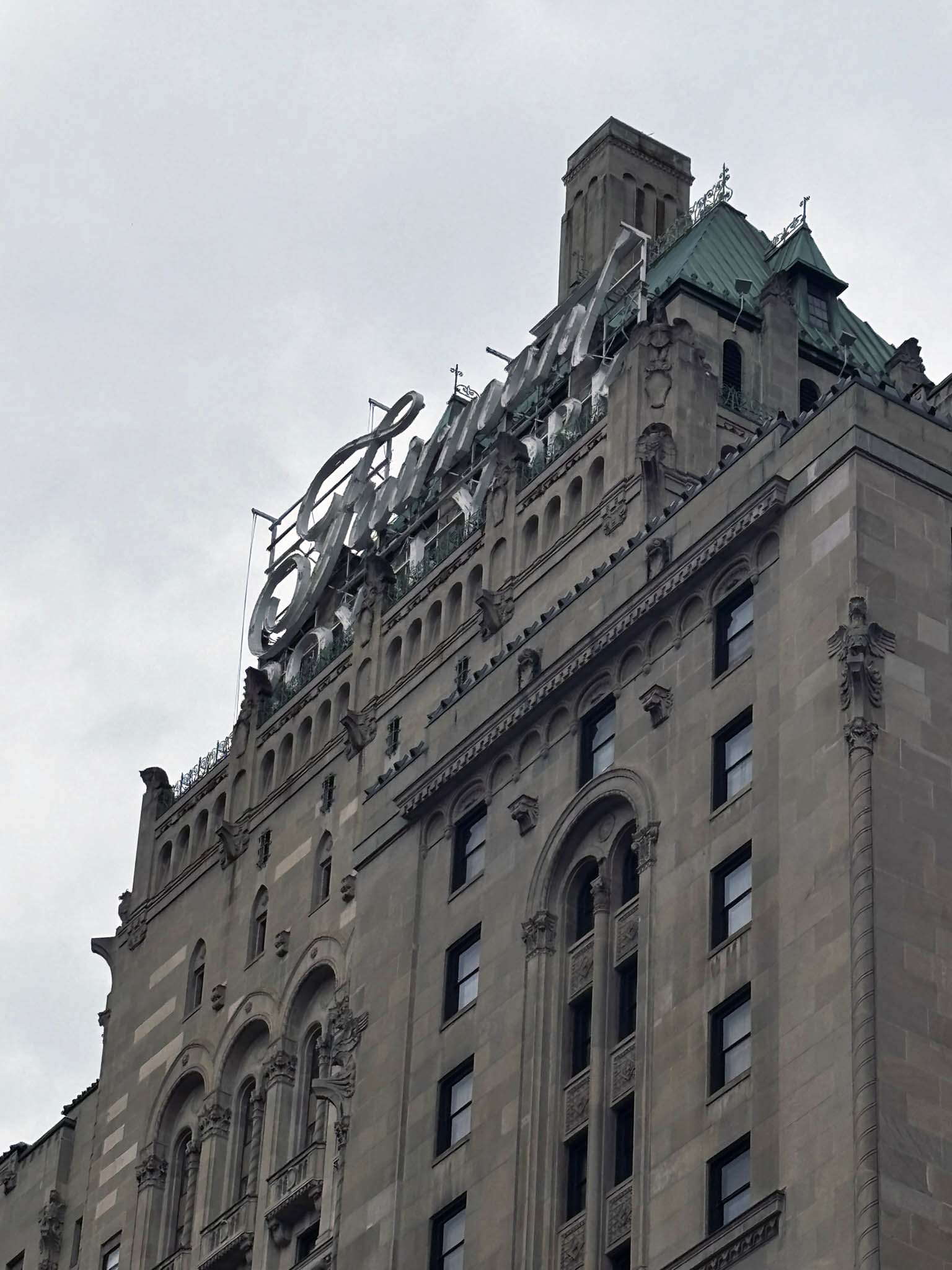
The Royal York Hotel was built in 1928-1929, by the Canadian Pacific Railway as part of its coast-to-coast chain of grand hotels. The skyscraper hotel was the tallest in the British Commonwealth at that time and dramatically altered the Toronto skyline.1
Today it’s one of Toronto’s most famous landmarks.
This stately hotel has played host to many celebrities and dignitaries over the years, such as Louis Armstrong, Ella Fitzgerald, and the Royal family.2 With such a storied past, it’s no surprise that it might also hosts a few ghosts.
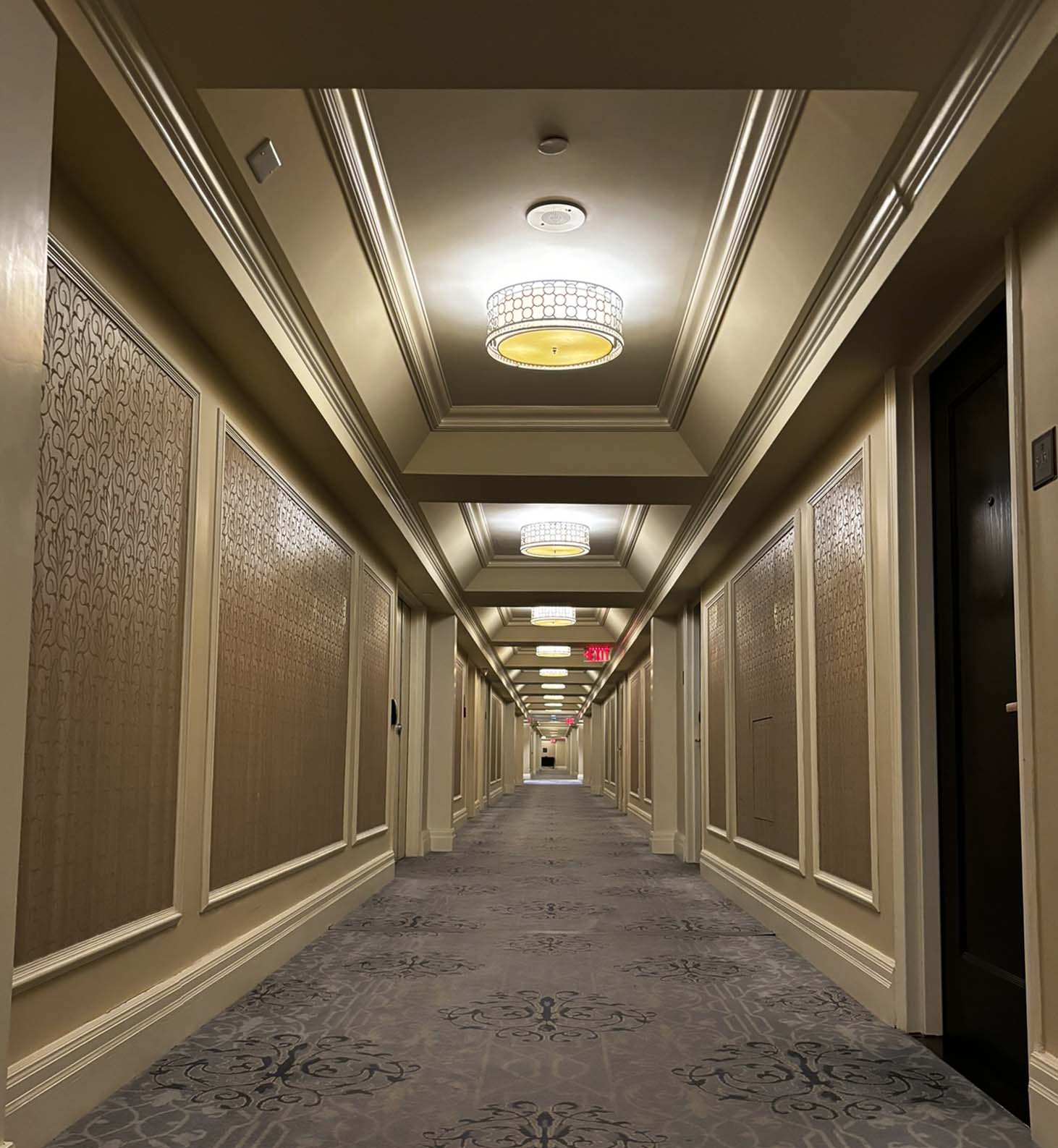
The most reported haunting is that of a gentleman who wanders the halls on the 8th floor. He is said to be wearing a purple jacket. This ghostly figure is sometimes seen accompanied by the sounds of children running up and down the halls while laughing. Those who have heard the ghostly children have peeked outside their chamber door to see an empty hallway and find silence. Some have peeked out to see the man in the purple jacket.3
My fiancé and I were eager to chat with someone about the supposed hauntings when we checked in. Unfortunately, we didn’t meet anyone who had any stories to share with us, either being recent hires or as one put it, worked only during the day when nothing spooky happens.
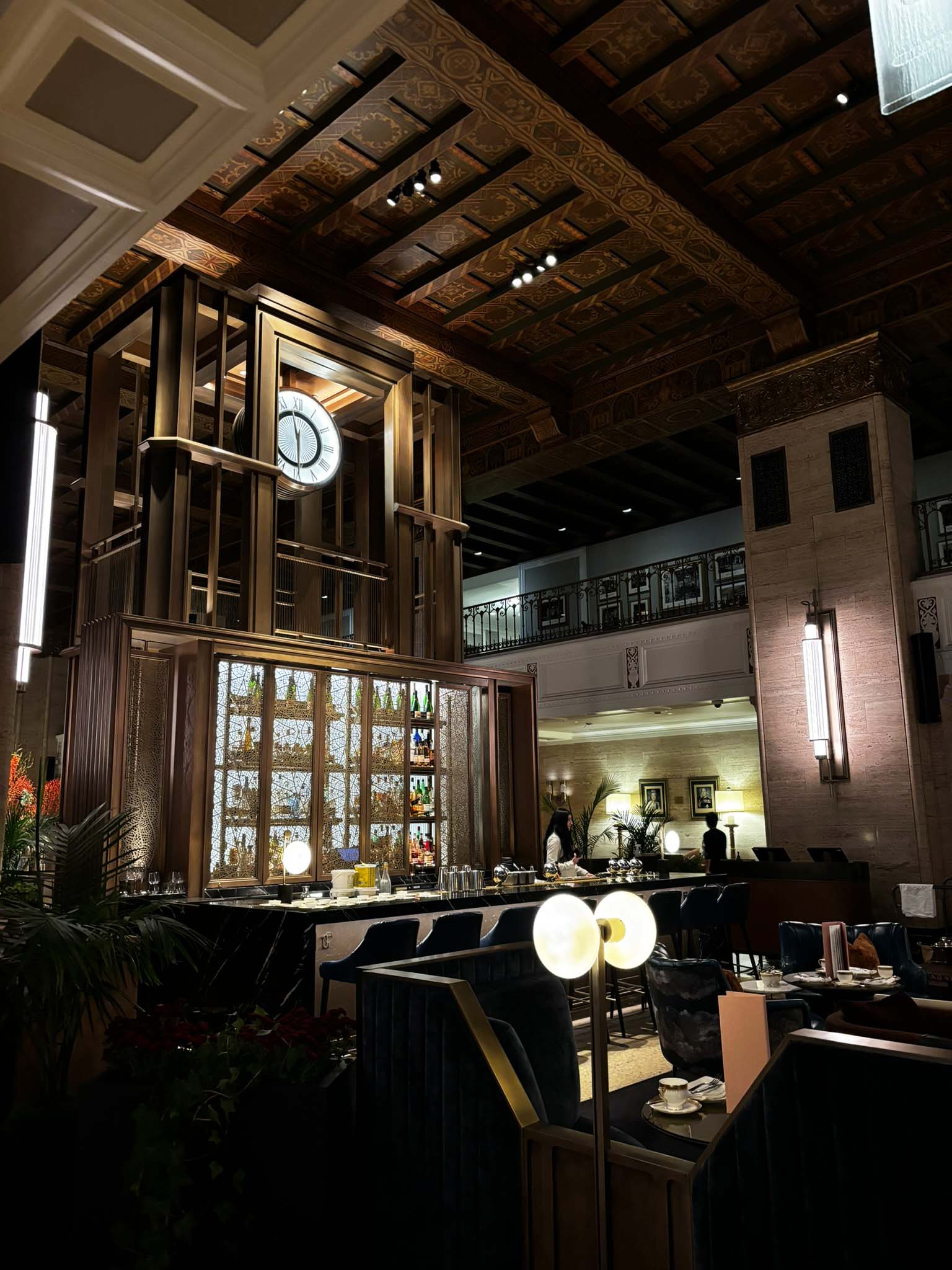
The hotel is immense and beautiful, so we took a bit of time to explore our surroundings while making our way up to our room on the 9th floor.
After dropping off our things and settling into our new home for the night, we had some free time before our dinner reservation. We had just enough time for a cemetery visit, some window shopping, and a drink or two at a pub.
Mount Pleasant Cemetery
Opened in 1876, Mount Pleasant Cemetery is considered one of Canada’s most historic cemeteries. It was designed by Henry Adolph Engelhardt and is a beautiful example of landscape design, inspired by the European and American garden cemeteries of the 19th century.4
Spanning 83 hectares in the middle of the city, the many winding paths provide picturesque views of the park-like landscape.4 Mount Pleasant features one of the finest tree collections in North America and walking and running trails that span 1 km, 3 km, and 5 km routes.5
Mount Pleasant is the final resting place of many prominent Canadians, including former Prime Minister William Lyon Mackenzie King, Nobel Prize winner Frederick Banting, founder of the Eaton’s department store Timothy Eaton, and renowned pianist Glenn Gould.6
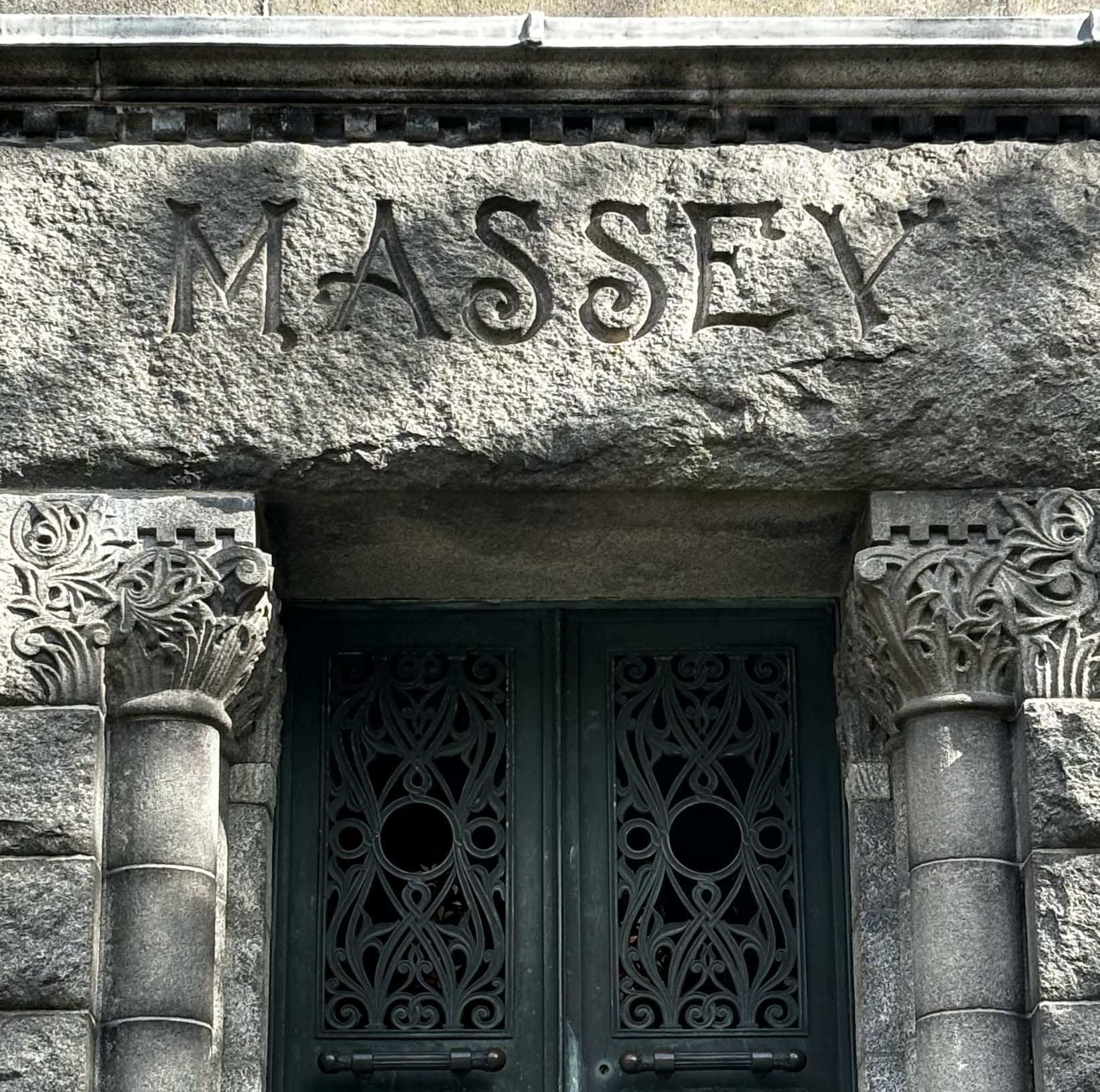
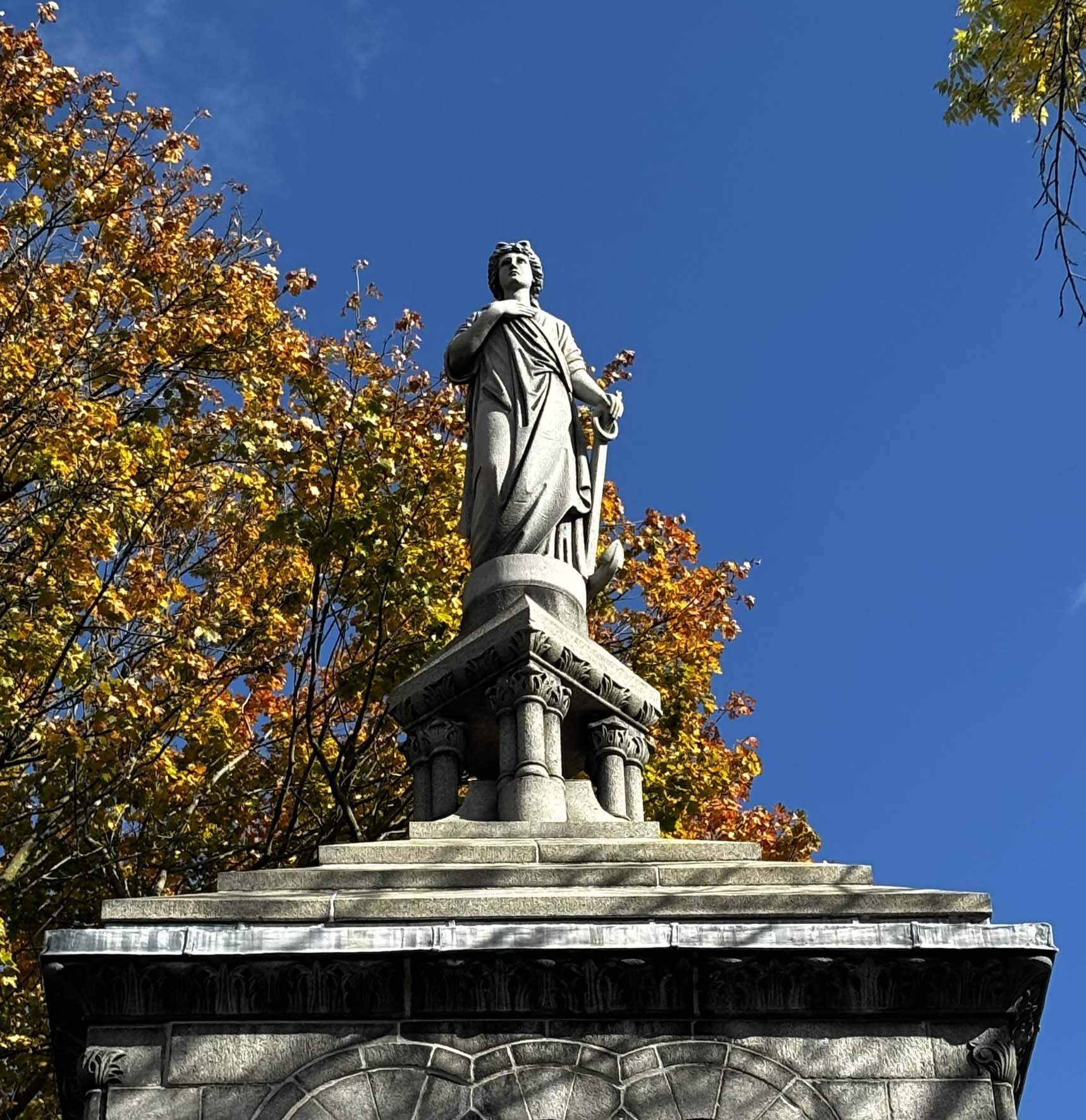
It’s also the final resting place of many members of the prominent Massey Family. The Massey Mausoleum was built in 1891. Designed in the Romanesque style, the family crypt features a tower, a below-grade crypt, and a statue of Hope, one of the seven virtues perched on top of its roof.7 Industrialist and philanthropist Hart Massey rests within the walls of this mausoleum, as well as his wife Eliza Ann Phelps Massey, and some of their children, like Lillian Frances Massey Treble.
I was particularly interested in visiting the final resting place of Lillian, as we would be dining with her ghost later that evening.
The Massey Mausoleum is massive and was easy to spot once I was pointed in the right direction. I will admit I did need to get directions from a groundskeeper as the cemetery is quite large and easy to get lost in. Especially when you are easily distracted by gravestones, like me.
Standing in front of the immense family crypt, I was in awe of the wealth and stature of this family, which I assume is one of the reasons for building such a massive final resting place.
I peeked inside and admired the beautiful stained glass, in the small sepulchre. The shaft of light coming from the stained glass windows in the ceiling lit the inside of the tomb just enough to make out the nameplates marking the shelves within the crypt. It felt like a special privilege to be able to see inside this final resting place of such a prominent Toronto family.
After paying my respects and taking a few more photos, I made my way back to my waiting fiancé. I excitedly showed him my photos as I described everything I saw during my short walk in the cemetery.
After a short rest and an iced pumpkin spice latte, we continued on our walk down Yonge Street stopping in at a shop here and there. We eventually sat down at a nice little pub called The Quail, where we enjoyed a few drinks and chatted with the owner. Now that I think about it, we completely forgot to ask the owner if he had any ghost stories to share.
But not to worry, we would get our fill of ghost stories at supper time!
The Keg Mansion
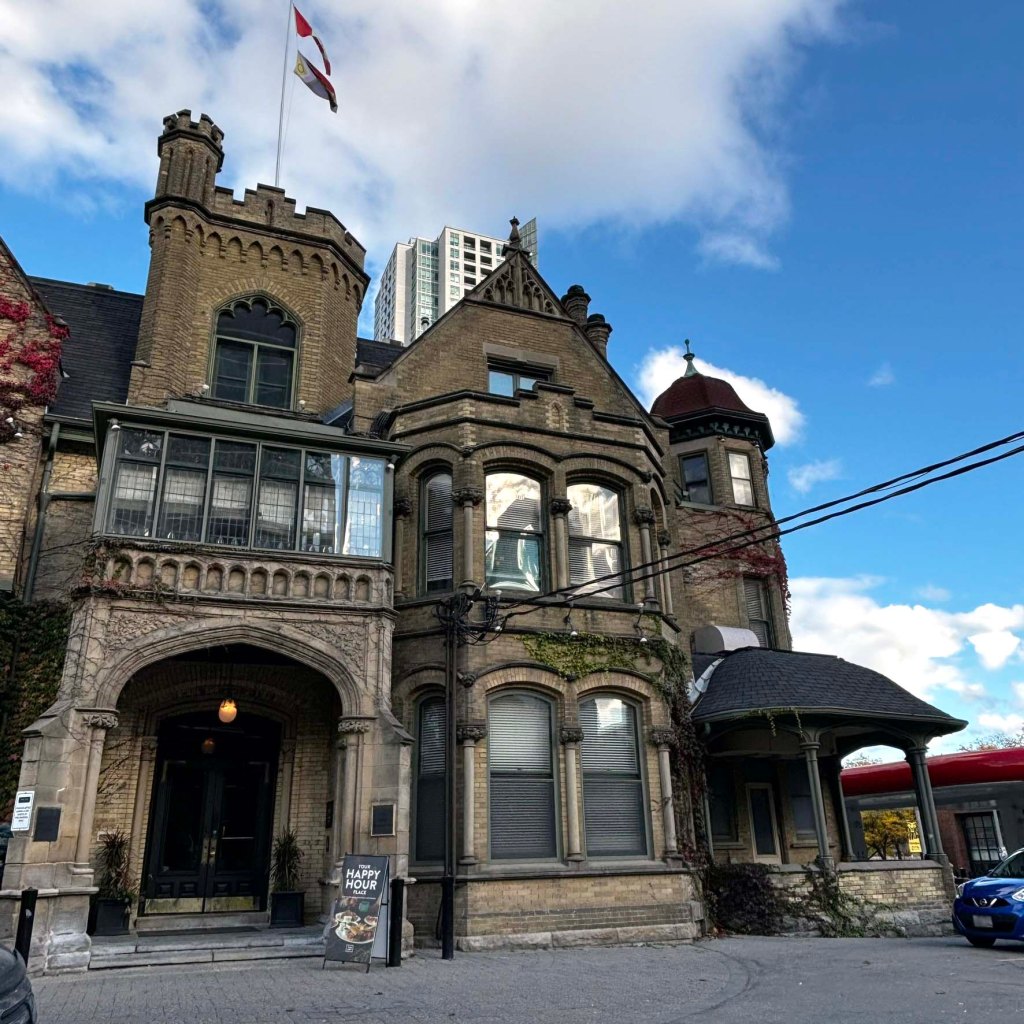
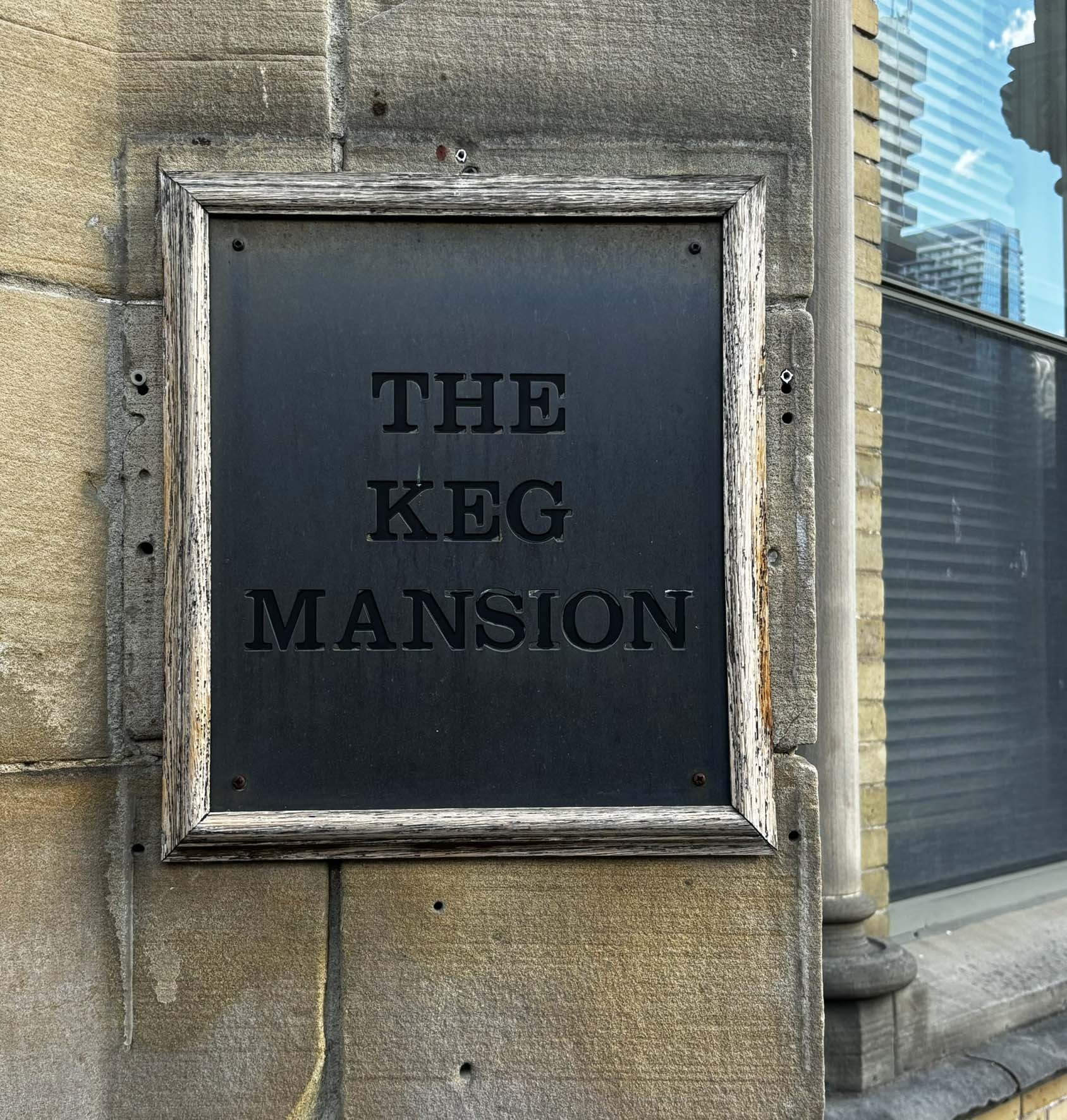
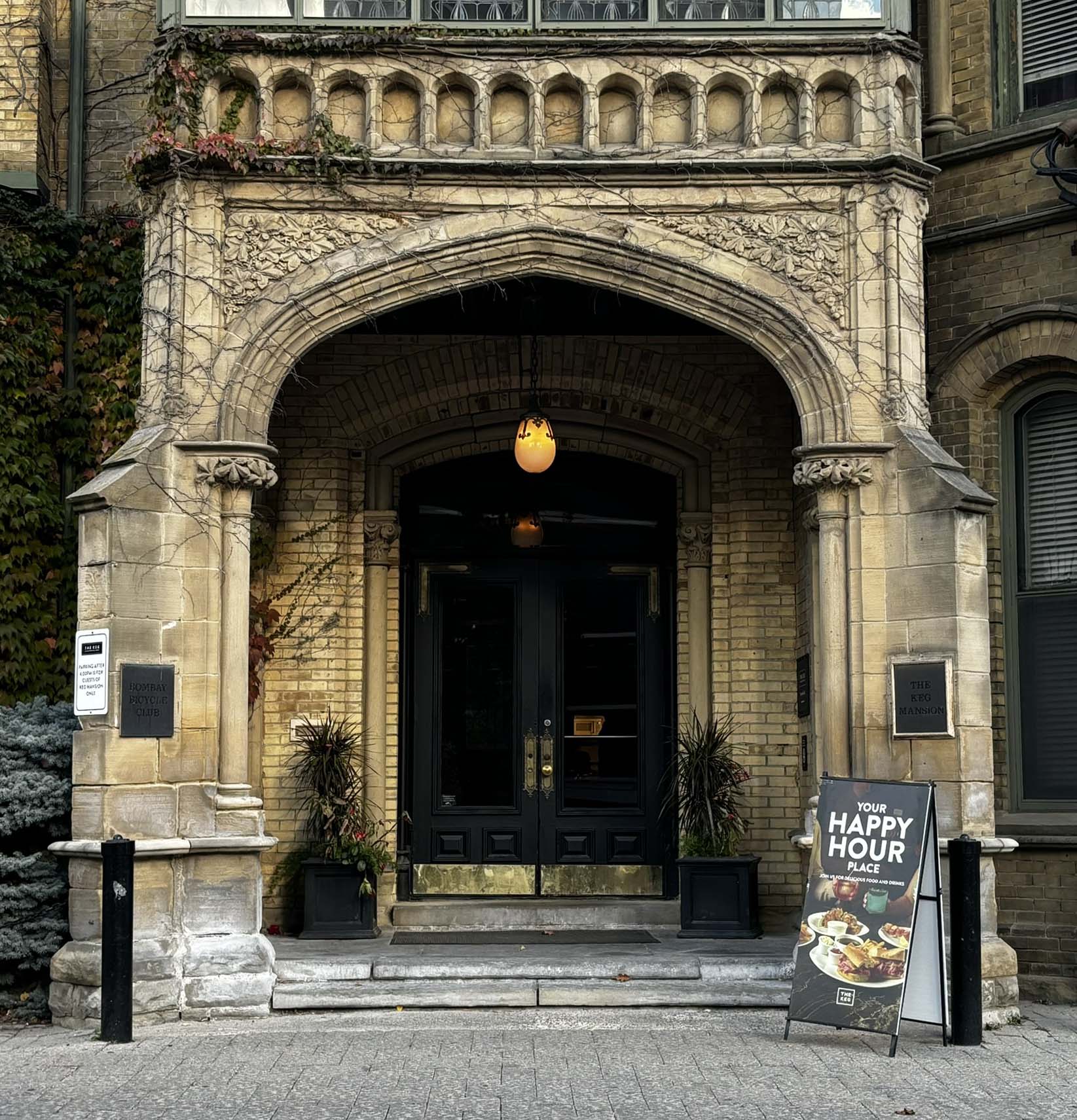
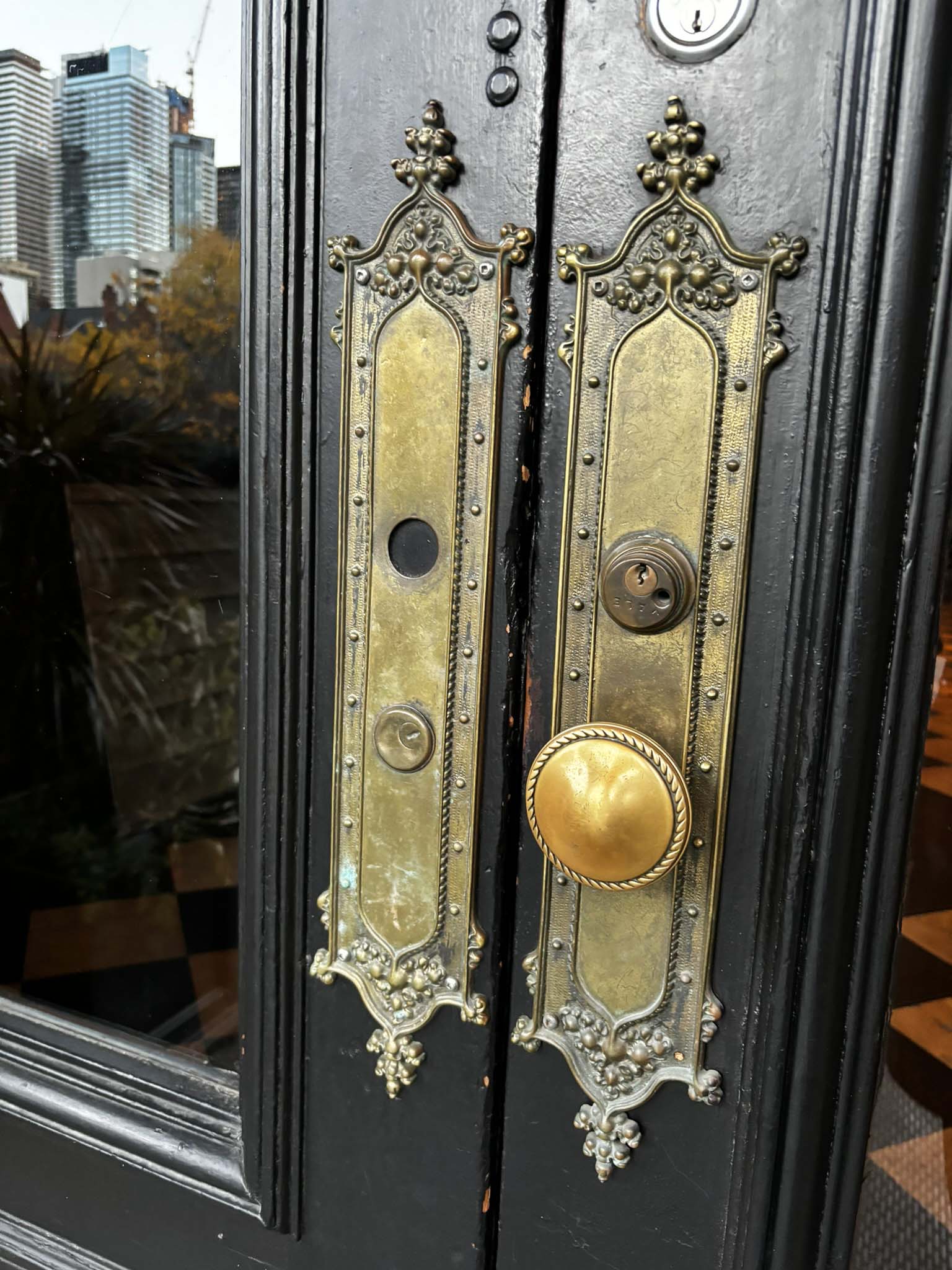
Our dinner reservation brought us to the Keg Mansion, a former home of the Massey family. Built in 1867, this elaborate mansion housed 26 different rooms and 17 fireplaces.8 The home was purchased in 1882 by Hart Massey, a Cleveland agricultural equipment salesman, and his wife. They would make additions to the ornate mansion by adding a turret, verandah, and a greenhouse.8
After Hart Massey passed away in 1896, at the age of 72, the estate was taken over by his daughter Lillian Massey. She would name the Mansion Euclid Hall, and reside there until her death. After her passing, the house was entrusted to the University of Toronto, serving as the home for many different establishments over the years. In 1975, the building received heritage status, and in 1976 became the home of The Keg Steakhouse + Bar. Today, it’s known as the Keg Mansion.8
The Keg Mansion does not shy away from its ghostly history. When we arrived for our reservations we were quietly seated on the second floor. Of course, we asked right away if our server had had any ghostly encounters to share. She didn’t have any stories of her own to tell, but she kindly offered to bring over the “ghost book”, a collection of reported hauntings by staff and restaurant patrons.
I was happy to peruse the reported hauntings while they brought out our drinks. Some of the stories I was familiar with, like the story of Lillian Massey and her maid. Lillian passed away in the house in 1915, at the age of 61. Lillian was beloved by her staff, and her maid in particular took her death very hard. The story goes that after learning of Lillian’s death, her maid, distraught with grief brought a length of rope with her upstairs to the oval vestibule, where she fashioned a noose and hung herself.9
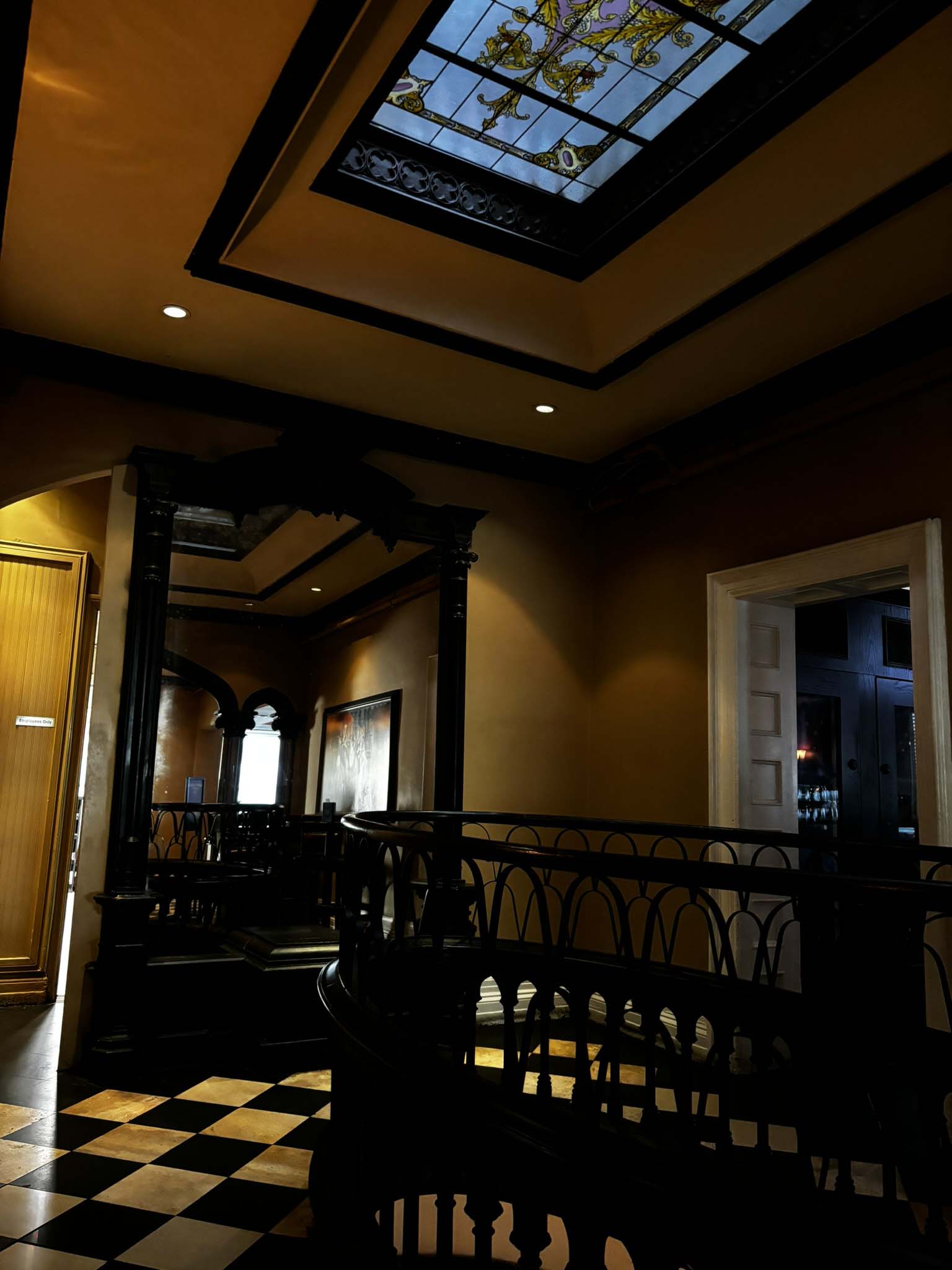
The vestibule is still a feature in the Mansion today, just outside the washrooms on the second floor. People have reported seeing Lillian’s spirit as well as the spirit of her maid, in various rooms throughout the house. The washrooms, in particular the women’s washroom, are thought to be one of the most haunted areas in the Mansion. Patrons have reported feeling cold spots, and even capturing ghostly images in photographs taken in a mirror above the fireplace in that washroom.
The stories I found most fascinating though were the sightings of the ghost of a young boy.
Throughout our meal, my fiancé and I couldn’t help eavesdropping on the conversations happening around us. The ghostly phenomenon happening at the Mansion is well known, and we were not the only ones asking questions about ghosts.
One server stopped by our table and told us a story about a mother and son who had come to the Mansion for supper. The little boy went to the bathroom, and on his return told his mother that there had been another little boy in the bathroom, all alone. Worried, the mother told her server who in turn told a manager. The manager went to the bathroom right away to see if the little boy needed help, but there was no one there.
We would learn later in the evening that there had been a young Massey boy, who also died in the house, who was around 10 years old. His playful ghost is also often reported.
Geoff, the Bar Manager stopped by our table after our meal and told us about his encounter with the child ghost. He had been walking with a tray of drinks past the front door area, where the large staircase is when he overheard a little girl telling her mother she wanted to play with the trains. The mother, confused, asked her daughter what she meant. In response, the little girl pointed to the empty staircase and said she wanted to play trains with the little boy. She was quite emphatic saying that he was playing with the trains and that she wanted to play too.
Except there was no one on the stairs, no little boy, and no toy trains!
Geoff assured us that even though the ghosts were very active, no one had experienced anything malicious. My fiancé and I hoped we would have an encounter of our own, but alas we didn’t experience anything. We both made it a point to visit the washrooms, and I did take a few selfies in the bathroom mirror, but I didn’t capture anything.
What we did have was a lovely evening of good wine, good food, and ghost stories.
After dinner we made our way back to the hotel to freshen up, then it was off to the Scotia Bank Centre for an evening of heavy metal. Iron Maiden put on an excellent show!
After a couple of hours of rocking out, we walked back to our hotel, stopping on the 8th floor to take a look around. It was quiet on that floor, so we returned to our own room for the night.
Although we didn’t get to experience any hauntings ourselves, we both agreed that it was a great weekend. You can’t go wrong with romance, ghost stories, and heavy metal. It was definitely a haunted holiday for the books.
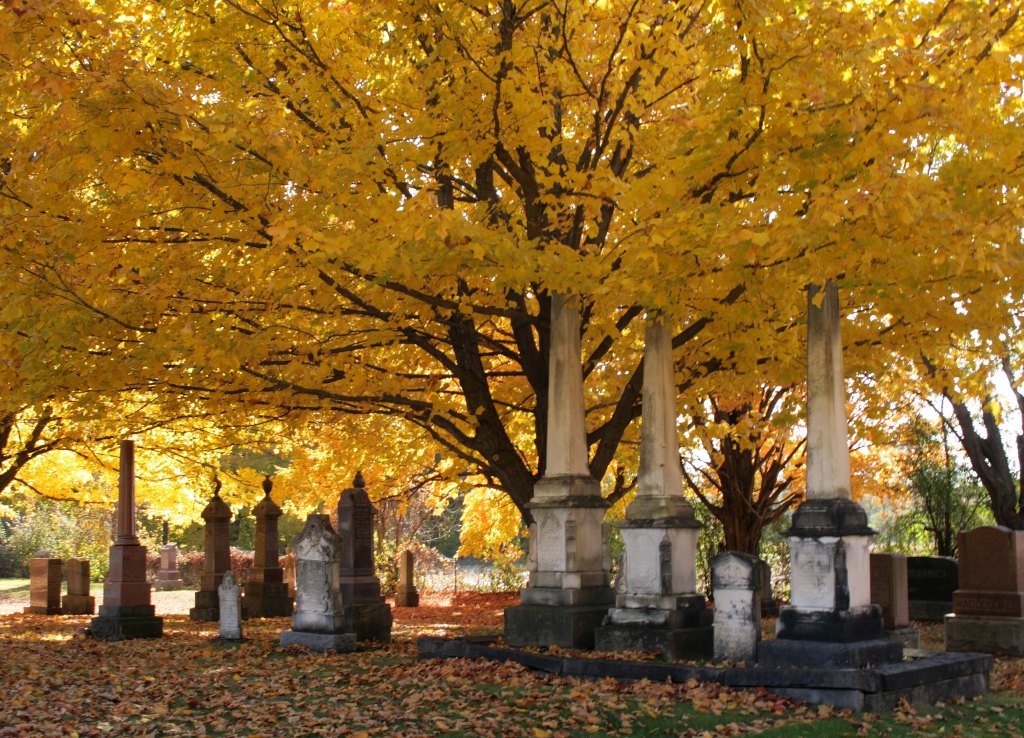
There is just something magical about wandering through a cemetery bathed in the warm colors of autumn. So today on the blog, I explore how the crunch of leaves underfoot and the cool breeze tousling your hair as you walk among the headstones, creates a uniquely reflective experience.
The stunning yellows, oranges, and reds herald the changing of the seasons and mark the transition from verdant green to withered rotting leaves. The falling leaves remind us of the cycle of life and that everything dies.
Autumn begins on the fall equinox, usually on September 22 or 23. The equinox happens twice a year in the Northern Hemisphere, occurring between the summer and winter solstices.1 It marks the point where the sun crosses the equator’s path and becomes positioned exactly between the Northern and Southern hemispheres.1 On the equinox, day and night are approximately the same length, but the fall equinox marks the beginning of longer nights and shorter days.1
As we lose daylight earlier, the yellow glow during the golden hour is intensified, creating a golden light that beautifully bathes the gravestones. It’s a photographer’s dream!
Gravestone symbolism draws heavily from Greek mythology, so it seems only fitting to share the Greek story of Persephone’s return, an anecdote used to explain why the seasons work the way they do.
In the story, Persephone was abducted by Hades and forced to live in the Underworld. Demeter, Persephone’s mother, searched far and wide for her daughter. Demeter threatened to make the earth a barren place until her daughter was returned to her.2
A deal was struck: because Persephone had eaten four pomegranate seeds while in the Underworld, she would return to Hades and live with him for four months out of the year.2
So when Persephone traveled to the Underworld to fulfill her four-month stay, Demeter’s sadness at being separated from her daughter was expressed by the barrenness of autumn and the winter cold.2
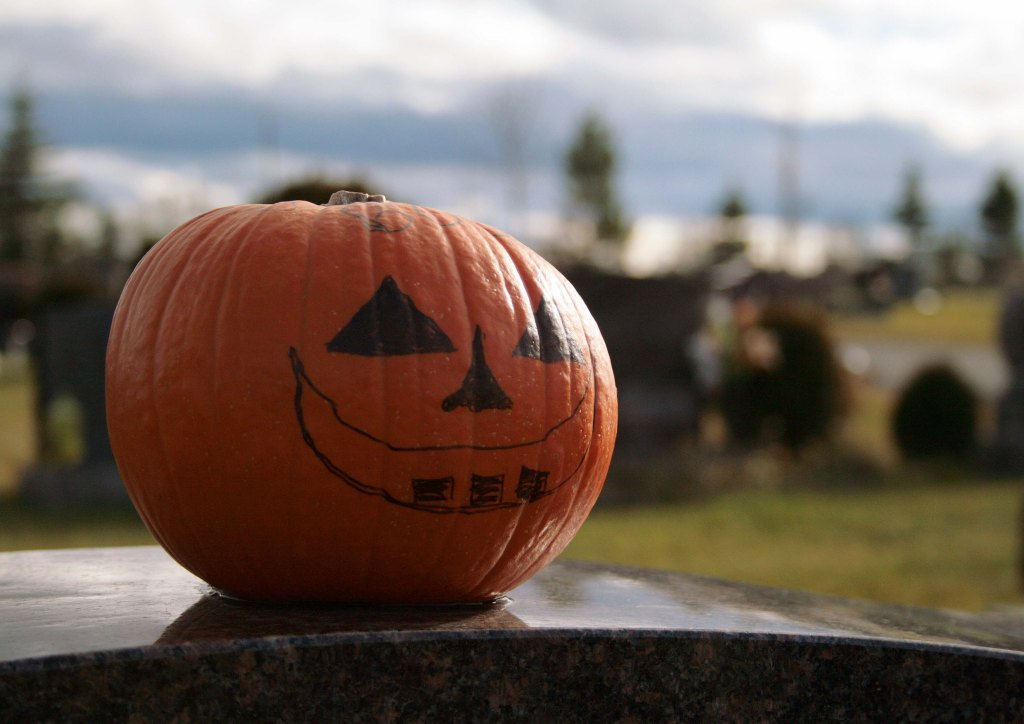
The month of October can be considered the peak of autumn, with the fall colors reaching their most vibrant, usually during the first couple of weeks. The beginning of October is also considered by many to be the start of the spooky season, which culminates on October 31st, Halloween.
Halloween night is said to be when the veil between the living and the dead is the thinest. This is thought to mean that it is the one night when spirits can cross over the easiest to communicate with loved ones.
The idea of a veil between life and death can sometimes be found in cemetery art.
A draped urn, for instance, is a popular Victorian-era motif, borrowed from Ancient Greece. The Ancient Greeks commonly cremated their dead, and the symbol of a ceremonial urn was adapted to represent the idea of the body being reduced to its barest elements while the soul ascends to heaven. Often draped in a cloth, this drapery is thought to symbolize the veil between the living and the dead.3
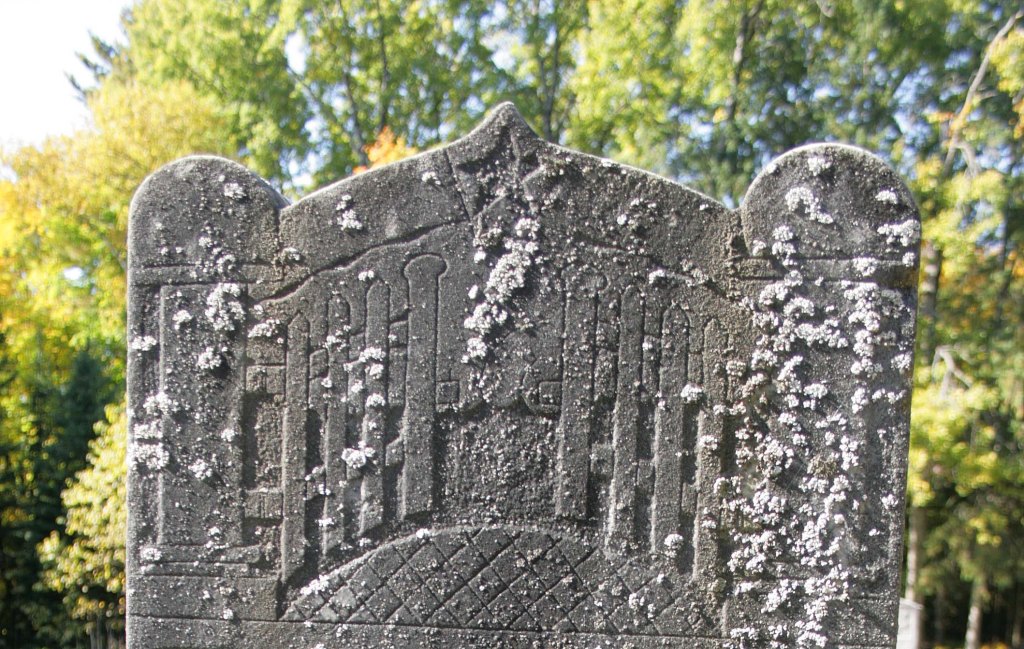
Another symbol that symbolizes this concept is the gates ajar. This grave symbol was popularized by author Elizabeth Stuart Phelps in her 1868 book The Gates Ajar. The story follows a woman coming to terms with the death of her brother, who died in the Civil War. This symbol features an open gate, symbolizing that the gates to Heaven are not closed, and that departed souls can pass back and forth.3
As you might expect Halloween is celebrated all over the world. It is one of the oldest holidays after all. There are many ways to celebrate, the most obvious being donning a scary costume and going door-to-door for tricks or treats. But there are other Halloween traditions, older traditions that are practiced in all parts of the world.
It’s not surprising that some of them involve cemeteries!
In France, All Saints Day and All Souls Day are celebrated by children going house to house collecting flowers that they use to decorate graveyards and churches.4
To celebrate Dia De Los Muertos, also known as Day of the Dead, in Mexico families will have picnics in graveyards at the graveside of their loved ones, to remember and celebrate their life.4
In Portugal, wine and chestnuts are brought to feast on, in the cemetery.4
And in Rome, they celebrate Feralia, which is similar to the Day of the Dead in many ways. Families visit loved ones in the cemetery and also bring offerings for the spirits of their loved ones who linger at their graveside.4
The symbolism of gravestones, like the draped urn and gates ajar, echoes the stories of Persephone and the thinning veil between the living and the dead. As Halloween approaches, traditions around the world invite us to remember and celebrate our loved ones in these revered spaces.
So, this fall, take some time to wander through a cemetery, and let the beauty and tranquility inspire some reflection on the spirit of Halloween—the connections we hold with those who have passed, the stories they leave behind, and the traditions that keep their memory alive.
Did you know that not all Witches are found in Salem?
Folktales and legends of witches can be found worldwide, even in small towns in Ontario. This truth led me down a few rabbit holes that uncovered some fascinating stories about a darker side of Canada’s history—a history of stigma, politics, and strong women.
One such strong woman was Jane Elizabeth Martin Barnes, also known as Mother Barnes. This summer, I was fortunate to visit her homestead and pay my respects at her final resting place.
Every good witch legend exists in mystery, and the Witch of Plum Hollow is no different. Some details of her story are uncertain, like the date of her birth. Some sources note her date of birth as 1794, as engraved on her tombstone, while others note November 15, 1800.
What we do know, is that she was born in Cork, Ireland. Her father was an Irish landowner, and her mother was of Spanish Gypsy descent.1 Facing an arranged marriage, Elizabeth and her lover, a military man, left for North America where they would elope.1
The young couple would have one child together before misfortune struck. Elizabeth’s husband passed away tragically, leaving the young mother alone to raise their child.1 Four years later, she would marry David Barnes, a shoemaker. Together they had nine children, six sons and three daughters.1
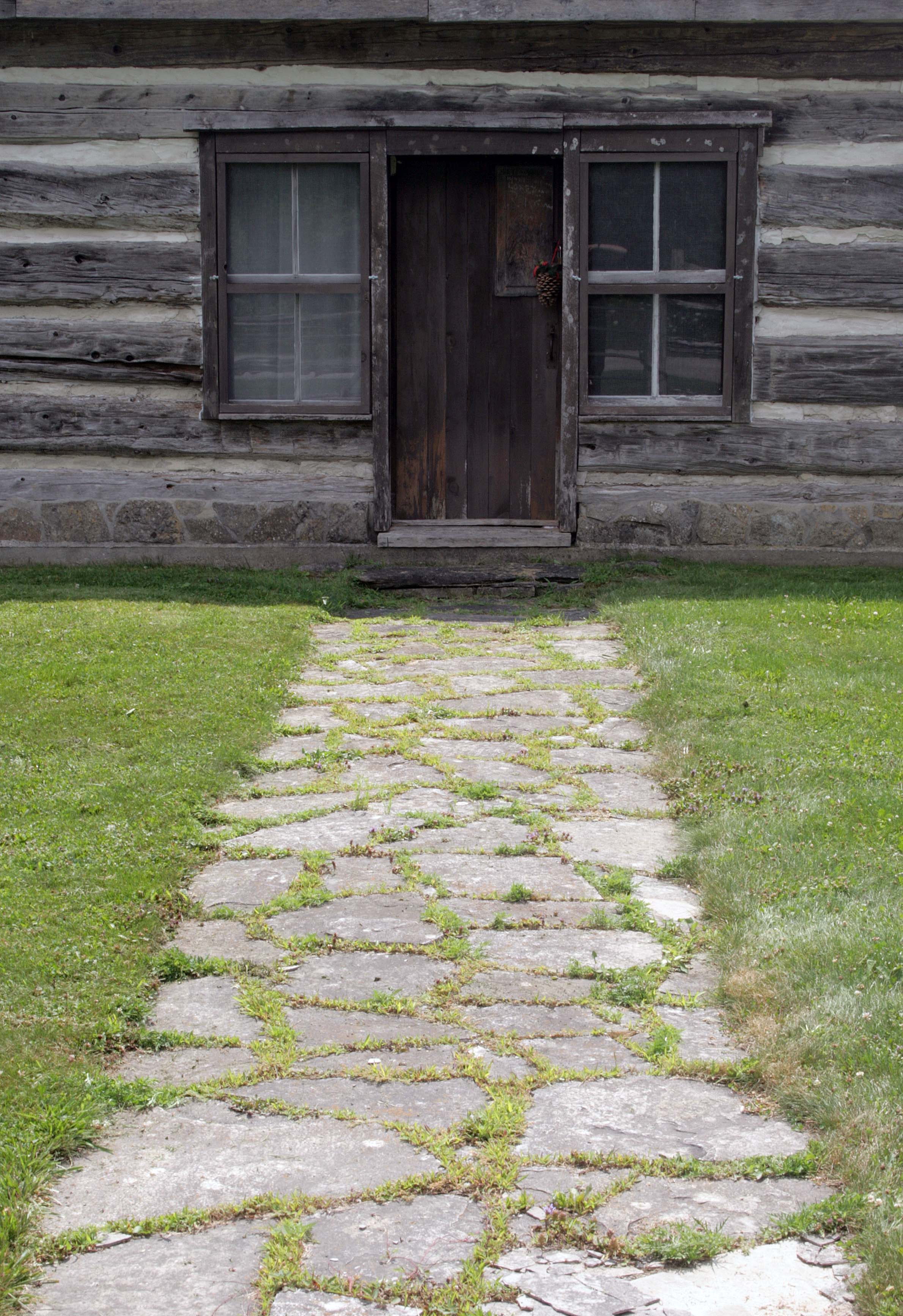
In 1843, the Barnes family moved to Sheldon’s Corners, near Athens, Ontario.1 They raised seven of their children in the small wood cabin, that today is known as the Mother Barnes Homestead. Eventually, Elizabeth’s husband grew tired of farm life and left, taking their youngest son with him.1 Elizabeth was left with a house full of children to mind on her own.
To support her family, Elizabeth turned to fortune-telling.
She credited her Spanish Gypsy ancestry and the fact that she was the seventh daughter of a seventh daughter as the source of her second sight.2 She charged 25 cents for a reading and soon became well known for her accuracy.2
At this time, she began to be known as the Witch of Plum Hollow, respected by some and feared by others.1 People visited from everywhere for a reading from Mother Barnes. She became increasingly involved with local lost & found cases, finding lost items and missing livestock.2 She was also instrumental in a disappearance case, directing the searchers straight to the missing body.2
Her most famous visitor was a Kingston lawyer with political aspirations. Mother Barnes foretold that this man would become the leader of a new country and that its capital would be in Bytown.2
Today, Bytown is known as Ottawa and is the capital of Canada. That lawyer was John A. Macdonald, who became the first Prime Minister of Canada in 1867.2
Mother Barnes Homestead
The small log cabin that had so many visitors in the past sat for a time in utter disrepair. Over time, the wood rotted, and the roof sagged, the derelict state made worse by vandals’ damage.
The property, which includes; two acres, the original cabin, an abandoned well, and a deteriorating barn, was eventually purchased by descendants of Mother Barnes in the 1980s. They worked hard to try and bring the little cabin back to life.3
Newspaper clipping, The Ottawa Citizen, Thursday, October 28, 1982, page 23
Today the log cabin has been restored by new owners. A green sign with large gold script declares the site as the “Mother Barnes Homestead”. Beside the sign sits a large boulder with an indent suggesting there was once something attached to it. This once commemorative boulder had a sign that read “Home of Mother Barnes”. The sign was removed to preserve it from further damage, as it had been used as target practice.1
The property is now well maintained and sits behind a wooden fence, that is dotted with no trespassing signs.
The day I visited the Mother Barnes Homestead I was hoping there would be someone on the property to talk to, and maybe get a tour of this historic house. Unfortunately, the property was deserted. The no-trespassing signs were enough of a deterrent to keep me from trying to sneak a peek inside the windows.
I would have loved to be able to explore the attic, where Elizabeth was known to perform her tea readings. I hope one day the property will be opened as a historic house and museum.
Jane Elizabeth Martin Barnes died on February 4th, 1891 at the age of 90 after falling ill with pneumonia.5 She is laid to rest in Sheldon Cemetery, not far from her homestead.
Originally her grave was unmarked, that is until local Cheesemakers Claude and Ella Flood decided to erect a monument in her memory. Curiously, the dates on the stone are incorrect, listing her year of death as 1886.5
The stone itself was not placed on her actual gravesite either, I would learn. The stone sits beneath the cemetery sign arch near the cemetery entrance. When I visited, the arch was completely overgrown and obscured with vines. The gravestone reads: “Burial Place / of / Mother Barnes / 1794—1886”
While visiting another cemetery in the area, I met two women who pointed out some interesting graves for me to photograph. After showing me the graves, they asked if I had been to visit the Witch of Plum Hollow. I said yes, to which they replied that she wasn’t buried beneath the stone.
The unmarked grave of Mother Barnes lies at the back of the cemetery on the left-hand side.
The woman also shared that there is a pipe sticking out of the ground in that area, very close to the grave. They continued to tell me a story about the pipe, and how it was plugged for a very long time, to keep the witch’s spirit in. But, sometime in the 1980s, the pipe was unplugged and the spirit of the Witch was released. I was surprised to hear a negative tone in the woman’s voice as she told the story, and how she thought the pipe should have remained plugged.
It was interesting to see that the stigma behind the term witch was still alive, well over 100 years later.
But was Elizabeth Barnes really a witch?
By all accounts she was just a single mother, using kind advice and honest predictions to provide for her family. Predictions that very often came true.
I love a good spooky story, especially in October. So for today’s blog post, I want to share another October cemetery story—this time coming from the Muskokas.
Earlier this year I planned a cemetery road trip that would take me around Lake Muskoka; visiting Bala, Torrance, Gravenhurst, Bracebridge, and Port Carling. I had quite a few cemetery stops planned as well as some other picturesque stops. At that same time, Canadian author Andrew Hind was coming out with a new book called Muskoka’s Most Haunted 2.
Hind is a freelance writer specializing in history, travel, lifestyle, and the paranormal. He has written quite a few books about hauntings in Ontario. So, I was pleasantly surprised when I read the book and discovered it has a chapter on Torrance Cemetery!
The small hamlet of Torrance was settled in 1870 by three families; Torrance, Coulter, and Jestin, all originally from Eramosa, Ontario.1 They had traveled to the area to explore a free land grant offered by the Government of Canada.1 The community was named after William Torrance, who was the first postmaster.1 The Torrance Union Cemetery, also known as Whiting Family and Church Cemetery, is located on the site of the first school that was erected in the township, in 1875.2
Today, the Township of Muskoka Lakes operates and maintains Torrance Cemetery, along with 11 other cemeteries in cottage country.3 They state that they offer a “peaceful” resting place for loved ones of all faiths, but Torrance Cemetery has a long history of being anything but peaceful.3
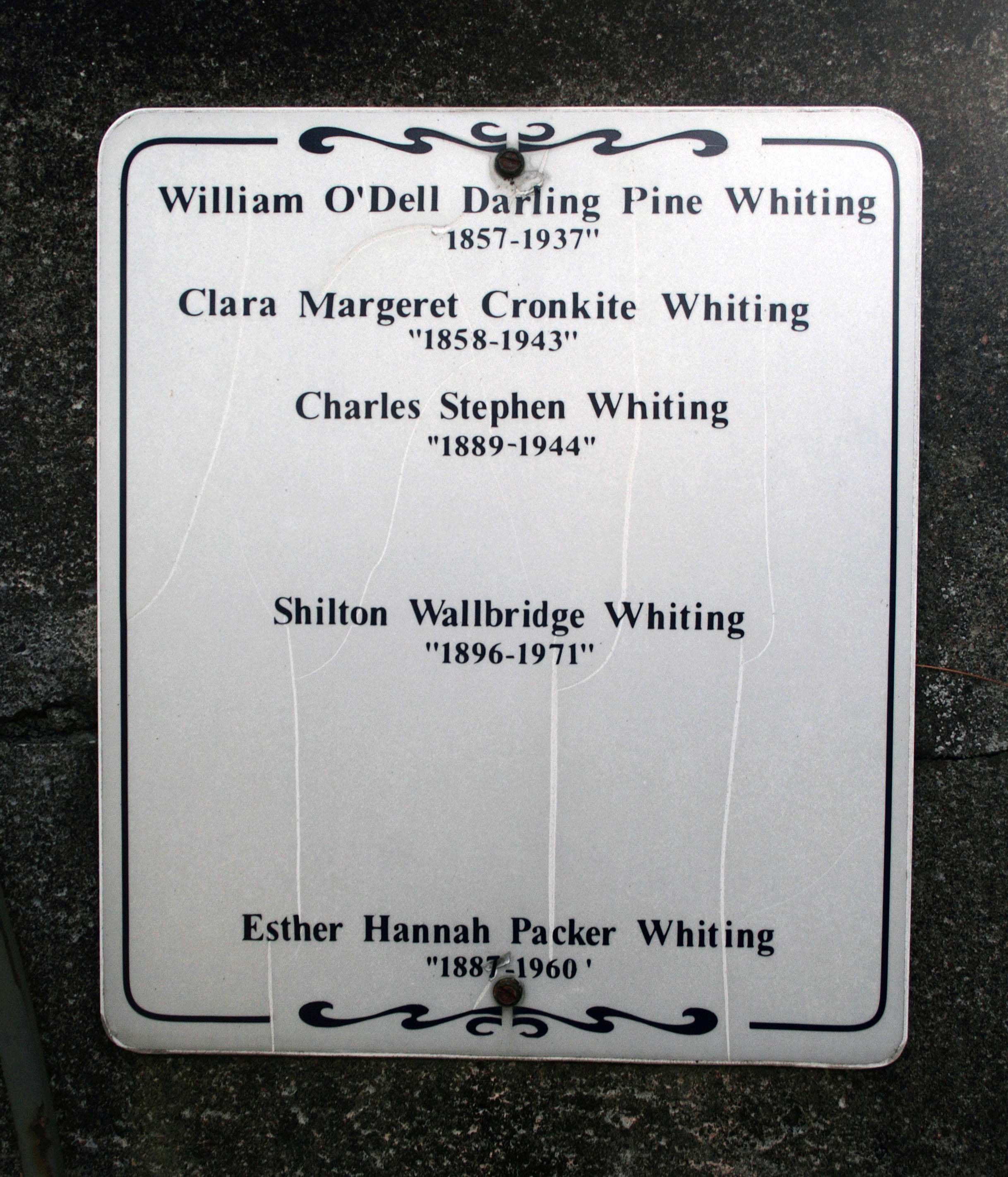
The lone, stone mausoleum belongs to the Whiting family. Their story is one fraught with tragedy. William O’Dell Darling Pine Whiting was born in 1857, in England.4 Whiting came to Canada in the late 1870s and briefly served in the Riel Rebellion as a member of the Northwest Grenadiers militia regiment in 1885, which is when he fell in love with the Muskokas.4,5
In 1892, he would return to the area, this time with his wife Clara Margaret Cronkite and their young family.5 Whiting purchased a large piece of waterfront property on Lake Muskoka, with dreams of building the finest resort in Ontario.5 He would call it Brighton Beach Hotel, reminiscent of a similar hotel back in Brighton Beach, England.4 Unfortunately, Whiting’s dream would never bear fruit. Only a week after the official opening, in July 1895, the grand hotel burned to the ground. Luckily, no one was injured.5
In 1898, Whiting revived his dream, this time on a smaller scale.5 The second incarnation of the hotel, Brighton Beach II4, had more success. It welcomed vacationers for two decades, before tragedy struck a second time in 1917.4,5 Sadly, this fire had one casualty. It claimed the life of Whiting’s infant granddaughter.5
Whiting never rebuilt, and never recovered after the loss of his granddaughter.5 Whiting passed away in 1937, and was laid to rest in the Whiting Family mausoleum in Torrance Cemetery. His wife Clara is also laid to rest within the stone crypt, alongside two of their children—and it seems their spirits are not at rest.5
There have been many reports over the years of paranormal activity taking place in and around the crypt. Ghost lights have been reportedly spotted, as well as full-bodied apparitions and disembodied voices.5 Are the spirits restless or were they awakened by something more sinister?
There is a particularly terrifying story of vandalism and desecration of the family vault. The crypt was broken into, and a coffin smashed open.5 The dead did not rest in peace that night.
The haunted reputation of the cemetery has garnered some attention as various ghost hunters and paranormal investigators have visited the cemetery. All trying to capture proof of ghostly phenomenon.
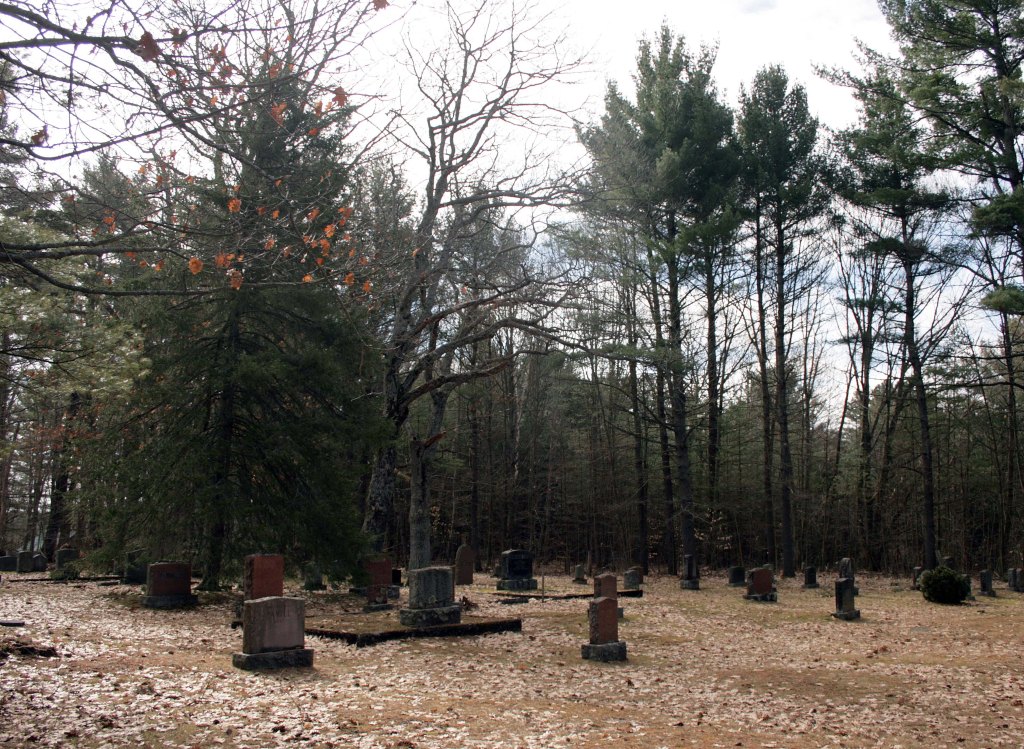
My mother and I visited Torrance Cemetery in early April. The spring thaw left the ground littered with brown leaves, giving off heavy fall vibes. The trees were also bare, their new growth still dormant. It was a perfect, faux-fall day to be wandering a haunted cemetery.
I had read the book before our visit, so visions of ghosts were swimming in my head as we wandered the cemetery. It was interesting to stand before the family mausoleum and think about the vandalism, the desecration, and the sightings.
I examined the gated door, peering into the dark screened windows. But, I didn’t see anything, nor did I hear anything. My mother on the other hand had her own experience.
As we normally do when visiting cemeteries, we each go our separate ways, drawn to different things. She told me afterward, that while she wandered the cemetery rows she suddenly felt cold. Not from a cool breeze, but like she had been suddenly “dipped in cold water” from her head to her toes. The sensation didn’t last long, and she didn’t think anything more of it. That is until she read the stories.
My mother read the book after our visit, with the experience of visiting the mausoleum still fresh in her mind. She reacted quite differently than I did when I read the stories of Torrance Cemetery. It terrified her! She was briefly paralyzed with fear, while cozied up on the couch to read.
Then she remembered the pinecones!
My mother had picked up two rather large pine cones while we were in the cemetery. She thought that they would each make a nice natural bird feeder if smeared with peanut butter and coated with seeds. She suddenly became fearful that she had brought a piece of the cemetery home, maybe even bringing a spirit home with her.
Thankfully, nothing strange has happened since bringing the pinecones home. And they are still hanging in the tree in the backyard, months later.
Do you believe in ghosts? Could the Torrance Cemetery be haunted?
To read more about Torrance Cemetery, and other haunted locations in the Muskokas, I highly recommend the Muskoka’s Most Haunted series by Andrew Hind.
This is one of my favorite movie quotes, and it comes from the 1968, black-and-white independent horror classic, Night of the Living Dead. I even have a small piece of the Evans City Chapel framed on my wall. The chapel sits in Evans City Cemetery, which is where the opening scene of the film was shot.
This horror classic was written and directed by George Romero, the father of zombie films. This summer, I had the chance to visit the final resting place of this iconic director.
George Andrew Romero was born in New York City on February 4, 1940, and grew up in the Bronx. His interest in film began at an early age and he would go on to enroll at Carnegie Mellon University, in Pittsburgh.1
After graduating in 1960, Romero began shooting short films and TV commercials, including an early short for the popular children’s show Mister Rogers Neighborhood.1
Romero’s break-out film Night of the Living Dead was revolutionary for the horror genre, and today is a staple of any horror film addict’s collection. This film completely reinvented the image of one of today’s most popular movie monsters.
Romero created the rules for a new kind of zombie. Now portrayed as reanimated corpses who hunger for living flesh. They are slow and shambling, with only one purpose. Silent, aside from their eerie moaning as they get closer to their prey. There is only one way to stop them—a violent strike to the head.
The film’s explicit violence and gore garnered negative reviews at its release, but today the film has amassed a cult following. In 1999, the film was deemed culturally and historically significant by the Library of Congress and has been preserved by the National Film Registry.2 In part for its social commentary during the 1960’s.
Romero would go on to write and direct other films, even directing a romantic comedy, but he always gravitated back toward the undead. He would go on to create a whole series of films set in the Dead universe; Dawn of the Dead, Day of the Dead, Land of the Dead, Diary of the Dead, and Survival of the Dead—his last film.
After falling in love with the city, Romero moved to Toronto, Ontario in 2004. He would shoot a lot of his later films in the city. In 2009, he acquired his Canadian citizenship, becoming a dual Canadian-American citizen.
In 2017, George Romero died in his Toronto home of lung cancer. He was 77.3 Romero is laid to rest in Toronto Necropolis Cemetery and Crematorium.
The Toronto Necropolis Cemetery and Crematorium is one of the city’s oldest and most historic cemeteries, dating back to 1850.4 The fully restored cemetery entrance features high Victorian Gothic architecture which also makes it one of the most scenic cemeteries in the area.4
I was enthralled the minute we stepped out of the Uber. The grand cemetery entrance sets the tone for the beautifully forested cemetery within. It was my first time visiting this enchanting cemetery. Being unfamiliar with its layout, I used Google Maps to lead us. Of course, I was easily distracted by the elaborate and historic gravestones we passed along our route.
As we approached a densely forested section, we heard the screeching of a hawk. It sounded close and didn’t seem to like us encroaching on its territory. Luckily the grave we were searching for was a bit farther back in the cemetery. My fiancé stuck to the meandering paths that snaked around the grounds while I ventured into the rows to read the graves.
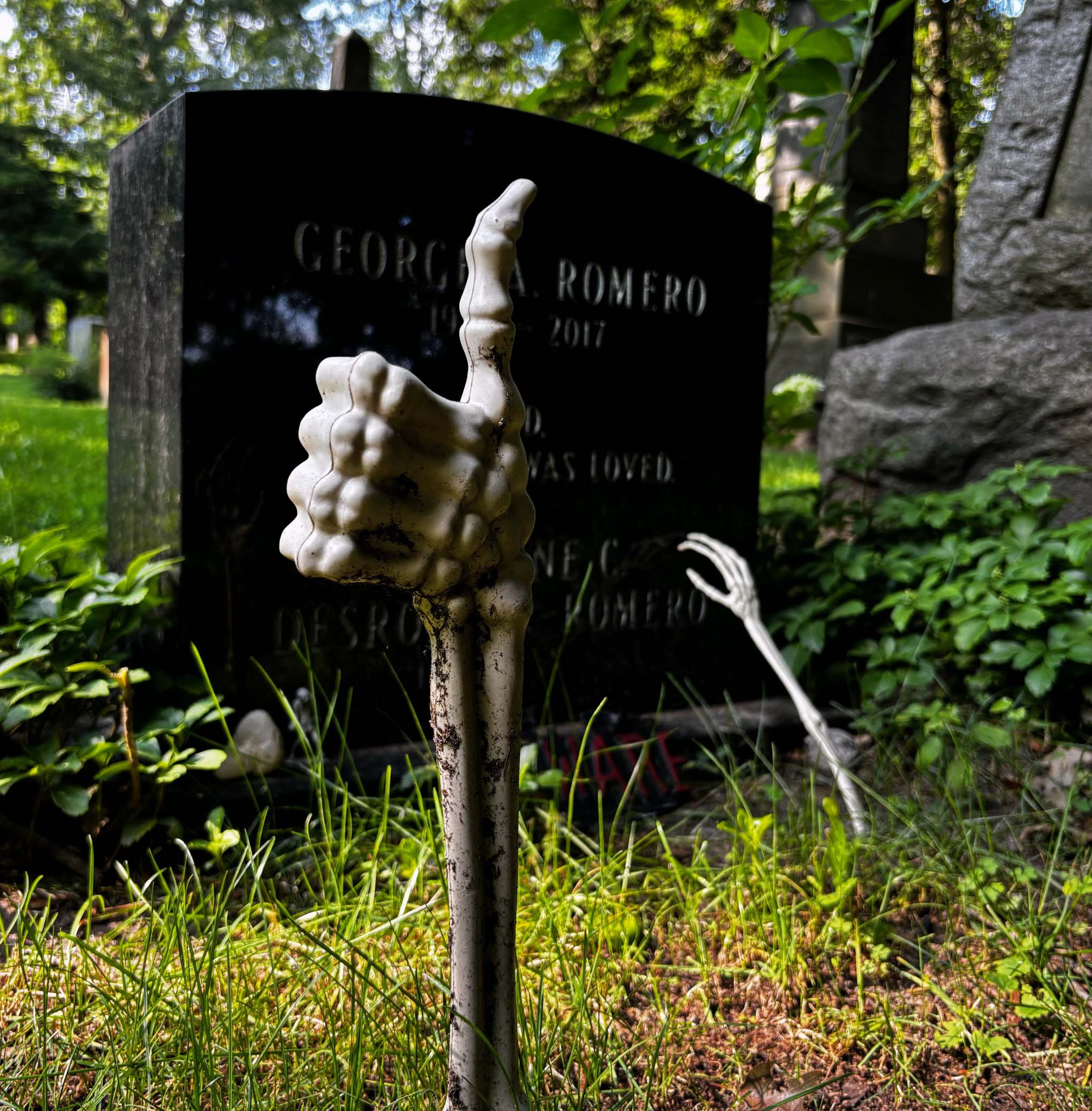
Although not quite accurate, Google Maps led me to the general area we were searching for. Surrounded by tablet stones and obelisks, sits the mirror-like black granite stone of George A. Romero.
The epitaph reads, “George A. Romero / 1940 – 2017 / He Loved, / And Was Loved.”
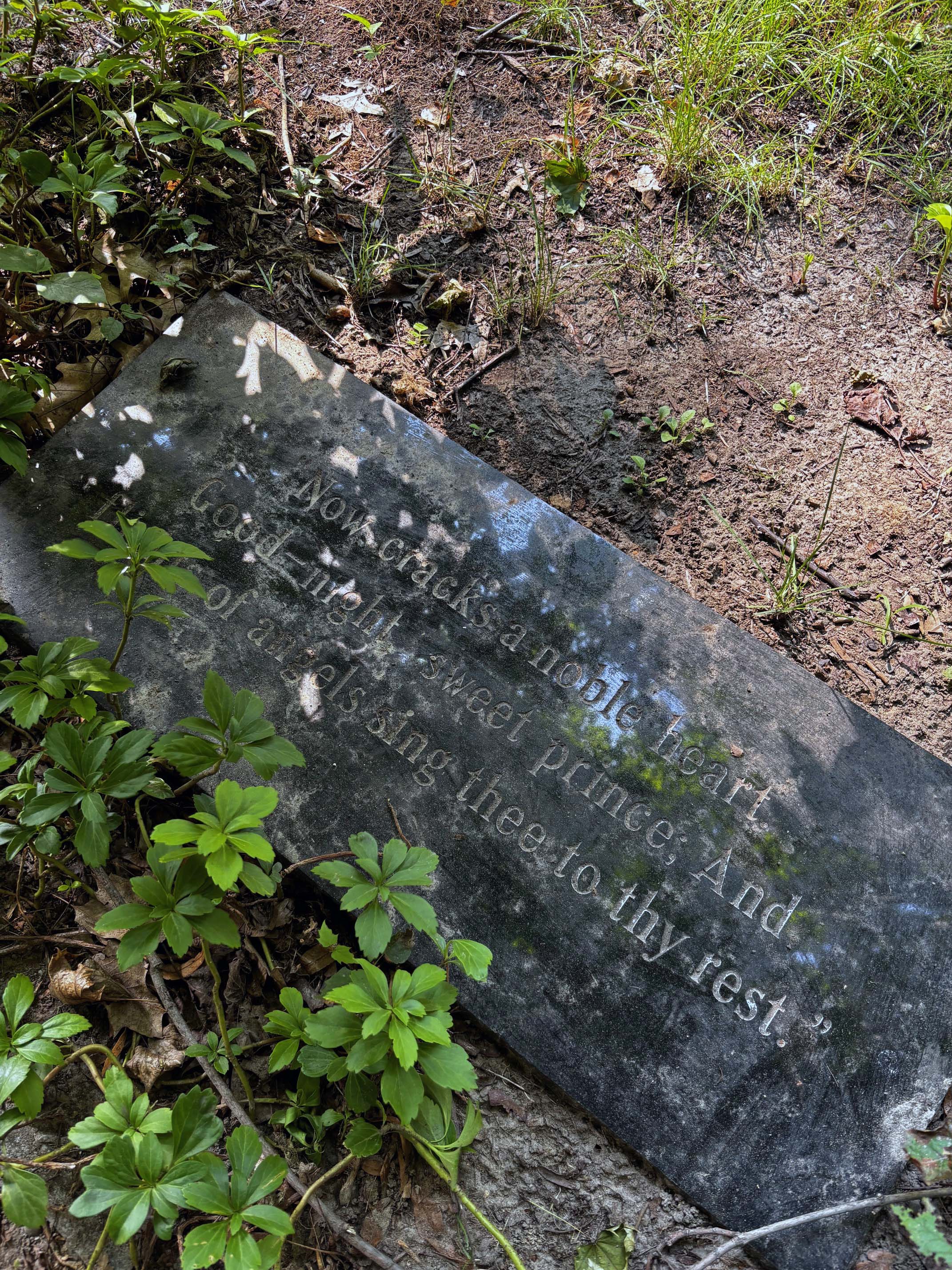
On the footstone is inscribed a quote from Shakespeare’s Hamlet, “Now cracks a noble heart. / Good-night sweet prince; And / flights of angels sing thee to thy rest.”
Although the cemetery was quiet that day, we could tell that many had come before us to pay their respects. Someone had planted two skeleton hands at the base of the grave, reaching up towards the inscription. Another skeleton hand, giving a thumbs up was also planted near the gravestone. Someone also left a little miniature zombie figure. The gravesite looked decorated for Halloween, even though we visited at the end of July!
Years ago, while collaborating with a community group dedicated to screening cult classics for charity, I envisioned hosting an event that would bring Romero to my small Northern Ontario town for a screening of one of his legendary films. Unfortunately, that dream never came true.
Although I never had the chance to meet him in person, to thank him for all the scares, visiting his grave and paying my respects was a profound and memorable experience for me.
During the summer, I wrote about a surprise road trip I took with my mother in Cambridge. This curated road trip, created by Guess Where Trips took us to exciting and spooky places. I shared a little about our Historic Haunts tour, but I wanted to keep some of the details a surprise at the time, so I could share this ghost story and pioneer cemetery visit with you now, in October.
So today on the blog, I want to share a little bit more about my visit to the haunted Waterloo Pioneer Memorial Tower and Doon Pioneer Cemetery and explore its rich history.
While looking for places to go for a walk, the day before our Historic Haunts tour, I found a hidden gem that had everything we were looking for—a walking trail, a historic site, and a cemetery. Little did we know when we visited that it was also haunted!
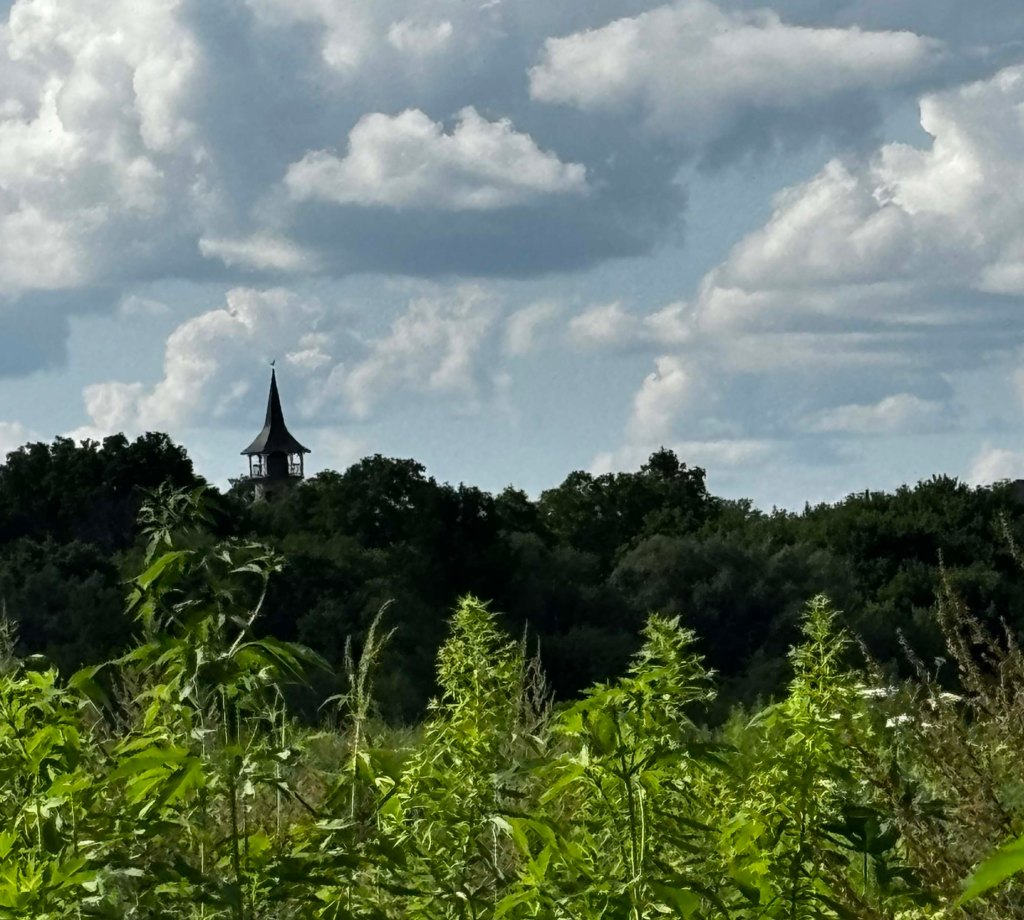
The Waterloo Pioneer Memorial Tower stands 18.9 meters tall, and peaks out above the surrounding trees. We could see its Swiss-style copper roof and the cute Conestoga wagon weather vane that sits atop it, as I parked my car in the nearby parking lot.1
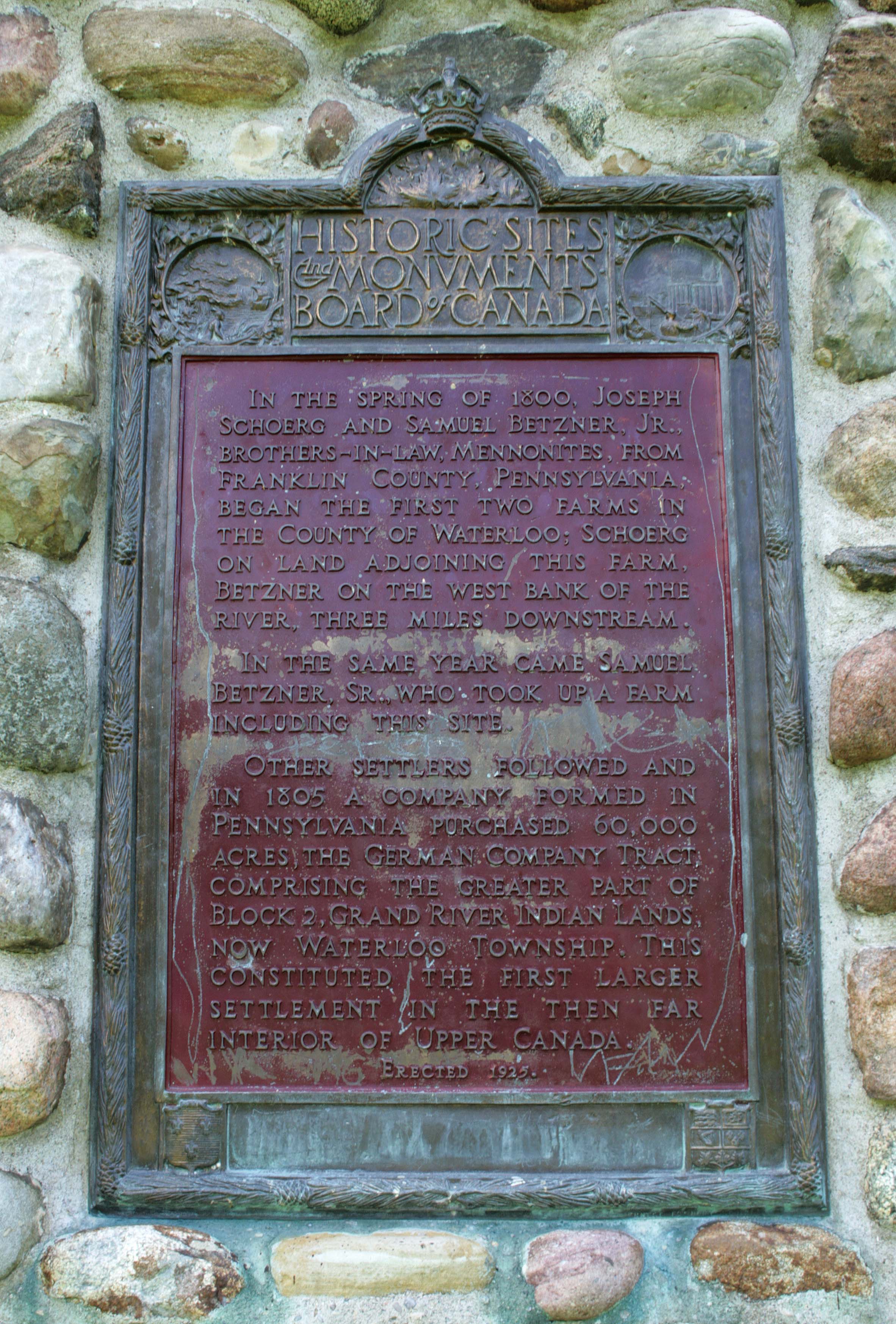
The Tower built in 1926, was created to commemorate the arrival of the Pennsylvania-German pioneers who immigrated to the area between 1800 and 1803.1 Fieldstones that line the outside wall of the tower represent the tireless work they did to plow and clear the land for farms and homesteads.
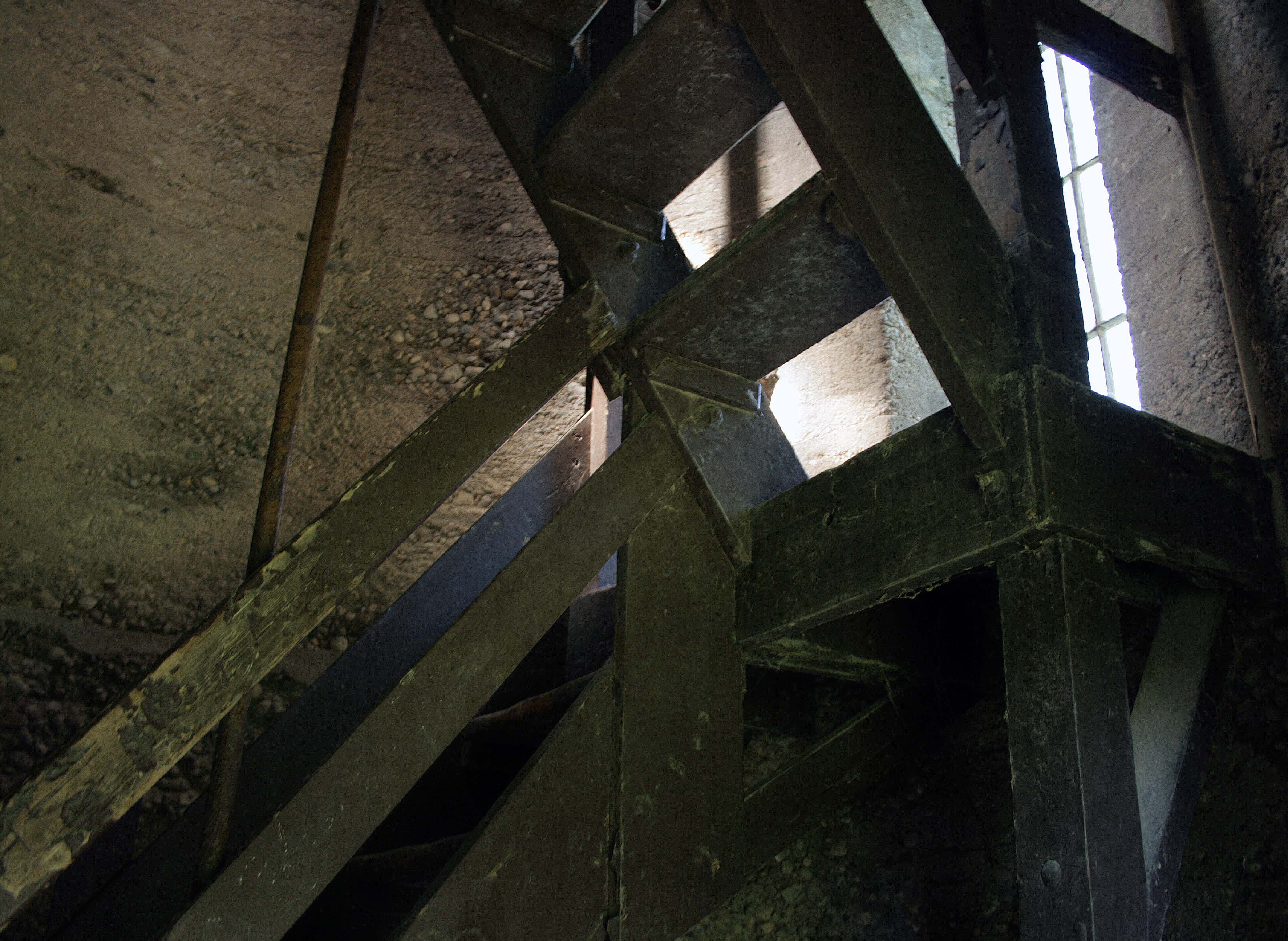
At one time, it was possible to go inside the tower and climb its spiral staircase to the eight-sided observation deck. The view is amazing, as Bob Oberholtzer noted in a 2015 article for the Waterloo Region Record. Citing it as one of the most “historic views”, it’s possible to overlook the first four Mennonite farms that were settled in the area.2 Oberholtzer also talked about how they used to scare the girls who climbed the tower, not with ghost stories, but with childhood antics like shaking the stairs as the girls climbed up.2
Although the tower has barely needed any repairs to keep it standing over the years, the tower has been closed to the public since 2008.2 BUT, it is possible to tour inside, by special request.2 A sign on site has a phone number that can be called to book a visit to the top of the tower. I wish I would have known this when we visited. We made do by peering through the gated doors to glimpse the cobwebs and spiral staircase inside.
What we also didn’t know at the time of our visit, was the haunted history of the place. The story goes that a woman jumped to her death from the top of the tower. She was distraught and suffering from grief of the loss of her husband, who went off to war—but never returned.3
They say her restless spirit can sometimes be seen at the top of the tower, waiting for her lost love to return.3
Doon Pioneer Cemetery
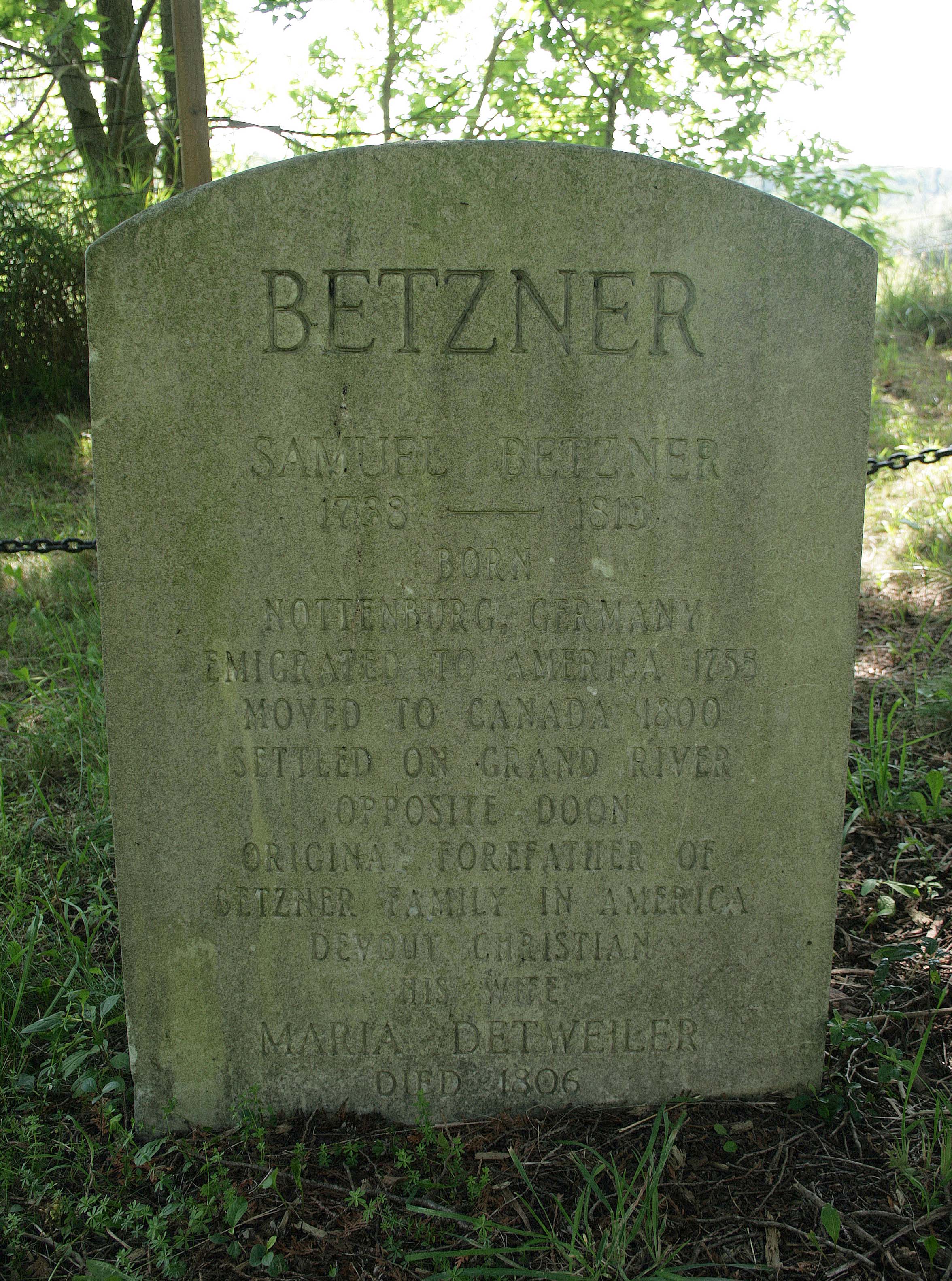
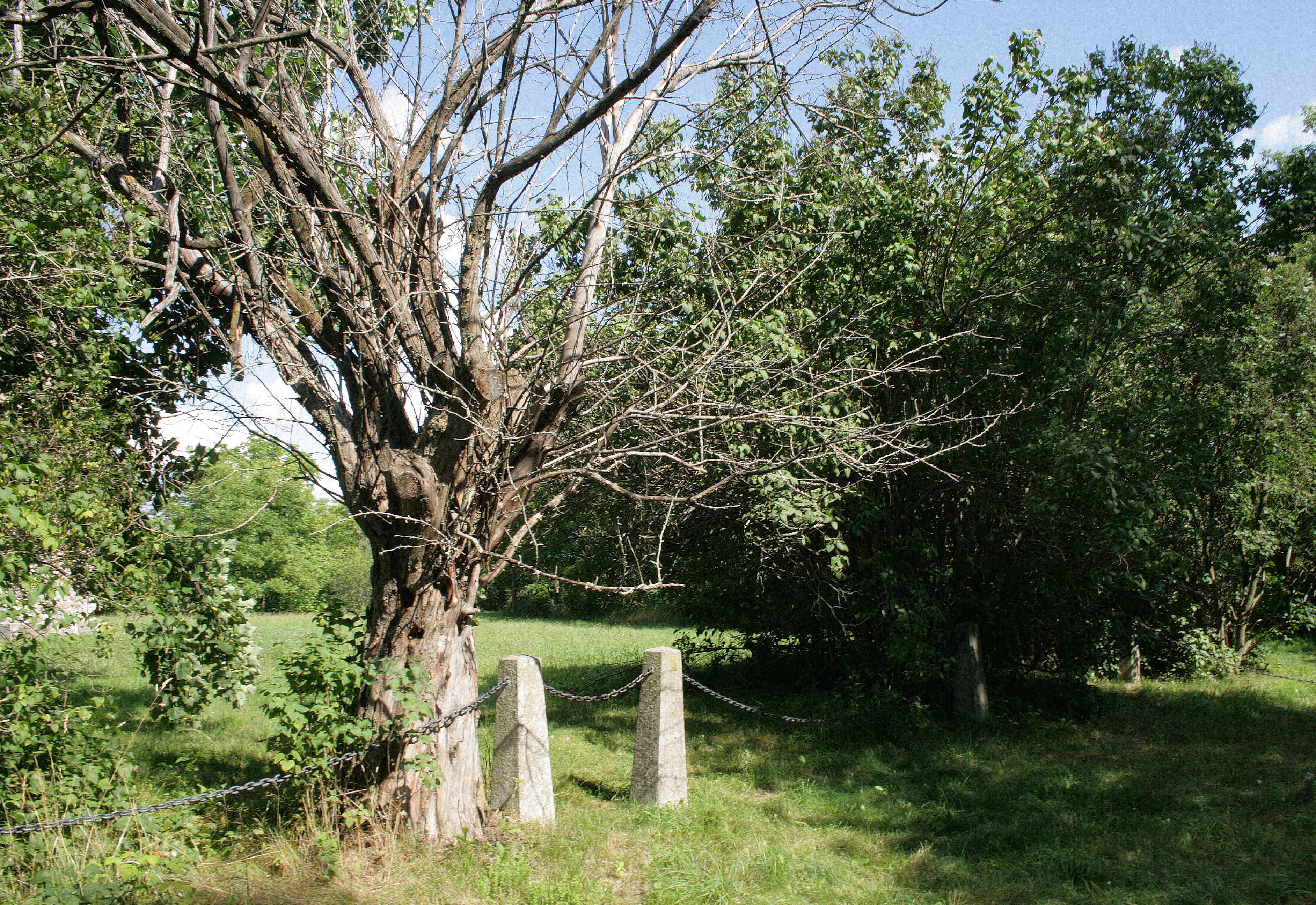
The 98-year-old Pioneer tower sits within a small grassy field, right beside the Doon Pioneer Cemetery. This is the final resting place of the Schoerg and Betzner families and overlooks the Grand River.
Also known as the Schoerg/Betzner cemetery, this small burial ground is where the first settlers are laid to rest, who arrived in Waterloo Township in the spring of 1800. The small cemetery is filled with old gravestones and field stones, marking their final resting place.
Some of the gravestones are very worn, so I took the opportunity to try out a trick I saw in one of the cemetery groups I am a part of. By using a mirror to reflect sunlight, or by holding a flashlight at an oblique angle you can create enough contrast to make gravestones legible again.
I had a small flashlight on me, one with a small beam so it worked well on the smaller stones. I asked my mom to hold the flashlight for me, as I lined up my shot by looking through the small viewfinder on my DLSR. The deep shadows help some of the long-forgotten words to be legible again. The flashlight trick didn’t work as well on larger stones, because the beam from the flashlight is too narrow to illuminate enough of the stone. I would need a much larger beam for that. This trick of the light is a great way to reveal gravestone inscriptions while doing no harm.
My mother and I both enjoyed visiting the memorial tower and the small burial ground beside it. We took our time taking in the beautiful craftsmanship and design of the tower and its history. At the time, we had no thoughts of ghostly apparitions in our minds. We didn’t experience anything supernatural. We just admired the Fieldstone Tower and all the toil and hard work it represented for those early pioneers.
After exploring the cemetery and paying our respects to the early settlers of the area, we made our way to the Walter Bean Grand River Trail. The flat gravel path meanders through the Pioneer Tower Natural Area taking you along the Grand River. The trail is dotted with educational panels, and the path eventually brings you to the Pioneer Tower Bridge.
On the opposite side of the bridge lies the Doon Valley Golf Course. On our walk, we didn’t cross but stopped at the bridge to take in the views. We sat for a time at a little garden roundabout, just before the bridge, admiring the flowers and wildlife. We were lucky to see a wild rabbit scurry across the trail.
The Memorial Tower was always in view during our walk, peeking out above the treeline like a sentinel keeping watch. A strong reminder of those who came before us. The whole area is beautiful, even more so now I imagine with the fall colors starting to emerge.
So if you are looking for a nice place to take in nature and enjoy some dark history, I think the Waterloo Pioneer Memorial Tower and adjacent Doon Pioneer cemetery would be a great place for a fall outing. Who knows, you might even see a ghost.
I have a lot of upcoming October content planned, so I thought I would officially kick off the Halloween season on the blog by sharing a spooky cemetery book review. It’s called Haunted Cemeteries: True Tales From Beyond the Grave by Edrick Thay.
Earlier this summer, I wrote a guest post for The Haunted Walk, titled Beyond the Headstones: 5 Surprising Secrets to Discover in Cemeteries. So when I was in Ottawa this summer visiting family, I made it a point to pop into the Haunted Walk office, on Sparks Street, to say hello. While there, I browsed their spooky-cute gift shop and this book jumped out. I thought it was a pretty fitting purchase.
Haunted Cemeteries was first published in 2004 by Ghost House Books, a part of Lone Pine Publishing. Ghost House has published a large series of books all focusing on local legends, ghosts, hauntings, and other unexplained phenomenon.1Haunted Cemeteries is a collection of stories about the world’s most notoriously haunted cemeteries and graveyards. The majority of the cemetery stories come from the United States, but the book does feature two cemeteries that are located in Ontario; Drummond Hill Cemetery in Niagara Falls and Burkholder Cemetery in Hamilton.
“Cemeteries are places of quiet repose where the dead are left to eternal rest. But some spirits refuse to rest in peace. Join Edrick Thay as he explores some of the world’s most notoriously haunted graveyards, both past and present, and interviews ghost hunters to discover how these eerie sites become charged with paranormal energy.
Plagued by nightmares, a mother has her daughter exhumed from Mount Carmel Cemetery in Chicago, only to make a shocking discovery paranormal researchers encounter spirits of wounded soldiers in Ontario’s Drummond Hill Cemetery, once the site of bloody conflagration when an archaeologist discovers a sealed tomb in Egypt’s Valley of the Kings, he awakens a terrifying ancient curse at Hollywood Forever Cemetery, ghosts of celebrities from another era float among the decrepit tombstones Anomalous Luminous Phenomena, or mysterious lights that defy explanation, illuminate Silver Cliff Cemetery in Colorado Ohio ghosthunters descend on Camp Chase Cemetery in Columbus, hoping to come across the captivating Lady in Gray a high school girl, fascinated with the paranormal, encounters a particularly irritable ghost at Bachelor’s Grove in Chicago in Salem, Massachusetts, site of the infamous witch trails, a ghost materializes, still mourning his inhuman death”
Haunted Cemeteries: True Tales From Beyond the Grave by Edrick Thay.
Haunted Cemeteries features 19 stories and a handful of black-and-white cemetery photos. The short stories made this an easy book to pick up when I had a few minutes to read. I appreciate those types of books.
The book includes some more well-known cemetery hauntings, like Bachelor’s Grove in Chicago and the Egyptian curse of King Tut’s tomb, but also highlights some lesser-known hauntings and folklore. As an avid reader of cemeteries and the supernatural, discovering these new unfamiliar stories was a lot of fun.
Overall, this was a fun and easy read, and I enjoyed the ghostly tales that can sometimes surround cemeteries. Reading about ghost stories, legends and reputed curses from beyond the grave is always a great way to ease into the Halloween season—especially when it also involves exploring the rich history of cemeteries.
Thanks for reading!
I am always on the hunt for cemetery-related book recommendations. If you are an author and have a cemetery-related book you would like me to review, please reach out at hello@chantallarochelle.ca. I would love to hear from you.
Over the summer I took a little break from making gravestone recipes, but I think it’s time to try another one. Fall is coming, so what better time to make chocolate chip cookies? They are always the best when they are still warm from the oven.
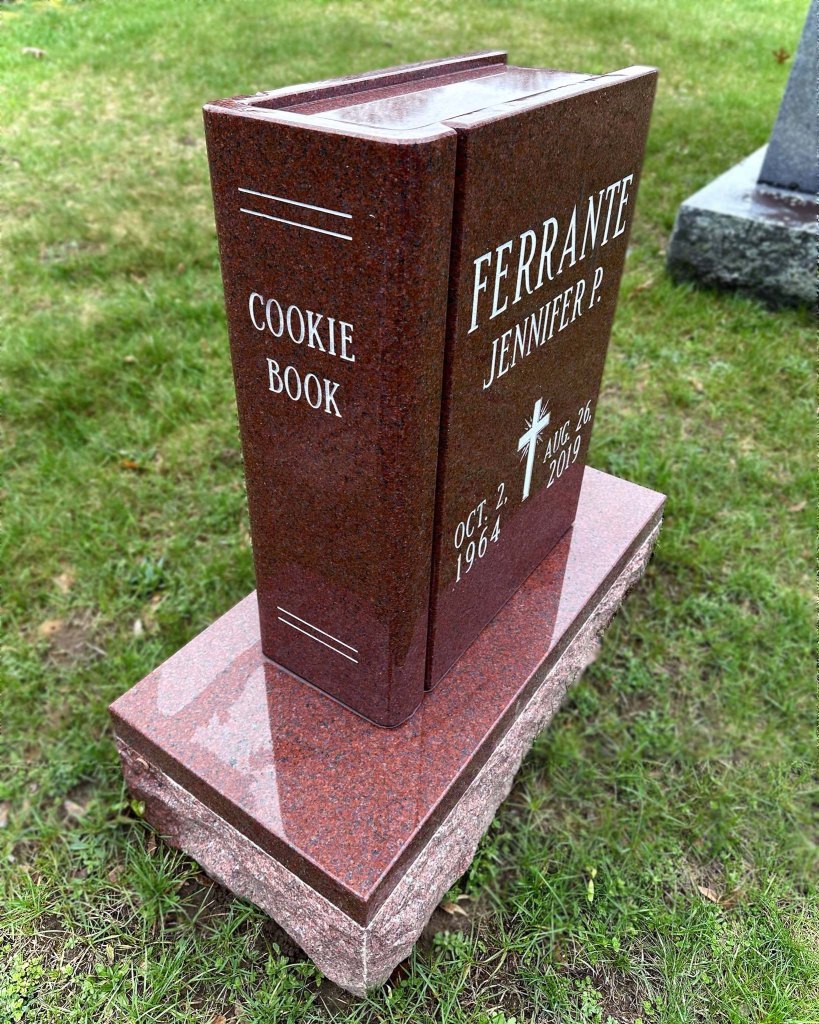
I came across this gravestone on reddit, posted by user ubercrabby. So, today on the blog, I want to try making Chocolate Chip Cookies from the Cookie Book gravestone of Jennifer P. Ferrante.
Cookie Book gravestone of Jenny P. Ferrante. Photo by Reddit user ubercrabby.
Ferrante’s red granite gravestone, found in a cemetery in upstate New York, is shaped like a book, with “Cookie Book” inscribed on the side. The recipe can be found on the back side of the stone.
Jennifer Peggy Allan Ferrante was only 54 when she passed away suddenly in August of 2019. According to her obituary, she was a consulting engineer for many years, traveled extensively, and loved spending time with her family and pets.1 She was also an avid baker and was known for her chocolate chip cookies, which she often shared with her loved ones.1
It seems fitting that they would honor her by inscribing her famous recipe on her gravestone for others to make and share.
Chocolate chip cookie recipe on the gravestone of Jenny P. Ferrante. Photo by Reddit user ubercrabby.
Here is the recipe as inscribed on the gravestone:
Chocolate Chip Cookies
9 to 11 min 375’F
1) 2 1/4 cups flour 1 tsp baking soda 1/2 tsp salt
2) 1 cup Crisco 3/4 cup white sugar 3/4 cup light brown sugar
2) 1 tsp vanilla 2 eggs 2 cups chocolate chips
Combine dry Combine wet then add dry
Making the Recipe
Although this recipe is similar to the famous Nestlay Toulouse recipe, also known as Nestle Toll House, there are some small differences—most notably the substitution of Crisco for butter, and the omission of nuts.
It also looks like there might be a typo on the stone, as it has two step 2’s, BUT it might not be a mistake. Both step 2’s contain wet ingredients. Is it possible that it is direction on how to mix the ingredients?
That is the way I read the recipe when I tried it. I mixed the dry ingredients in one bowl, and then in a second bowl, I mixed the ingredients from step 2. Then in the same bowl from step 2, I mixed the vanilla, eggs, and chocolate chips. I was a bit worried about the amount of chocolate chips, it seemed like a lot! When that was mixed well, I then combined the wet ingredients with the dry ingredients, forming a nice cookie dough.
The ingredients consist of pantry staples so it was nice not having to make a special grocery trip to make this recipe. I was curious about the use of Crisco instead of butter. Crisco or shortening, is made from 100% hydrogenated vegetable oil and contains no water.2 It has a higher melting point than butter, so it tends to produce more lift and holds its shape better.2
I try my best to stick to the recipes as written on the gravestone and only make substitutions when necessary—like when ingredients are not available. That being said, shortening has no flavor, so baked goods made with it do miss that buttery taste that only butter can produce. If I made this recipe again, I would make the switch and use butter.
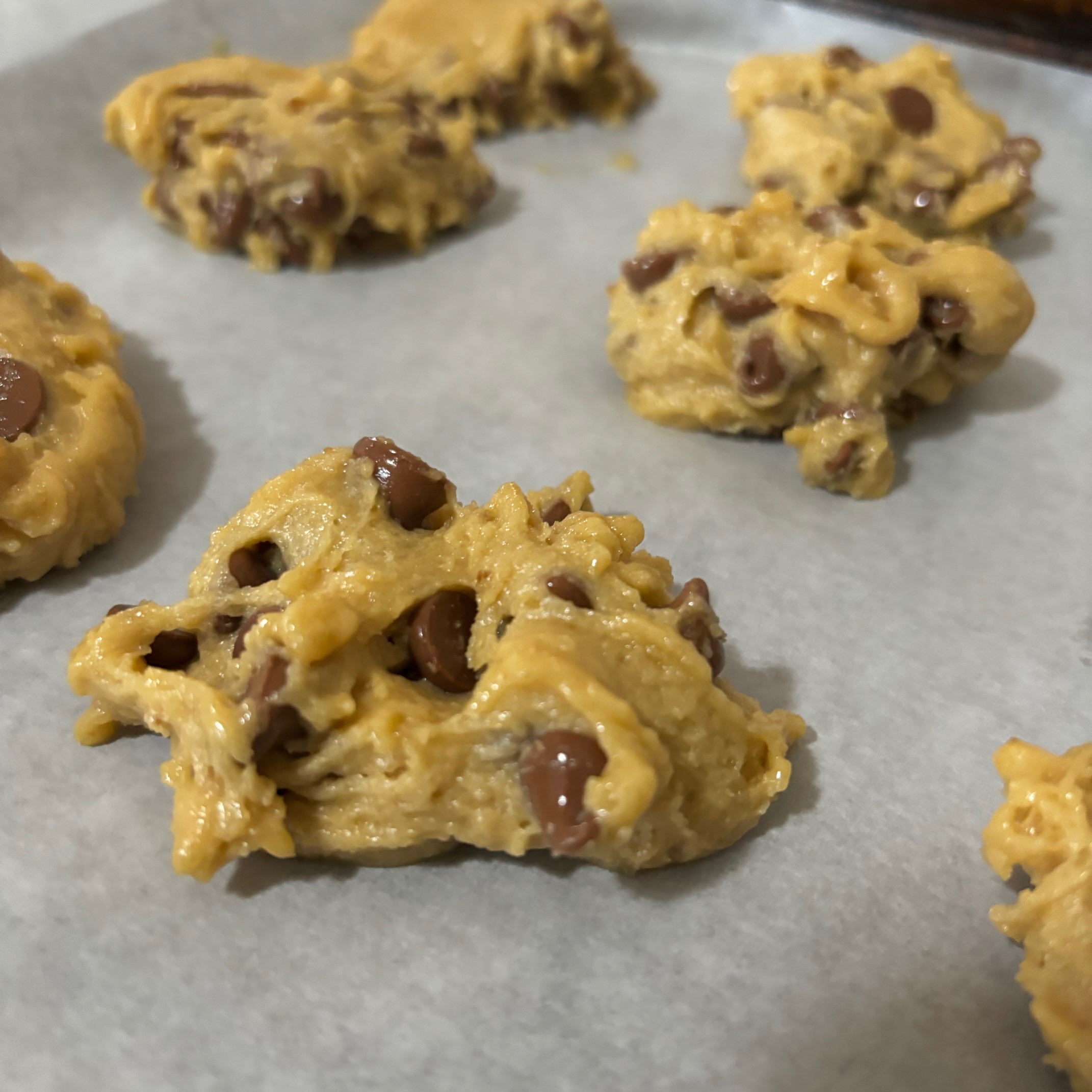
Otherwise, following this recipe was incredibly easy and was a quick one to make. The trickiest part for me was spooning the cookie dough from the bowls to the parchment-lined cookie sheets. I had a bit of a hard time getting uniformed portions so after the first cookie sheet was full, I put a little oil on my hands, to prevent the dough from sticking, and rolled the rest of the dough into balls for the second cookie sheet.
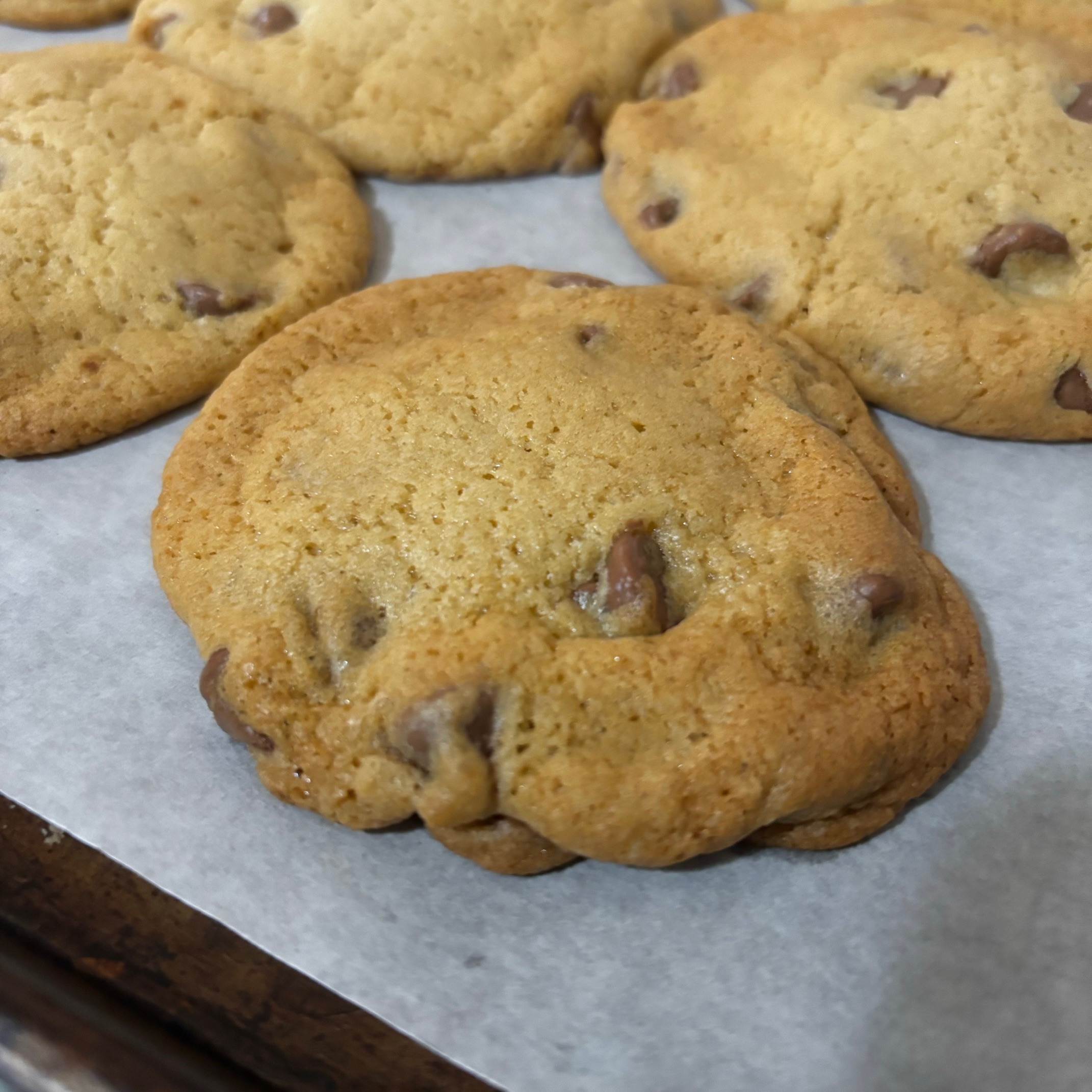
In the end, both cookie sheets came out the same, with the cookies spreading out into each other. I should have given them more space and used one more cookie sheet.
My worries about the amount of chocolate chips were also unwarranted as they didn’t come out a melty chocolate mess. These cookies are incredibly decadent, and delicious!
This is a tasty cookie recipe and easy to make. I can see how this would quickly become a favorite. It’s also a simple recipe with room for modifications if desired. I would make this one again the next time I am craving a nice chocolate chip cookie.
Have you tried this recipe? Or do you have another gravestone recipe suggestion I should try? I would love to read about it, in the comments!



































 Cemetery Photography by Chantal Larochelle