Stone Stories: Art in a Cemetery

When people ask me why I love cemeteries so much, I often say it’s because they are great places to learn about art and history. Today on the blog I wanted to share a recent cemetery visit that is a perfect example of this.

On the Canada Day long weekend, some friends and I took advantage of the nice weather to explore some areas in the Temisikaming District. We toured around Temagami, and up to Kirkland Lake. We visited 18 cemeteries that day, (New Record!) and found some really interesting things along the way. A day or two before we left for our cemetery road trip, one of my friends learned about an interesting gravestone in a cemetery in Earlton. 

We made it a priority to find it. 

In one of my friend’s work offices, they have a bronze sculpture created by a famous Canadian sculptor. When describing the artist’s work, it was mentioned that one of her sculptures sits atop a gravestone, in Earlton, Ontario. I’ve always thought of cemeteries as open-air art galleries, and this gravestone proves that point. 

That famous French Canadian sculptor is Rose-Aimée Bélanger. She was born in 1923 in Guérin Quebec,1 but lived most of her life in the small township of Armstrong, near New Liskeard.2 In 1945, she began her studies at l’École des Beaux-Arts de Montréal but paused her studies to marry and raise nine children. It wasn’t until thirty years later, that she would return to her love of sculpture.1

Her work, in clay and bronze, mainly depicts women frozen in everyday moments. Her work is informed by her own life experiences, and inspired by her community.1 Arguably her most famous, and most photographed work is Les Chuchoteuses (The Gossipers), which can be found in Montreal, Quebec.

Another of her bronze sculptures can be found on top of the grave of her son Charles Bélanger, in St. Jean Baptiste Cemetery. Charles rests beside his father, Laurent Bélanger, and the future resting place of his mother. One of nine children, Charles passed away of pneumonia in 1951 in Timmins, Ontario. 

Shortly after we visited Charles’s resting place, my friend had the chance to meet Pierre Bélanger, Charles’ brother. He shared that young Charles was eventually moved to the Bélanger family plot in Earlton from Timmins when his mother, Rose, felt she was ready.

The final resting place of the Bélangers can be found in St. Jean Baptiste Cemetery, in the small town of Earlton Ontario. The cemetery is a fairly small one, although Find a Grave does list 797 memorials for this cemetery.4 I had some trouble trying to locate this cemetery on a map, but after reaching out to a fellow taphophile on Find a Grave, I had the address and coordinates and we were able to find the cemetery easily.

The epitaph, written in French, reads: “In loving memory of / Charles / son of / Laurent and / Rose-Aimée Bélanger / died February 17, 1951 / at the age of 1 year 8 months.”

It didn’t take us long to find this beautiful sculpture, as it does stand out a little bit among the gravestones. Possibly bronze in color at one time, the sculpture now has a dark patina. The sculpture depicts a small cherub of a child sitting on top of a granite square. He holds out his hand where a small bird has perched. He looks down wistfully at the little bird in his small hand. He is dressed in what might be a little linen jumper and has two small angel wings protruding from his back.

You can tell right away, this sweet tribute was made with love. From the angel wings to the soft look of the face, the attention to detail is impressive. I love the little dimples on the hand. It is a poignant symbol of a mother’s love, expressed in the most natural medium for her. It must have been a cathartic experience creating this piece.
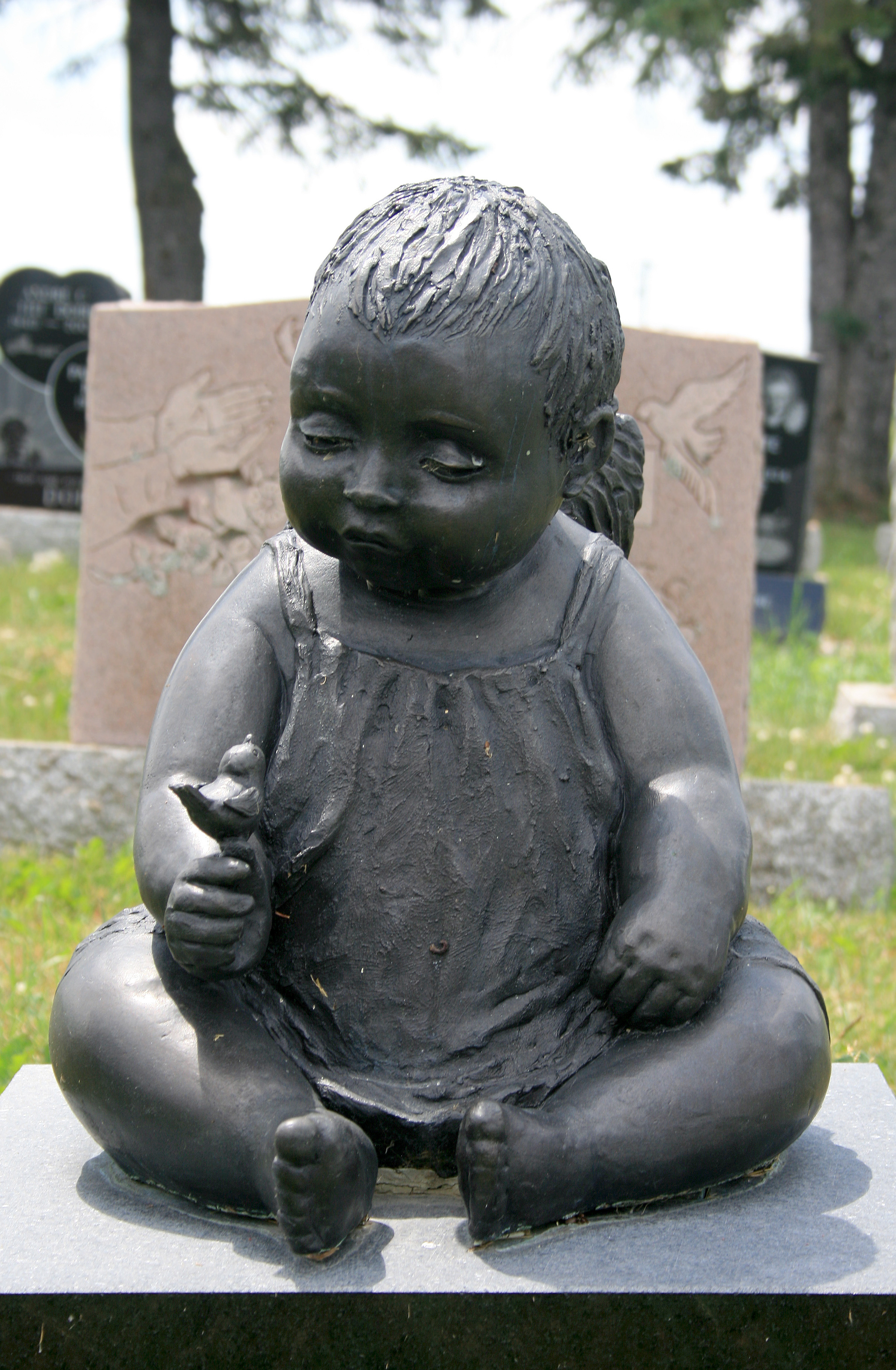
Sculpture by Rose-Aimée Bélanger, that sits on top of the grave of her son Charles Bélanger. Photos: St. Jean Baptiste Cemetery, Earlton ON ©2023

My friends and I paid our respects to Charles and Laurent, lingering to admire Roses’ beautiful work. We were very happy that we were able to visit. I have always said that cemeteries are the perfect place to go for a walk, enjoy nature and look at beautiful art. And in this case, explore some Canadian art history. 

Rose-Aimée Bélanger celebrated her 100th birthday this year, on July 4th. In celebration, she also unveiled a new sculpture. Titled Appeasement, her new work can be found at the Canada House Gallery in Banff, Alberta.3 She has many art pieces in collections all over the world1, but you can see some of her beautiful artwork while paying your respects at the cemetery.

Thanks for reading!


References:

  1. Artist Resume | Galerie Blanche
  2. 99 year old bronze sculptor celebrates new book | Bay Today
  3. Pour ses 100 ans, Rose-Aimée Bélanger dévoile une nouvelle œuvre | Radio-Canada
  4. St. Jean Baptiste Cemetery | Find a Grave

Cemetery Book Review: The Rural Cemetery Movement

Today’s cemetery-related book review is another AGS Bookclub pick; The Rural Cemetery Movement: Places of Paradox in Nineteenth-Century America by Jeffery Smith. I found this one very fascinating and wanted to share my thoughts. 

I was looking forward to reading this one. I am very interested in the different types of cemeteries and graveyards that exist. I haven’t had the chance to visit many rural cemeteries, also sometimes called garden cemeteries. I have visited only a handful of them, but I look forward to visiting more after having read this.  

The Rural Cemetery Movement was published in 2017 and is available in three different formats; hardcover, softcover, and a kindle edition. I was able to find a paperback edition on Amazon.ca. It’s filled with lovely black-and-white photos as well as some detailed cemetery maps. 

Here is a snippet of the book synopsis from Goodreads.com: “The Rural Cemetery Movement: Places of Paradox in Nineteenth-Century America breaks new ground in the history of cemeteries in the nineteenth century. This book examines these “rural” cemeteries modeled after Mount Auburn that were founded between the 1830s and 1850s. As such, it provides a new way of thinking about these spaces and a new paradigm for seeing and visiting them. While they fulfilled the sacred function of burial, they were first and foremost businesses. The landscape and design, regulation of gravestones, appearance, and rhetoric furthered their role as a business that provided necessary services in cities that went well beyond merely burying bodies. They provided urban green spaces and respites from urban life, established institutions where people could craft their roles in collective memory, and served as prototypes for both urban planning and city parks.”

This fascinating book is incredibly well-researched and takes an in-depth look into the rise of the rural cemetery movement. It details the gradual shift and impacts it had on urban planning and ultimately the business of cemeteries. Essentially this is a book of essays that look at different aspects of the rural cemetery and its effects on burial and cemeteries worldwide. It’s full of fascinating history about the creation and layout of garden cemeteries and the effect they had on other landscapes, such as what we know today as public parks. I found it also fascinating to read about the effort that went into creating the look of rural cemeteries and how the rules and regulations evolved to maintain that look. There is also an interesting section on cemetery tours and how some were created as marketing tools before a cemetery was even opened!

I found the content so interesting that I devoured this one pretty quickly. It’s well-researched and written at a high level but still very graspable which made it an excellent read. I found the added photographs and maps a nice touch as well. There are also extensive notes and a bibliography if you are interested in further reading. 

I extremely enjoyed this book. It’s a great resource for those looking for information specifically about garden cemeteries. This would also be a good read for those interested in learning more about different styles of cemeteries, or anyone interested in a behind-the-scenes look at how cemeteries operate and the business of cemeteries. 

There are not many garden cemeteries in my local area, but I know I will be thinking about this book the next time I do visit one. Have you read The Rural Cemetery Movement? If not, will you be adding it to your reading list? Do you have a favorite garden cemetery? I would love to read your thoughts in the comments. 

Thanks for reading! 


I am always on the hunt for cemetery-related book recommendations. Please feel free to share yours in the comments. If you are an author and have a cemetery-related book you would like me to review, please reach out at hello@chantallarochelle.ca. I would love to hear from you.


References:

  1. The Rural Cemetery Movement | Goodreads.com

Stone Stories: The Screaming Heads

Writing these weekly blog posts, I often feel like a travel writer. Cemetery tourism is one of my favorite things! For this week’s blog post I wanted to share another cemetery road trip destination—The Screaming Heads.

At the beginning of June, I went on another Birthday weekend road trip. This trip was a mix of cemetery visits, museums, and attractions. We visited 15 cemeteries, played a game of Cemetery Bingo, and visited the Wiseman’s Corner Schoolhouse Heritage Centre, which happened to have a gravestone on its grounds. 

The main attraction of this trip, and the whole reason we visited Burk’s Falls, was to finally visit and experience The Screaming Heads, in Midlothian. We had talked about visiting for about the last 2 years but never managed to make our way there. So this year we made a special birthday trip to visit this unique resting place. You never know where you might find a cemetery.

The Screaming Heads is an ever-growing art installation created by Peter Camani, a Canadian artist, sculptor, and retired art teacher. This public open-air art gallery dots the landscape of his 310-acre property.Living among his artwork, Peter lives in the Midlothian Castle, which was built upon a 19th-century derelict farmhouse. 

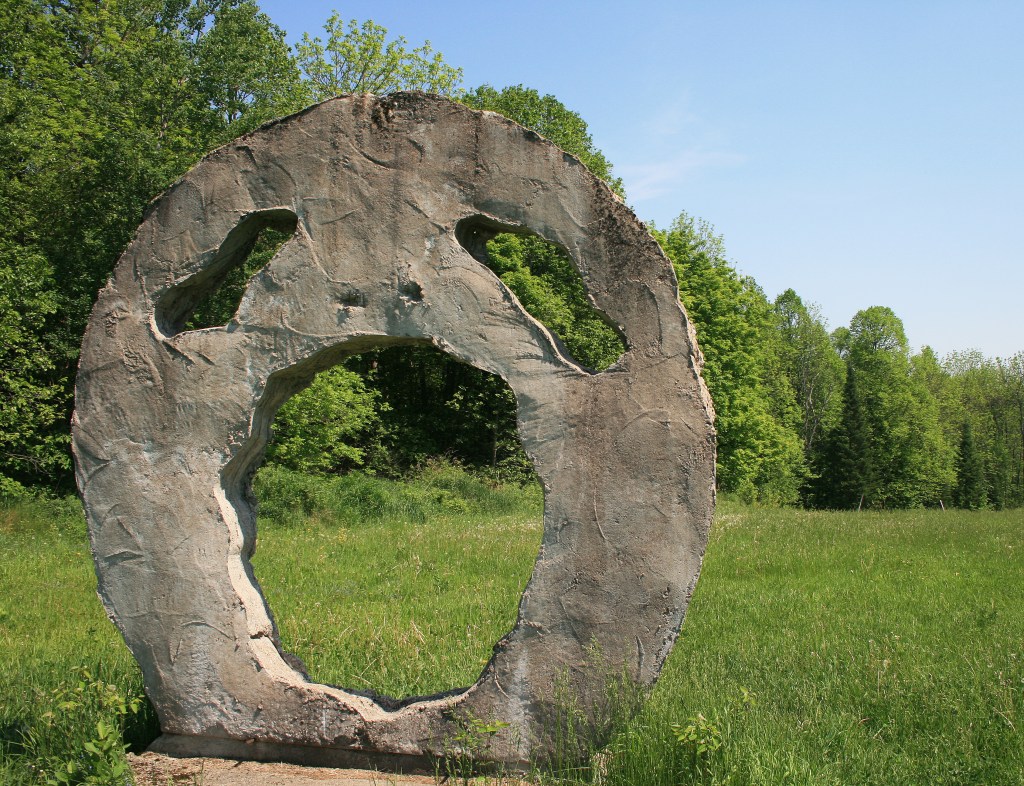
There is a giant spider web gate made of stone and rebar that surrounds the castle. If the gate is open, you may get a chance to look inside and visit the artist’s studio and living space. Everywhere you look there are interesting details to admire, from the metallic dragon that breathes smoke when the fireplace is lit, to a giant head that houses a studio space within it, to the rows of smaller screaming heads that line the top wall of the gate. 

Located on Midlothian Road, near the small town of Burks’s Falls, The Screaming Heads is an off-the-beaten-path roadside attraction. You know you are getting close if you start spotting smaller screaming heads; like at the Burk’s Falls visitor center and the Wiseman’s Corner Schoolhouse Heritage Centre. Peter opens his property to tourists year-round, from dawn till dusk. You’ll find much more at this attraction than just amazing artwork. The property is also home to about 300 species of birds, including peacocks. Their eerie calls can be heard all around you as you hike through the open fields and bush. There is a small gift shop that has some neat Screaming Heads merch, and on weekends you might also find a small farmers market.

The main attraction is of course The Screaming Heads. The artist has described these 20-foot-tall concrete sculptures as a warning against environmental degradation, “the earth rebelling against what we’re doing to the land.”2 Peter has transformed this once barren farmland, by planting many of the trees on his property and propagating spring-fed ponds. His large concrete structures are arranged in such a way that they form the shape of a dragon when viewed from the air, although today the trees are so large they obscure some of the statues.2

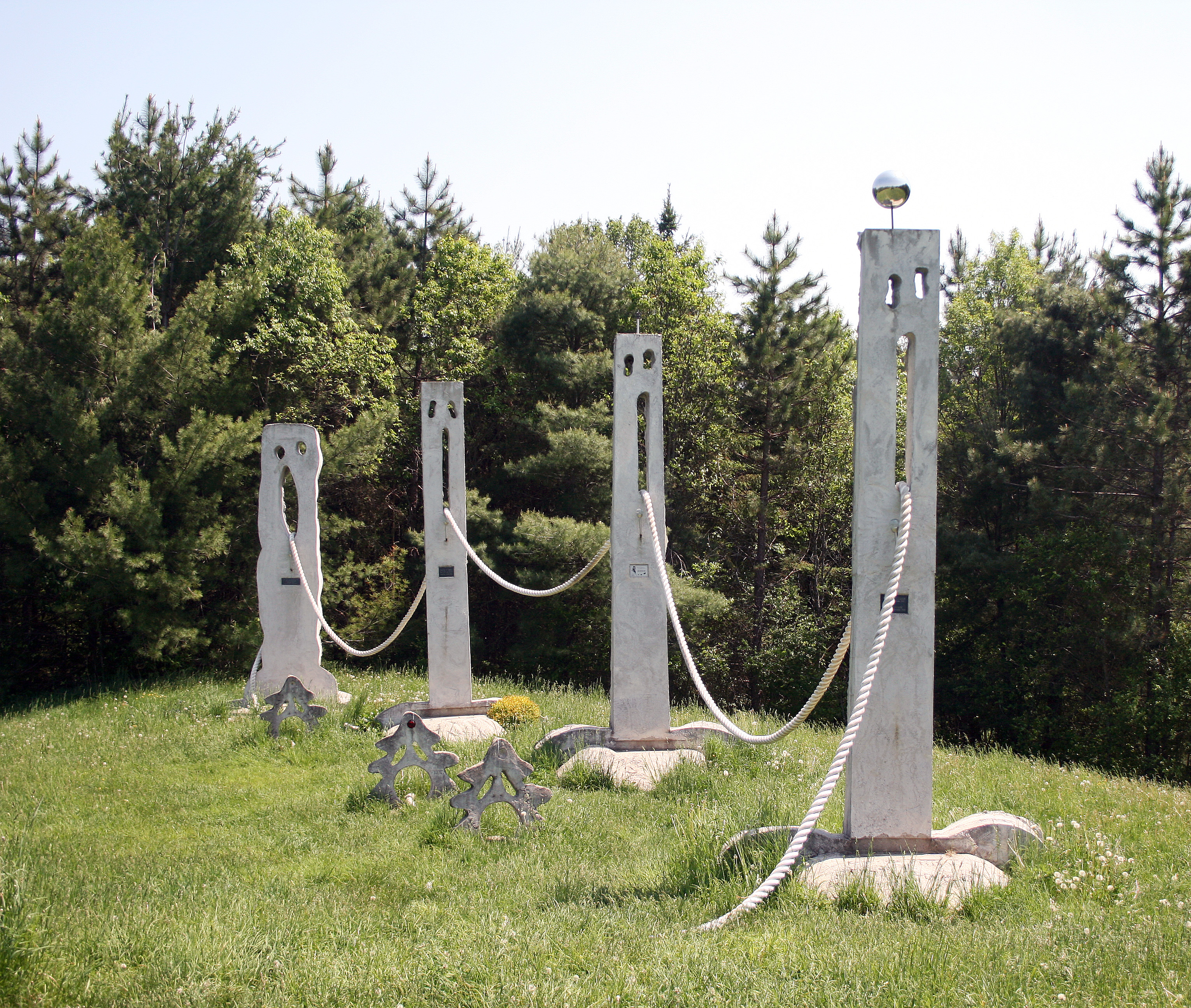
Along with being a unique roadside attraction, The Screaming Heads can also be considered a cemetery. A small grouping of Screaming Heads stand out among the other round Edvard Munch-like sculptures. These tall narrow creations have cremated remains mixed into the concrete. On his website, which now seems to be defunct, the artist had a creative suggestion for where your final resting place could be when you pass away; “Why settle for a small underground plot in the suburbs, when you have the option of joining a vibrant creation that fills the landscape?”3 At one time, If you wanted to be memorialized in this open-air art gallery, you would need $10,000 to reserve your spot.3 Since the website is now gone, I am uncertain if this option still exists.

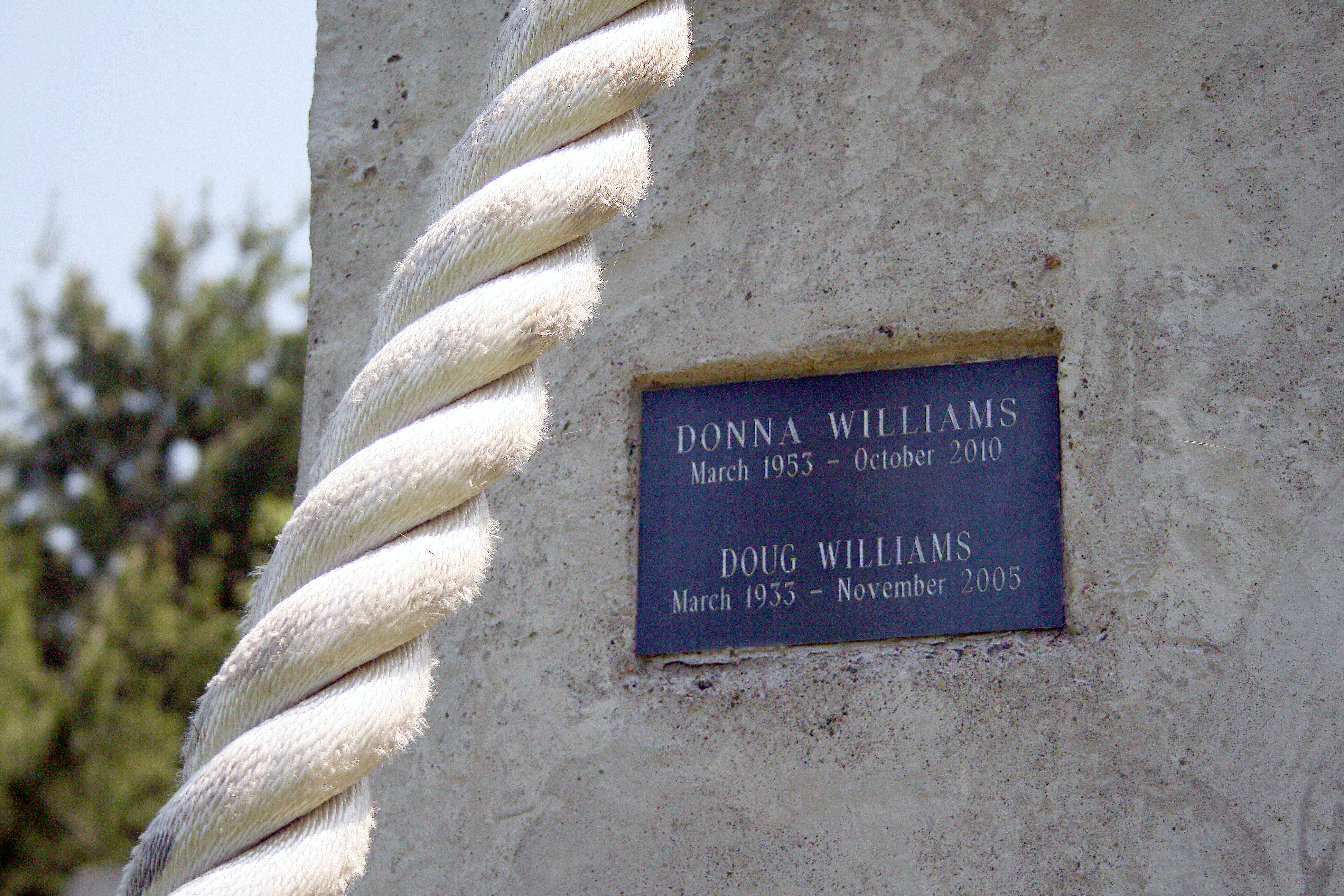
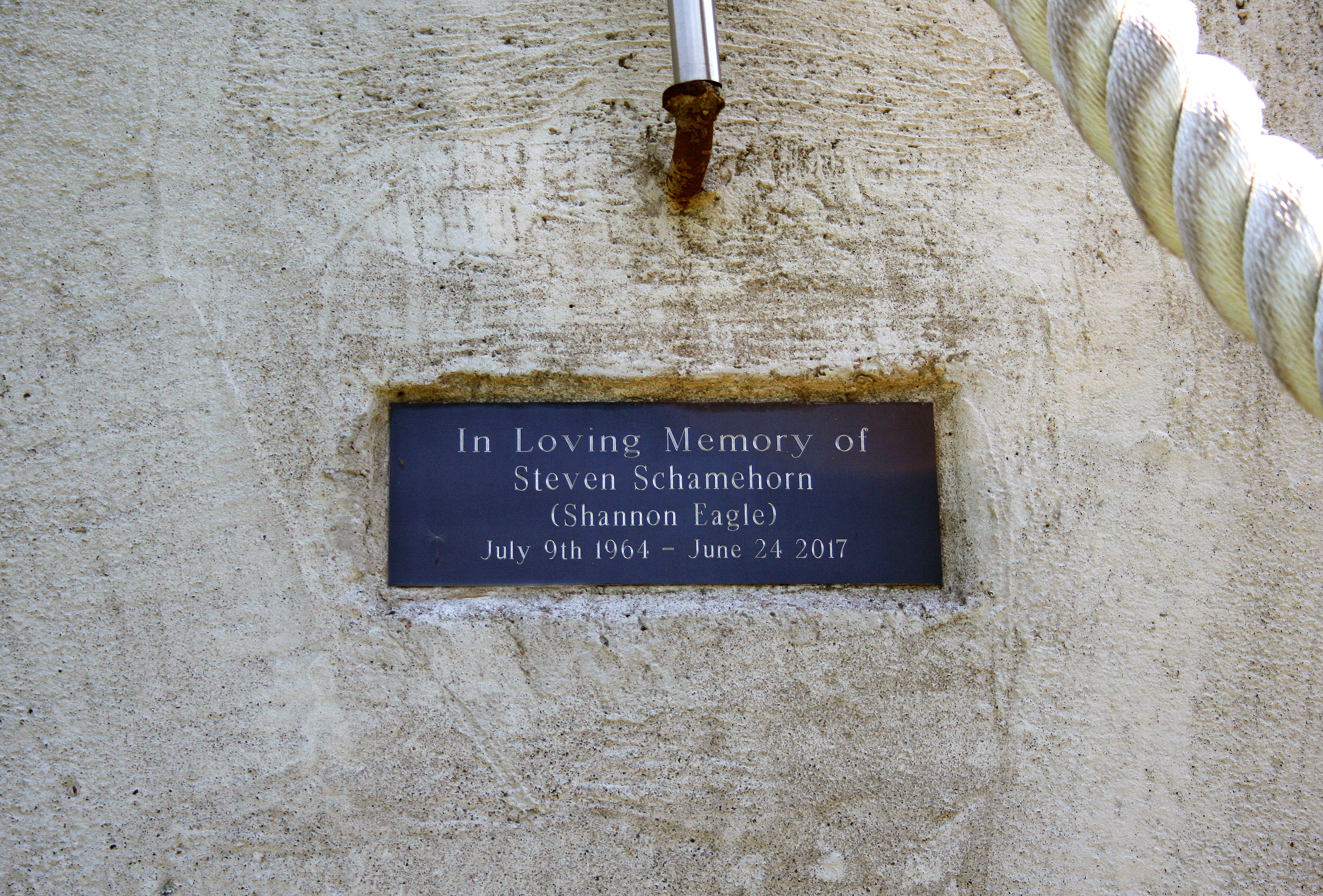
At the time of our visit, there were 4 human ash sculptures, with memorial plaques for 5 people.

“Gone but not forgotten” Memorial sculptures created with cremated remains. Artist: Peter Camani. Midlothian ON ©2023

Everyone’s experience with the Screaming Heads will be different, as there is no set way to explore the grounds. There is no trail map, and there are a few trailheads to choose from. When we visited, on an exceptionally warm day, we managed to come upon the memorial sculptures first. The photos don’t do them justice, as they are larger than life! We asked ourselves many times as we wandered the grounds, about the process of making these immense sculptures and what that might look like. 

There is something magical about this place. As you walk among these enormous, whimsical sculptures, it’s easy to feel like you are in a magical forest, where strange creatures may reveal themselves at any moment. I was filled with a sense of wonder as we walked through the woods and fields, discovering hidden sculptures as we got closer to them. The eerie sound of the peacocks also added to the experience. Their cries always seemed to surround us, and just when we thought we were close enough to see one, we would hear their scream from another direction. 

I can understand why someone would want their final resting place to be in such a magical place. The idea of becoming art, becoming part of something larger than yourself, to instill a sense of awe in others; that guarantees you will always be remembered.

Do you want to plan your own trip to visit The Screaming Heads? They are located in Midlothian, Ontario, close to the small town of Burk’s Falls. The grounds are open year-round, from dawn till dusk, and admission is by donation. Make sure to bring your camera, your water bottle, and LOTS of bug spray. Have you already visited? I would love to hear about your experience in the comments.

Thanks for reading! 


References:

  1. The Screaming Heads North of Muskoka | The Great Canadian Wilderness
  2. Peter Camani | Wikipedia
  3. How to Be Posthumously Transformed Into an 18-Foot Screaming Head | Slate

Additional Links:

A Collection of White Bronze

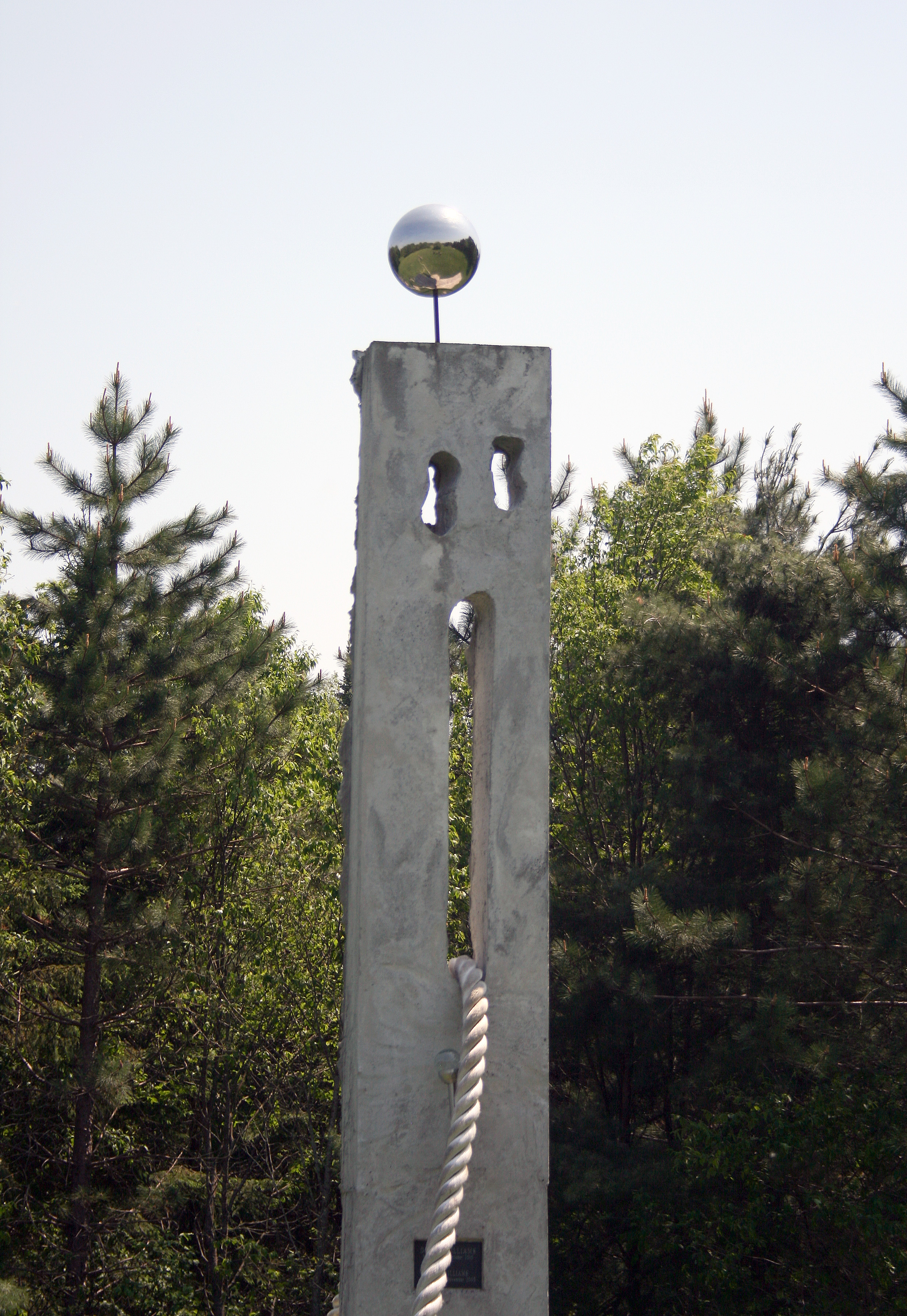
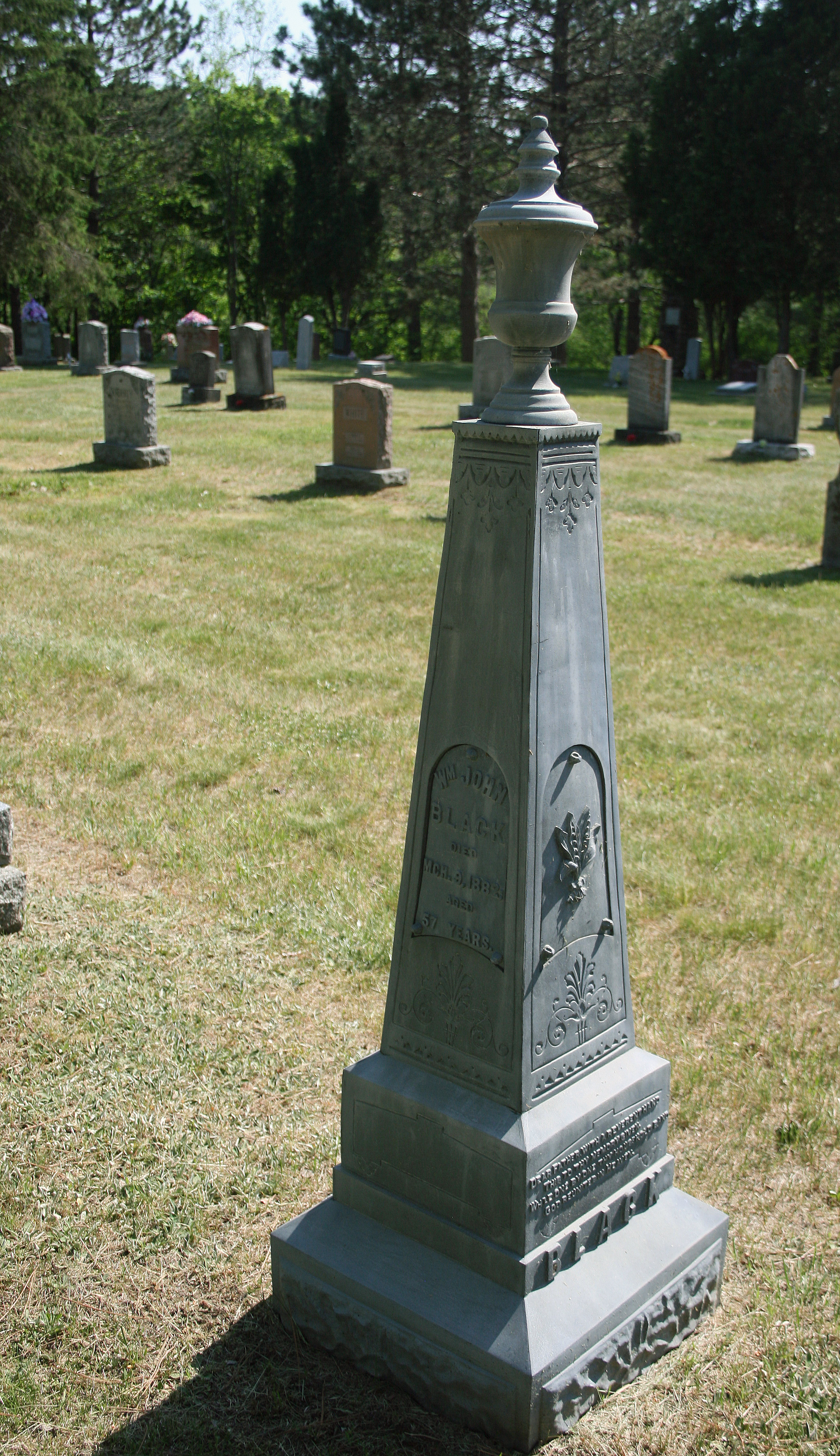
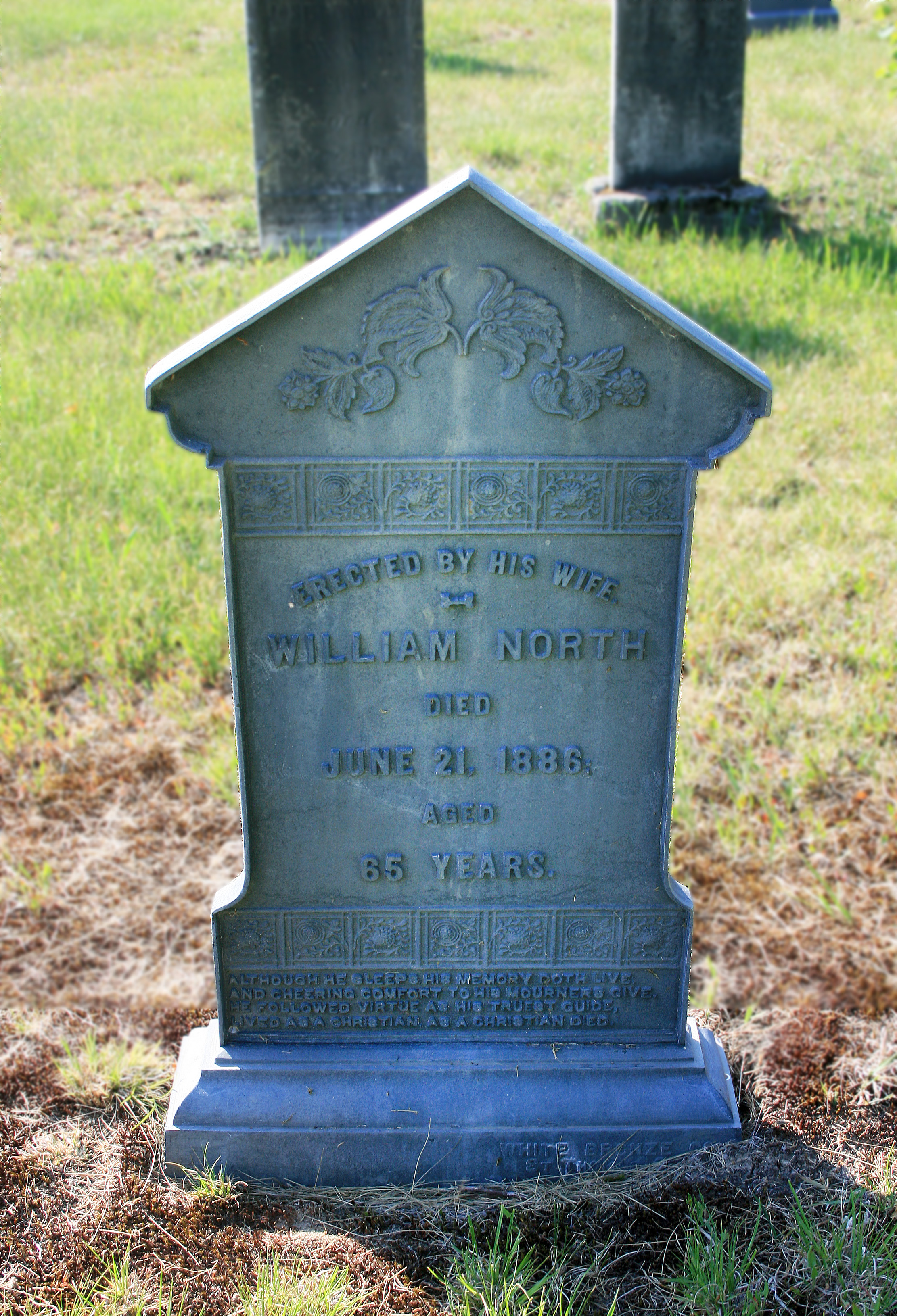
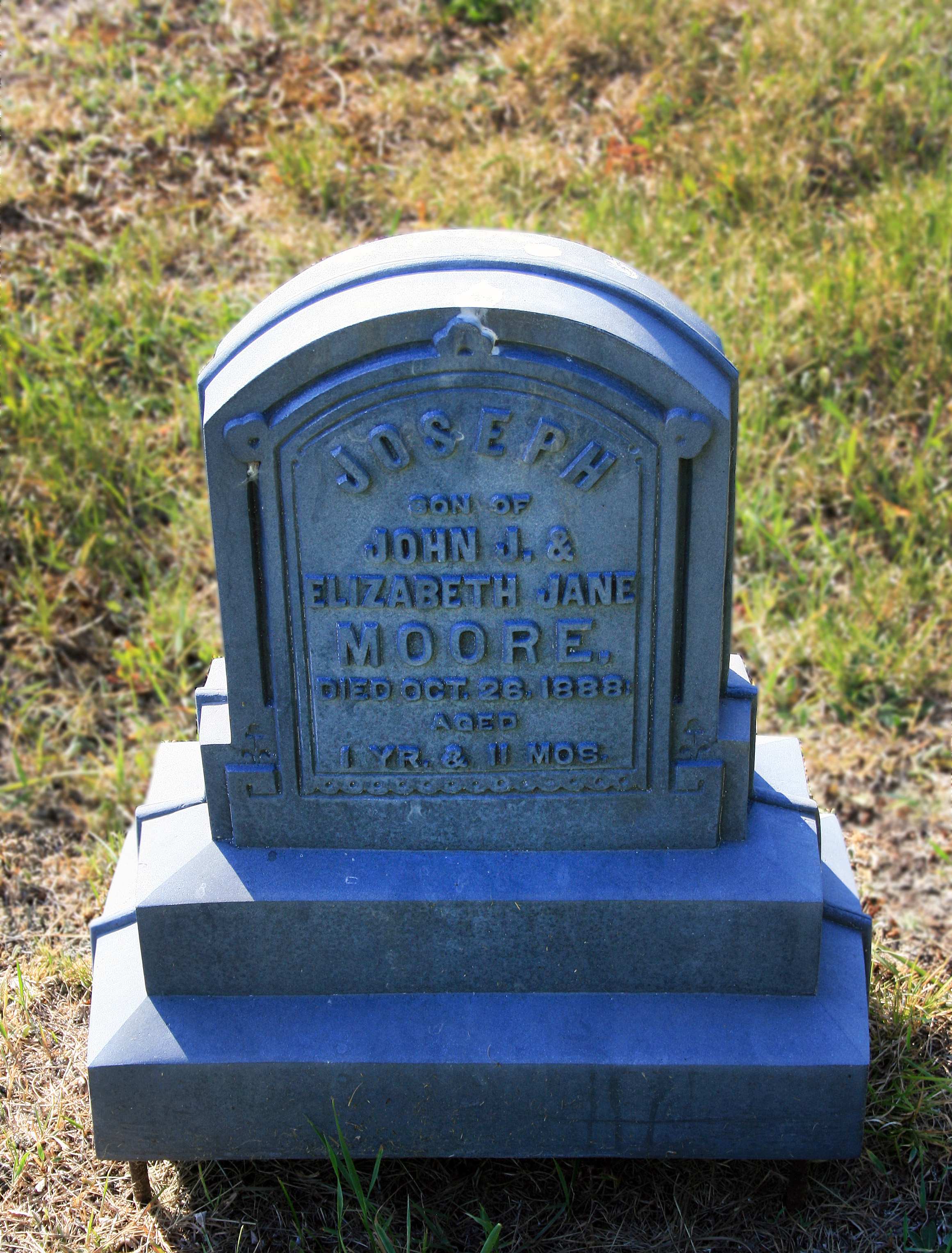
Last weekend, some friends and I went on a cemetery road trip in the Burks Falls area. I was really surprised at the amount of white bronze markers that we found. Almost every cemetery we visited had 1 or more zinkys. I had never come across that many before. They are not a common sight in my local Sudbury cemeteries. 

So for today’s blog post, I thought I would share a collection of white bronze markers. 

In January 2022, I wrote a post that looked more into the history of these unique gravestones. Zinkys as they are lovingly referred to, are also known as white bronze. You can recognize these types of headstones by their bluish-grey color, and if you give them a gentle tap, it should produce a hollow metallic sound.

These types of gravestones never came back into fashion after World War I, but because of their durability, you can still find them in great condition.

Spence Cemetery, Magnetawan ON ©2023

Fairholme Cemetery also known as Dunchurch-Fairholme Cemetery, Dunchurch ON ©2023

Although these markers are very durable, they do sometimes get damaged. According to Understanding Cemetery Symbols by Tui Snider, in the United States during the prohibition era, it was claimed that bootleggers would pry the panels off of these monuments to hide their contraband booze. I am curious if this was also a practice in Canada, as I have found some markers with their panels pried off. 

Have you found some of these unique gravestones in your local cemeteries? Do you have a favorite design? I would love to read about it in the comments. 

Thanks for reading!


References:

  1. Understanding Cemetery Symbols: A Field Guide for Historic Graveyards by Tui Snider

Cemetery Recipes: O’Neal’s Peach Cobbler

I’ve been craving a sweet treat lately, so I think it’s time for another cemetery recipe! Peaches are coming into season right now so I thought why not try O’Neal’s Peach Cobbler? This tasty treat would also go well with a side of ice cream. It is summer after all!

O’Neal’s Peach Cobbler recipe can be found on the gravestone of O’Neal Bogan “Peony” Watson, in New Ebenezer Cemetery in Castor, Louisiana. O’Neal’s son Charlie McBride loves this family recipe so much, that he had it inscribed on his Mother’s grave after she passed away in 2005. He said “It really is just a great recipe”.1 In an article for the Sault Lake Tribune, Charlie reminisced about memories that making this recipe brought up. It’s a perfect example of how these cemetery recipes are a sweet way to remember our loved ones. 

Here is the recipe, as inscribed on the gravestone:

O’Neal’s Peach Cobbler

  • 1 c. Flour
  • 2/3 c. Sugar
  • 2 tsp. Baking Powder
  • 1/2 c. Butter
  • 1/4 tsp. Salt

Mix ingredients. Add 3/4 c. Milk.

Put fruit into pan. Pour on topping.

Bake at 350’ until done.

I always find it interesting how descriptive or nondescriptive recipes found on gravestones can be. I realize it might be too expensive to inscribe too much text on a stone. I do appreciate how creative some authors get to skirt around that. This recipe is a short and sweet one, pun intended. The only things I found missing was the amount of fruit, and how long to bake it for.

Rosie Grant over at GhostlyArchive, of TikTok fame, used 1 can of whole peaches that she cubed up, so I did something similar and used 1 big can of sliced peaches. I drained the peaches before putting them in the pan and tried to make sure they were evenly distributed. 

I followed the recipe as closely as possible, mixing the dry ingredients first, then adding the milk. I poured on the topping as evenly as I could, now it was time for it to go into the oven. The recipe says to bake it at 350’ “until done”. I wasn’t sure how long that should be, so I started with a timer for 20 minutes. After 20 minutes it wasn’t looking cooked through, so I left it in for another 10 minutes, then another 5. After 35 minutes it was looking nice and golden so I took it out to cool.

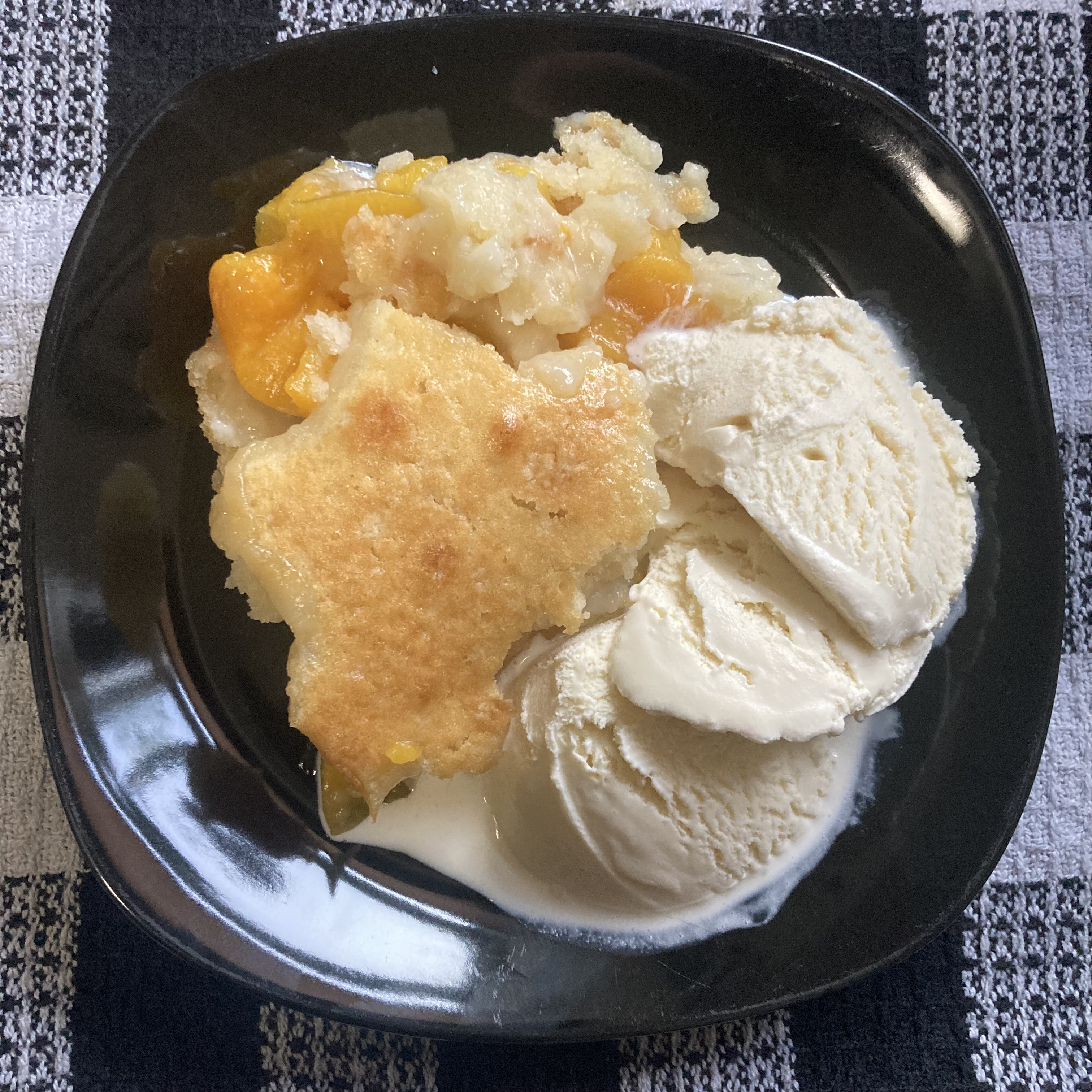
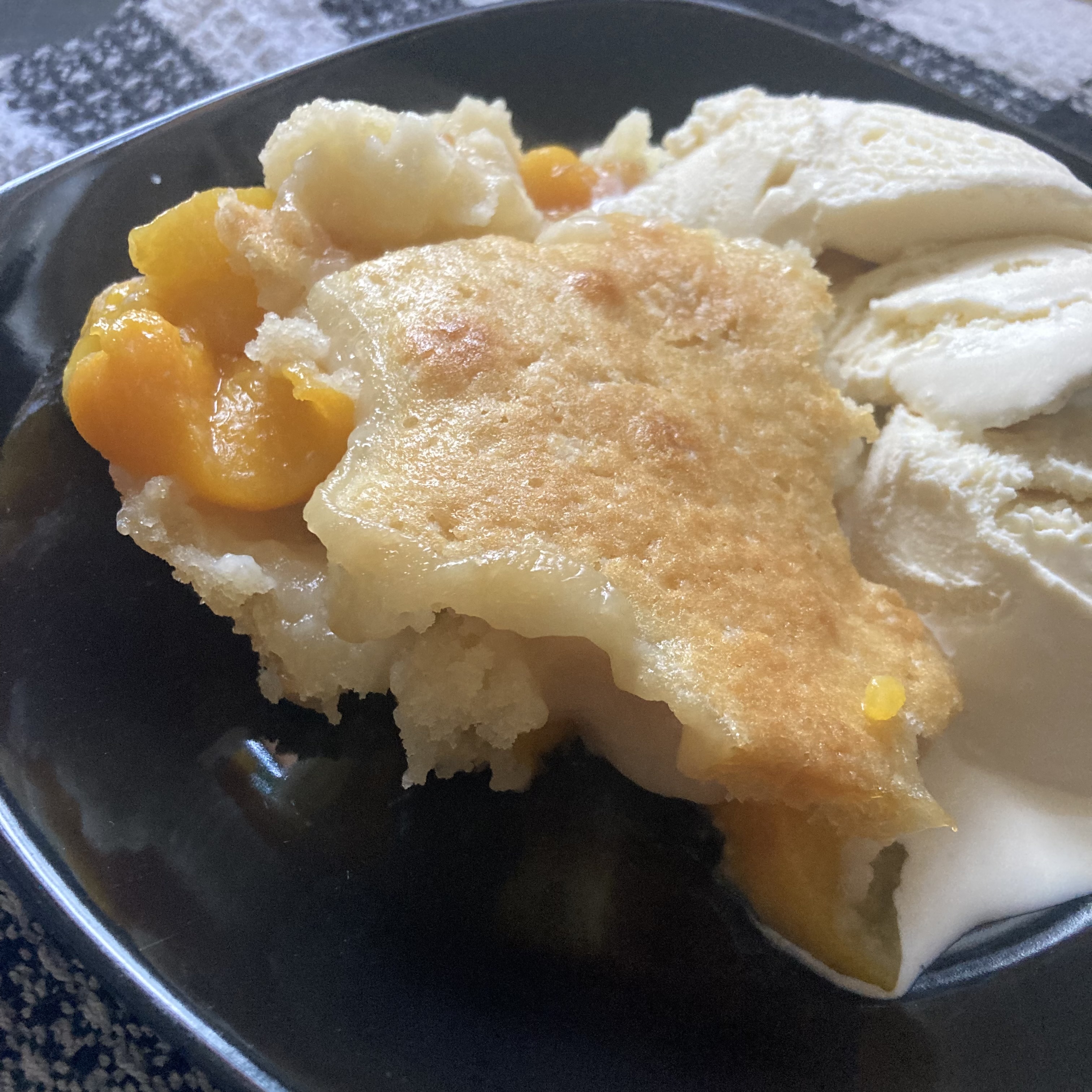
I paired my first serving of O’Neal’s Peach Cobbler with Häagen-Dazs vanilla ice cream. It was to die for! The topping puffed up, creating a lovely fluffy texture that combined nicely with the soft peaches. I’ll be keeping this first batch for myself, since there isn’t enough left to share! But, I will need to make this again for a friend or family gathering.

Have you tried recreating any cemetery recipes yet? Share your favorites in the comments! 

Thanks for reading! 


References:

  1. Family Recipes Etched in Stone. Gravestone, That Is. | The Sault Lake Tribune
  2. O’Neal Bogan “Peony” Watson | Find a Grave
  3. O’Neil’s Peach Cobbler | GhostlyArchive on TikTok

A Collection of Weeping Willows

While working on an upcoming project, I was going through my photo archive and found myself frequently stopping on the images of weeping willows. I have captured an interesting variety in the last few years. I love weeping willows, they have a very unique look. They are not common in my area, in the forests, or on graves. 

So for today’s collection, I wanted to take a closer look at this cemetery symbol and share some of the different versions I have found and photographed during my cemetery walks.

As the name implies, weeping willows commonly symbolize grief and mourning. They are a very common Victorian-era cemetery symbol. Adopted from the Ancient Greeks, the weeping willow can represent immortality and life after death. Weeping willows are sometimes associated with the Underworld because, in Greek mythology, Orpheus brought with him a willow branch on his travels to the Underworld to save Eurydice from Hades.1 The symbolism of immortality stems from the fact that willow trees are very hardy, and can survive heavy damage.

A variety of the weeping willow motif you might find is a weeping willow standing beside a gravestone. I love the idea of a gravestone on a gravestone. 

Another variation you might come across is of a weeping willow and urn. The urn represents death itself, and the willow again symbolizes grief.2 This motif was a popular gravestone symbol of the late eighteenth and early nineteenth century. You might also see weeping willows paired with a lamb or a cross.3 I have yet to come across these variations. 

I noticed that the majority of the ones I found were in Southern Ontario. As I explore more Ontario cemeteries this summer, I hope I will come across a few more to photograph. I would love to find some more variations on the symbol. If you have any suggestions for where I might look, I would love to hear about them in the comments. 

Thanks for reading!


References:

  1. Understanding Cemetery Symbols: A Field Guide for Historic Graveyards by Tui Snider
  2. Mastering Cemetery Iconography | The Academy at Penguin Hall
  3. Stories in Stone: The Complete Guide to Cemetery Symbolism by Douglas Keister

Cemetery Road Trip: Visiting Historic Fort St. Joseph Cemetery

I feel like a broken record lately, always talking about the snow. But it’s finally melting! We have been having some consistent warm weather so the snow has been disappearing quickly. I have been getting ready for the warmer weather by planning and mapping some upcoming cemetery walks. It’s exciting that the weather is finally warming up. I have some great future road trips planned and am looking forward to some fun cemetery adventures. All this planning has got me thinking about some of last year’s trips. 

My mother and I did some exploring of St. Jospeh’s Island last year, home to Fort St. Joseph National Historic Site and bird sanctuary. We spent the night at a quaint little motel on the island and explored everything the island had to offer. I wrote a little about our adventure and finding a pet cemetery, but there are many more stories to tell from that trip.

So today, I wanted to share another experience from that cemetery road trip and talk about our visit to Fort St. Joseph, and the Historic Fort St. Joseph Cemetery.

I first learned about Fort St. Joseph when I stumbled onto a trail map while going down an internet rabbit hole. The cemetery trail piqued my interest and I redirected my Google search to learn more. Fort St. Joseph is a National Historic Site of Canada that features the ruins of an archaeological site and is filled with history about the War of 1812. “History that saw a powerful alliance struck between the British and the First Nations People of the western Great Lakes region.”1 

The historic site has an interactive visitor center with a walk-through exhibit as well as an educational short film that tells you more about the history and discovery of the site. There is also a trail system that takes you through and around the ruins and includes the Cemetery Trail, Rains Point Trail, and the Lapointe Point Trail. Visiting cemeteries and hiking are two of my favorite things and often go hand in hand. I thought they would be a perfect destination for a summer road trip. My mother was on board right away when I asked her if she wanted to come. She is an avid bird watcher and was excited to visit the bird sanctuary. More than 200 species have been spotted in the area.1 

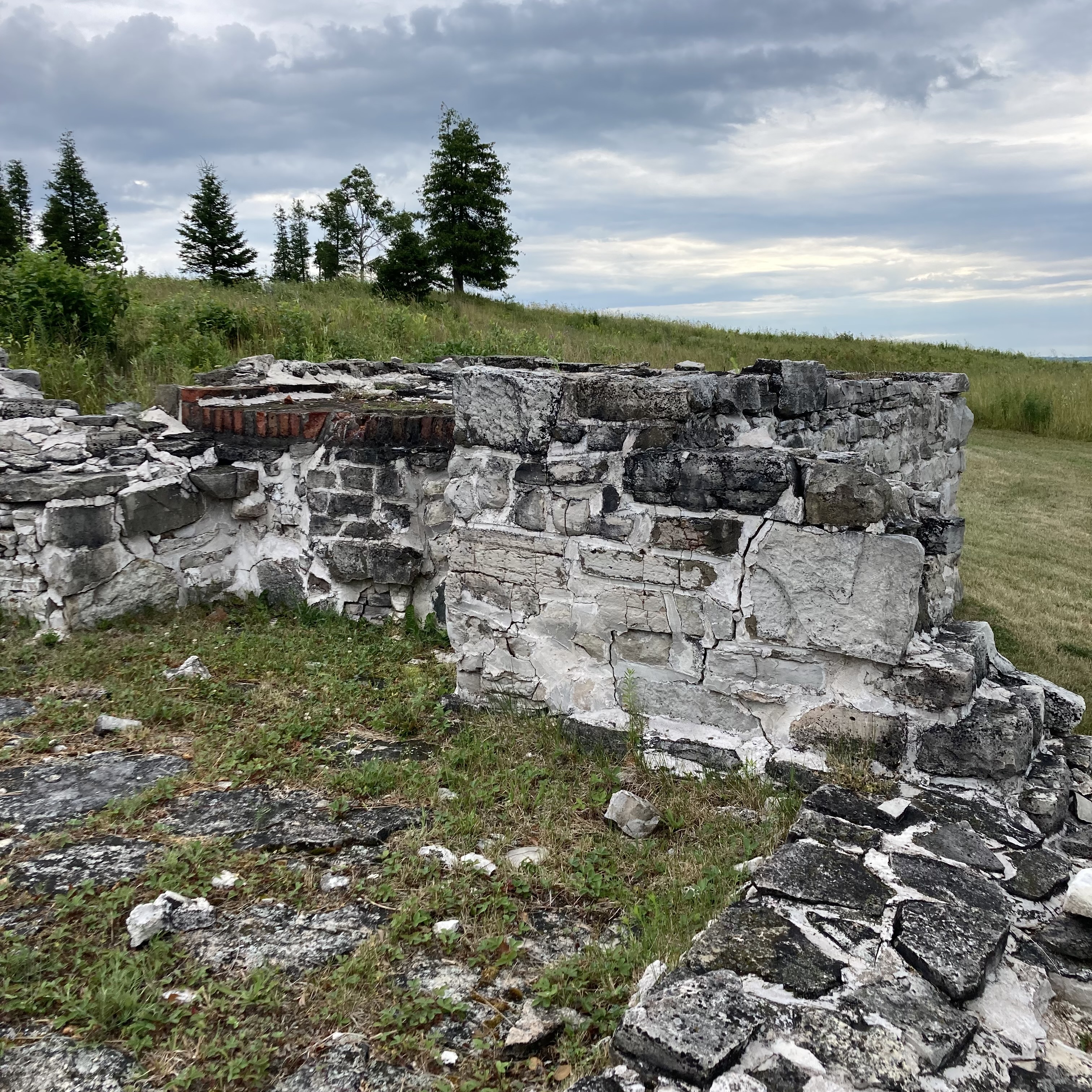
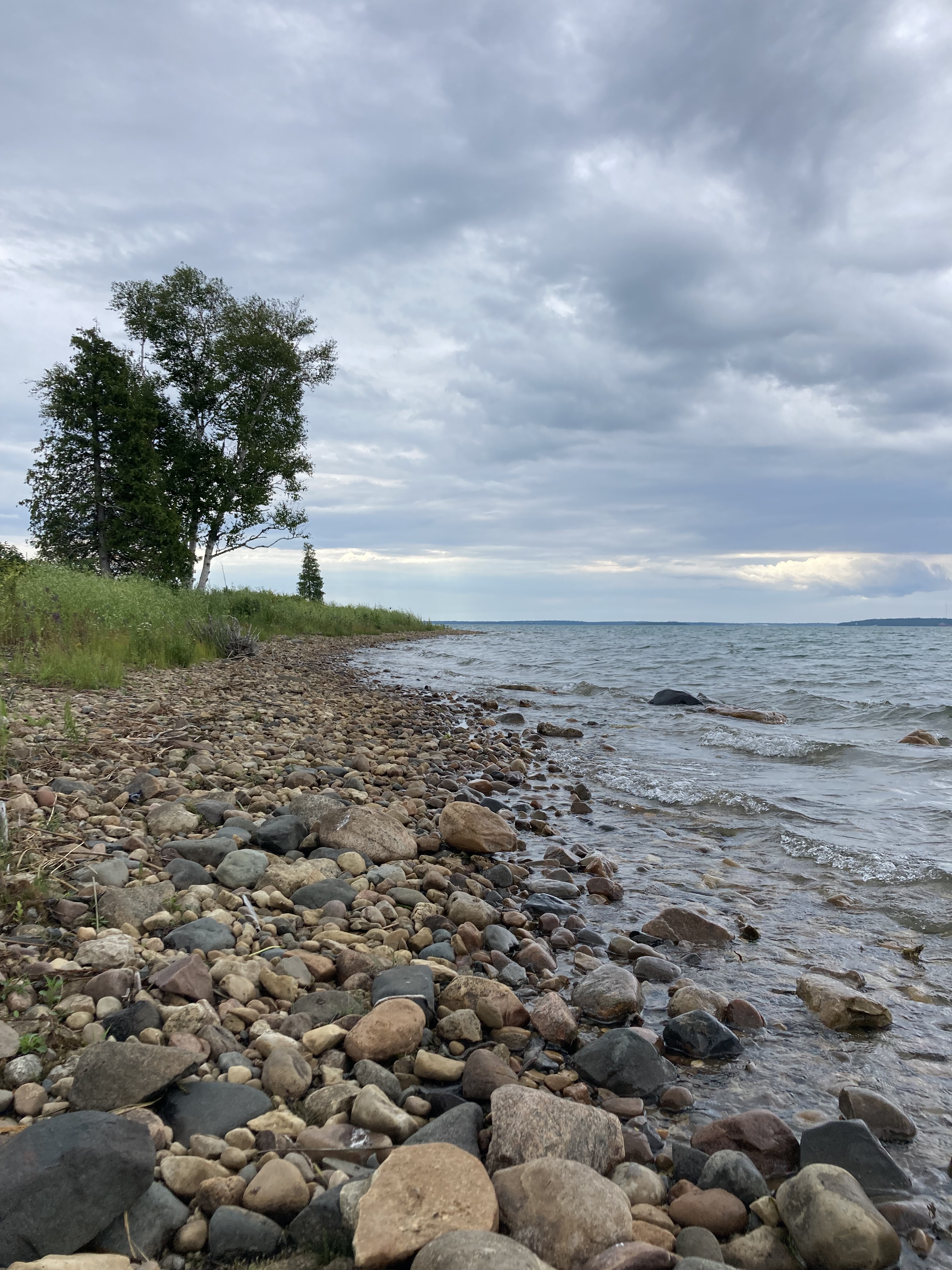
After taking our time exploring the interactive exhibits and watching the film my mother and I headed outside to explore the ruins. Fort St. Joseph was once the most westerly fort in Upper Canada.1 All that is left today are the foundations, ruins, and surviving artifacts. It was very windy the day we went to explore the ruins, and rain was on the way. We took a chance and tried to beat the rain by going as soon as the site opened. We toured the ruins, reading the plaques and taking in the history laid out before us. I found it a little hard to imagine these small foundations housing a community, but the helpful diagrams and maps of the area helped visualize what the layout of the fort would have looked like in its time. Because we got there so early we had the place to ourselves and took our time exploring. Even with the strong winds, we spent some time at the shoreline, examining the horizon. Unfortunately, we didn’t see any birds or wildlife while we were there. I think we can blame the stormy weather on that. 

Fort St. Joseph National Historic Site, St. Joseph Island ON ©2022

As we were finishing up at the ruins, the rain started to come down and visitors started to trickle in. When the rain started to pour down harder we took shelter in the visitor center and gift shop and tried to wait out the storm. They have a cozy little gift shop filled with most of the typical things you would expect from a historic site; postcards, magnets, pins, sweatshirts. One of the more interesting items they had was chocolate, more specifically heritage chocolate. Using a recipe and ingredients authentic to the colonial era, you can try a chocolatey treat that was commonly consumed at the time. They had chocolate sticks and hot chocolate mix at the time of our visit, and I regret not picking up the hot chocolate mix along with the couple of chocolate sticks I did purchase.

After the rain finally eased up, we made our way to the car. There was one more stop to make. The Cemetery Trail turns off the main road to and from the historic site. A small green sign with a hiking symbol and the word “Cemetery” mark the turnoff. My mother was a bit tired at that point and didn’t want to walk the trail. I didn’t have any idea where the cemetery was on this trail loop so I wasn’t sure how far I would need to walk to find it. She decided to stay in the car and wait.

At the trailhead, there is a trail map, along with a description of the cemetery. It reads “The cemetery at Fort St. Joseph contains graves established between 1796 and 1812. While there were only 10 recorded deaths during the occupancy of the fort, such as those of Jessie Crawford’s twins who died in 1807 shortly after birth, there are probably others who rest here eternally, their identities unknown. Those that died at Fort St. Joseph usually suffered from illness or their deaths were as a result of tragic events or accidents like that of Private Antoine Gazzinel who was killed May 9, 1803 when a loaded musket went off as he was placing it into a bateau. A cairn was erected in 1954 to recognize the final resting place of these individuals and stands today as a reminder of the community that once existed at Fort St. Joseph.”

The Cemetery is located right at the beginning of the trail, with a clearing opening up on the right side of the trail. The rain held out for me as I examined the large cairn and took photographs. The cairn reads, in English and French, ”This cairn marks the site of Fort St. Joseph cemetery in which are the graves of soldiers and fur traders who died here between the years 1796 and 1812.” There are about a dozen white crosses here, with no names. One grave looks to also be marked with stones surrounding it. It’s a peaceful spot, surrounded by the lush green forest, but it is also a place of sorrow. I was very sad to see the blank white crosses, marking lives that are now unknown, and who knows how many more lie there unmarked.

Fort St. Joseph Cemetery, St. Joseph Island ON ©2022

My mother and I really enjoyed our time visiting Fort. St. Joseph, even though the weather wasn’t ideal. Exploring the historic ruins and cemetery was an interesting look at the past, even when at times it was a somber one. It was my first time exploring a ruin site, and I look forward to the chance to visit more.

Have you visited Fort St. Joseph? Will you be adding it to your travel plans? I would love to read your thoughts in the comments. 

Thanks for reading!


References:

  1. Fort St. Joseph National Historic Site | Parks Canada

Cemetery Recipes: A Good Carrot Cake

Today on the blog I wanted to share another cemetery recipe with you. All the recipes I have made so far have been sweet treats, and today’s recipe is no different. It’s the Easter long weekend, so I thought today’s recipe would be a perfect fit – A Good Carrot Cake. 

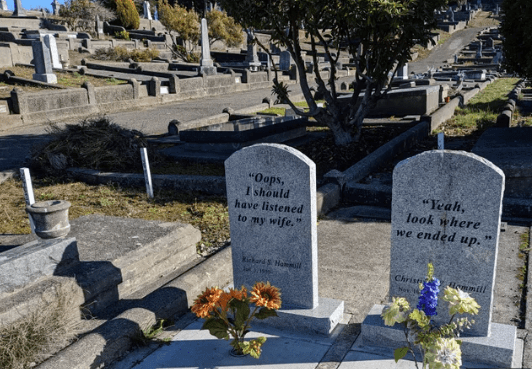
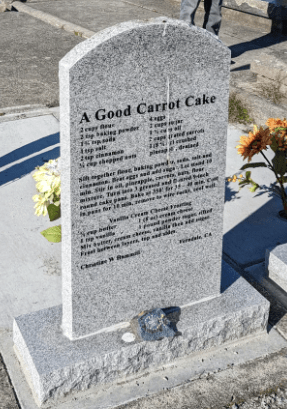
This recipe is a little different than the previous ones I have made. It can be found on a white tablet gravestone for Christine W Hammill in Ferndale, California. Her stone sits beside the stone for her husband Richard. The difference is that Christine and Richard are still living.

They seem like pretty fun folks as well, based on their gravestones! Not only can this delicious recipe be found on the back side of Christine’s gravestone, they both also have some funny epitaphs on their headstones.


The white granite tablet gravestones read:

“Oops, / I should / have listened / to my wife.”

Richards S. Hammill

June 3, 19__ – 

“Yeah. / Look where / we ended up.”

Christine W. Hammill

Nov. 

Unfortunately, I haven’t been able to find more information about the Hammills and where their future resting place is, but I do know that Christine makes an excellent carrot cake.

Here is the recipe:

A Good Carrot Cake

  • 2 cups flour
  • 4 eggs
  • 2 tsp. baking powder
  • 2 cups sugar
  • 1 1/2 tsp. soda
  • 1 1/2 cups oil
  • 1 tsp. salt
  • 2 cups grated carrots
  • 2 tsp. cinnamon
  • 1 (8 1/2 oz.) crushed pineapple, drained
  • 2/3 cup chopped nuts

Sift together flour, baking powder, soda salt, and cinnamon. Beat eggs and add sugar. Let stand 10 mins. Mix in oil, pineapple, carrots, nuts, flour mixture. Turn into 3 greased and floured 9-inch round cake pans. Bake at 350’ for 35 – 40 min. Cool in pans for 10 min, remove to wire racks, and cool well. 

Vanilla Cream Cheese Frosting

  • 1/2 cup butter
  • 1 (8 oz.) cream cheese
  • 1 tsp. vanilla
  • 1 pound powdered sugar, sifted

Mix butter, cream cheese, vanilla then add sugar. First between layers, top and sides.

This is one of the more thorough sets of baking instructions I have come across on a gravestone. It didn’t need any guesswork at all. The recipe is very easy to follow and create. I started with the prep work first; chopping, grating, and measuring out ingredients to make the mixing process a bit smoother. 

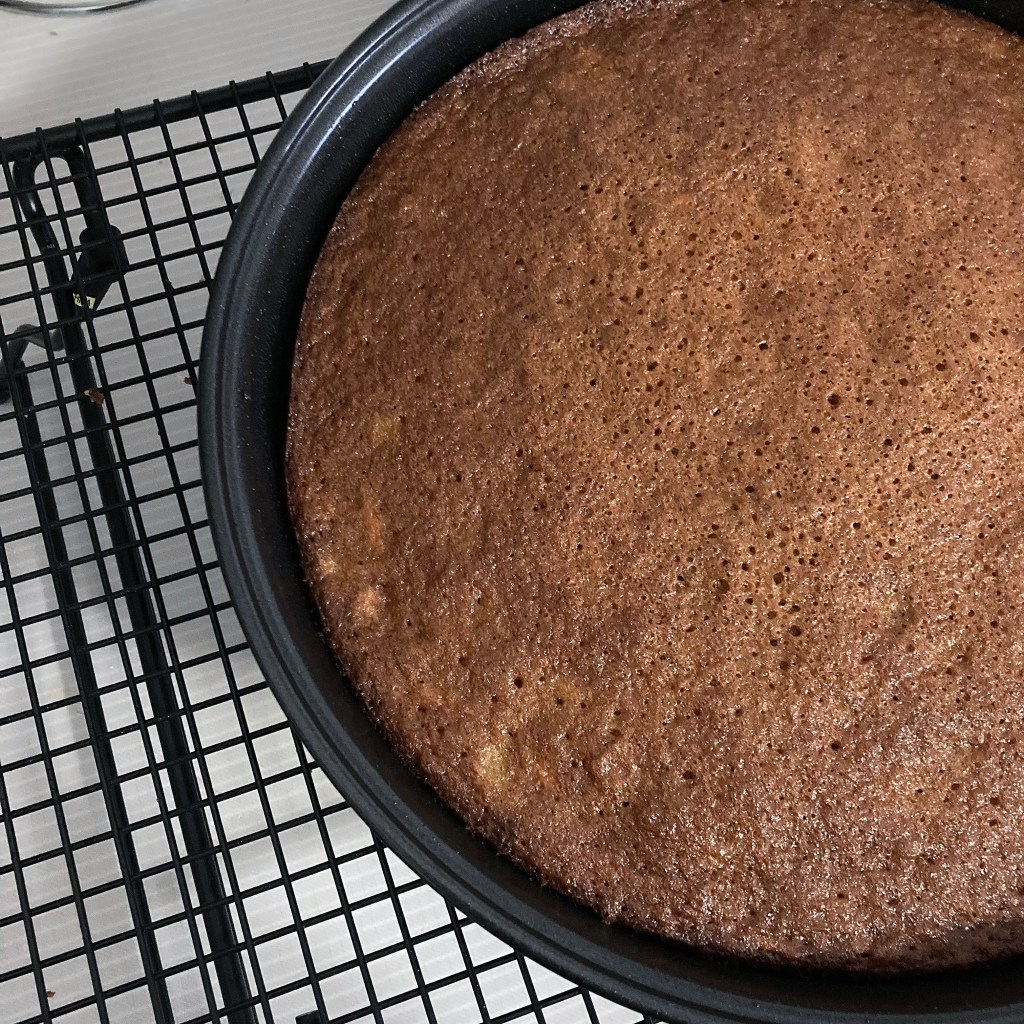
I did start off thinking I would only need two cake pans, but I did need to make a third layer. I only filled the cake pans about halfway with batter because I had a feeling they would rise as they baked. They did rise as I suspected so that left batter for a third layer. I only have 2 cake pans though. I put the first two pans in the oven for 35 minutes and used the toothpick trick to test if they were done. 

If you don’t know this trick, you take a toothpick and stab it into the middle of the cake, touching the bottom of the pan. If it comes out clean when you pull it out, it means the cake is done. If there is batter on the toothpick when you pull it out, it means the center is not cooked all the way through and should go back in for a few more minutes. 

After the first two layers were done, I let them cool for ten minutes then removed them from the pan and placed them on a wire rack to continue cooling. Then I put the third layer into the oven to bake. This did make the baking process a bit longer, but it wouldn’t be an issue if you have extra cake pans. 

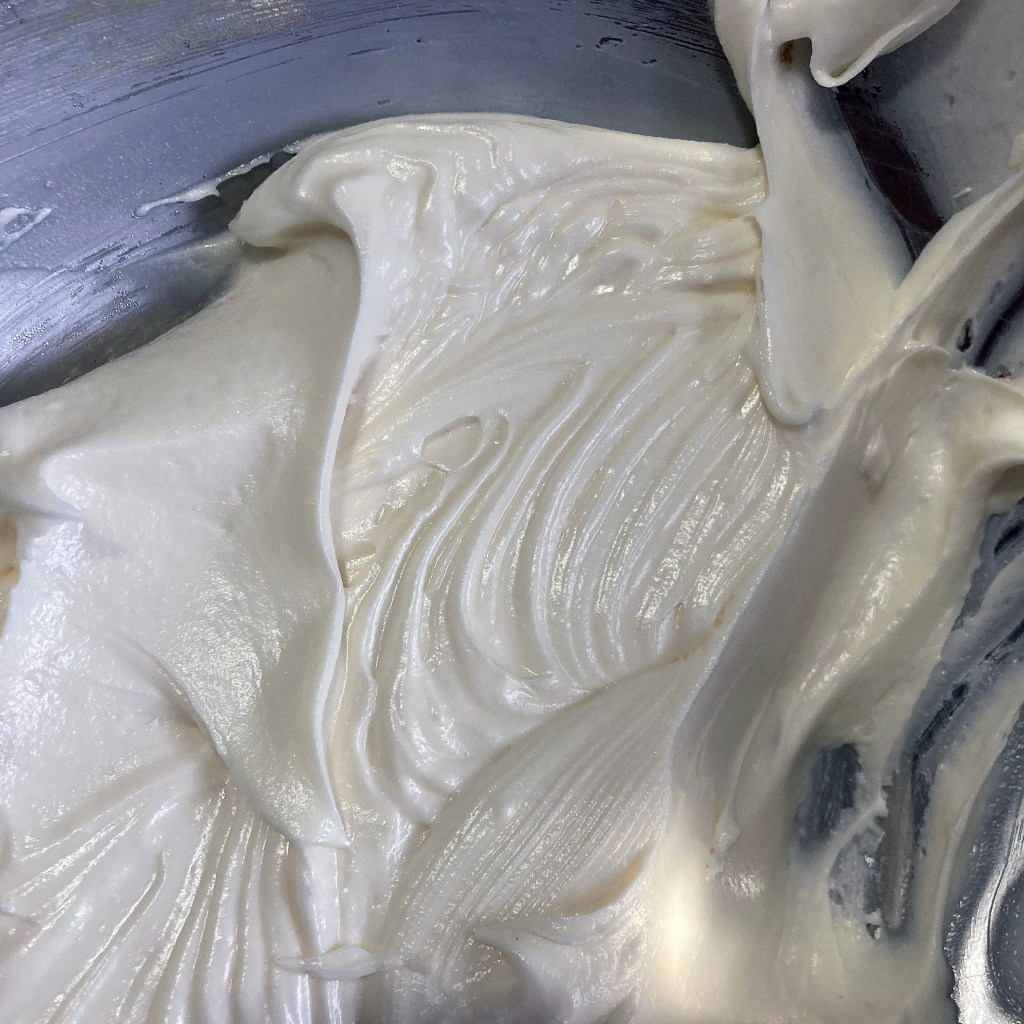
I used the time while the last layer was baking, to make the cream cheese frosting. I have to say, it’s the best frosting I have ever made. Sifting the powdered sugar made all the difference in creating a smooth and creamy frosting. I ended up with some extra frosting as I was unsure how much to frost in between the layers. I was afraid to run out of frosting for the top and the sides. I didn’t have to worry though as I had quite a bit left over. I put the leftover frosting in a container and put it in the fridge to use as a cookie dip. I couldn’t let that deliciousness go to waste.

I had some chopped walnuts left over and decided to sprinkle them on the outer edge of the cake as decoration and to use them up. I think it was a nice added touch, but you can decorate it however you like. The white frosting is a lovely base for frosting accents, sprinkles, or any other type of decoration you may want to add to make your cake more festive. 

I love a good carrot cake with a good cream cheese frosting, and this might just be the best one yet. I was curious how the final product would taste with the addition of pineapple. I had never seen that in a carrot cake recipe before. The cake is so moist and sweet, I think because of the pineapple. It’s one of the best cakes I’ve ever made. I shared this cake with my mother and fiancé, and they both agreed, it was delicious. I think this cake would make a lovely finish to an Easter meal, or any meal for that matter. It’s a big cake, so it’s perfect for sharing with loved ones. 

I wish I knew more about Christine and this recipe. I am going to assume that it is a Hammill family favorite. At any rate, I want to say thank you to Christine, for sharing this sweet treat with the world!

Have you tried this recipe before? Do you have a favorite carrot cake recipe? I would love to read about it in the comments. 

Happy Easter, and thanks for reading!


References:

Cemetery Book Review: Cemetery Reflections

I recently had an author reach out to me, asking if I would be interested in reviewing her book Cemetery Reflections and if it would be a good fit. She described her book as a pairing of photographs with epitaphs, poetry, and prose; giving a slightly different slant to a typical walk through a cemetery. I thought it would be a perfect fit! So for this month’s cemetery book review, I wanted to share my thoughts about Cemetery Reflections by Jane Hopkins.

Cemetery Reflections looks at the beauty and emotion that accompanies cemetery visits and is meant to be read in bits and pieces, as a cemetery walk would be. This new book was published in the fall of 2022, by Headstone Press. This is Jane’s first cemetery photography book, but she is no stranger to photography. Her fine art photography has been exhibited and sold since 2002, at many venues including the Memorial Art Gallery in Rochester, New York, and the Dyer Arts Center at the Rochester Institute of Technology.1 

I was already familiar with Jane’s work, having seen her beautiful photographs on various cemetery social media accounts that I follow. I was very excited when she reached out and asked me to review her book. She was also very gracious and provided me with a beautiful paperback copy to read. 

Here is the book synopsis from Goodreads: “Stroll through three centuries of American cemeteries through photographic images, historic poetry, and memorable prose. The reader will find stunning photos in both black-and-white and color. Paired with the images are poignant passages drawn from timeless literature and sensitive recollections of family losses. The cemetery emerges as a place of solace, where final and loving farewells may rest safely among the tombstones.

This book offers a compassionate context that deepens awareness of the experience of death. Devotees of art, history, poetry, and philosophy will find Cemetery Reflections a mesmerizing journey. Grief is intense and lonely, dying can be frightening and sometimes painful beyond expectation, and the “great beyond” remains a mystery. The pandemic and recent violence in the US have brought issues of death to the forefront. People are searching for ways to better understand and cope with challenges that once seemed far distant. Cemetery Reflections can provide a valuable assist in this process.”2

This is a beautiful, high-quality softcover photography book. It’s filled with full-color and black-and-white photographs alongside beautiful poetry, epitaphs, and musings. It is very different than the books I have been reading lately. I loved that it showcases American cemeteries alongside Canadian ones. I also love the variety of the photography, from detailed shots of grave goods to lovely cemetery landscapes, and everything in between. 

Cemetery Reflections feels like a contemplative walk through a cemetery. I found each epitaph, poem, and beautiful photograph encouraged self-reflection and exploration of my own understanding of grief and remembrance. At times it is a very emotional read.

I would highly recommend this book to anyone interested in fine art photography, poetry, and cemetery walks. Because of the self-reflective nature of this book, I would also recommend it to those who may be grieving a loss, as well as those who might find cemeteries and death uncomfortable. They might find its heartfelt and thoughtful messages to be healing.

Have you read Cemetery Reflections? Do you agree with my review? Or will you be adding it to your reading list? I would love to read your thoughts in the comments. 

Thanks for reading! 


I am always on the hunt for cemetery-related book recommendations. Please feel free to share yours in the comments. If you are an author and have a cemetery-related book you would like me to review, please reach out at hello@chantallarochelle.ca. I would love to hear from you.


References:

  1. Author Bio | Cemetery Reflections
  2. Cemetery Reflections | Goodreads.com

A Personal Cemetery Mystery

I have been thinking a lot lately about my connection to cemeteries. I recently read Death’s Garden Revisited, edited by Loren Rhoads. It’s a collection of 40 personal essays by people from all walks of life, regarding their own connections with cemeteries. I saw a lot of myself in those essays, and it has encouraged me to look back on past events in my own life that have attributed to my love of cemeteries. 

One of those moments that stand out, is a family story that has been passed down by my mother. I was too young at the time, so I have no memory of it, but my mother has told me the story many times.

When I was a child, I saw an angel in a cemetery.

Now you may be thinking, well yes, there are lots of angels in cemeteries! And yes, this is very true. Angel statues are a very common sight in Catholic cemeteries. Children are also known to have overactive imaginations, and I was no exception. I did have an imaginary friend growing up. But I am curious and wanted to learn more about the circumstances of this cemetery visit.

One of my earliest memories is of attending my uncle’s funeral in Elliot Lake. I was very young, maybe 5 or so, but I vividly remember the funeral parlor. I remember the smell of the parlor, as well as seeing many somber family members, sitting in dark leather armchairs. I don’t remember the cemetery though. Was this the same moment? Were we visiting the cemetery after the funeral service? 

In 2021, my mother and I took a drive to Elliott Lake to do some hiking and cemetery wandering. We visited my uncle in the cemetery. I had no recollection of being there, but my mother had vivid memories of the place. She said it looked a lot different; there had not been as many graves in the section where my uncle was laid to rest. Over the years it had become a very popular section. It was so full that the cemetery opened another section at the back, which was now about half full. The cemetery has no standing gravestones, only flat grave markers. No angel statues here. My Mom confirmed this was not the cemetery where I saw an angel.

It turns out there is MUCH more to this story. 

In the summer of 1987, My mother, father and I were visiting my uncle in Quebec for a family reunion. I would have been about 3 years old. It was planned to be a big reunion of my father’s side of the family. Unfortunately, only we showed up. My uncle was a bit dismayed but decided to not let that ruin our visit, so there was a change of plans. Since we were close to Quebec City we would visit some old stomping grounds and visit some cemeteries to visit family. There was one family member in particular that my dad and uncle wanted to find—their uncle Joseph Larochelle.

The story goes that my great-uncle, Joseph Larochelle who was blind, went out into a snowstorm with his dog. His Family members told him not to go out, because of the blustery winter weather—but he went anyway. He said he would be fine since he had his dog with him. Unfortunately, he lost his way in the storm and went missing. Tragically, both he and his dog perished in the storm. He had gotten stuck on a fence and was not able to break free. He was not found until the late spring. 

My dad and uncle did manage to find the grave of Joseph. They took a picture with the gravestone that has some details of what happened to him. The gravestone states he was blind, died February 18, and was found June 4. I don’t know the year, as the photo is a little hard to read. It was while visiting this cemetery that I saw an angel. 

The gravestone reads: “Joseph Larochelle / Blind / Died February 18 / And Found / June 4, 19_1 / Aged __ Yrs. / R.I.P”

I have reached out to my aunts and uncles to see if they have more information, or know which cemetery he is buried in. I have not been able to find anything much so far. My searches on Find a Grave and Ancestry have not turned up anything yet. I have an idea where to look—Quebec City, but I don’t have much more than that at the moment. I would love to learn more about my great-uncle, as well as the cemetery where he is laid to rest. Is it filled with stone angels? 
When I started looking into this story, I didn’t expect to uncover a cemetery mystery. I love a good cemetery mystery, and it’s even more intriguing to have a family connection to one. I will keep researching and maybe will have an update on this story in the future. In the meantime, I will continue to go down cemetery rabbit holes looking for answers. Maybe I’ll also get closer to answering my question about my cemetery angel. 

Thanks for reading!