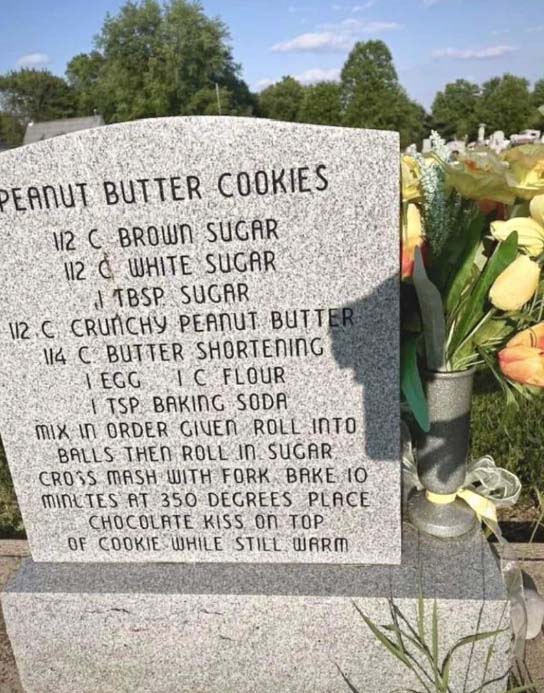
I have been craving peanut butter lately so I thought it would be a perfect time to try another gravestone recipe. This recipe went viral in June of 2023 after Twitter (now X) user SoloFlow786 replied to a Stephen King tweet with a photo of a peanut butter cookie gravestone recipe. The photo quickly went viral, amassing 500k views and over 5,000 likes.1
Unfortunately, I wasn’t able to learn much about this recipe, or whose gravestone it is written on. According to Rosie Grant, of Ghostly Archive it might be inscribed on a gravestone somewhere in Raymond, Maine. I did find that after this tweet went viral, many folks tried their hand at making this recipe, with great success.
Interestingly, some users on Reddit think this recipe is a variation of an old Betty Crocker recipe from the 1950s. From what I could find, the recipes are a bit similar. The gravestone version does omit a few things and has the added touch of the chocolate kiss.
Gravestone engraved with peanut butter cookie recipe. Photo credit: Twitter/X user @SoloFlow786
Here is the recipe, as written on the gravestone:
Peanut Butter Cookies
1/2 C Brown Sugar
1/2 C White Sugar
1 Tbsp Sugar
1/2 C Crunchy Peanut Butter
1/4 C Butter Shortening
1 Egg
1 C Flour
1 Tsp Baking Soda
Mix in order given. Roll into balls, then roll in sugar. Cross mash with fork. Bake 10 minutes at 350 degrees. Place chocolate kiss on top of cookie while still warm.
This is a pretty straightforward recipe with few ingredients. So it didn’t take long to whip up a batch. The longest part of the process I found, was rolling the cookie dough into even-sized balls.
The extra tsp of sugar that the recipe calls for, is for rolling the cookie dough into. For my batch, since it was St. Patrick’s Day on March 17th, I decided I would try adding a touch of green to be festive. I managed to find some green sanding sugar, but unfortunately, it was more of a pastel green. More for Easter than St. Paddy’s, so after baking the green colour had pretty much disappeared.
I spaced the cookies out evenly on two baking sheets. My batch made 19 cookies. I found my dough was a bit crumbly, so after mashing it with a fork, they didn’t keep a round shape and some crumbled a little bit. They didn’t spread out too much and kept their crumbly shape. They still taste delicious though.
I found making this recipe was a little different for me. I often find myself talking aloud to the person whose gravestone the recipe comes from, but this time I don’t know who this recipe belongs to. I find talking out loud while I bake or cook helps me connect to the person. I hope one day I can find out where this gravestone recipe comes from. It would be lovely to be able to put a name to the gravestone.
Until then, I will highly recommend this delicious peanut butter recipe to anyone craving a sweet peanut butter treat.
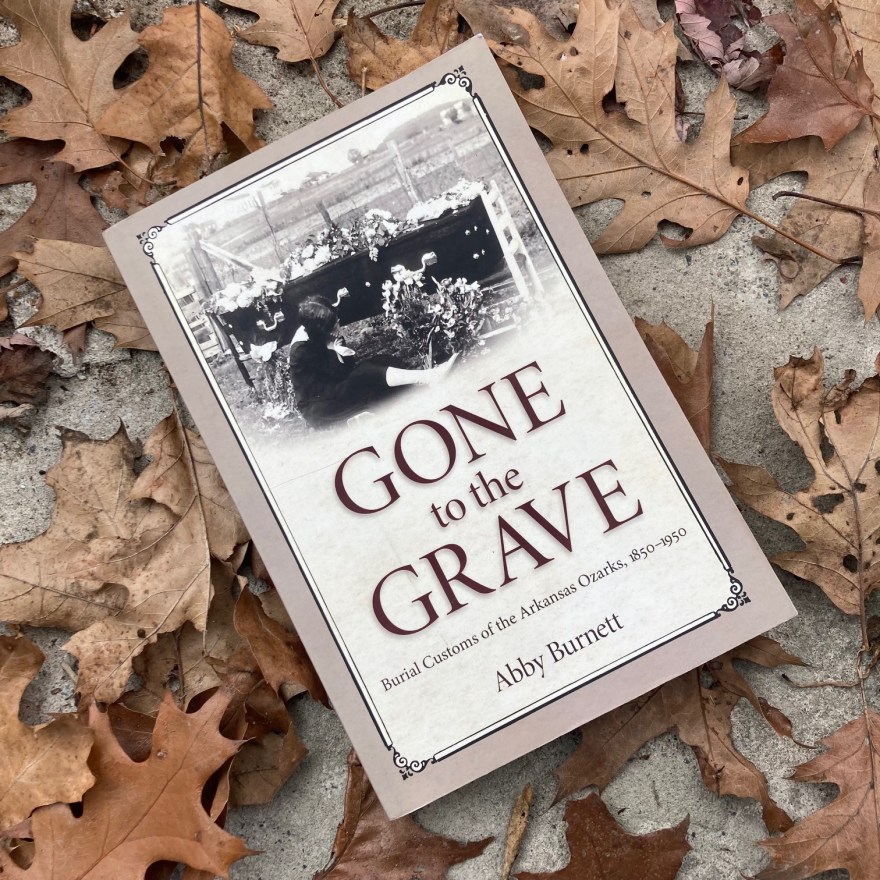
Being a Canadian, I am not 100% familiar with American history and customs. Luckily, there are MANY books written about it, and I do love to read. This month’s cemetery book review is Gone to the Grave: Burial Customs of the Arkansas Ozarks, 1850—1950 by Abby Burnett. I first learned about this book through the AGS Book Club, as this book was the pick for July 2023.
Published in 2014 by University Press of Mississippi, Gone to the Grave is written by Abby Burnett, a former freelance newspaper reporter and columnist for The Springdale News. At one time, her writing was food-focused, about understanding food and learning how to cook. Over time, her focus has shifted to death and burial practices.1In an article for the Arkansas Democrat-Gazette Burnett said,
“I’ve always loved cemeteries, and started seriously exploring ones in the Arkansas Ozarks about 25 years ago.”
Gone to the Grave is a collected work, the culmination of years of lectures, short newspaper articles, historical society journals, Arkansas Encyclopedia entries, and Gravestone Studies publications.1 It’s a very well-researched look into not only the burial customs of the residents of the Arkansas Ozarks, but also an in-depth look into deathcare and undertaking practices, health, and community life between 1850—1950.
Here is part of the book synopsis, from Goodreads:
“Gone to the Grave, a meticulous autopsy of this now vanished way of life and death, documents mourning and practical rituals through interviews, diaries and reminiscences, obituaries, and a wide variety of other sources. Abby Burnett covers attempts to stave off death; passings that, for various reasons, could not be mourned according to tradition; factors contributing to high maternal and infant mortality; and how loss was expressed through obituaries and epitaphs. A concluding chapter examines early undertaking practices and the many angles funeral industry professionals worked to convince the public of the need for their services.”
Gone to the Grave: Burial Customs of the Arkansas Ozarks, 1850-1950 by Abby Burnett
This book is fairly dense, but not the heaviest read I have come across recently. I am not going to lie, it did take me some time to work my way through it. It’s filled with black and white photos, including some post-mortem photographs. A big part of the author’s research includes diaries and interviews, with snippets printed verbatim to reveal what it was like to be a part of the funerals and burials at the time. I found these first-hand accounts fascinating. Death is a part of life, and reading about how a community would come together to sit up with the sick and dying, and everything that comes after a passing is eye-opening. Today, death is such a taboo that it’s not talked about, and we forget that it’s something that everyone goes through.
Learning more about these practices emphasizes how much things have changed. My uncle passed away in his home a few years ago. He had cancer and was spending his last days at home with his family. Two of my aunts went over to visit him, unknowingly on the day that he passed away. They knocked on his door, and his wife told them that he had just passed. They stayed to console his wife and visit with him one last time. Both of my aunts found the whole experience very surreal, as they had only ever visited deceased loved ones in a funeral home. But, that’s how wakes and funerals were done in the past, set up in the parlor of the deceased’s own home.
The practices discussed in the book are associated very specifically with the Arkansas Ozarks, it would be interesting to compare how different the practices are from other parts of the world. I often wondered as I read, if the customs described would have been much different than what customs were like here in Ontario around the same time.
Overall, I enjoyed this book. It covers a lot of information, but I found it was well-connected and flowed together well. This book is a deep dive, and as such might be too heavy for a casual reader. I read some reviews where people compared it to a textbook, which understandably might not be for everyone. I wouldn’t go that far, but it does get close to that territory. So, if you are looking for that kind of in-depth, high-level information, this may be the perfect book for you.
Have you read Gone to the Grave? What did you think? I would love to read your thoughts in the comments.
Thanks for reading!
I am always on the hunt for cemetery-related book recommendations. Please feel free to share yours in the comments. If you are an author and have a cemetery-related book you would like me to review, please reach out at hello@chantallarochelle.ca. I would love to hear from you.
A cemetery is filled with many interesting stories, stories of the souls that are laid to rest within its gates. But often the cemetery itself has an interesting story to tell.
Today on the blog I want to introduce a new series called Cemetery Stories. For these blog posts, I plan to focus on the story of individual cemeteries. I have visited a lot of cemeteries over the years, and many of them have interesting stories and historical significance. So for this series, I want to look a little deeper into history, geography, notable graves, and all the different elements that make them unique.
For today’s cemetery story, I thought I would look at Greenwood Cemetery in Owen Sound.
Greenwood Cemetery was created in 1858 when land surveyor Charles Rankin submitted a plan to the town council for a new public cemetery. At the time the plan was for 5 acres of land, divided into 27 blocks, including space for vaults.1Today the cemetery is quite large, sitting on approximately 40 acres of land.2Greenwood is also sometimes called “The People’s Cemetery” because, in those early days, the land was purchased using the people’s money.1The cemetery contains 26,700+ burials.1
The oldest home in Owen Sound can be found in Greenwood Cemetery. The house is dated from the 1840s1and is used as the cemetery office.2There is also a red brick burial chapel on the cemetery grounds. Built-in 1905, it served as both a chapel and a receiving vault. There is a trap door built into the floor that a coffin could be lowered through, into the storage racks below, to rest until the Spring when the remains could be interred. The chapel stopped being used for burials in the 1930s when the mausoleum opened. The chapel was converted and used as an office space for a time, until the early 90s. Today the building looks to be mostly empty.3
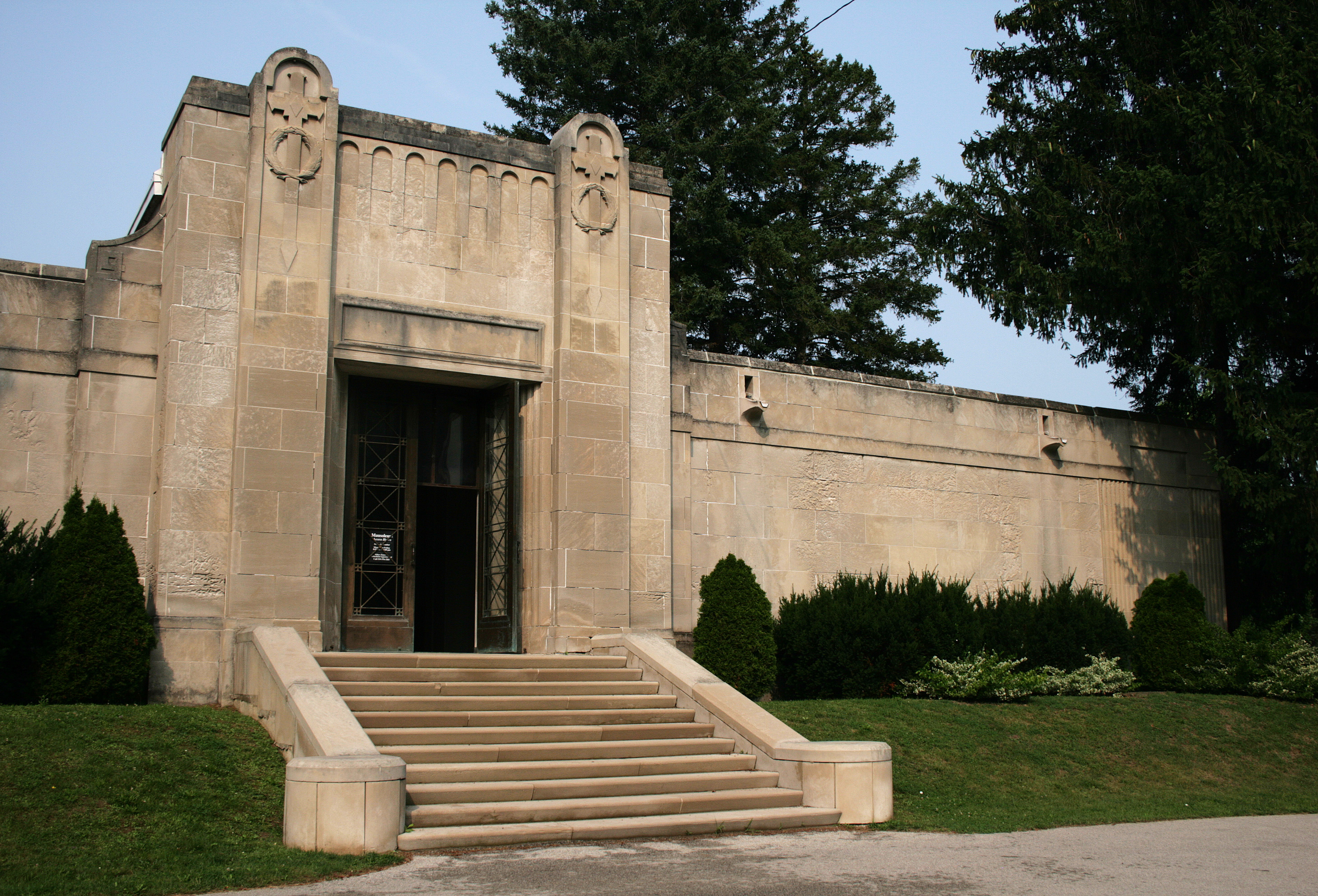
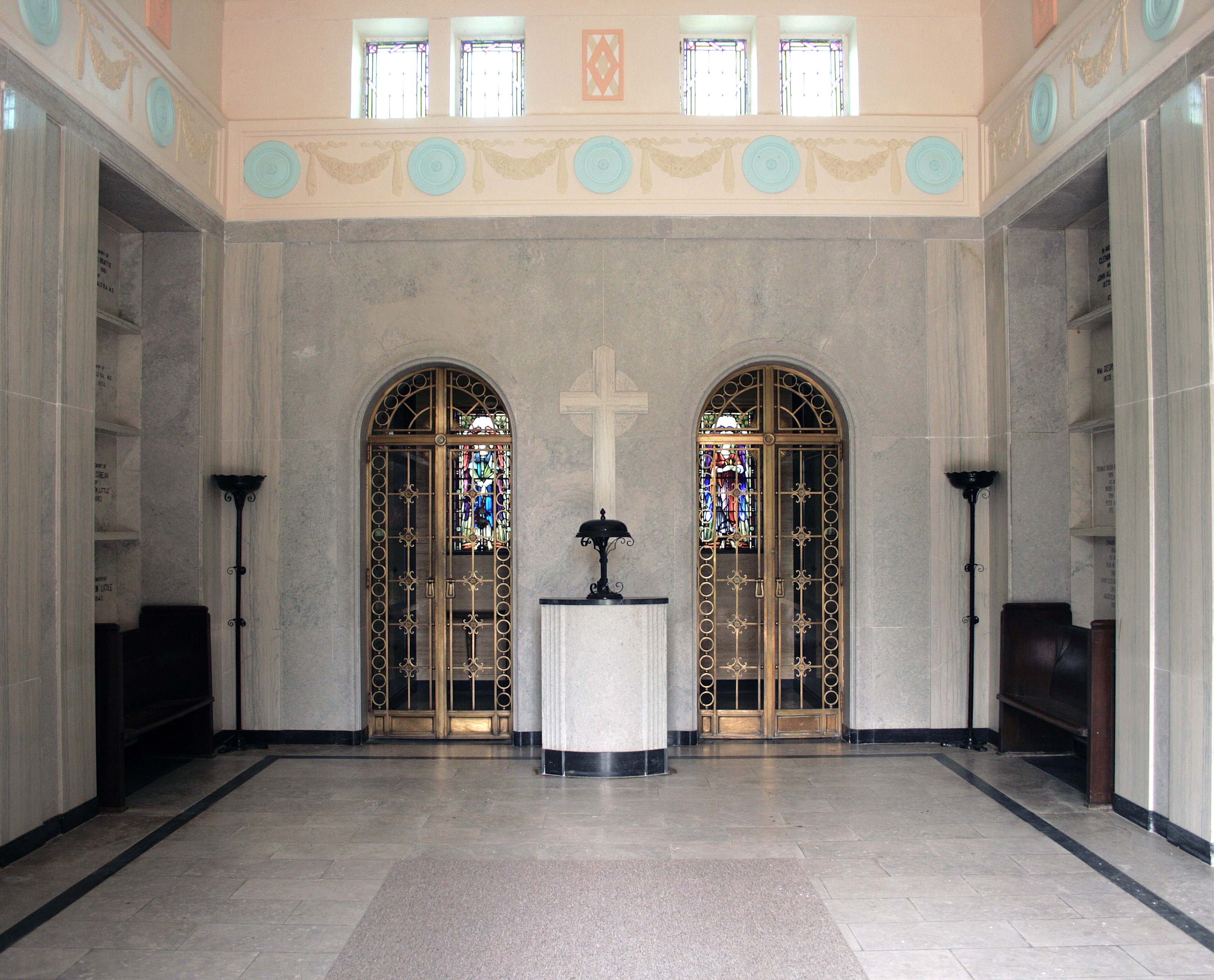
Greenwood is also home to a beautiful mausoleum. Construction of the large mausoleum began in 1927. The Art Deco-inspired exterior is covered in Indiana limestone, while the interior is finished with Italian marble. It also features some lovely stained glass windows and has a large central chapel that is used year-round.1
The cemetery is dotted with a variety of gravestone styles, and there are three memorial garden sections. It also has a section for members of the fraternal organization, The Independent Order of Odd Fellows (IOOF), that features a large stone cairn with IOOF symbolism.
Greenwood also has a Potter’s Field and memorial. The memorial honors the more than 1,000 women, children, and men who were buried in unmarked graves between 1858 and 1989. A potter’s field, also known as poor grounds, stranger’s plot, or indigent plot, is a section of a cemetery where those who are impoverished are buried.4 1,242 people are thought to be buried in Greenwood’s potter’s field4, all unmarked aside from the memorial and one lonely gravestone that sits close to the tree line at the back of the indigent plot. According to an article in the Northern Terminus: The African Canadian History Journal, many of the unknown graves are Black pioneers. Only a small few have been identified.
Among the unidentified graves lies an infant, who in 1889 was found in Victoria Park, wrapped in white cloth. The transcription in the cemetery records, simply reads “Unknown, child found dead”.4
Greenwood Cemetery is the final resting place of a few notable memorials. William Avery “Billy” Bishop, Canada’s World War I Flying Ace rests here. There are also two other Victoria Cross recipients buried here; LTC David Vivian Currie (World War II) and Thomas Holmes (World War I).
Speedskater and world-record holder Lela Brooks is also laid to rest here, as well as professional hockey player, Harry “Apple Cheeks” Lumley. Margaret and John Thomson, parents of famous Canadian painter Tom Thomson, are also buried here.
There are many more notable pioneers and local celebrities buried here, like Charles Rankin, who submitted the cemetery plan and helped bring the cemetery into reality. The best way to pay your respects is with a self-guided walking tour. The cemetery offers three tours that take you to different areas within the large cemetery and highlights all the notable members of the community who are laid to rest at Greenwood. You can pick up the printed tour guides at the cemetery office. The guides include a map, directions, and a little history for each stop on the tour.
We visited the cemetery twice on our trip to Owen Sound. Because it’s so large we felt we had to. Our first visit was late in the day, so the mausoleum had been locked up for the night. We were losing light quickly, and every turn on the winding paths revealed new sections I wanted to explore further. We visited again the next morning and were able to explore the Mausoleum and walk the sections at our leisure.
Greenwood was full of life during both our visits. In the evening we saw folks paying respects at graves, but also saw families taking advantage of the safe, paved pathways. Two young children were learning to ride their bikes between the rows.
The next day, we saw many walkers enjoying the scenery, both young and old. We also saw folks walking their dogs and running into others they knew who were doing the same. It was lovely to see a green space in use but also used respectfully.
Last October, My mother and I took a little road trip to Mattawa. We planned on doing some hiking, visiting cemeteries, and enjoying the fall colors. We always like to visit local museums when we visit new places, and the Mattawa Museum did not disappoint. We had a great time touring the grounds and learned a lot about the history of the city, including that it has the distinction of having Canada’s first elected Black mayor.
Mattawa, located in northeastern Ontario is a little over two hours drive from me. Mattawa is located where the Mattawa and Ottawa Rivers merge, in Nipissing District. The name Mattawa means “Meeting of the Waters” in Ojibwa.1 It is the oldest settlement in the Nipissing District, and today showcases that historic past with beautiful wooden sculptures. Many wooden sculptures of historic figures, important to Mattawa’s history, can be found scattered throughout the town.1
It was an overcast day when we visited Mattawa, but it didn’t deter us from exploring. We admired the two wooden sculptures on the museum grounds and looked for the three white crosses, that stand high on Québec Hill across the Mattawa river. The three crosses were erected in 1686 by missionary priests to mark the place where the two rivers meet.2
Inside the museum, we found a treasure trove of artifacts; paintings by a well-known Mattawa painter, many indigenous artifacts, and a large exhibit about Canada’s first Black Mayor, Dr. S. F. Monestime. The exhibit features large panels with many photos and a history of what brought Monestime to Mattawa, and how he changed the community for the better. The exhibit also includes some of his personal items, like his signature fedora and a medical skull used in his practice. My Mother and I were both interested in this exhibit the most, and were surprised that we had never heard of him before. We made it a point to pay our respects at the cemetery.
Saint Firmin Monestime was born in Cape Haitian, Haiti in December of 1909. Monestime grew up during the United States occupation of Haiti, which took place from 1916 to 1935. He graduated with a medical degree from the University of Haiti Medical School, and after graduation was named Medical Officer for the International Route between Haiti and the Dominican Republic.3 He experienced a lot during his medical career in Haiti, living through mass casualty events. He received the Knight of the National Order of Honor and Merit, awarded to those of distinguished excellence. He wrote four books around this time, about rural medicine.3
After becoming frustrated with the politics and what he called “deplorable conditions”, Monestime quietly left Haiti for Quebec. He was part of the first small group of Haitian professionals to come to Quebec in the 1940s. Unfortunately, this meant starting over as he had to train and intern for several years to get his full Canadian medical accreditation.3
Monestime found his way to Mattawa almost by chance. He and another colleague were traveling through Mattawa on their way to Timmins to see about setting up a medical practice. They stopped in for lunch at Chez Francois in Mattawa, and it just so happened that the restaurant owner recognized Dr. Monestime, as he had been operated on by the Doctor in Ottawa. The timing was right. The long-standing doctor in Mattawa had recently passed away and the town needed a new doctor. The restaurant also had a vacant room to rent and office space. Monestime agreed to stay, temporarily, but ended up staying indefinitely.3
Monestime found the community to be very welcoming and their generosity encouraged him to stay. His medical practice was booming with a busy office as well as on-call work with the hospital. That’s not to say that he didn’t experience racism in his time there.3 In 1972, he was asked by a reporter if race ever came into play, Monestime replied:
“My practice was booming in no time and from then until now I’ve had no serious problems. You might find a very few—and not the most intelligent—who may say they won’t come to see me because of my race. But very few.”3
Three months after Dr. Martin Luther King gave his “I Have a Dream” speech in 1963, Dr. St. F. Monestime also made history by being elected the first Black mayor in Canada. An active political figure in good standing within the community, regarded for his sense of justice and equality, he was elected mayor nine times.3 Today, the legacy of Dr. Monestime continues and is still felt vibrantly within the community as his family continues to do good works. The most notable of these works is the Algonquin Nursing Home, a project championed by Monestime in his last years.
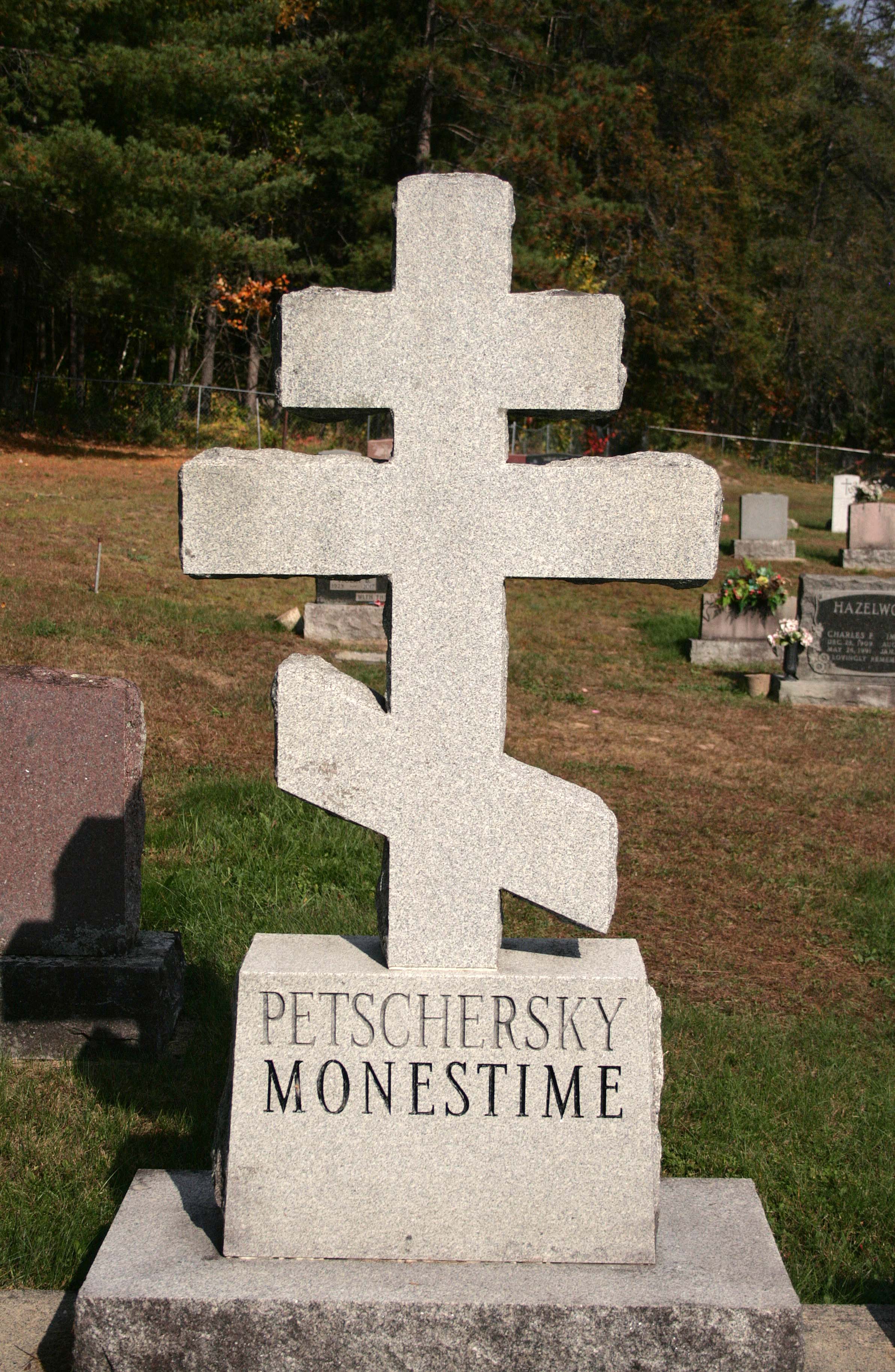
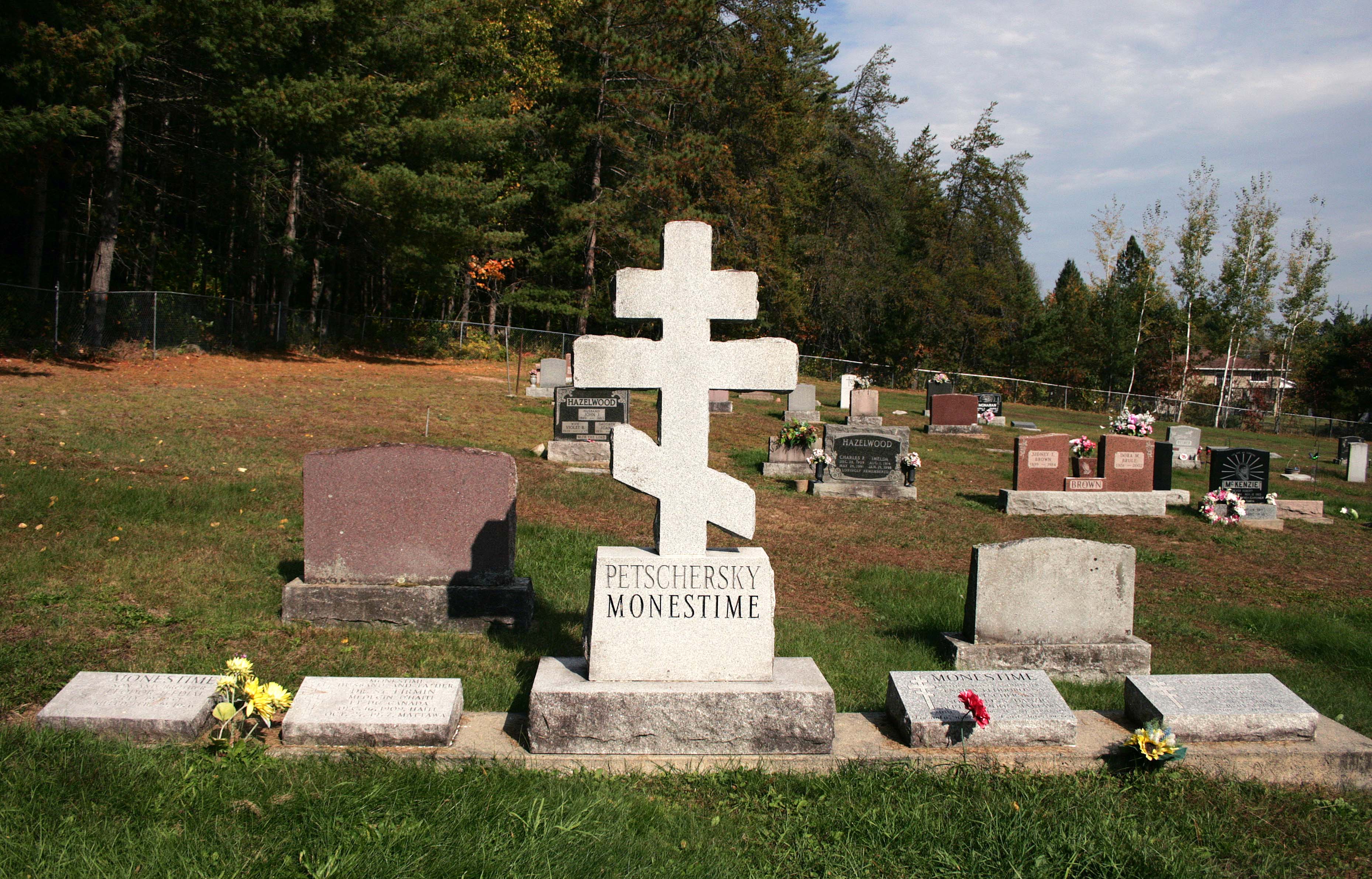
On October 27, 1977, Dr. Monestime passed away at the age of 67, most likely from pancreatic cancer, which he battled multiple times throughout his life. His Russian Orthodox funeral service took place at St. Anne’s Roman Catholic Church in Mattawa.3 He is buried in the Petschersky Monestime family plot at Pine Hill Union cemetery.
He is laid to rest beside his son Fedeor, who sadly was accidentally shot and killed a year earlier on February 29, during an altercation outside of Chez Francois.3Monestimes’ wife, Zena, and her mother are also laid to rest in the family plot, which features a large Eastern Cross. The Eastern Cross or Orthodox Cross has a tilted bar at the base of the cross; a tilted footrest. This is meant to illustrate that the thief crucified on the left side of Christ, thought to be the wise thief, went up to heaven, while the thief crucified on the right side was thought to be unrepentant, and went down to hell.4
My visit to Mattawa was an eye-opening trip. After exploring the exhibit at the museum, we stopped at the gift shop and spoke with the museum curator after buying a few things. We had a great conversation about the museum contents and how sometimes history is hidden in plain sight.
If you’re interested in learning more about Dr. Monestime, I highly recommend a visit to the Mattawa Museum and also picking up a copy of Where Rivers Meet by Doug Mackey. It’s a well-researched look at the life of Dr. Monestime and also explores life in Haiti as well as Black history in Canada.
This past Wednesday was Valentine’s Day, and like many others this past week, I wanted to make a little sweet treat for my sweetheart. So earlier in the week I tried out another gravestone recipe. My fiancé is quite supportive of my gravestone hobby, so I knew he wouldn’t mind where I got the recipe from.
For this month’s gravestone recipe, I made chocolate mint brownies. This tombstone recipe can be found on the gravestone of John Rodda, in Maple Grove Cemetery in Wichita, Kansas.
John Harold Rodda passed away on January 18, 2019, following a brief but courageous battle with cancer. He was a compassionate Funeral Director and Embalmer, having worked at Cochran Mortuary for 54 years. He enjoyed music, cooking, and collecting recipes and cookbooks.1 He was famous for his chocolate mint brownie family recipe, so famous that it was inscribed on a black marble plaque that can be found on his gravestone.2
Chocolate Mint Browne recipe on the grave of John Harold Rodda. Photo by Find a Grave member Lynda.
I put in a greased and floured small cookie sheet (can use a 9×13 baking dish).
Bake 20 minutes 350. Bake a little less with the thinner brownie.
Cool.
Frost with > for a 9×13 top: 1/4 cup margarine, 2 tbsp cream, 2 cups powdered sugar, 2 tsp peppermint flavoring (I go 1.5 of this to frost the cookie sheet top).
Place the frosted brownie in the freezer for 10 to 15 minutes.
Melt 2 squares of unsweetened chocolate, 2 tbsp Margarine.
Cool.
Drizzle over brownie and sprinkle with crushed peppermint.
This is one of the most complete gravestone recipes I have made. The directions are very straightforward, and they even include variations for bake time and measurements depending on what you bake the brownies in.
Unfortunately, I don’t have a 9×13 pan so I opted to bake my brownies in a 9×9 pan. In hindsight, I should have tried baking them on the cookie sheet. Because the 9×9 was deeper than both the cookie sheet and the 9×13, I had to bake my brownies for about an extra 15 minutes. After the initial 20 minutes in the oven, I could tell right away that the center was not cooked through so I put it back in for another five minutes, which then turned into 10 more. I knew it was done when the toothpick I pushed into the center of the dish came out clean.
I followed the cooling instructions and frosted the brownies. I thought about adding a bit of food coloring to the frosting to make it red for Valentine’s, but I also wanted to see how it would look without the added color so I decided against it. You could add whatever color you like to the frosting easily by adding a bit of gel food coloring.
Because I used a 9×9 pan, I think the two squares of baker’s chocolate for the drizzle were a bit too much since I had less surface area to cover. I should have reduced it to half. I then took a candy cane and put it into a zip-lock bag to crush up for the topping. I wrapped the bagged candy cane in a dish towel and used a pint glass to crush the candy, as I didn’t have a rolling pin. It worked perfectly.
Chocolate Mint Brownies. Recipe from the gravestone of John Harold Rodda.
These are super minty, and sweet, but I would have liked them to be a bit more chocolaty. I think maybe my peppermint extract was a bit off because my batch has a bit of an aftertaste, or perhaps I just used too much? Either way, I still think they turned out decent and would try this recipe again with some slight modifications. Learning and experimenting are all part of the fun, after all.
Have you tried this recipe before? Do you have any helpful tips for me? I would love to read them in the comments!
For today’s blog post, I wanted to share a collection of cemetery statues. I find this type of funerary art beautiful, and always enjoy finding detailed sculptures. I do often say that cemeteries are open-air art galleries, and statues are just one example of artistic works that can be found when you visit a cemetery.
Angel statues are sometimes a very common sight in a cemetery, especially in Catholic cemeteries and graveyards. But, you might also find representations of saints, virtues, and other biblical figures.
To decipher which saints or figures are being depicted, it’s important to look at the details. Little details like something at the statue’s feet, or what they are holding or doing with their hands can be a big indication of who the statue is representing.
ANGELS
The most common figures you might find in a cemetery are angels. The winged statues can symbolize many things, most commonly that the deceased is now in heaven. They can also represent a connection between earth and heaven, comfort and mourning.
An angel statue holding a book, for instance, suggests that this statue is a representation of a celestial scribe, a recording angel. Recording angels are thought to be tasked with recording historic events, actions, and prayers of everyone on earth.
You might also come across an angel holding flowers. There are many variations of angels with flowers, ranging from full bouquets to single-stemmed flowers. The flowers are thought to represent how fleeting life is.
Some angel statues are depicted holding a wreath. This symbolizes memory and eternity, an indication that the deceased will not be forgotten. This example below also shows the angel holding their chin as if they are deep in thought, emphasizing the idea of remembrance.
The Seven Virtues are traits that some of those of the Christian faith aspire to. According to Tui Snider’s book Understanding Cemetery Symbols, this list of traits was created by Greek philosophers and then adopted by Christian scholars. Sometimes the virtues are labeled on the statue’s pedestal, but most often you must look closely at their design for clues. In this example, we can tell this is Hope, by the large anchor she is dragging behind her.
Based on the details, we can tell that this statue is a representation of Saint Joseph. The carpenter’s square represents his trade, as well as the concept of truth. The lilies represent purity. Saint Joseph is the patron saint of many things, including families, fathers, craftsmen, engineers, and common workers.
Statues of Jesus can also be a common find in Catholic cemeteries. He is often depicted as a young child or an adult. When depicted as a young child he can sometimes be found in the arms of Saint Joseph. He is also sometimes depicted as a young boy, with both Saint Joseph and the Virgin Mary.
Jesus is also commonly depicted as an adult, his hands pointing to a flaming heart with thorns, that have rays emanating from it in his chest. This is often called the scared heart, and also sometimes has the addition of being topped with a Latin cross. There is a lot of symbolism here to unpack. The flame represents Jesus’ love for God and humanity, while the thorns represent his passion. The rays emanating from it represent the glory of God. Jesus’s hands point towards his heart, encouraging the viewer to look at it and reflect.
One of the more somber depictions of Jesus you might come across is a scene after the crucifixion. A thin and wounded Jesus is cradled in his mother Mary’s arms. He might be still wearing the crown of thorns, or it can sometimes be found lying by his side.
Statuary always seem to stand out to me, when I visit cemeteries. They are beautiful expressions of art and emotion, often made even more moving with the passage of time. Do you have a favorite cemetery statue? I would love to hear about some of your cemetery statue finds in the comments.
Thanks for reading!
References:
Understanding Cemetery Symbols: A Field Guide for Historic Graveyards by Tui Snider
Stories in Stone: The Complete Guide to Cemetery Symbolism by Douglas Keister
We recently had our first big winter snowfall, after enjoying a pretty mild start to the season. The snow and cold weather have me craving warm and cozy comfort food, so I thought this might be a good time to try out another gravestone recipe—Chicken Soup!
This gravestone recipe comes from the tombstone of Valerie C. Volpe, of West Seneca, New York. I’m not sure exactly where Volpe is laid to rest, but her pink granite gravestone topped with an open book design features her chicken soup recipe in her own handwriting. I thought that was a beautiful touch.
The recipe, inscribed on the open book is laid out like a recipe card and even has her signature. In life, Volpe was co-owner of Valerie’s Family Restaurant where she not only fed her family but her community as well.1
Gravestone of Valerie C. Volpe, with Chicken Soup recipe. Photographer unknown. If this is your photo or you know who the photographer is, please contact me for proper photo credit.
The epitaph reads: “Beloved Daughter, Mother / Wife, Grandmother, / Sister, Aunt & Friend / Valerie C. Volpe / She was a lady raised by a lady / Apr. 18, 1947 / Sep. 10, 2016”
Unfortunately, the only photo I could find of the gravestone is not the highest resolution, so the handwriting is a bit hard to make out. I did my best to transcribe the recipe, as inscribed on the gravestone. Here is the recipe:
Recipe for Chicken Soup
From the kitchen of Mommy
1 Perdue oven stuffer
Cut in 10 pieces
1 small Parsnip
1 small Turnip
2 stalks Celery
4 Carrots
Parsley —
Dill —
This makes 1 large pot or 2 — pots / Clean chicken. Cover with / cold water — / Celery, Carrots, parsnip – turnip / Bring to a boil — / — / — / — / Cook about 2 1/2 hours. / Valeria C. Volpe
Since I had such a hard time reading the recipe from the photo, I went by this recipe description from Billion Graves:
“Cut an “oven stuffer” into 10 pieces. Place in a pot. Rinse and cover with cold water. Add salt. Cut up 1 small parsnip, 4 carrots, 1 turnip, and 2 stalks of celery. Add to the pot and bring to a boil. Sprinkle with dill. Cook for 2 1/2 hours and then remove the bones. Top with chopped parsley when ready to serve.”
This is one of the more detailed recipes I have made so far, so once I had the above instructions I didn’t have too much to decipher to make it. The recipe does call for a Perdue oven stuffer, which I did have to look up. A Perdue “oven stuffer” is an American brand, of fresh whole chicken. These chickens, also called roasters, are older chickens and usually weigh between 5 and 7 pounds. I made a shopping trip specifically for the ingredients of this recipe and although we don’t have Perdue brand in Canada, I was able to find a fresh chicken that would work for my needs.
I have trimmed a roasted chicken before, but trimming a fresh chicken was new for me. I didn’t end up using 10 pieces of the chicken, as the thighs, wings, drumsticks, and chicken breasts were more than enough. I was also worried about smaller bones being lost in the soup and causing a choking hazard, so I was happy to have just some larger bones in the pot.
I should note that this was my first time making soup from scratch! Aside from getting the chicken ready, this soup is pretty simple with hearty ingredients.
Once the soup was at a boil I lowered the heat to medium and let it simmer for 2 1/2 hours, checking on it now and then to stir. I will admit I did need to add water periodically as it boiled off leaving more of a stew at times. I made sure to re-season the pot every time I added fresh water, but in the end, I still needed to season it when it was ready to serve. I’m not sure if that was supposed to happen, or if I didn’t really need to let the pot simmer for that long, but in the end, the soup still turned out. I was of course mindful of making sure the chicken was cooked through.
Since it took so long to prepare, I didn’t have soup for supper that night, but I did make sure to do a taste test after removing the bones. It wasn’t as seasoned as I would have liked, but the cozy warm chicken soup taste is unmistakeable. I ended up enjoying a bowl for lunch the next day.
This one was a little tricky for me, and I would tweak the cooking time if I were to make it again. This recipe took me out of my cooking comfort zone. I think I would prefer to stick to sweet gravestone treats, but at least I tried.
Have you made this recipe before? Do you make soup from scratch often? I would appreciate any tips in the comments!
If you’re a regular reader of my blog, you very well might be!
You may have noticed that I use this term a lot, and often refer to myself and others in the cemetery community as taphophiles. For today’s blog post, the first of the new year, I wanted to take a closer look at the word, and what it means to be a taphophile.
The origin of the word taphophile comes from the Ancient Greek word taphos and phile. Taphos meaning funeral rites, burial, wake, or grave, and phile meaning dear or beloved.1Curiously, if you look up the word in the Oxford English dictionary or Merriam-Webster online, the word does not come up. Although the latter did bring up the word typophile, similar but not quite right.
Taphophile is defined as a person who is interested in cemeteries, funerals, and gravestones.2 To me that is a very flat and vague definition, as there is so much it entails. I was curious as to how others in the cemetery community would define the term, so I reached out to a few friends. The responses I received were very mindful and thought-provoking.
Tui Snider, speaker and author of Understanding Cemetery Symbols shared this thoughtful reflection:
“To me, being a taphophile means understanding that cemeteries are for the living. Not only do burial grounds provide a place for grieving, cultural expression, and contemplation, but they offer a direct connection to nature, something that is often missing from people’s lives.
Visiting graveyards throughout the year exposes us to cycles of life and death that are the foundation of our world. Many cemeteries are wildlife corridors that nurture vital pollinators as well as migrating birds and other animals. By visiting cemeteries, taphophiles gain a unique appreciation for all that burial grounds offer, not just to humans but to the plants and animals they sustain as well.”
Tasha Westby Tietz, also known as Graveyard Girl on Facebook shared this insight:
“Being a taphophile means to me, an unusual intense interest in cemeteries and all that is related. A way to remember and respect those that have gone on before. Endless adventures.”
Loren Rhoads, cemetery traveler and author of 199 Cemeteries To See Before You Die shared this interesting perspective:
“I don’t really think of myself as a taphophile, because the word seems academic and cold to me.
I’ve always thought of myself as a cemetery aficionado, because my love of burial places is much more about appreciating their beauty and ambience as a whole than it is about studying the stones individually.
To be honest, I love that everyone defines taphophile for themselves.”
I couldn’t agree more! Each of these responses showcases the many reasons why visiting cemeteries is so important. I really appreciate Loren, Tasha, and Tui taking the time, and want to thank them for sharing their thoughts with us.
It makes sense that everyone who would call themselves a taphophile has their own definition of the word since we all have our own unique interests and reasons for visiting cemeteries.
For me, the term taphophile names that connection I feel to those who have come before me and are now laid to rest. It means they will not be forgotten, and that there is still much that they can teach us. It means that I love the experience of wandering through beautiful cemeteries and reading the names out loud. I love to admire the uniqueness and craftsmanship of gravestones, while also learning more about art, architecture, and symbolism. I am curious about the person below the gravestone. I also love the adventure of finding and exploring cemeteries.
I always say that cemeteries are for the living, that they are open-air art galleries and museums, and that they should be explored.
Do you call yourself a taphophile? What is your definition? I would love to keep the discussion going in the comments.
We’ve had a few snowfalls since November, and the temperature has been steadily dropping. I have never been a Winter person really, although I have tried many times to find a winter activity that might make me enjoy it more. Figure skating, ice fishing, snowshoeing—not for me!
I tried again today to see if maybe winter cemetery visits might be something I would enjoy. It doesn’t hurt to try right? I was quickly reminded why I don’t like graving in winter, as soon as I exited my vehicle.
It isn’t even that cold today, but still makes me question why I live somewhere where the air hurts my face. It’s -3°C in Sudbury today, but feels like -8°C with the wind chill. That’s 26.6°F which feels like 17.6°F for my American friends.
Aside from being uncomfortable, the cold isn’t good for my equipment either. The cold can drain the battery life of my DSLR, which would shorten my cemetery trip unexpectedly. I would rather not play that game of roulette.
Wandering cemeteries in the winter isn’t that safe either, for me or the stones. The snow isn’t that deep yet, but soon it will be a couple of feet deep, which can completely obscure some gravestones. I wouldn’t want to accidentally step on and damage a tombstone. They also become tripping hazards as well. I wouldn’t want to hurt myself tripping over a stone, while also damaging it in the process. Too risky, if you ask me.
I’m sure for some, visiting cemeteries in the winter, is a great past time. If you have the proper outerwear, can tolerate the cold, and come prepared with backup batteries an outing in a snow-covered cemetery sounds delightful.
For me, I see this time of year as a great opportunity to curl up with a good book and a hot beverage or research by the light of my iMac. Reading, scouring the internet, and sifting through my photo archive to work on future blog posts and cemetery trips seems like a much more comfortable use of my time.
When I visited Civic Cemetery today, I did notice a few beautiful and interesting scenes. Many of the graves were decorated with Christmas ornaments, wreaths, and lights. I also found a small Christmas tree, that looked like it had been recently put up, judging by the tracks in the snow. I also saw some rabbit and possibly dog tracks dotting the fresh snow as well.
Despite the cold weather, the cemetery was a fairly active place today, with a handful of visitors in the mausoleum, a burial taking place, and a couple of folks just out and about for a walk, dressed warmly in their mitts, toques and snow pants of course.
Cemeteries in the winter sure are pretty though. The starkness created by the grey weather, bare trees, and white snow does create a mood. That being said, cemeteries in Autumn are still my favorite.
So until the snow melts, I’ll stick to online research, book reading, and updating my online portfolio. I do have some upcoming Stone Stories to share with you as well!
It’s officially the holiday season! The long-awaited horror film Thanksgiving is in theatres and Black Friday is behind us. Guess that means it’s time to start thinking about Christmas shopping! I love finding unique and meaningful gifts for my loved ones. It’s so fun to watch someone open up a unique gift that you know they are going to love! The perfect gift doesn’t need to cost a fortune, and supporting a small business is always a bonus.
I had so much fun creating last year’s gift guide, that I knew I wanted to do it again. I even started a bit early this year, book-marking things I thought would be perfect for this list. So if you are looking for some inspiration for your cemetery-loving friends and family, or maybe your own Christmas wish list, look no further!
Here is my round-up of 13 unique cemetery-related items that I think every taphophile would love!
These are perfect to add to your cabinet of curiosities! These beautiful pieces are made to order by Weeping Widow, from a lightweight resin and are hand-painted to give them a weathered finish just like the real thing. Pictured is a 3D-printed reproduction of a real gravestone. This monument is for the Sanford family which can be found in Cleveland, Ohio. Be sure to check out the rest of their Etsy shop, it’s filled with other gravestone reproductions and beautiful curiosities.
Described as a morbid activity book for the blossoming taphophile, A Mortal’s Guide to Cemeteries by Amanda R. Woomer is part reference book, part activity book. It features 30 pages of history, 50 pages of symbolism, and over 200 pages of activities! This book would pair well with the Woomer’s other new book, A Child’s Guide to Cemeteries Activity Book. Both of these books are available on the author’s Etsy shop. A note for Canadian shoppers, her Etsy shop does not ship to Canada, but you can also find her books available on Amazon.
This coloring book, created for children ages 5 to 9, is full of pictures that the Friends of Mount Hope Cemetery hoped would appeal to young children. I would argue that they also appeal to adults since coloring is a great way to unplug and exercise focus and mindfulness. This coloring book, available on Amazon, is illustrated by Ann McCracken, and written by Marcia Birken. Color your way through a beautiful and historic cemetery, while learning about its landmarks and common cemetery symbols.
For the cemetery AND feline lover in your life. Over the past 20 years, Owen Philips has created thousands of photographs of cats in dozens of cemeteries, in numerous countries, on three continents. This photography book, available on Amazon, is a collection of some of the best of those photographs. By purchasing this book you will also be helping to support Philips’s future photography expeditions in search of the elusive cemetery cat.
They say you should surround yourself with what you love. This death’s head print is stained, ripped, wrinkled, and folded to feel old and authentic. Make sure to check out the rest of Archaic Archives Etsy shop for more memento mori and woodcut prints, but note that the frames are not included.
This collection would be a great gift for anyone looking to get started in gravestone preservation. Available through the Association for Gravestone Studies (AGS) online store, this bundle Includes A Graveyard Preservation Primer by Lynette Strangstad, the AGS Field Guide, and the AGS iconic “I brake for old graveyards” bumper sticker.
For the taphophile looking to get a little more organized! The Graveyard Journal for Grave Hunters: Cemetery Tourist Notebook and Log by G.C. Waites is available on Amazon. This softcover journal features numbered log pages as well as blank spaces for notes and sketches. Its small size is perfect for slipping into your travel bag, and you can record up to 60 cemetery visits within its pages.
I think every taphophile can relate to this sentiment. That’s why this beautiful t-shirt print would make an excellent addition to any taphophile wardrobe! Find this and other great prints over at Dana Glover Art on Etsy.
Perfect for the taphophile who is always dreaming of travel. This map of the Sleepy Hollow Cemetery, a historic site, is the final resting place of Washington Irving, the author of The Legend of Sleepy Hollow. Sleepy Hollow Gifts also has other unique souvenirs that would pair well with this map to help get those travel plans started.
This spooky-cute art print would be a great gift for any cemetery lover. Laurie A. Conley‘s art is full of lovey scenes depicting ghosts and grim reapers in a cemetery, so make sure to check out the rest of her Etsy shop.
Deaths heads, or skull effigies are my favorite graveyard symbol. I’m sure many other taphophiles agree. Along with being a beautiful ring, this deaths head ring by Arcana Obscura Designs on Etsy, is also a lovely memento mori, a reminder that life is fleeting and to live life for today.
T-shirts are a staple to any graving wardrobe. This awesome print features the definition of the word Taphophile. Just in case you ever need to explain your love of cemeteries to anyone—there’s a word for that! You can find this and other great prints over at Noir Oddities on Etsy.
I just love the design of this sticker from the Magic in our Bones Etsy shop. I think these would look great on a notebook, water bottle, or even a laptop. Love the design, but not into stickers? You can also get this and some of their other taphophile sticker designs on mugs and tote bags.
There you have it, the 2023 holiday gift guide for the taphophile in your life!
Thanks for reading!
Cemetery Photography by Chantal Larochelle is not affiliated with any of these brands and artists. I do not receive any proceeds from sales. Just sharing products I love!