One of my favorite cemetery symbols are hands. They can represent so many things from only how they are positioned. I also find them beautifully detailed, and they have a lot to say. Hands are a very common symbol in funerary art and can be found in almost any cemetery.
I have photographed many over the years, ranging from very simple to very detailed, and wanted to share some of them with you today.
A hand pointing upward often represents going up to heaven. You may also find a hand pointing down, which can look a little odd, but it does not mean what you may have first thought. A hand pointing down usually represents a sudden or unexpected death. Clasped hands or praying hands often represent devotion but can also be seen as a plea for eternal life.
Handshakes are a very common variation and also can have a few different meanings. When the handshake depicts limp fingers held by a firm handshake, this often represents the deceased being welcomed to heaven by loved ones or maybe even God. When one finger is extended, it is a masonic handshake, meaning the deceased was a member of the Freemasons. You may also find a double masonic handshake, where one finger is extended on each of the hands. This is meant to resemble the square & compass, the emblem of the Freemasons. You should also look closely at the wrists of the hands, this can also give more clues. If both hands look masculine, this could represent fraternal brotherhood. If one of the cuffs is more feminine and one more masculine, this is most likely a marital handshake, to indicate the deceased was married.
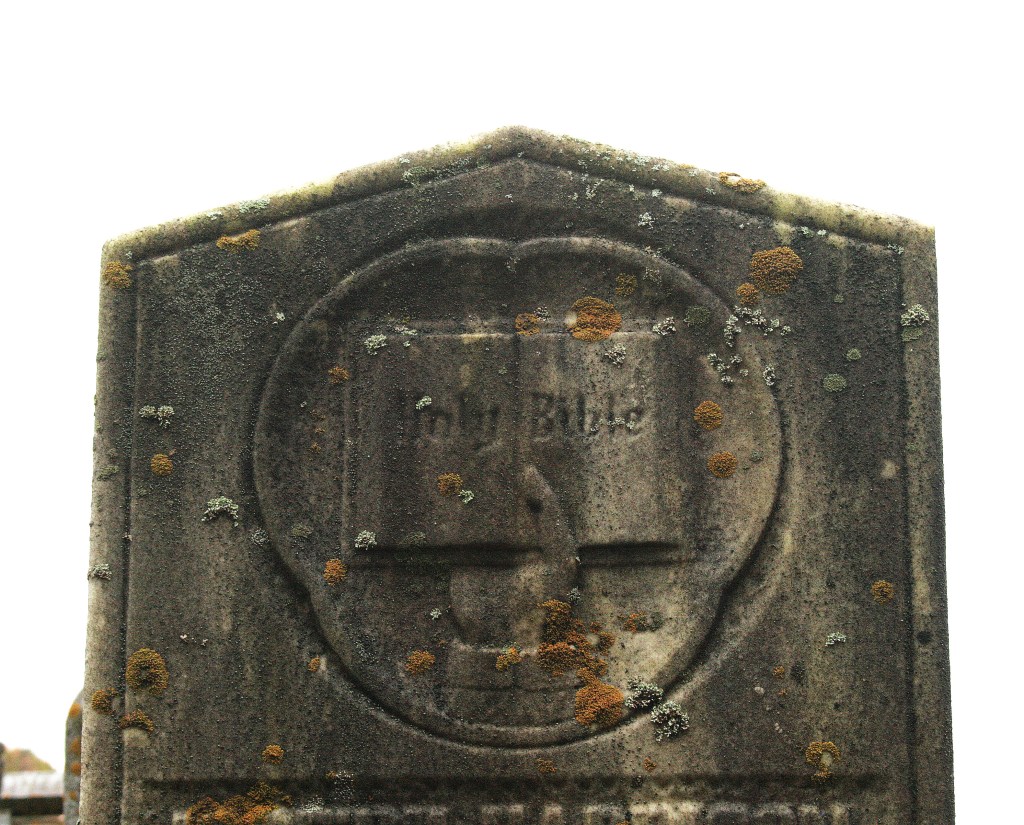
When you find a hand holding a book, that book is often meant to be the bible. Sometimes it is more obvious, as it may have “holy bible” inscribed on it.
I love exploring cemeteries and looking at the different symbols used on tombstones. If you spend a lot of time in cemeteries, especially in Northern Ontario, you will start to notice the repetition of certain symbols and motifs. One of the most common symbols I find, is the lamb.
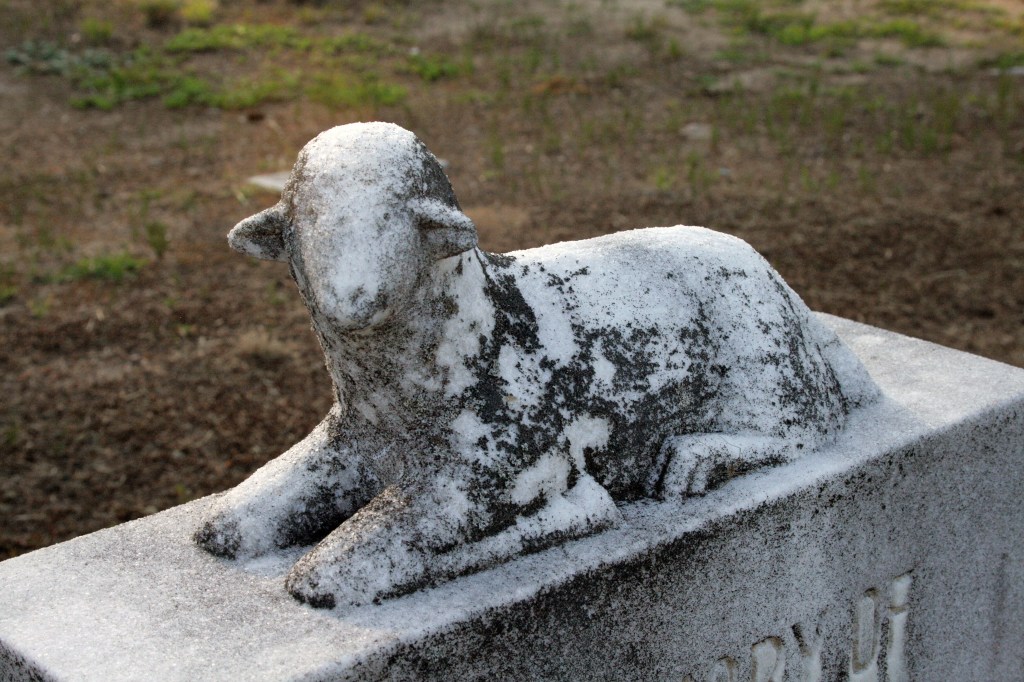
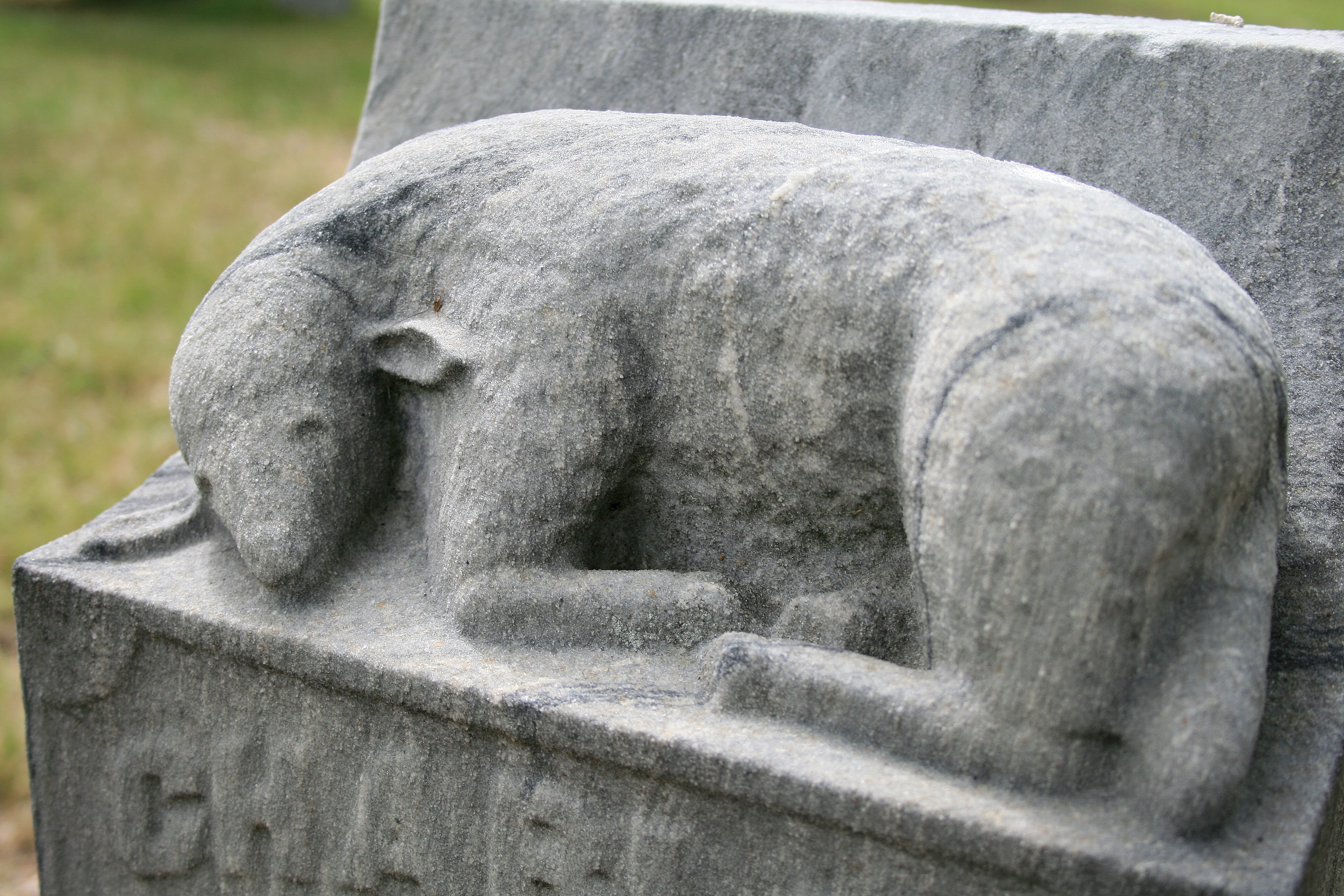
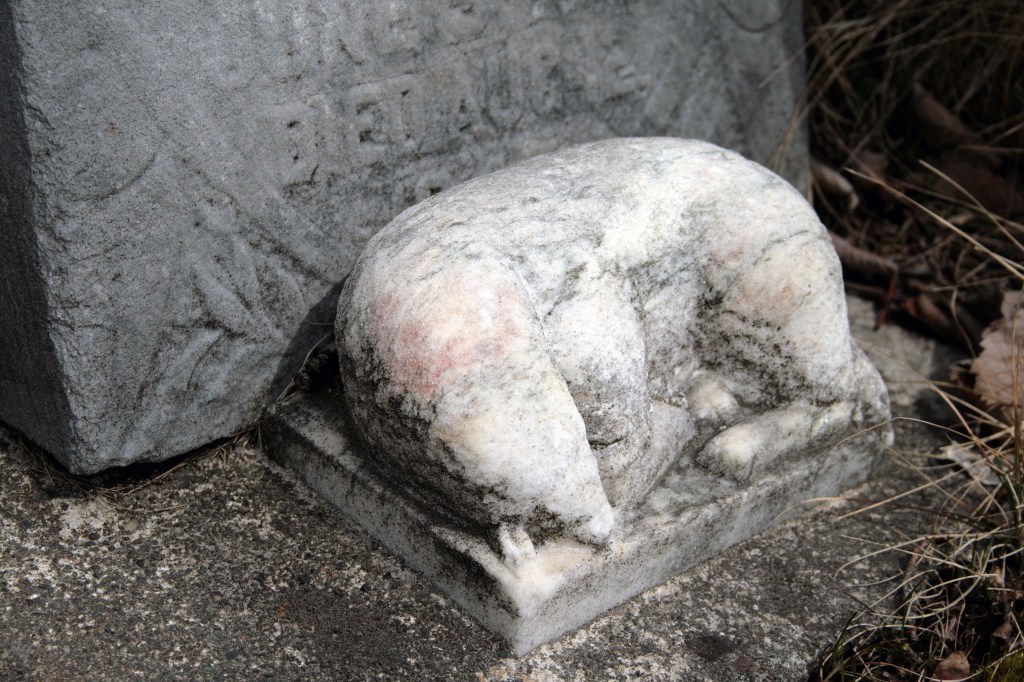
Lambs represent innocence and sacrifice, as they were often used in sacrificial ceremonies in ancient times1. Most often you will find lambs on the gravestones of infants and children, as Jesus is often depicted as a Shepherd, and also known as the “lamb of God”. Some variations can be found with lamb symbolism. A robed figure with a standing lamb beside it most often represents John the Baptist, who had called Jesus the “lamb of God”1. A lamb with a cross is known to represent the Lamb of God or Agnus Dei2, symbolizing the suffering of Christ as he sacrificed himself for the sins of mankind. Several other symbols may be found with a lamb to symbolize the lamb of God – such as a banner, halo, shepherds crook, and alpha and/or omega symbols2. A single seated lamb symbolizes an innocent soul. A seated lamb can sometimes be found sitting in front of a tree stump, this often symbolizes a life cut short.
Finding lambs is often sad, but they are a beautiful symbol. I have photographed many over the years and wanted to share some of them with you today.
In August of 2020, a friend and I set out to find an abandoned cemetery. She had been to it before, having stumbled upon it while out and about on four-wheelers. She was excited to share it with me. She and I have been on many cemetery adventures, but this one was a bit different for us. Normally we would jump in the car and head for a destination while stopping at all the cemeteries we found along the way. This one was a bit closer to home and would need to be reached on foot. So with the camera in hand, we started walking. Have you ever seen the movie Stand by me? It sort of had that feeling, except we weren’t going to see a dead body, we were off to see a cemetery.
Happy Valley is considered a ghost town. According to Ontario Abandoned Places, it never really was considered a town at all.
“…more of a settlement which belonged to Falconbridge. Happy Valley consisted of residents who wanted to be separate and independent from the residents of Falconbridge…The residents were mainly farmers and mill-workers who worked at the sawmills by the lake. The children would have to endure a three-mile walk every morning to the nearest school (established in 1907) located in Garson…Other than the mills and homes, there were no stores or a post office to be found. Residents had to travel to Falconbridge Township for amenities…By 1970, the town was abandoned…almost. The last resident, “Gizzy”, left the town in the late ’80s.” – Ontario Abandoned Places
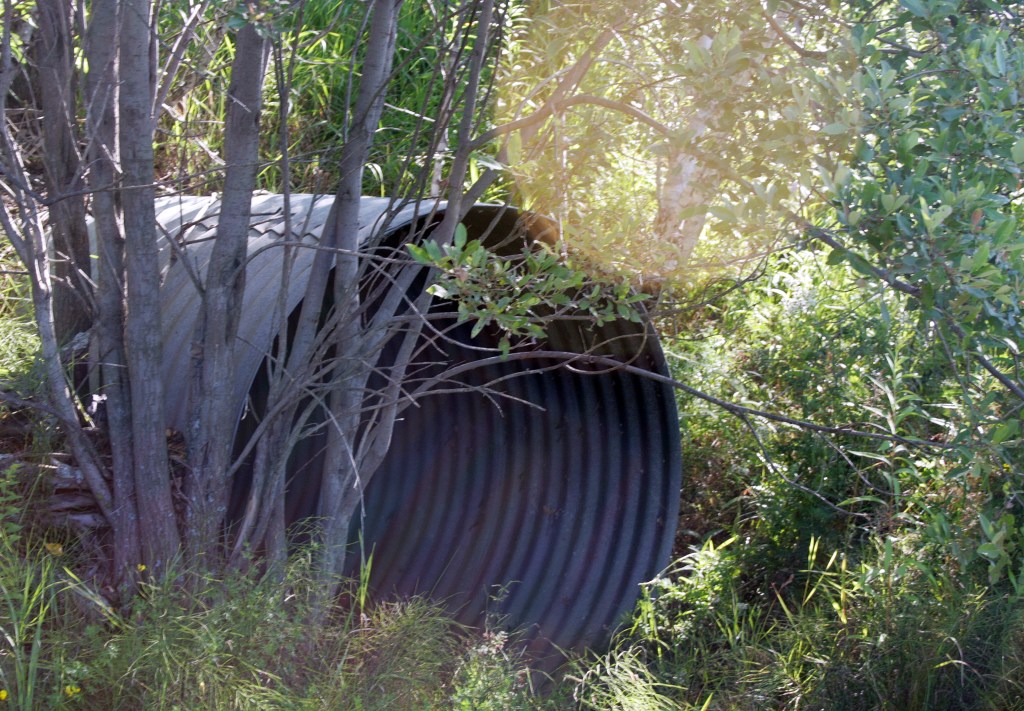
Our trip began by taking us into a more industrial part of the town. There were dunes everywhere and an old abandoned railway track. Small trees and bushes were growing from in between the railway ties. Those tracks had not seen much use in a while. We walked the train tracks for a little bit, but then found a dirt trail that took us more into the surrounding wilderness. We passed old culverts and a few small lakes. It was a beautiful day for a walk!
The way to this cemetery wasn’t a straight shot, or well marked. We had a general direction and were using landmarks to help find our way. We referenced old photos from the first time my friend had been there. We seemed to have made our way into some backcountry, where there were sandy trails and lots of sandy hills, that would be great for four-wheeling. After climbing up into a rocky area we reached a plateau where it levelled off and there was a two-lane sandy road. It was nice to not have to watch our footing anymore for fear of catching a toe on a rock.
My friend felt we were getting close. We walked on, enjoying each other’s company and chatting about life. Now and then we would stop to assess how far we had gone. We were alone in the woods, having not seen anyone else out on the trails. After a while, we started to question if we had gone too far. We checked a side trail, but no, it was going off in the wrong direction. We took a small break to rest and re-evaluate. Luckily, we still were getting cell service in what seemed like the middle of nowhere. She was able to look at satellite photos on Google and find what looked to be our cemetery. We had gone too far! We had to backtrack a little way and take a dirt road that forked to the right. Our goal should be right around that corner.
We found it! It’s a small cemetery, having been recently surrounded by a chain-link fence. We theorized that the fence was put up to protect the cemetery from people unintentionally running through it on quads and snowmobiles. There are about a handful of headstones, some up-right and a few flat to the earth. There seem to be more pioneers buried there than there are headstones.
Having found the cemetery and being able to visit it was well worth the hike. It was super satisfying! Almost more rewarding than if we would have driven straight there. After spending some time among the tombstones, we made our way back the way we came. Through the woods, along the dirt paths, and along the train tracks, ending by having to climb back up a massive dune that we had first scaled down at the beginning of our journey. It was a great adventure! I am grateful that I have good friends who want to share these kinds of experiences with me!
More recently, I was doing some pre-emptive cemetery road trip research, getting ready for this spring. I was going through all the cemeteries listed in my hometown, there are 25 in total. I have been to all but 3 of them, or so I thought. Based on my archived photos I had not visited Ruff Pioneer Cemetery, Chelmsford Protestant Cemetery, and St. Joseph Cemetery. As I did a bit more research into where these cemeteries are located, I got stuck on Ruff Pioneer Cemetery. It’s listed as being off of Goodwill Road, in Garson. As I searched Google Maps, it just was not making sense. I was able to zero in on its location using satellite photos. Low and behold—Ruff Pioneer Cemetery is our Abandoned Happy Valley cemetery!
Looking back at my photos, though, it all makes sense!
Looking back at this cemetery adventure has me pining for summer and the opportunity to visit new cemeteries. I have a few road trips already planned and mapped out, but I may take a look for more abandoned cemeteries that are harder to find. Do you have a story about an abandoned cemetery? Share it in the comments!
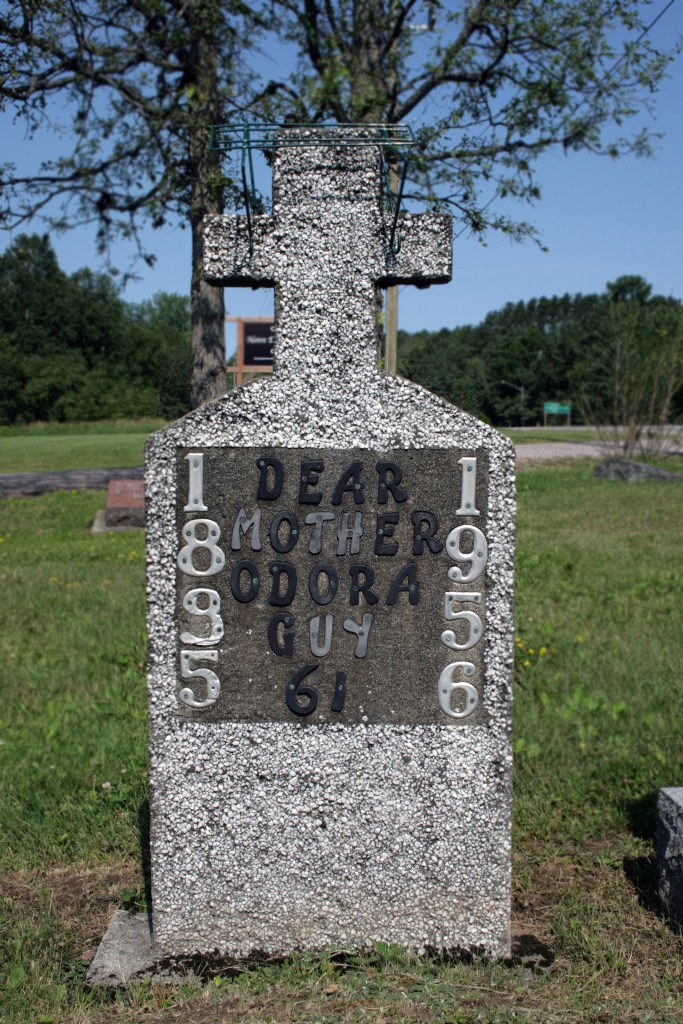
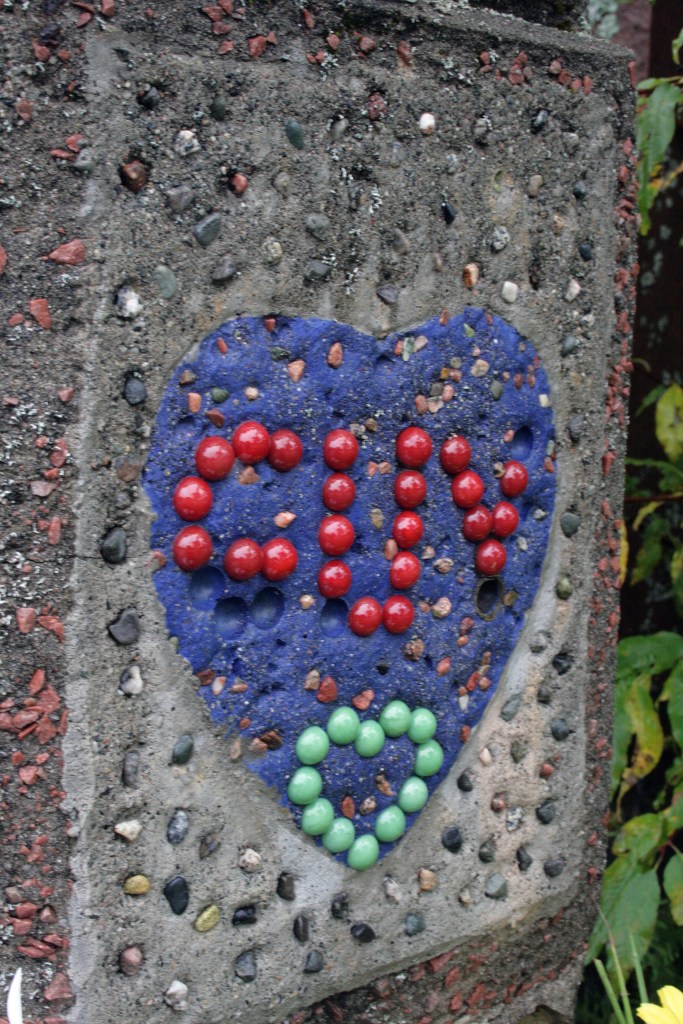
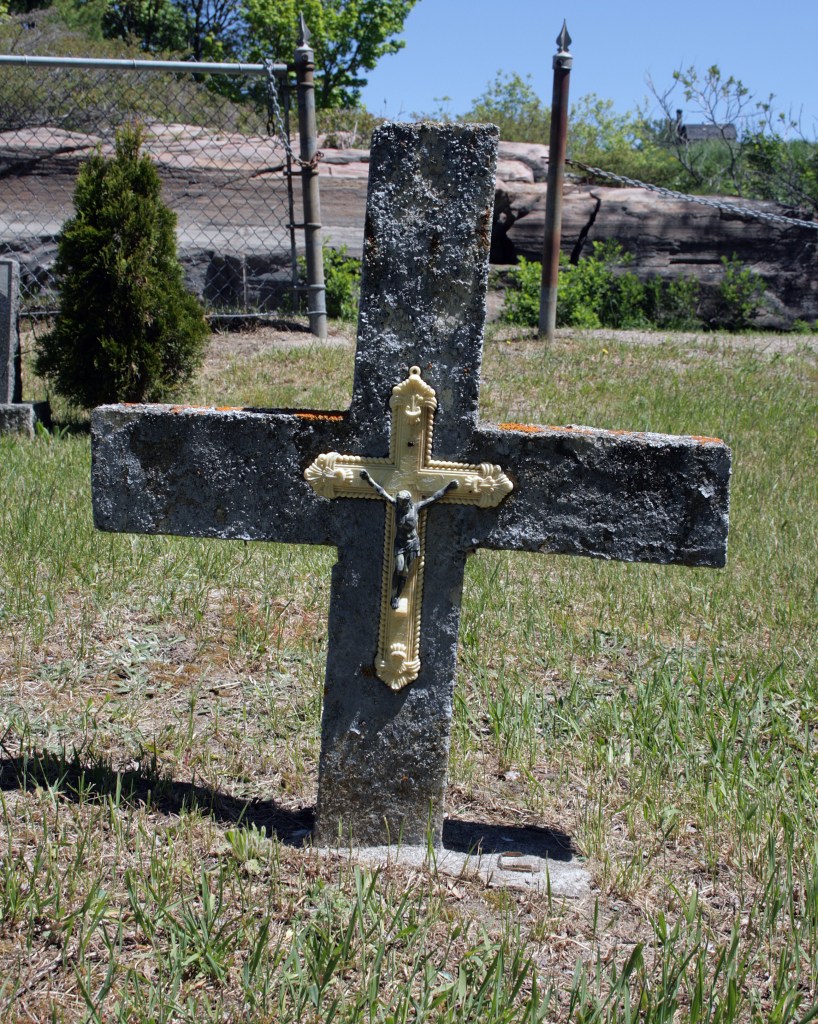
If you spend a lot of time in cemeteries, especially in Northern Ontario, you will start to notice the repetition of certain symbols and motifs. In Ontario and Quebec, something I have come across frequently is handmade stones.
These stones have been lovingly hand-poured in cement, adorned with crucifixes, stones, and other baubles, and usually have hand lettering. They are beautiful representations of love for those who have passed. There could be many reasons why a handmade stone was created, and each one is unique and beautiful with its own charm.
I love finding handmade stones and have photographed many over the years. I wanted to share some of them with you.
In October 2021, I took some time off to enjoy the autumn weather and some Halloween activities. I also took it as an opportunity to go on some cemetery road trips. I had the idea to visit Elliot Lake during the summer, but my nephew suggested we wait till the fall, to take advantage of the fall colors. My mother and I both thought that was a great idea. I will admit, we may have gone a bit later than we should have, as we missed peak leaf-peeping colors, but it was still a beautiful drive.
I have wanted to visit Elliot Lake and its cemetery for a while now. It seemed a perfect fit for a cemetery road trip. It’s only about 3 hours away, and I have family that is buried there. I remember visiting when I was very young for my uncle’s funeral, but that was many years ago. We made sure to visit him and his wife in the cemetery, while we were there. Since my mother accompanied me on this trip, we tried to pack as much as we could into this one day trip, visiting some cemeteries and getting in some hiking.
We stopped at couple of cemeteries along the way, spending 10 to 20 minutes at each one. Roadside cemeteries I explored myself, while my mother waited in the car eating breakfast and enjoying her coffee. She was more interested in visiting Woodlands Cemetery.
There were two must-see locations on this trip for me, Woodlands Cemetery and the site of the former Algo Centre Mall. You may have heard of it. On June 23rd in 2012, a section of the roof collapsed, injuring 22 people and killing two, Lucie Aylwin and Doloris Perizzolo.
For more information on what happened at the Algo Centre Mall, there is a short documentary on Youtube by Fascinating Horror that tells the whole story: The Algo Centre Mall Collapse.
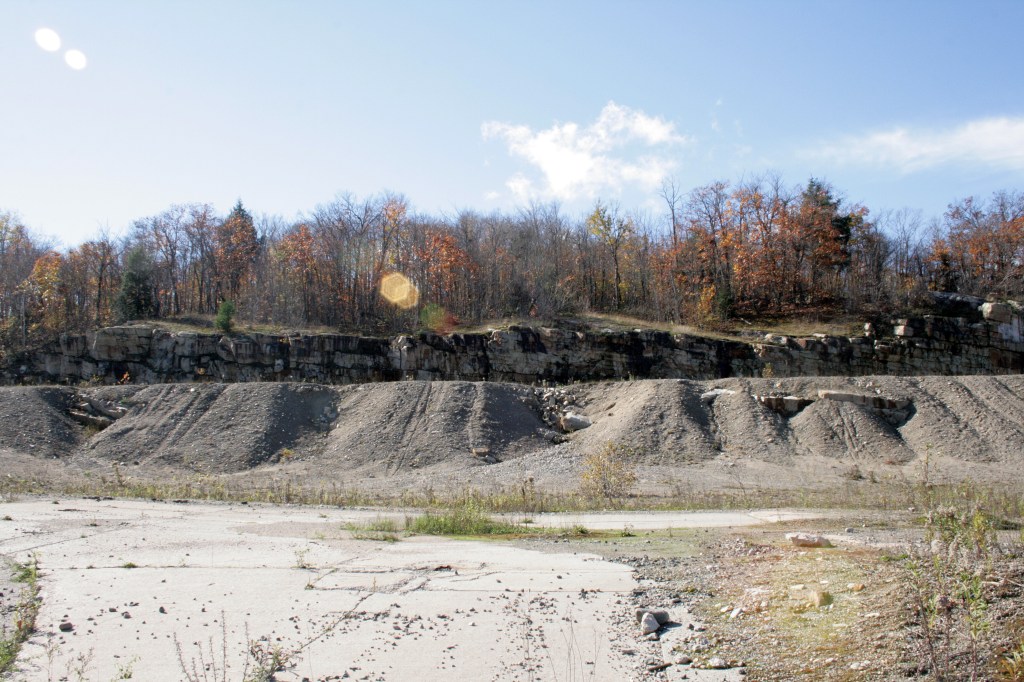
I familiarized myself with the location using Google Maps before we visited. You can still see online, what the mall used to look like before the collapse. From the street, the parking lot looked the same but the mall has been completely demolished. All that is left is a parking lot and empty space filled with sandy mounds. The area seems small to have held a multi-level shopping center. My mother stayed in the car, while I stepped out to survey the area. Behind where the mall had stood, stands some sandy cliffs that look like they meld into the sandy mounds of the demolished building. As I looked around, taking in the sandy scenery, I thought about how this spot used to be a space full of life. I also thought about Lucie and Doloris, and how terrifying it must have been for them. Even though it was a bright sunny day, I felt a chill run through me.
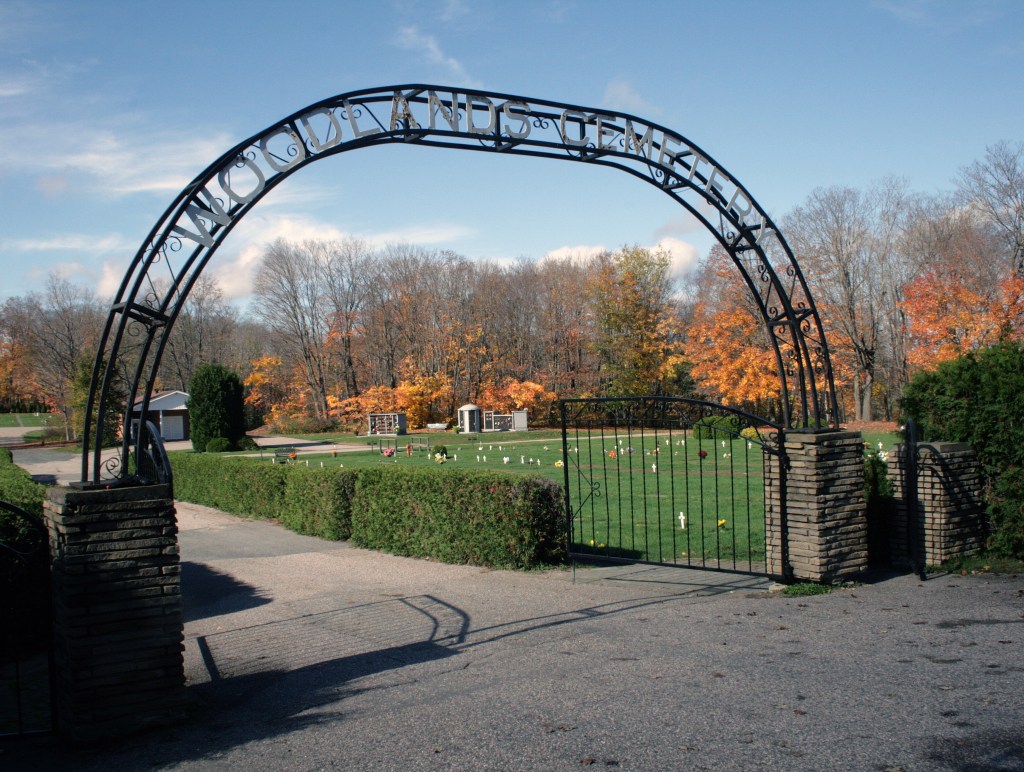
Before visiting the mall collapse site, we had stopped at Woodlands Cemetery. Woodlands is a very large non-denominational cemetery. The first thing I noticed as I walked among the tombstones, is that there are no upright stones. All the grave markers are flat to the ground. There are also a few small columbariums for cremated remains, or cremains. One section was particularly beautiful. Surrounded by tall trees and a layer of fallen leaves lies a large crescent-shaped columbarium. It’s away from the rest of the graves, in an almost wooded area, giving it peaceful seclusion.
I found my uncle almost immediately, buried beside his girlfriend. I remember going to his funeral when I was very young but had no recollection of the cemetery. My mother did remember, and talked about how there were not as many internments at the time. It made finding my aunt, my uncle’s first wife, a bit of a challenge. We didn’t end up finding her at all. We hope to go back this summer and try again. There were two more graves I was looking for while we were there; Lucie Aylwin and Doloris Perizzolo. I found Doloris, in the upper portion of the cemetery, which looked to be a new addition. She is buried next to her husband Giuseppe, who passed in 2011. Their marker is large, with ceramic photos. In her photo, she is holding a small dog and has a bright smile. I read their names out loud. It’s something I always do when visiting a cemetery. My little way of remembering them. Unfortunately, I was not able to locate Lucie Aylwin’s grave to pay my respects.
Next, we stopped at the Miners Memorial at Horne Lake. It’s a great place to stop and stretch your legs. It has multiple life-size statues and monuments, honoring the mining history of the town. We read each one and admired the artistry of the statues. The last monument we looked at, consisted of 3 large marble pillars that listed all the names of miners who had lost their lives on the job. As we stood taking in the lake view and the monuments, my eyes landed on a name. It jumped out at me. Giuseppe Perizzolo – Doloris’s husband. He had been a miner. It felt like a very serendipitous moment. I recognized his name from having just visited the cemetery. It was nice to see that he was memorialized.
After that discovery, we took a walk on the Horne Lake trail, which circles the lake. It looked to be a long trail, so we only walked half of it. We made a mental note to visit the Miner Memorial again and walk the whole trail when we return. We had one more stop on our list—visiting the fire tower. It was not at all what I had expected. I expected a tower with many stairs to reach the top. Thankfully, that was not the case. Only a few stairs lead to the top for a magnificent view of the land. We noticed more trails while we were there. Elliot Lake has an extensive trail system that gives access to all the beautiful views it has to offer.
On our way home, we stopped at a couple more cemeteries. We ended up visiting five cemeteries that day. It did make for a long day, but it was a day full of adventure. During a pandemic, visiting places close to us has been a great way to get out of the house, and have a change of scenery. Even a few hours can make a big difference. I enjoyed my visit to Elliot lake and look forward to going back this summer.
Have you ever heard of Zinkys? You may have come across one or two in your cemetery travels. I know I have, but it has only been until recently that I discovered what these beautiful gravestones are. That is one of the many things I love about my cemetery community, I am always learning new things from my fellow taphophiles.
Zinkys as they are lovingly referred to, is also known as white bronze. They look very similar to carved stone headstones, but they are made from a zinc alloy and are hollow. These monuments were generally less expensive than carved stone, and are a lot more durable. You will often find intricate designs on white bronze headstones, that are still perfectly legible. You can recognize a white bronze headstone by its bluish-grey color, and giving it a gentle tap should produce a hollow sound.
According to Understanding Cemetery Symbols by Tui Snider, in the United States during the prohibition era, it was claimed that bootleggers would sometimes pry the panels off of these metal monuments to hide their booze.
Here in Canada, the White Bronze Company of St. Thomas, Ontario produced zinkys from 1883 to 1900. It was a child company of Monumental Bronze Co. of Bridgeport, Connecticut.1 According to Connecticuthistory.org, Monumental Bronze Co. only produced white bronze between 1874 and 1914. In 1914, World War I saw the facilities turn from creating pure zinc tombstones to creating gun mounts and munitions.2 After the war, it seemed that tastes had changed, and public demand shifted to other natural materials for grave markers.
These blue-grey markers are truly beautiful in person. They range in size and detail, but I always find myself fascinated by how perfectly intact they are. I have come across a couple of broken ones, where a cross or spire has been broken off, but the names of the deceased are always legible.
Since learning about them, I have kept an eye out for them in my cemetery travels, and have been rewarded a few times this summer. I look forward to finding more in my travels.
Have you come across and zinkys in your cemetery travels? I would love to read about it in the comments.
Back in June, I wrote a post about how many cemeteries I have visited so far. You can read it here.
My tally at that time was 85.
After that post I had a goal to reach—hit 100!
This year has not been the best for travel. My cemetery road trips with my friends have had to wait for the current pandemic to end. Luckily, my Mother is very easy going! We have been spending time outside together, and going for hikes locally. She doesn’t mind if we tack on a cemetery visit here or there.
That being said, I was able to go on some small road trip adventures with her. We visited Manitoulin Island and walked the Bridal Veil Falls trail. We also stopped at a couple cemeteries on our way there, as well as a couple on the island. We also visited Elliot Lake. We walked the Horne Lake trail and visited the Fire Tower lookout, as well as visited a few cemeteries. Keep an eye out for future blog posts about those visits!
Let’s be honest, visiting cemeteries can sometimes be a little bit spooky, and for the most part hauntingly beautiful. The weather is cooler, and the leaves have turned from green to red, gold, orange and brown. I love visiting cemeteries in the fall. I always look forward to doing to some leaf peeping! As you may have guessed, fall is my favorite season.
Halloween is only a few days away, so I wanted to talk about a project I worked on that might help you get into the season.
In 2017 I worked with local author, Sarah May, on bringing her book Haunted Sudbury: 101 true accounts of the paranormal to life. This book features 101 stories of local supernatural occurrences, as told to Sarah May. It’s filled with wonderfully spooky true stories of weird experiences and ghost sightings as well as true crime accounts that left their imprint on our small town.
Here is the book synopsis:
“Haunted Sudbury is a collection of true eye-witness accounts of the paranormal. Experience a different side to the city you don’t hear about everyday
‘Lady in White’ haunts a downtown restaurant after a ghastly murder
A ‘Starship’ is spotted in the air above Vale’s tailings dam
Mysterious man walks out of a snow bank and bids a final farewell
Deceased loved one communicates to his girlfriend through a stereo
Local high school teacher saved by a ghostly warning
Wife envisions her late husband catch a limo lift to the next world
Violent death. Lost loves. Haunted places. Haunted Sudbury has it all. Pick up a copy and prepare for a spine-tingling good read.”
Below is the image used on the book cover, with a little ghost manipulation added to it. This image comes from Eyre cemetery, one of the oldest cemeteries in Sudbury.
I loved working on this book, designing the layout and cover, and creating the illustrations. I was extremely excited when Sarah asked me if I wanted to include some of my cemetery photography. Nine of my photos can be found at the back of the book, in black and white. It was really exciting to see my photos in print. And still is!
The book launch for Haunted Sudbury took place at a local restaurant, the site of a murder that is described in the book, and is also reported to be haunted. The night of the launch was also held on the anniversary of the murder. Medium Jay Lane was also in attendance, and gave readings and spoke about the restaurant and what she felt. It was a very interesting experience and a great turnout!
Haunted Sudbury is not available in print at the moment, but Sarah May has another book in the works, that should be coming out soon.
I just finished reading 199 Cemeteries to see before you die by Loren Rhoads. It’s a great read, showcasing beautiful and unique cemeteries all over the world. It has me thinking a lot about travel lately. Unfortunately, travel isn’t really in my future at the moment. We are currently in Step 3 of the Ontario Reopening Plan due to COVID-19. Restrictions have lifted a little and life is getting a little bit back to normal. But, I am not quite ready to do any major traveling just yet. This past year and a half have been hard, and my mind has wandered a lot—daydreaming of visiting far-off places and new cemeteries.
Reading 199 Cemeteries to see before you die has been helping curb that wanderlust. A little bit. It’s been a nice escape, but my bucket list of cemeteries to visit just seems to be getting longer and longer!
Here are my current top 5 cemeteries I want to see before I die:
Sleepy Hollow Cemetery
Located in Sleepy Hollow, New York. This cemetery is 85 acres, and is most notably the resting place of Washington Irving, the author of The Legend of Sleepy Hollow. This cemetery might be best known for its fictional dead people—as the namesakes for characters in The Legend of Sleepy Hollow come from this burial ground. Supposedly even the grave of the Headless horseman can be found here. This cemetery also offers walking tours; The Original Knickerbocker: Washington Irving & The Legend of Sleepy Hollow and The Classic Evening Lantern Tour. You can also pick up a free legal-sized map at the Cemetery office, or purchase a full color 17 x 20 map for self-guided tours.
Located in Salem, Massachusetts. It is also known as the Charter Street cemetery. It’s the oldest cemetery in Salem, and holds some connections to the witchcraft trials that took place there in 1692-1693. It has many beautiful slate and sandstone grave markers. I would love to see the detailed deaths heads in person. Some of the more notable people buried here are: Salem witch trial judge John Hathorne, and a passenger on the Mayflower, Capt. Richard More. There is also a memorial to the men and women who were killed during the witch trials.
Located in Halifax, Nova Scotia. This cemetery holds the graves of over 121 victims of the sinking of the RMS Titanic, that happened on April 15, 1912. They are memorialized with granite markers, laid out in the subtle outline of a ship’s hull. There is also a mass grave for the victims of the Halifax explosion that happened in 1917 and war graves of commonwealth personnel from World War I and World War II.
Necropolis means “city of the dead” in Greek. This historic cemetery in Toronto Ontario, opened in 1850 and is the final resting place of many notable Canadians such as Toronto’s first Mayor, William Lyon Mackenzie and Dr. Roy Dafoe, of the Dionne Quintuplets fame. It is also the final resting place of George A. Romero, director of the horror movie classic Night of the Living dead. This large cemetery also contains a cremation chapel. The chapel was erected in 1872, with the crematorium added later, in 1933.
Located in New Orleans, this cemetery opened in 1789, it’s the oldest and most famous in New Orleans. Most of the graves are above-ground vaults, following Spanish custom due to the area having a high water table. The most notable graves here may be the Voodoo Priestess Marie Laveau, and notorious slave owner Delphine LaLaurie. You can also find the future final resting place of Nicholas Cage here.
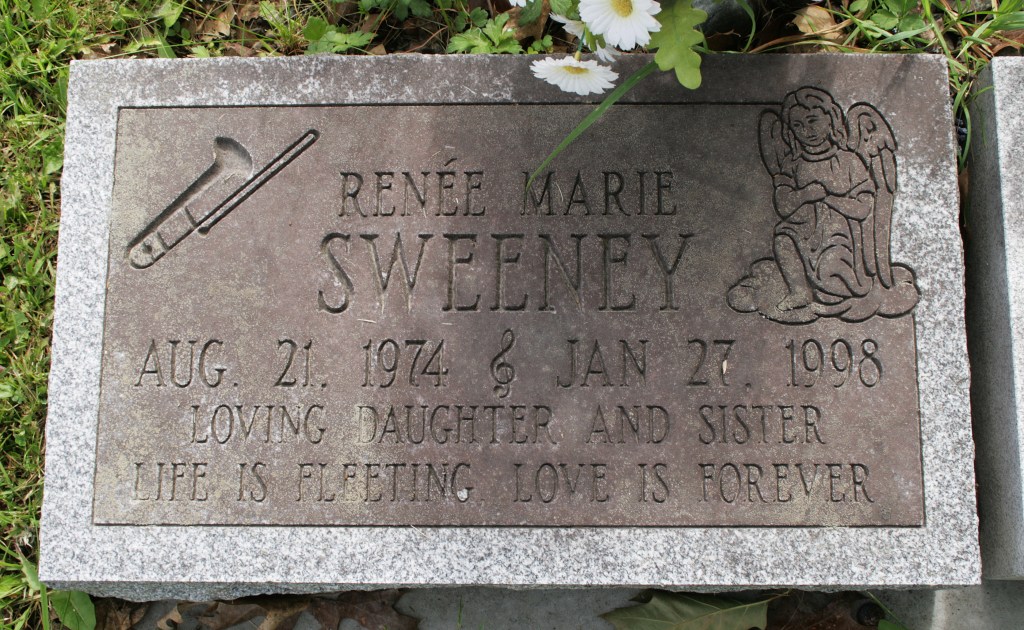
A couple of weekends ago I visited the grave of Renée Sweeney.
While planning out a hike that weekend, I checked which cemeteries would be along the way. One of them just so happened to be her resting place.
I usually don’t spend as much time in newer cemeteries because the stones and symbolism are much more modern and not as nuanced. This cemetery is full of some very interesting stones and stories. Because I was searching for one grave in particular, I took my time walking through the rows, examining every stone. I came across some lovely stones and epitaphs, as well as some heartbreaking ones.
But none as heartbreaking as the family plot of Renée Sweeney.
Her grave marker is small, laying flat to the earth, but it tells a story of a life cut short, that had a lot of love yet to give. The epitaph reads “Loving Daughter and Sister, Life is fleeting Love is forever” A trombone is engraved on her stone, as well as a treble clef and an angel. She is buried beside her mother.
What happened to Renée is terrifying and heart-wrenching. She was 23 years old when she was brutally murdered in 1998. She was stabbed at least 30 times while working at Adults Only Video.
Her murder went unsolved for 20 years.
In 2018, Robert Steven Wright was arrested. He faces a second-degree murder charge. Due to the pandemic, he is still awaiting trial. His new trial date as of this writing is October 25th, 2021. The trial is expected to last 5 weeks.
Renée’s story can be found in more detail in Unsolved Sudbury: Missing. Murdered. Unexplained. by Sarah May. Books are available locally at Bay Used Books, Jan Browning Boutique, and Sudbury Paint and Custom Framing.
If you are interested in learning more about this tragic history, you can read more about it at these links:

















 Cemetery Photography by Chantal Larochelle