One of my favorite cemetery symbols are hands. They can represent so many things from only how they are positioned. I also find them beautifully detailed, and they have a lot to say. Hands are a very common symbol in funerary art and can be found in almost any cemetery.
I have photographed many over the years, ranging from very simple to very detailed, and wanted to share some of them with you today.
A hand pointing upward often represents going up to heaven. You may also find a hand pointing down, which can look a little odd, but it does not mean what you may have first thought. A hand pointing down usually represents a sudden or unexpected death. Clasped hands or praying hands often represent devotion but can also be seen as a plea for eternal life.
Handshakes are a very common variation and also can have a few different meanings. When the handshake depicts limp fingers held by a firm handshake, this often represents the deceased being welcomed to heaven by loved ones or maybe even God. When one finger is extended, it is a masonic handshake, meaning the deceased was a member of the Freemasons. You may also find a double masonic handshake, where one finger is extended on each of the hands. This is meant to resemble the square & compass, the emblem of the Freemasons. You should also look closely at the wrists of the hands, this can also give more clues. If both hands look masculine, this could represent fraternal brotherhood. If one of the cuffs is more feminine and one more masculine, this is most likely a marital handshake, to indicate the deceased was married.
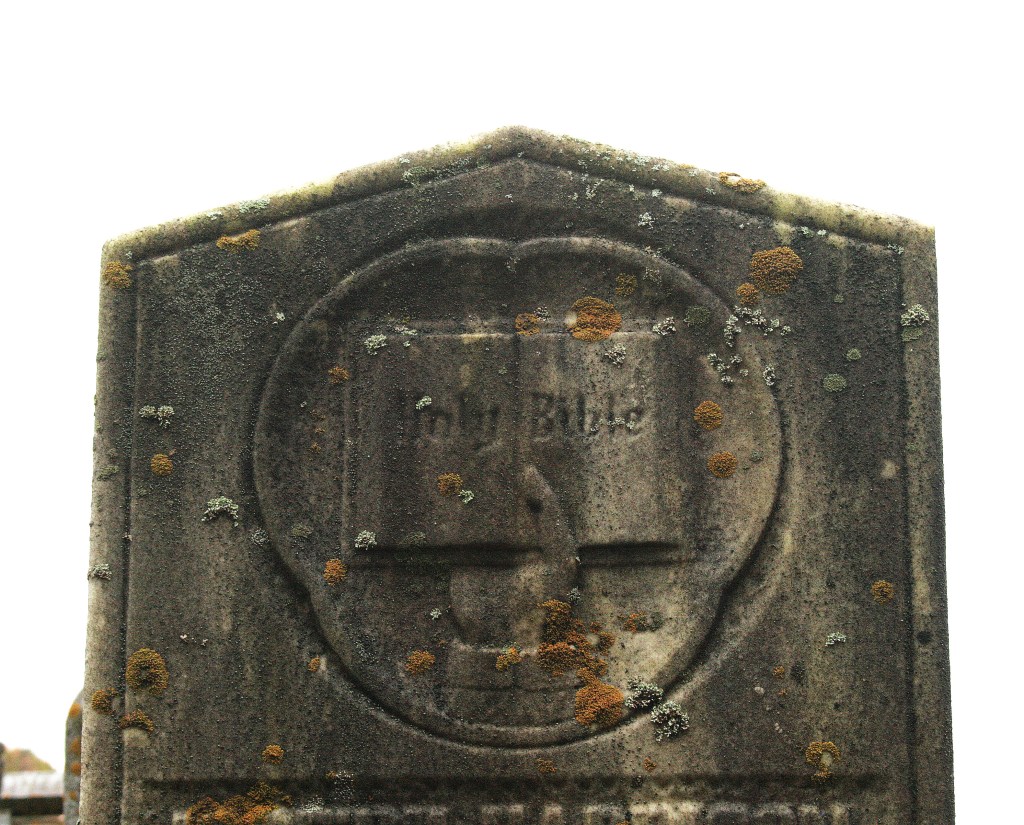
When you find a hand holding a book, that book is often meant to be the bible. Sometimes it is more obvious, as it may have “holy bible” inscribed on it.
I had such a fun time trying out Kay’s Fudge recipe a couple of months ago, that I wondered what other cemetery recipes were out there. I was pleasantly surprised at the handful of recipes I found.
Today I wanted to try my hand at making Connie’s Date & Nut bread. 100% Good stuff – 0% Bad Stuff. Sounds delicious to me!
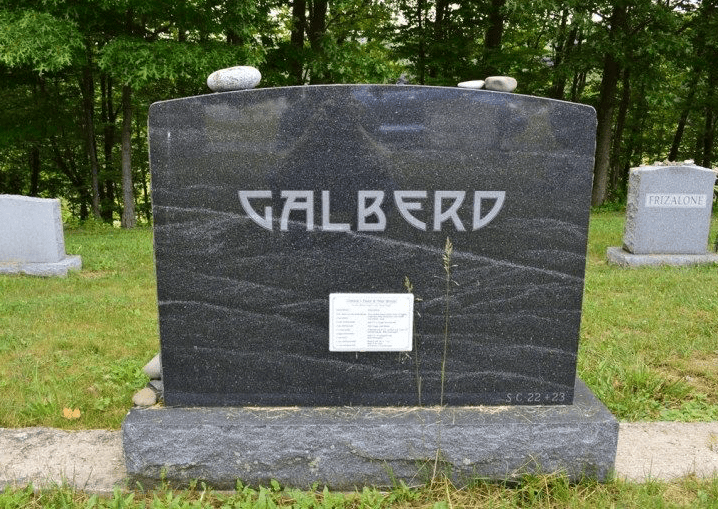
Grave of Constance Galberd, Photo by Find a Grave contributor P. Jill Moore. Photo used with permission.
This tombstone can be found in the Cemetery of the Highlands in Highland Mills, NY. Instead of the recipe being engraved on the stone, it’s printed on a small white plaque that is attached to the stone. The headstone belongs to Constance Galberd.
From reading Connie’s obituary, she was a very busy woman. Constance was a retired Registered Nurse at Cornwall Hospital in New York, a member of the Woodbury Community Ambulance Corps, and a member and Trustee of the Woodbury Historical Society. She has three children, a daughter, two sons, and four grandchildren. I think it’s safe to say she was also a great baker with a great sense of humor. Constance passed away in September 2008, at the age of 80.
I love the idea of putting a well-loved family recipe on a tombstone. It ensures the recipe will be passed down through the generations, and that a piece of them will be remembered.
Recipe plaque on the grave of Constance Galberd, Photo by Find a Grave contributor P. Jill Moore. Photo used with permission.
The recipe reads:
Connie’s Date & Nut Bread | 100% Good stuff – 0% Bad Stuff
Ingredients:
8 oz. dates cut into small pieces
1 cup raisins
2 cups boiling water
2 tsp. baking soda
1 1/2 cups sugar
2 eggs, well beaten
4 cups flour
2 tsp. baking powder
1/2 cup chopped nuts
Directions:
Pour boiling water (where 2 tsp. of baking soda have been dissolved) over dates and raisins. Cool.
Add 1 1/2 c. sugar and mix well.
Add 2 eggs, well beaten.
Gradually mix in 4 c. of flour and 2 tsp. of baking powder. Beat thoroughly.
Add 1/2 c. of chopped nuts. Beat thoroughly.
Bake at 350 for 3/4 – 1 hr.
Bake in tin cans.
One batch = 13 small cans.
This recipe is pretty easy to follow. I have made banana bread before and found the process very similar. The directions are very clear, although I was a little uncertain of how long to let the boiling water over the dates & raisins cool. I spoke out loud to Connie while I mixed my ingredients and waited for the water to cool. When the water was no longer steaming, I mixed in the sugar and continued with the recipe.
I was a little thrown off by the last 2 directions, about baking in tin cans. I had to look that up. I found out that baking in tins cans, like vegetable or soup cans, was used for baking during the depression. The end result would be little round cakes or loaves of bread. I would have loved to be authentic to the recipe, but I didn’t have any empty tin cans to wash out and recycle for baking. It is something I would like to try in the future though. For this recipe, I used 2 loaf pans and split the batter between the two.
My kitchen smelled amazing while these were baking! I had to have a piece when it came out of the oven, and I was not disappointed. It’s a dense bread, similar to a fruit cake. Connie is absolutely right when she says “100% Good stuff – 0% Bad Stuff“. I am really happy with how they came out. After letting them cool on a cooling rack, I popped them out of the pans and wrapped them up. I always love to share my baking, and being able to share Connie’s recipe too feels like a sweet way to remember her.
Will you be trying Connie’s Date & Nut bread? Or have you found another tombstone recipe I should try? Tell me about it in the comments.
I have always considered myself a lifelong learner, I love taking online courses. I have taken some interesting ones over the years, like Society, Science, Survival: Lessons from AMC’s “The Walking Dead”. During the pandemic, online courses have become pretty popular, and you can find all sorts of online courses offered. The topics can vary, from more regular academic offerings to the more obscure. I remember once taking an online course on Stereoscopy: An Introduction to Victorian Stereo Photography. That was an interesting course. It got me wondering if there were cemetery-related courses available out there? That is something I feel like I can always learn more about.
I have spent some time browsing Atlas Obscura for unique places to visit and found that they offer in-person and virtual courses. They just so happen to offer an online course I think would be perfect for taphophiles. It’s called Stories in the Stones: How to Read a Gravestone With Dr. Elise M. Ciregna. Here is the course description, from the website:
“Have you ever wondered why certain gravestones and funerary monuments look the way they do? In this course, Dr. Elise M. Ciregna will explore how to decipher the stories in these stones, drawing from foundational knowledge of cemeteries and material culture. Over the course of four sessions, we’ll trace the history of burying grounds, cemeteries, and gravestones in the United States, focusing on a different period of American history each week. We’ll cover Puritan and Colonial practice and African American burying grounds through to the impact of cremation on contemporary American burial practice. In between, we’ll touch upon the advent of the garden cemetery movement, the 19th century romance of cemeteries, the cemetery beautiful movement of the early 20th century, and the 20th-century changes in cemetery management—looking at common motifs and stone cutting techniques as we go. By the end of this course, you’ll have the tools to engage with gravestones in a new way, the foundations for doing genealogical research, as well as a new lens through which to understand American society, culture, and values through time.” – Atlas Obscura
It sounds super interesting! There are currently 2 month-long sessions being offered, April (every Saturday) and May (every Sunday). I’ve registered for the May session and am looking forward to it. I’m hoping it will help fill the gap until I can regularly get out to visit cemeteries.
This next course I found is specifically for Clyde River & Area cemeteries in Prince Edward Island. It’s a free, self-directed course created by the Clyde River History Committee, called Cemetery Stories: Online Study Series. This course is not currently running, but since it’s self-directed and the materials are well laid out, I think it’s possible to work your way through the course. It looks like this online course was created to replace their regular lecture series during the COVID-19 pandemic. The course was held from November 2020 – to August 2021, but the course materials can still be found online. The materials include links to online resources, videos, and reading material. It also includes a breakdown of the activities. Some activities look to be specific to the Clyde River & Area cemeteries, but I think the resources they provide would be interesting to any taphophile.
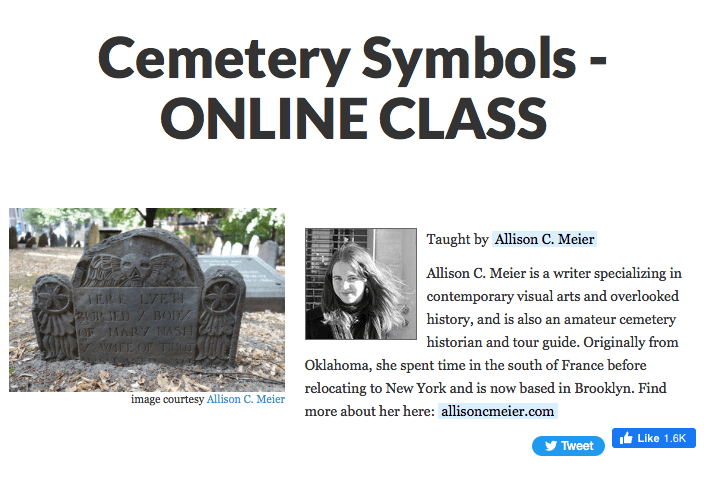
The last course I found is called Cemetery Symbols, through the Brooklyn Brainery. This course is not currently running, but you can sign up for the mailing list to get notified the next time it’s offered. It sounds very interesting, as it focuses on one of my favorite subjects: symbolism, and iconography in cemeteries. I would love to take this course the next time it’s offered. Here is the course description from the website:
“Have you found some recent solace in visiting your local cemetery or ever wondered what those symbols etched in the tombstones say about the deceased? Sure, the skulls and winged hourglasses are ominously straightforward, but along with them are secret society emblems, carefully chosen flowers, gesturing hands, guardian animals, and other arcane symbols. This class will explore the meaning behind the symbols commonly found in cemeteries, along with their history in mortuary art, highlighting symbols found in NYC and beyond, so that the next time you go for a stroll in the necropolis you can decipher their hidden meanings.” – Brooklyn Brainery
It’s not a very long list, but that’s all I could find in my most recent search. I think I may revisit this in the future and share other courses I can find. I would love to see more courses become available. There are so many interesting cemetery-related topics that I think can be expanded upon, and would love to learn more about. I would love to see courses exploring the history of historic graveyards, notable graves, death and funerary practices through the ages, and even stone carvers and their materials. There is just so much that can be explored. For the moment I am looking forward to Atlas Obscura’s Stories in the Stones course, my first class is on May 1. I’m hoping it will be informative and that I will learn a new thing or two. I may write another post after the course is done, to share my thoughts, any AHA moments I have, and whether I would recommend the course or not.
Have you taken some interesting online courses? Or do you know of a cemetery-related course that I missed? I would love to hear about it in the comments.
When we hear the words tombstone, headstone, or gravestone, they all bring the same image to mind; a stone marked with a name, birth date, death date, and maybe some funerary art and an epitaph. It is a stone representing a person laid to rest.
While working on some blog posts recently, I noticed I used the term tombstone very often. To avoid repetition, I found myself using some other words synonymously like headstone, gravestone, and grave marker. It got me thinking, ARE these words interchangeable, or is there a subtle difference? I decided to look into it a little deeper.
My term of preference seems to be tombstone, so that is where I started in my search. The dictionary defines a tombstone as “a stone marker, usually inscribed, on a tomb or grave”.1 The first known use of the word in print was in 1565.2 According to Merriam-Webster, a tombstone is also defined as a gravestone.2
So tombstone and gravestone can be used interchangeably. After a little more reading I found that a gravestone is a Middle English word dating back to 1175–1225.3 It has a similar definition to tombstone, but I read that the term gravestone comes from the practice of covering whole graves in stones, to mark the grave as well as “keep the occupants in the ground”.4
A headstone, according to dictionary.com is “a stone marker set at the head of a grave.5 This term was first recorded in 1525-35.5 It is interesting to note that this definition specifies the location of the stone, similar to a footstone, which is a smaller stone laid at the foot of a grave. The first known use of the word headstone was in the 15th century.6
Grave markers, also known as cemetery markers, are smaller and sit flat to the ground. They can sometimes be angled like a wedgestone, to make them easier to read. They may be small, but they still carry the same information, such as name, birth, and death date.7
Two other possible terms are monument and cenotaph. These are a little different as they are not as interchangeable. A monument refers specifically to a very large -monumental- stone.7 A cenotaph may seem similar to a tombstone or monument as it sometimes has names and dates engraved on it, but there are no bodies buried beneath it. Cenotaph means “empty tomb”.8 They are often used to memorialize and commemorate those buried elsewhere, such as soldiers who died in war.
All that being said, tombstone, gravestone and headstone can be used interchangeably. Although at one point in time they may have looked different than what we think of today. It’s interesting to look at how language has changed over time and how these words have all become synonymous with each other. After doing so much reading on the subject, I think tombstone is still my favourite term.
Do you have a preference? Or maybe you use a different term? I would love to hear your thoughts!
Spring is right around the corner here in Canada, although you wouldn’t think so with the amount of snow that’s on the ground. The days are getting a little longer and the snow is melting, very slowly. The sun and subtle warmth are giving me hope that cemetery visits will be starting very soon!
I’ve been so excited about the prospects of visiting cemeteries again, that I have spent a lot of time researching and seeking out new cemeteries to visit. I have some fun plans for this spring and summer, involving visiting some nearby towns and cemeteries. I also found some other interesting things to visit.
I enjoy the planning as much as the road trip itself and have found some really interesting things to visit along the way. Due to the pandemic, my trips have been fairly close to home, but that doesn’t mean there aren’t lots to see. I wanted to share some insights on how I plan a cemetery road trip, and hope it may inspire you to do some local visiting where you are. You never know what you might find!
Where do you start when planning? I use Google My Maps to create my travel plans. You can add a color-coded legend to make things easy to read, and you can add notes to each location marker, like highlighting notable graves in a cemetery, or the best thing to order at a specific restaurant. You can also share these maps with your travel buddies.
Where to visit? I often pick a starting point based on something in particular that I want to see. For example this summer, I want to visit the Devil’s Rock trail head, in the Timiskaming District. It’s very close to Cobalt, Ontario, so for that map, I will focus on destinations leading up to and surrounding Cobalt.
Map created using Google My Maps. Legend: Purple – Cemetery, Yellow – Hiking, Orange – Haunted, Dark blue – Museum, Light blue – Heritage Silver Trail, Green – Food, Black – Oddity
Now comes the fun part! What is there to see and do?
I like to start by looking up every cemetery along the way to my chosen destination and in its surrounding area. I tend to focus on cemeteries that I have not visited before, unless I have an urge to visit a particular cemetery again. I also like to look up any memorials and cenotaphs that might be close. Find a Grave and Google Maps are great resources for this. You should also check any tourism websites that exist for the town you will be visiting, they often have cemetery information. Don’t forget to look up any famous, or infamous graves that may be in the area. I like to look for unique tombstones and Atlas Obscura is a great resource for this, as it lists many unique tombstones and cemeteries.
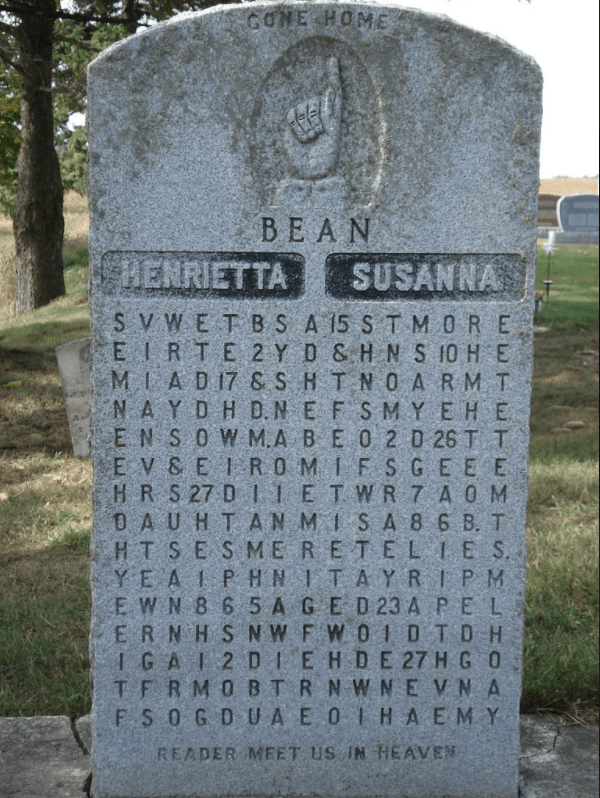
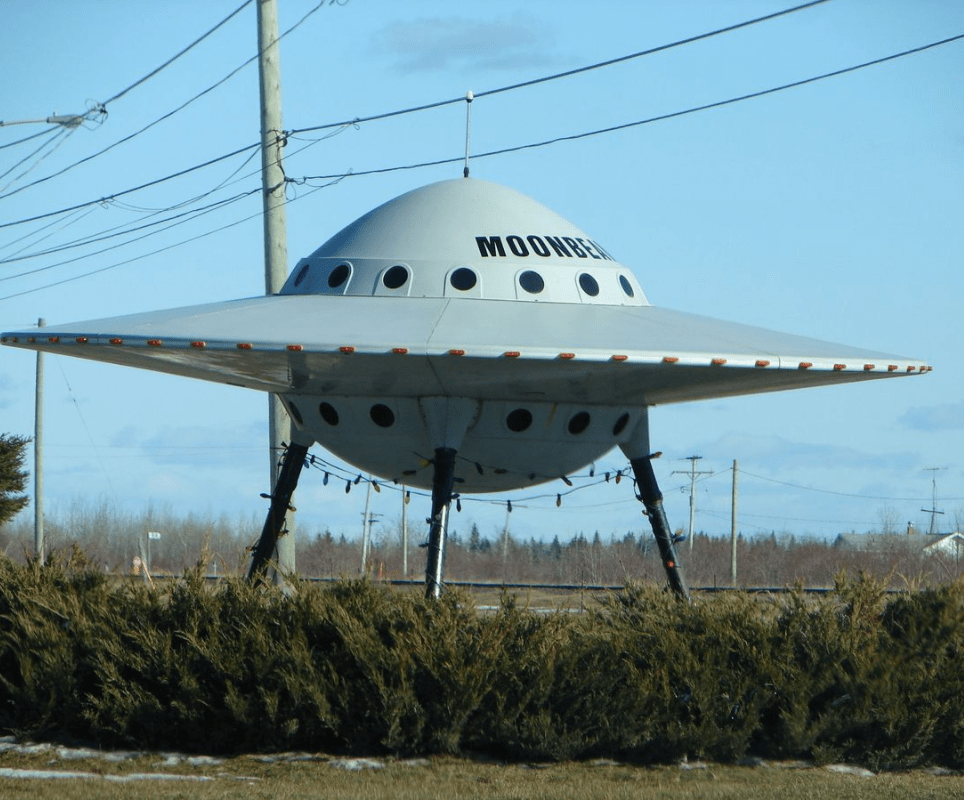
You can also use Atlas Obscura to find other interesting things to visit, like interesting natural landmarks, unique museums, outdoor art, themed restaurants, and all sorts of things that would be cool to visit. Granted there are way more listings for the U.S.A. than for Canada. But there are still some cool things to be found and visited. For example, on my list for this summer’s road trips are the Bean puzzle tombstone in Wellesley, ON, and the UFO monument in Moonbeam, ON.
I don’t know about you, but I love food, so I always look for fun local restaurants to try out too. My favorites to visit in the summer are local chip stands. There is also one chain restaurant I always look for – Casey’s Bar & Grill. We no longer have one in my town, and it was a favorite place to go for my friends and I. You can’t beat a tornado potato after a long day of visiting cemeteries.
Lastly, I always look for haunted locations and ghost walks. This may seem a little odd, but if you have ever been on a ghost walk, you may understand. Hauntings are always connected with history. A ghost walk is essentially a history tour, taking you throughout a city and highlighting the darker and seedier past of a place. The stories can tell you a lot about a town’s history, and the people who built it. Cobalt, Ontario for example, is a mining town, and there are many haunted locations connected to that mining history. That’s the type of history I find fascinating. You can’t find ghost walks in every town, so I often like to make my own by compiling all the haunted locations and their stories.
All this planning and research can sometimes make the road trips pretty ambitious, and you won’t always be able to see and do everything that you have mapped out. I love having a variety of different things mapped out because that’s as far as my planning goes. Once I am on the road, I go with the flow and see where my map takes me. I don’t always get to visit all the cemeteries, or walk every trail, or visit every museum, but that’s ok! I save those locations that were missed for another trip and create a new map.
Researching and discovering all these interesting places has been a great pastime while waiting for the snow to melt and COVID restrictions to ease. This way I’ll be ready to road trip once the last bit of snow has melted! It also looks like restrictions are lifting and may be completely gone by spring, but that is the beauty of visiting cemeteries, they aren’t very crowded.
I hope you have found some inspiration in this post to start planning your own road trips for this summer and exploring your own backyard. Feel free to share your plans in the comments! I would also love to hear about any cool places you would recommend visiting.
I have been spending more and more time on Find a Grave lately. I have been a member for years now, but just recently started being a more active member. This winter, I have been spending a lot of my free time going through my digital files and thought it would be a great opportunity to add some of them to this great website.
Find a Grave, if you are not familiar (if you are a taphophile, I’m sure it needs no explanation) is a great resource for burial information from all over the world. It’s a great tool for those looking for genealogical information, as well as those curious about famous graves. It’s filled with cemetery information, burial details, photos, biographies, and more. It’s also a great community of volunteers, all brought together by this online tool, helping others complete family tree details, sharing a hobby, but also creating an online memorial space to remember lost loved ones.
“Find a Grave got its start in 1995 when founder Jim Tipton built a website to share his hobby of visiting the graves of famous people. He found that many people shared his interest and quickly opened the site for all individuals (famous and non-famous) with a mission for finding, recording, and presenting burial and final disposition information worldwide. Since then, millions of contributors have been entering memorials, photos, GPS locations, biographies, and other rich content to the site. As the site grew, the community grew also. Find a Grave houses the largest international graving community in the world. In 2013, Find a Grave became a wholly-owned subsidiary of Ancestry® and launched a new iOS mobile app. The Android app was released in 2014. Ancestry redesigned the website and released it in August 2018. The community continues to add and update memorials every day. We look forward to an exciting future for the site and the community!” – findagrave.com
I’ve been a member for almost 8 years, and often use Find a Grave when researching road trips for famous graves to visit. As I mentioned above, I recently have started being more active on the site, uploading photos to existing memorials and creating new ones that have not yet been listed. It is also possible to take on photo requests. These are requests submitted by anyone, to photograph a specific grave. The requests include all the details that are available; like cemetery location, full name, and birth and death date if known. As a Find a Grave member you can claim these requests and take photos to fulfill them. It’s a great way to contribute. Did I mention, it’s free to become a member?
Find a Grave also has other features such as their News & Announcements page that lists new website features, tips on how to use the site to its full potential, features on volunteers of the month, and all sorts of cemetery related articles. One of my favorite little touches is the On this day feature on the main page, showcasing famous deaths. There is also a forum to connect members. It features threads on all sorts of different discussions on cemetery research, famous graves, translations, and site support among other things. They also have an online store where you can purchase a small selection of merchandise. I wish they offered a Find a Grave button or stickers. I would love a button to add to my camera bag.
To learn more about Find a Grave or become a member, you can visit their website at findagrave.com, or find them on Facebook and Instagram.
Are you a contributor to Find a Grave? Feel free to share you experience in the comments.
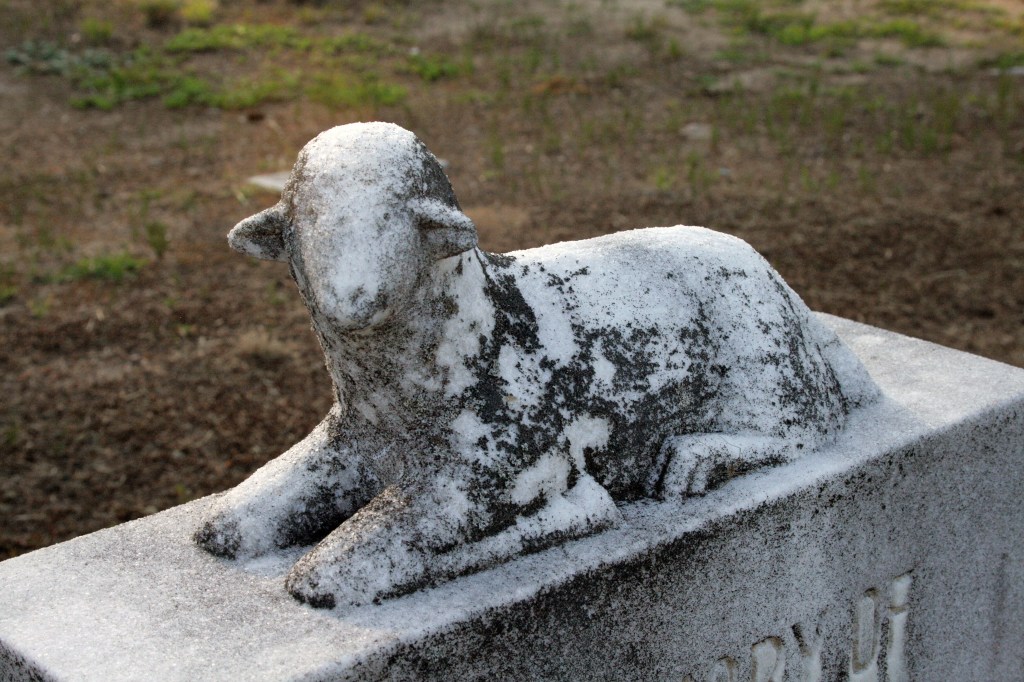
I love exploring cemeteries and looking at the different symbols used on tombstones. If you spend a lot of time in cemeteries, especially in Northern Ontario, you will start to notice the repetition of certain symbols and motifs. One of the most common symbols I find, is the lamb.
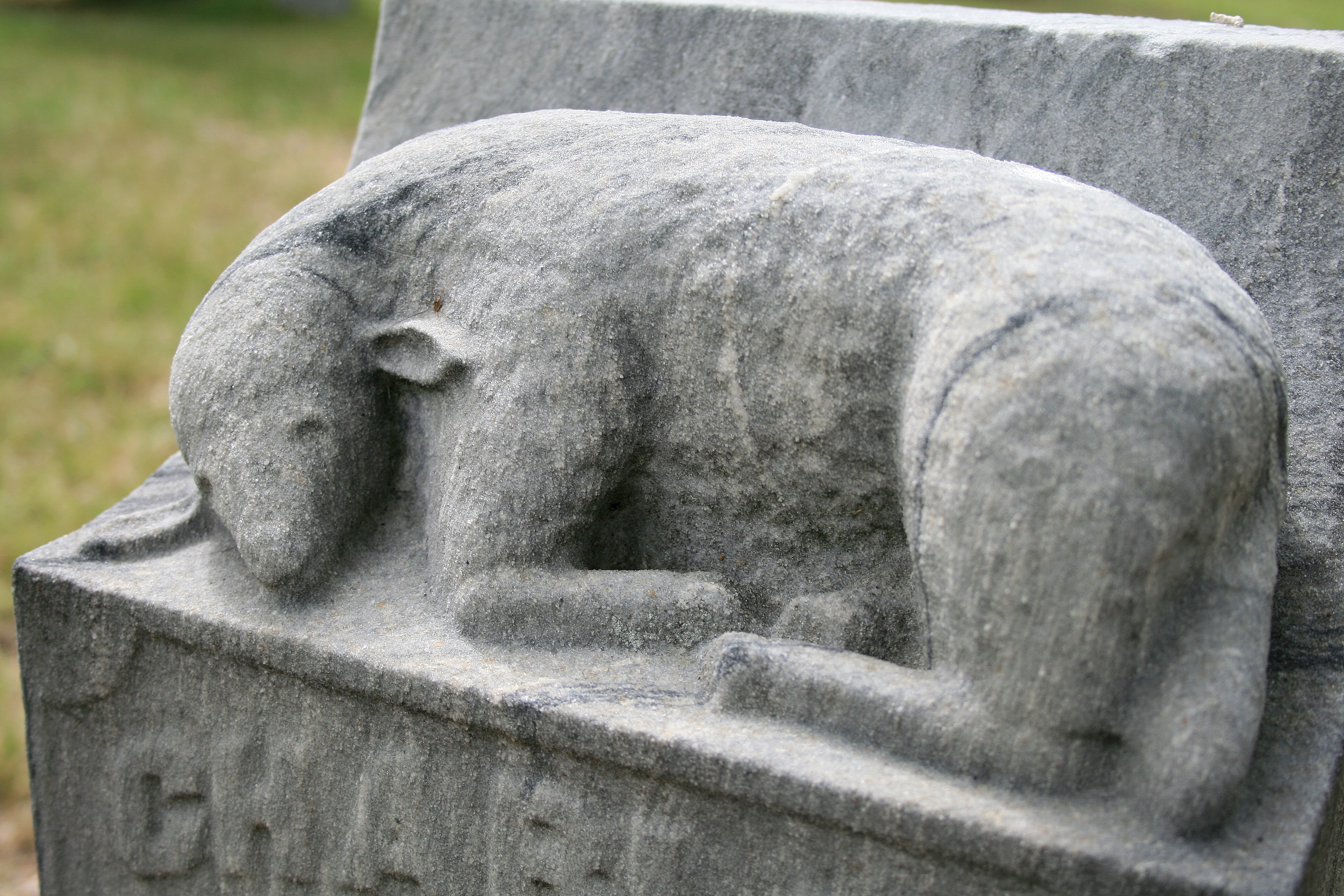
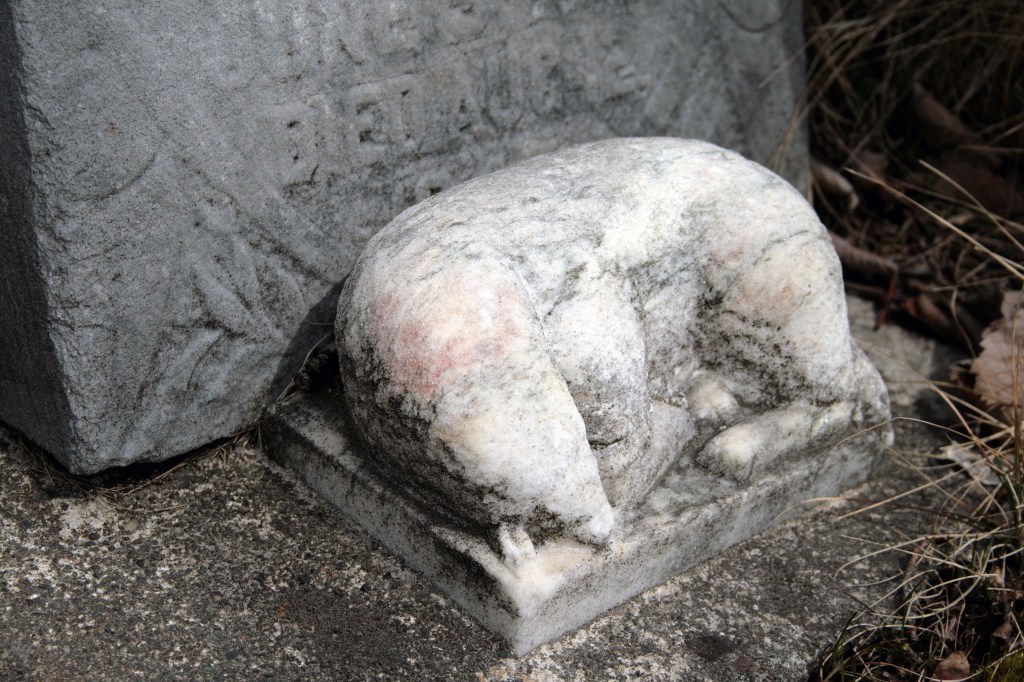
Lambs represent innocence and sacrifice, as they were often used in sacrificial ceremonies in ancient times1. Most often you will find lambs on the gravestones of infants and children, as Jesus is often depicted as a Shepherd, and also known as the “lamb of God”. Some variations can be found with lamb symbolism. A robed figure with a standing lamb beside it most often represents John the Baptist, who had called Jesus the “lamb of God”1. A lamb with a cross is known to represent the Lamb of God or Agnus Dei2, symbolizing the suffering of Christ as he sacrificed himself for the sins of mankind. Several other symbols may be found with a lamb to symbolize the lamb of God – such as a banner, halo, shepherds crook, and alpha and/or omega symbols2. A single seated lamb symbolizes an innocent soul. A seated lamb can sometimes be found sitting in front of a tree stump, this often symbolizes a life cut short.
Finding lambs is often sad, but they are a beautiful symbol. I have photographed many over the years and wanted to share some of them with you today.
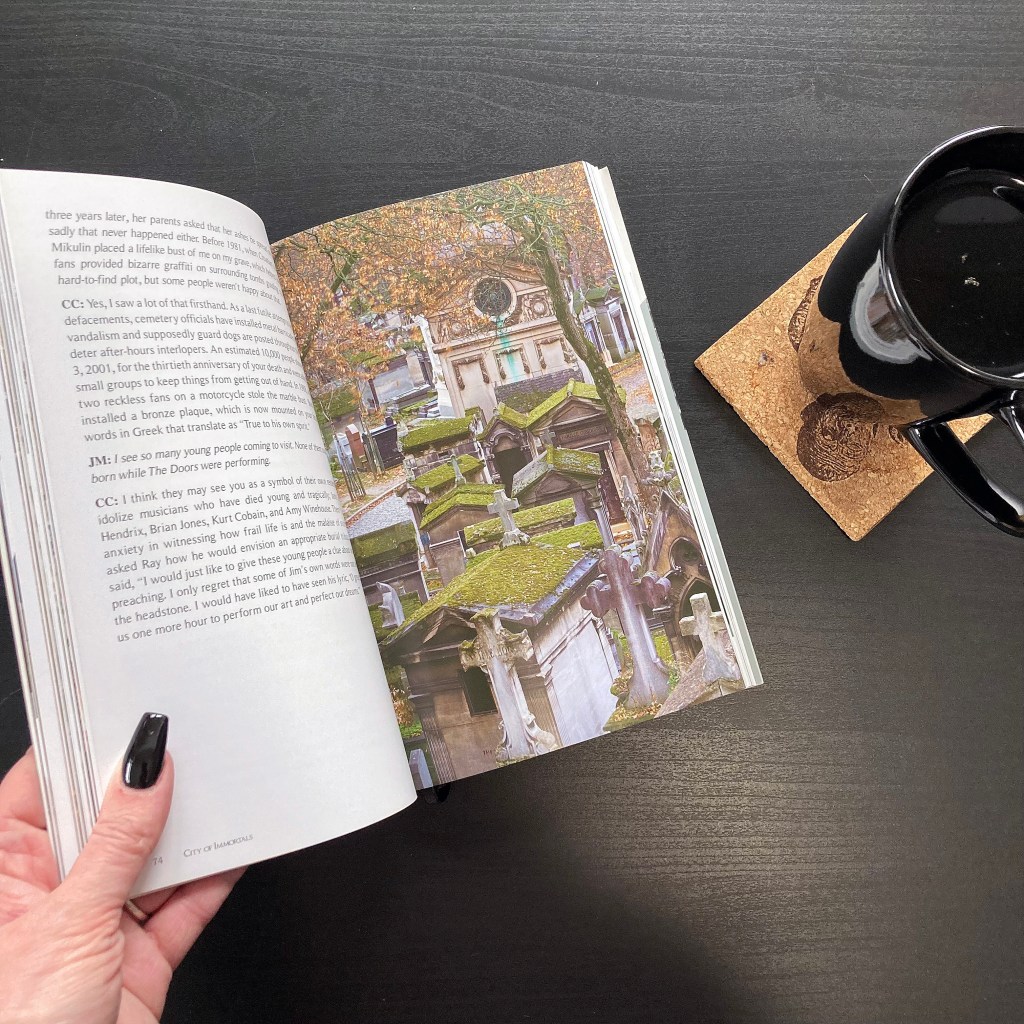
For this month’s book review, I wanted to look at Carolyn Campbell’s debut book, City of Immortals Père-Lachaise Cemetery, Paris. I found out about this book through the Association for Gravestone Studies. It is February’s book, for the AGS book club.
City of Immortals is in part history, a first-person account, and a guided tour. Carolyn takes us through the rich history of this legendary necropolis, while also sharing her connections to it. She also sheds light on the stories of the most notable figures laid to rest at Père-Lachaise. This book also includes 3 guided tours and an illustrated map, with detailed directions to take you throughout the cemetery.
“This first-person account of a legendary necropolis will delight Francophiles, tourists, and armchair travelers while enriching the experience of taphophiles (cemetery lovers) and aficionados of art and architecture, mystery, and romance. Carolyn Campbell’s evocative images are complemented by those of renowned landscape photographer Joe Cornish.” – Book synopsis
This is a beautiful book. It boasts a built-in ribbon bookmark, a satin finish cover, glossy pages, and a pull-out illustrated map of the cemetery. The illustrated map was a lovely surprise. I enjoyed this book, for the most part. I loved exploring the rich history of the place. The only aspect of the book I didn’t like was Chapter 3 – Conversations with the immortals. In this chapter, Carolyn holds Q&A conversations with some of the more notable figures buried in the cemetery. I assume she did her research to come up with the answers to her interview-style questions, but these notable figures have passed on—some over a hundred years ago. It sometimes comes across as she is putting words into these people’s mouths. I understand it as a narrative device, but I think it may have been a poor choice. That chapter could have been better used to describe more of the rich history of the cemetery, while the information gleaned from her “conversations” could have been included in the tours. That being said, the walking tours are very well directed and had me feeling like I was wandering the graves in person. This book would be a great resource to bring along if I were to ever visit in person. I also have to mention the gorgeous photography in this book. It runs the gamut from detailed shots of individual tombs while also showcasing the beauty of the landscape as a whole.
Overall, I did enjoy this book. Especially now, during a pandemic, it’s a great way to travel without leaving the comfort of my couch. It also is a good starting point for planning a future trip when things return to a more comfortable state of normal. I would say this is a great addition to any cemetery or travel library and would be a valuable resource as a guide to visiting Père-Lachaise Cemetery.
Have your read this book? What did you think? Have you ever visited Père-Lachaise Cemetery? Tell me about it in the comments.
In August of 2020, a friend and I set out to find an abandoned cemetery. She had been to it before, having stumbled upon it while out and about on four-wheelers. She was excited to share it with me. She and I have been on many cemetery adventures, but this one was a bit different for us. Normally we would jump in the car and head for a destination while stopping at all the cemeteries we found along the way. This one was a bit closer to home and would need to be reached on foot. So with the camera in hand, we started walking. Have you ever seen the movie Stand by me? It sort of had that feeling, except we weren’t going to see a dead body, we were off to see a cemetery.
Happy Valley is considered a ghost town. According to Ontario Abandoned Places, it never really was considered a town at all.
“…more of a settlement which belonged to Falconbridge. Happy Valley consisted of residents who wanted to be separate and independent from the residents of Falconbridge…The residents were mainly farmers and mill-workers who worked at the sawmills by the lake. The children would have to endure a three-mile walk every morning to the nearest school (established in 1907) located in Garson…Other than the mills and homes, there were no stores or a post office to be found. Residents had to travel to Falconbridge Township for amenities…By 1970, the town was abandoned…almost. The last resident, “Gizzy”, left the town in the late ’80s.” – Ontario Abandoned Places
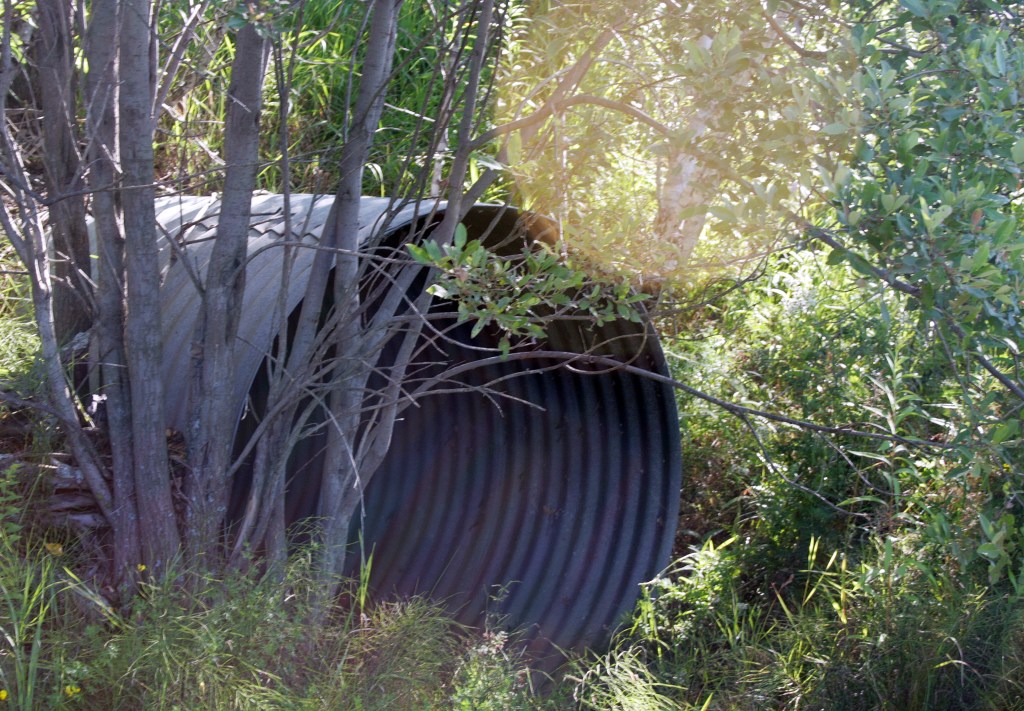
Our trip began by taking us into a more industrial part of the town. There were dunes everywhere and an old abandoned railway track. Small trees and bushes were growing from in between the railway ties. Those tracks had not seen much use in a while. We walked the train tracks for a little bit, but then found a dirt trail that took us more into the surrounding wilderness. We passed old culverts and a few small lakes. It was a beautiful day for a walk!
The way to this cemetery wasn’t a straight shot, or well marked. We had a general direction and were using landmarks to help find our way. We referenced old photos from the first time my friend had been there. We seemed to have made our way into some backcountry, where there were sandy trails and lots of sandy hills, that would be great for four-wheeling. After climbing up into a rocky area we reached a plateau where it levelled off and there was a two-lane sandy road. It was nice to not have to watch our footing anymore for fear of catching a toe on a rock.
My friend felt we were getting close. We walked on, enjoying each other’s company and chatting about life. Now and then we would stop to assess how far we had gone. We were alone in the woods, having not seen anyone else out on the trails. After a while, we started to question if we had gone too far. We checked a side trail, but no, it was going off in the wrong direction. We took a small break to rest and re-evaluate. Luckily, we still were getting cell service in what seemed like the middle of nowhere. She was able to look at satellite photos on Google and find what looked to be our cemetery. We had gone too far! We had to backtrack a little way and take a dirt road that forked to the right. Our goal should be right around that corner.
We found it! It’s a small cemetery, having been recently surrounded by a chain-link fence. We theorized that the fence was put up to protect the cemetery from people unintentionally running through it on quads and snowmobiles. There are about a handful of headstones, some up-right and a few flat to the earth. There seem to be more pioneers buried there than there are headstones.
Having found the cemetery and being able to visit it was well worth the hike. It was super satisfying! Almost more rewarding than if we would have driven straight there. After spending some time among the tombstones, we made our way back the way we came. Through the woods, along the dirt paths, and along the train tracks, ending by having to climb back up a massive dune that we had first scaled down at the beginning of our journey. It was a great adventure! I am grateful that I have good friends who want to share these kinds of experiences with me!
More recently, I was doing some pre-emptive cemetery road trip research, getting ready for this spring. I was going through all the cemeteries listed in my hometown, there are 25 in total. I have been to all but 3 of them, or so I thought. Based on my archived photos I had not visited Ruff Pioneer Cemetery, Chelmsford Protestant Cemetery, and St. Joseph Cemetery. As I did a bit more research into where these cemeteries are located, I got stuck on Ruff Pioneer Cemetery. It’s listed as being off of Goodwill Road, in Garson. As I searched Google Maps, it just was not making sense. I was able to zero in on its location using satellite photos. Low and behold—Ruff Pioneer Cemetery is our Abandoned Happy Valley cemetery!
Looking back at my photos, though, it all makes sense!
Looking back at this cemetery adventure has me pining for summer and the opportunity to visit new cemeteries. I have a few road trips already planned and mapped out, but I may take a look for more abandoned cemeteries that are harder to find. Do you have a story about an abandoned cemetery? Share it in the comments!
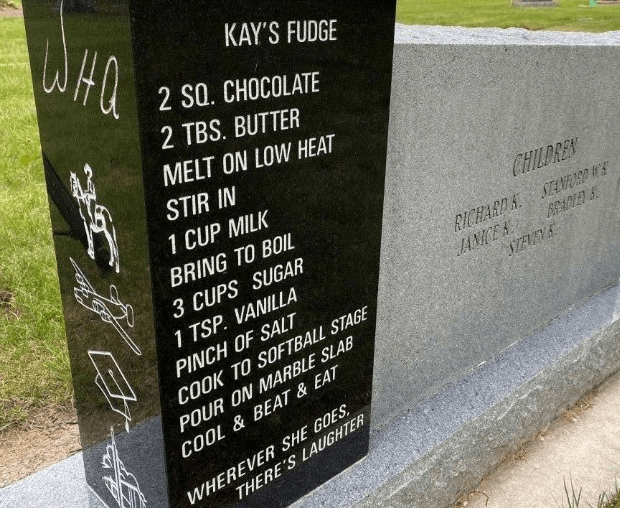
Last year I posted a news article on my Facebook page about an interesting tombstone. What makes Kathryn Andrew’s stone so unique is that it features her go-to fudge recipe. Kay had asked for her recipe to be engraved on her tombstone as a way to share her delicious recipe with others. According to Janice, Kay’s daughter, Kay would often share her fudge with friends and family1.
Kay passed away in 2019, at the age of 97. She was laid to rest beside her husband Wade. Her now-famous tombstone has been circulating on the internet, with many folks trying out her famous fudge recipe.
Photo of Kay’s tombstone, by Find a Grave member, Lizzie. Photo used with permision.
To learn more about Kay and see more photos of her tombstone, visit her memorial page at findagrave.com.
Here is the recipe, as listed on Kay’s tombstone:
2 SQ. CHOCOLATE
2 TBS. BUTTER
MELT ON LOW HEAT
STIR IN 1 CUP MILK
BRING TO BOIL
3 CUPS SUGAR
1 TSP. VANILLA
PINCH OF SALT
COOK TO SOFTBALL STAGE
POUR ON MARBLE SLAB
COOL & BEAT & EAT
Interestingly, when the recipe was first engraved, there was a typo. It originally called for a tablespoon of vanilla. I’m told that that would make for some very runny fudge. The tombstone was updated to read a teaspoon of vanilla. I wonder if this correction was made while Kay was still around, and how she would have felt about it?
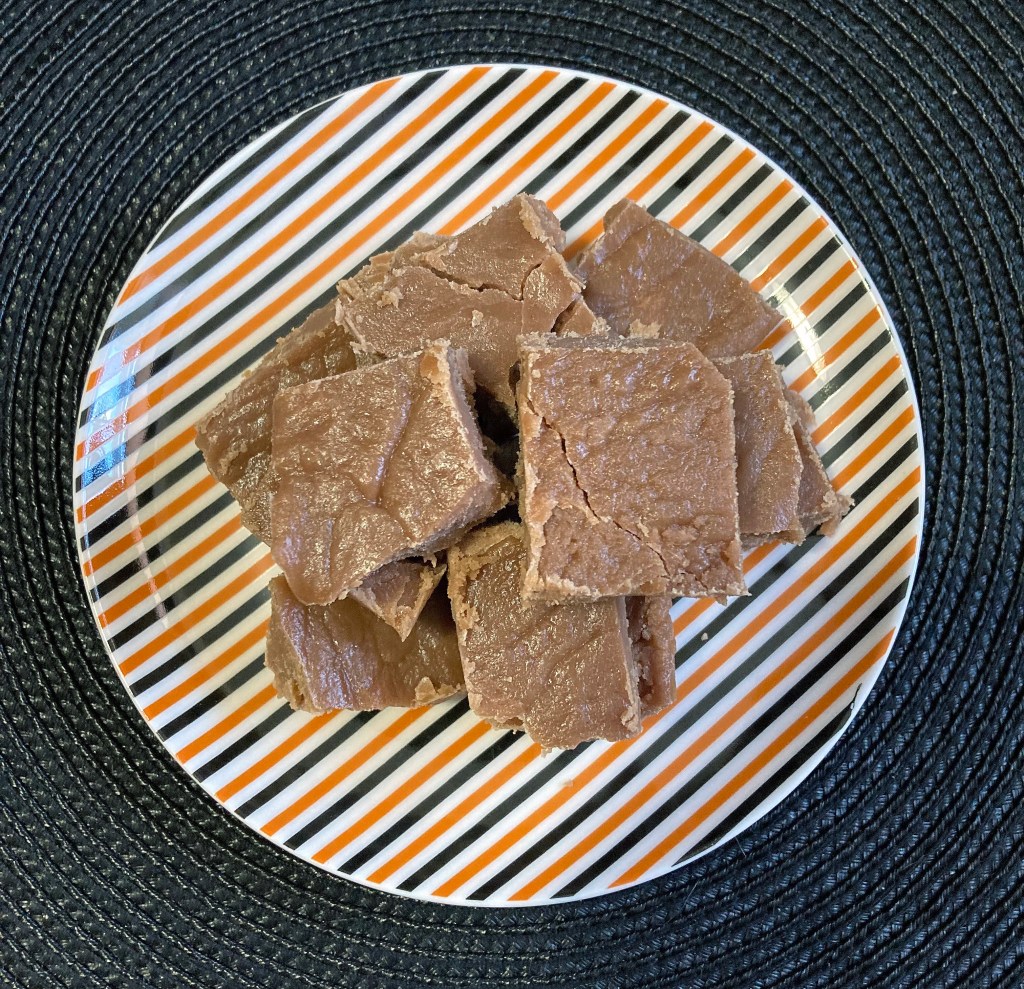
Of course, I couldn’t write about this unique tombstone without trying my hand at making Kay’s fudge recipe myself. I have dabbled in the past with making candy but never had much success, so I was a bit worried about ruining it. I made sure to take my time and follow the instructions, although I did need to take some time to Google a few things. I used a candy thermometer to make sure I didn’t overcook the ingredients. I did have a little trouble at first as I was not reading my thermometer properly. I started talking to Kay out loud as I poured out the mixture into a bowl. It looked too runny to me. Talking it out with Kay, I put the mixture back on the stove and took a closer look at the thermometer. A Google search clarified that the softball stage is reached between 112 to 115 Celsius. You don’t need a candy thermometer though.
To tell when you have reached the softball stage you can use a spoon to drop a little bit of the mixture into a cold glass of water. If the mixture forms small malleable balls in the water, you have reached the softball stage. After getting that sorted, I watched it carefully to get to the right temperature.
I don’t have a marble slab so I opted to pour the mixture into a bowl to let it cool. I did another Google search to see how long it should cool for. After 15 minutes, it was time to beat the mixture. Again I had to do a little bit of research to see how long to beat the fudge. Traditionally it would be beaten on a marble slab, but I read that you can beat it in a bowl with just a spoon. The trick is to beat it until it is no longer glossy. I was a little unsure about this step as it did not seem to be losing its shine but after a few minutes it did, and it started to firm up. I then poured the mixture into an 8×8 square dish and let it set.
I am very happy with how it turned out! It’s sweet and chocolatey with a lovely texture. It also made a decent size batch. In the spirit of Kay’s generosity, I brought my batch of Kays fudge to a small gathering to share with my friends.
Thank you so much, Kay, for sharing your recipe with us!
After all the fun of making this recipe, I started to wonder if there were other tombstone treats I could try? If you know of other cemetery recipes out there, please share! I would also love to hear how your fudge turned out, if you attempted Kay’s recipe.

















 Cemetery Photography by Chantal Larochelle
