Finding the abandoned Happy Valley cemetery

In August of 2020, a friend and I set out to find an abandoned cemetery. She had been to it before, having stumbled upon it while out and about on four-wheelers. She was excited to share it with me. She and I have been on many cemetery adventures, but this one was a bit different for us. Normally we would jump in the car and head for a destination while stopping at all the cemeteries we found along the way. This one was a bit closer to home and would need to be reached on foot. So with the camera in hand, we started walking. Have you ever seen the movie Stand by me? It sort of had that feeling, except we weren’t going to see a dead body, we were off to see a cemetery. 

Happy Valley is considered a ghost town. According to Ontario Abandoned Places, it never really was considered a town at all. 

“…more of a settlement which belonged to Falconbridge. Happy Valley consisted of residents who wanted to be separate and independent from the residents of Falconbridge…The residents were mainly farmers and mill-workers who worked at the sawmills by the lake. The children would have to endure a three-mile walk every morning to the nearest school (established in 1907) located in Garson…Other than the mills and homes, there were no stores or a post office to be found. Residents had to travel to Falconbridge Township for amenities…By 1970, the town was abandoned…almost. The last resident, “Gizzy”, left the town in the late ’80s.” – Ontario Abandoned Places

For more formation on the Happy Valley ghost town, visit Ontario Abandoned Places.

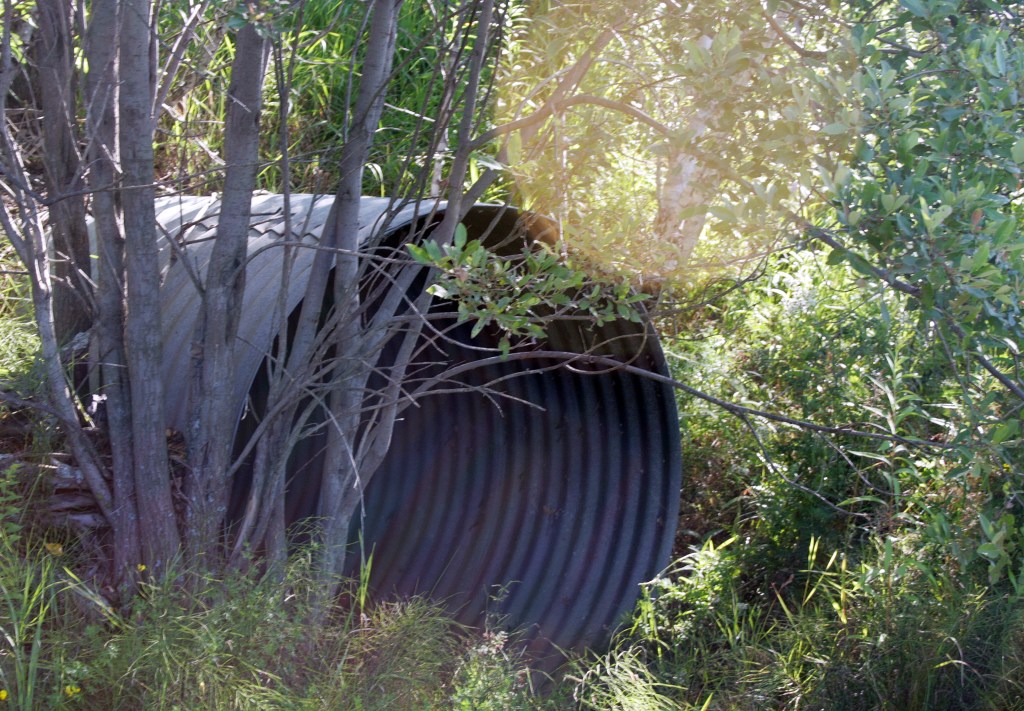
Our trip began by taking us into a more industrial part of the town. There were dunes everywhere and an old abandoned railway track. Small trees and bushes were growing from in between the railway ties. Those tracks had not seen much use in a while. We walked the train tracks for a little bit, but then found a dirt trail that took us more into the surrounding wilderness. We passed old culverts and a few small lakes. It was a beautiful day for a walk! 
The way to this cemetery wasn’t a straight shot, or well marked. We had a general direction and were using landmarks to help find our way. We referenced old photos from the first time my friend had been there. We seemed to have made our way into some backcountry, where there were sandy trails and lots of sandy hills, that would be great for four-wheeling. After climbing up into a rocky area we reached a plateau where it levelled off and there was a two-lane sandy road. It was nice to not have to watch our footing anymore for fear of catching a toe on a rock.

My friend felt we were getting close. We walked on, enjoying each other’s company and chatting about life. Now and then we would stop to assess how far we had gone. We were alone in the woods, having not seen anyone else out on the trails. After a while, we started to question if we had gone too far. We checked a side trail, but no, it was going off in the wrong direction. We took a small break to rest and re-evaluate. Luckily, we still were getting cell service in what seemed like the middle of nowhere. She was able to look at satellite photos on Google and find what looked to be our cemetery. We had gone too far! We had to backtrack a little way and take a dirt road that forked to the right. Our goal should be right around that corner. 

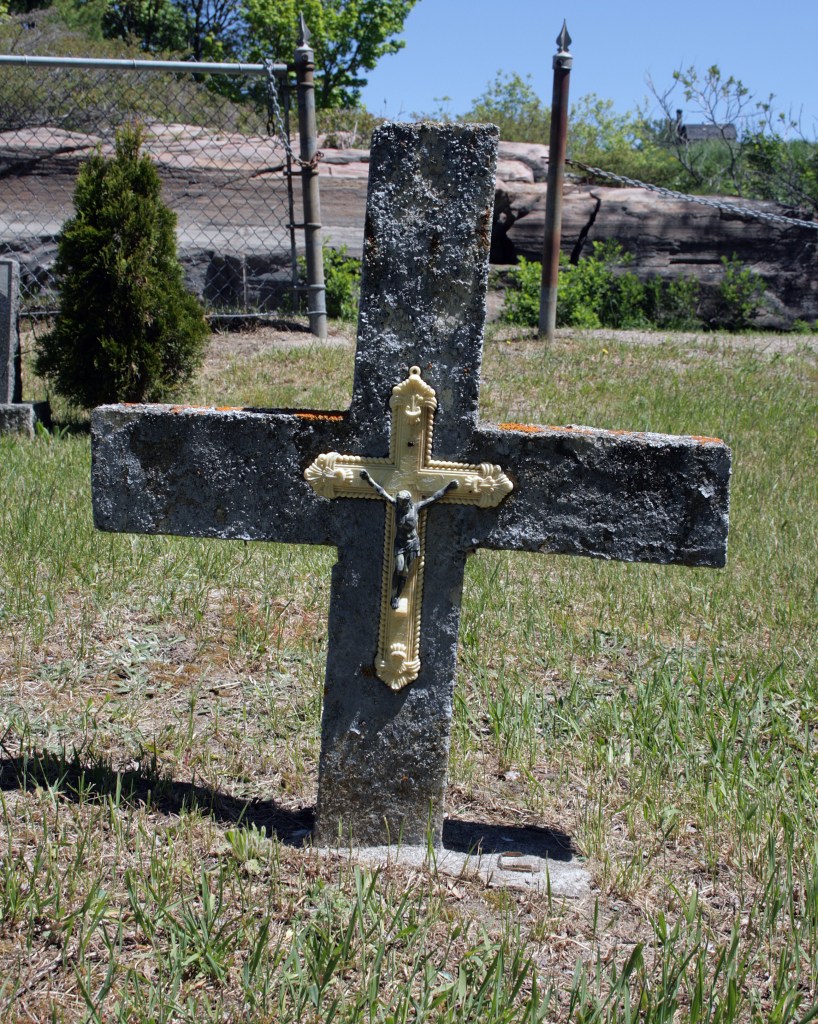
We found it! It’s a small cemetery, having been recently surrounded by a chain-link fence. We theorized that the fence was put up to protect the cemetery from people unintentionally running through it on quads and snowmobiles. There are about a handful of headstones, some up-right and a few flat to the earth. There seem to be more pioneers buried there than there are headstones.

Ruff Pioneer Cemetery, Garson ON ©2020

Having found the cemetery and being able to visit it was well worth the hike. It was super satisfying! Almost more rewarding than if we would have driven straight there. After spending some time among the tombstones, we made our way back the way we came. Through the woods, along the dirt paths, and along the train tracks, ending by having to climb back up a massive dune that we had first scaled down at the beginning of our journey. It was a great adventure! I am grateful that I have good friends who want to share these kinds of experiences with me! 

More recently, I was doing some pre-emptive cemetery road trip research, getting ready for this spring. I was going through all the cemeteries listed in my hometown, there are 25 in total. I have been to all but 3 of them, or so I thought. Based on my archived photos I had not visited Ruff Pioneer Cemetery, Chelmsford Protestant Cemetery, and St. Joseph Cemetery. As I did a bit more research into where these cemeteries are located, I got stuck on Ruff Pioneer Cemetery. It’s listed as being off of Goodwill Road, in Garson. As I searched Google Maps, it just was not making sense. I was able to zero in on its location using satellite photos. Low and behold—Ruff Pioneer Cemetery is our Abandoned Happy Valley cemetery!

Looking back at my photos, though, it all makes sense!

Goodwill road was most likely named after those pioneers buried in this cemetery.

Looking back at this cemetery adventure has me pining for summer and the opportunity to visit new cemeteries. I have a few road trips already planned and mapped out, but I may take a look for more abandoned cemeteries that are harder to find. Do you have a story about an abandoned cemetery? Share it in the comments!

Thanks for reading! 
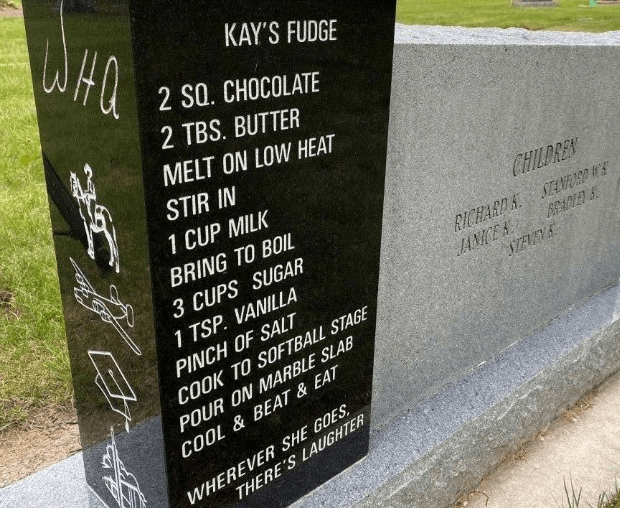
Cemetery Recipes: Kay’s Fudge

Last year I posted a news article on my Facebook page about an interesting tombstone. What makes Kathryn Andrew’s stone so unique is that it features her go-to fudge recipe. Kay had asked for her recipe to be engraved on her tombstone as a way to share her delicious recipe with others. According to Janice, Kay’s daughter, Kay would often share her fudge with friends and family1

Kay passed away in 2019, at the age of 97. She was laid to rest beside her husband Wade. Her now-famous tombstone has been circulating on the internet, with many folks trying out her famous fudge recipe. 

To learn more about Kay and see more photos of her tombstone, visit her memorial page at findagrave.com.

Here is the recipe, as listed on Kay’s tombstone:

  • 2 SQ. CHOCOLATE
  • 2 TBS. BUTTER
  • MELT ON LOW HEAT
  • STIR IN 1 CUP MILK
  • BRING TO BOIL
  • 3 CUPS SUGAR
  • 1 TSP. VANILLA
  • PINCH OF SALT
  • COOK TO SOFTBALL STAGE
  • POUR ON MARBLE SLAB
  • COOL & BEAT & EAT

Interestingly, when the recipe was first engraved, there was a typo. It originally called for a tablespoon of vanilla. I’m told that that would make for some very runny fudge. The tombstone was updated to read a teaspoon of vanilla. I wonder if this correction was made while Kay was still around, and how she would have felt about it?

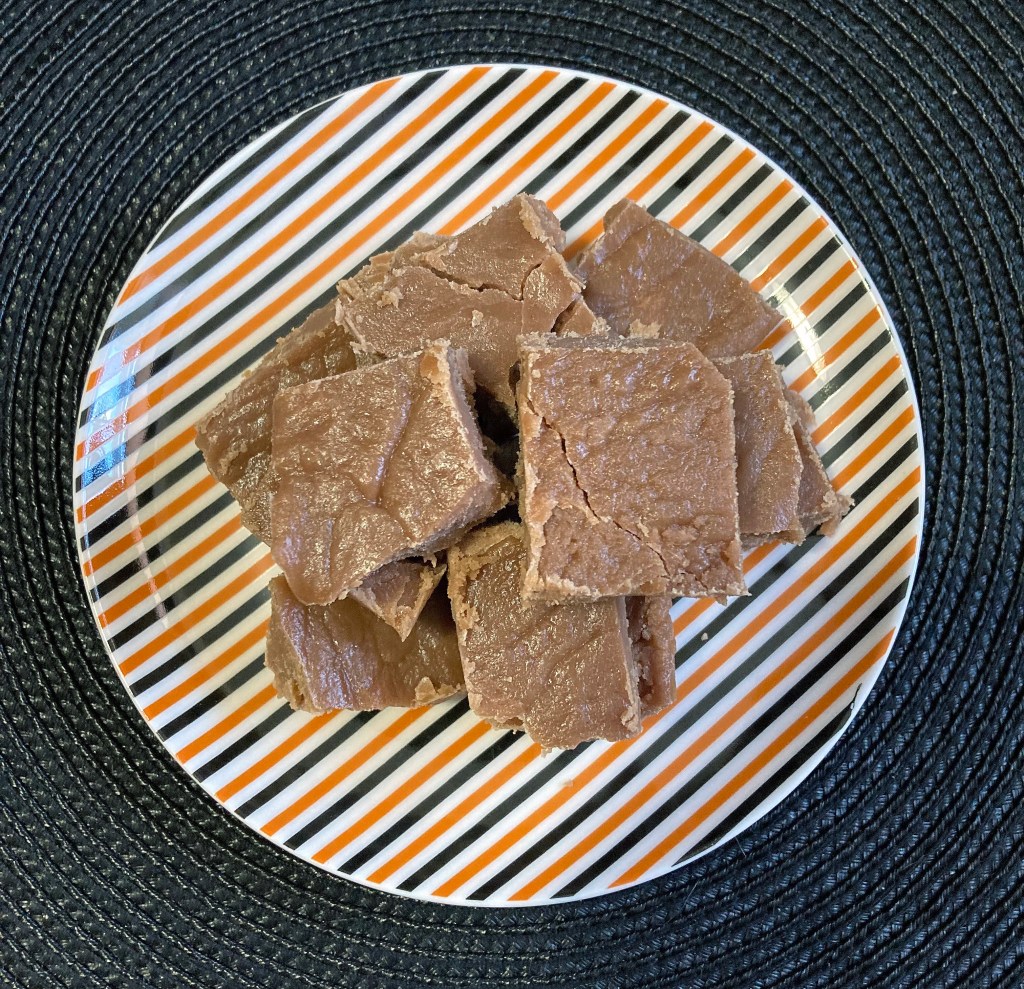
Of course, I couldn’t write about this unique tombstone without trying my hand at making Kay’s fudge recipe myself. I have dabbled in the past with making candy but never had much success, so I was a bit worried about ruining it. I made sure to take my time and follow the instructions, although I did need to take some time to Google a few things. I used a candy thermometer to make sure I didn’t overcook the ingredients. I did have a little trouble at first as I was not reading my thermometer properly. I started talking to Kay out loud as I poured out the mixture into a bowl. It looked too runny to me. Talking it out with Kay, I put the mixture back on the stove and took a closer look at the thermometer. A Google search clarified that the softball stage is reached between 112 to 115 Celsius. You don’t need a candy thermometer though.

To tell when you have reached the softball stage you can use a spoon to drop a little bit of the mixture into a cold glass of water. If the mixture forms small malleable balls in the water, you have reached the softball stage. After getting that sorted, I watched it carefully to get to the right temperature.

I don’t have a marble slab so I opted to pour the mixture into a bowl to let it cool. I did another Google search to see how long it should cool for. After 15 minutes, it was time to beat the mixture. Again I had to do a little bit of research to see how long to beat the fudge. Traditionally it would be beaten on a marble slab, but I read that you can beat it in a bowl with just a spoon. The trick is to beat it until it is no longer glossy. I was a little unsure about this step as it did not seem to be losing its shine but after a few minutes it did, and it started to firm up. I then poured the mixture into an 8×8 square dish and let it set.

I am very happy with how it turned out! It’s sweet and chocolatey with a lovely texture. It also made a decent size batch. In the spirit of Kay’s generosity, I brought my batch of Kays fudge to a small gathering to share with my friends.

Thank you so much, Kay, for sharing your recipe with us!

To read more about Kathryn’s unique tombstone, visit: Headstone for woman who died at 97 includes her signature fudge recipe | ABC Action News

After all the fun of making this recipe, I started to wonder if there were other tombstone treats I could try? If you know of other cemetery recipes out there, please share! I would also love to hear how your fudge turned out, if you attempted Kay’s recipe.

Thanks for reading!

References:

  1. We tried the famous fudge recipe engraved on a late grandmother’s gravestone | Today.com | June 2, 2021

The Association for Gravestone Studies

I found out about The Association for Gravestone Studies years ago, while doing some online shopping. I was looking at gravestone rubbing kits at Pushin Daisies, the mortuary novelty shop. Each kit comes with information on becoming a member of AGS. I was curious. I didn’t end up purchasing a rubbing kit, but I did end up getting myself a membership for AGS. After being a member for a few years, I let my membership lapse due to financial reasons. I missed being part of the Association and missed receiving gravestone-related mail though.

When I decided to focus more on my cemetery photography a couple of years ago, one of the first things I did was renew my membership. I am very happy to be a member again! 

“The Association for Gravestone Studies (AGS) was founded in 1977 for the purpose of furthering the study and preservation of gravestones. AGS is an international organization with an interest in grave markers of all periods and styles. Through its publications, conferences, workshops and exhibits, AGS promotes the study of gravestones from historical and artistic perspectives, expands public awareness of the significance of historic grave markers, and encourages individuals and groups to record and preserve gravestones. At every opportunity, AGS cooperates with groups that have similar interests.” – gravestonestudies.org

What drew me to the Association, was finding other like-minded individuals, and all the resources they offer. There are quite a few AGS chapters throughout the United States, and when I first joined there were a couple of Canadian chapters. Unfortunately, none were close to me, and those chapters have since closed. There are lots of opportunities to get to know your fellow members and taphophiles though, like the AGS Conference for example. This annual conference takes place in a different location each year and features events like field trips, conservation workshops, hands-on sessions as well as panels, evening lectures, and late-night presentations. Last year the conference went virtual! I think it was a great approach. It’s mindful of the current pandemic, and a great way for those of us that are far away, to attend. I do hope they continue to offer some virtual events for the conference.

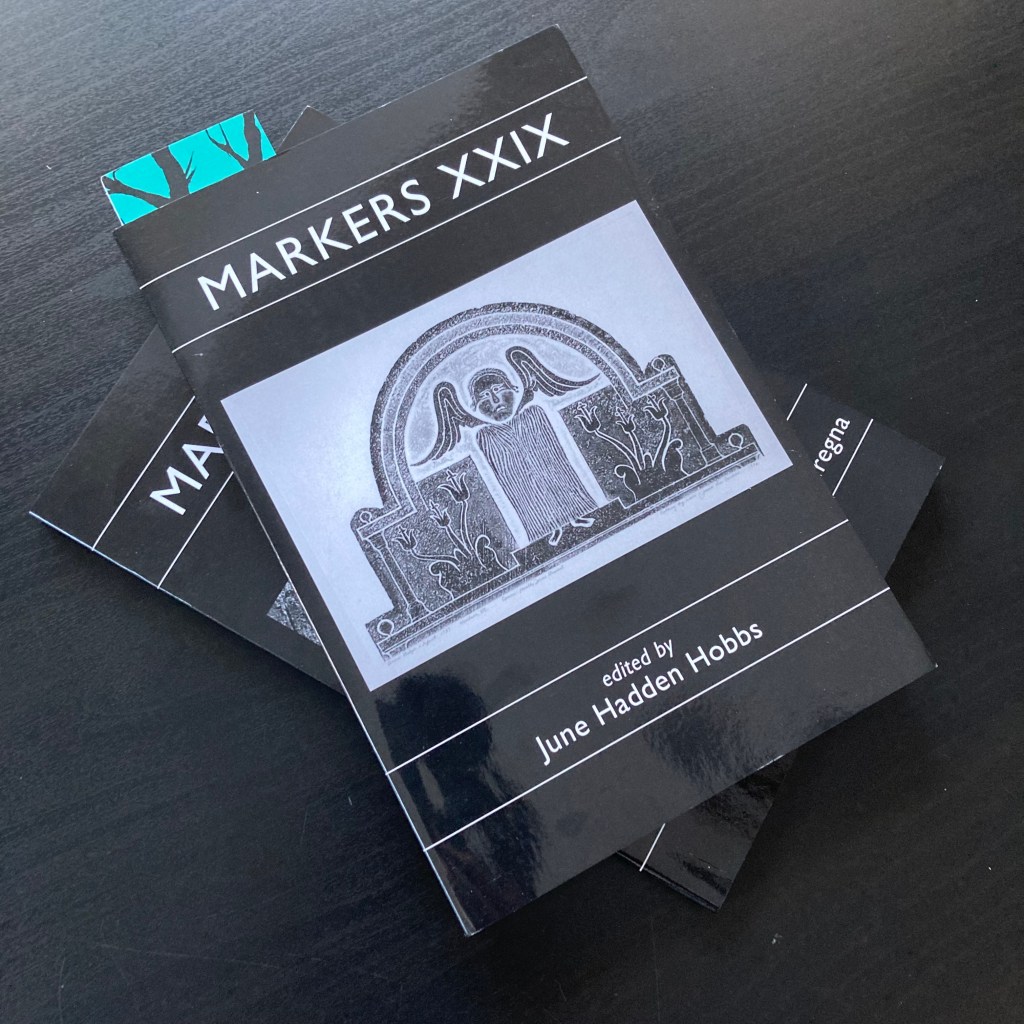
In addition to that, there are a lot of publications available. The AGS Quarterly is the bulletin of the Association for Gravestone Studies. It’s published 4 times a year and is delivered right to your door if you are a member. The Quarterly features articles, and regular columns on conservation and International gravestone studies. I love the articles in the Quarterly, they are always fascinating. Another publication AGS offers is Markers, the annual journal of AGS. During the winter months, what I consider my off-season for cemetery photography, I have been diving into the back issues of Markers, reading them cover to cover. It’s a beautiful perfect-bound journal that features definitive illustrated articles on cemetery and gravestone topics. It’s very in-depth and very informative. It also features international content. A bonus of AGS membership is that now you can read and download past issues of Markers online. They offer a lot of other online resources as well, in their knowledge centre. There you can find information on symbolism and the archives of past Markers and AGS Quarterly issues, as well as past e-newsletters. They also have a database of websites that pertain to the preservation of gravestones.

New this year, AGS has added a virtual book club. Starting in January, the book club meets on the third Sunday of each month and focuses on books about cemeteries, gravestones, mourning customs, funerary practices, and death and dying. The book for January was 199 Cemeteries to See Before You Die by Loren Rhoads. I attended the first meeting and had a great time. There were about 30 participants, including the books author. We were split up into 2 smaller groups for discussions. In virtual break-out rooms, the moderators inspired conversation by asking questions about elements of the book. There was a great range of participants from all over the world. It was really interesting to hear everyone’s thoughts. Having Loren in attendance was a pleasant surprise. It was really interesting to get some extra insights from her. I’m looking forward to February’s meeting, where we will be discussing City of Immortals: Père-Lachaise Cemetery, Paris by Carolyn Campbell.

I highly recommend joining the Association for Gravestone Studies if you have an interest in cemeteries, and gravestone preservation. It’s a great place to find others with a passion for cemeteries and a great resource to learn more about everything cemetery related.

To learn more about the Association for Gravestone Studies, please visit their website. You can also find AGS on Facebook and Instagram.

Thanks for reading!

A Collection of Handmade Stones

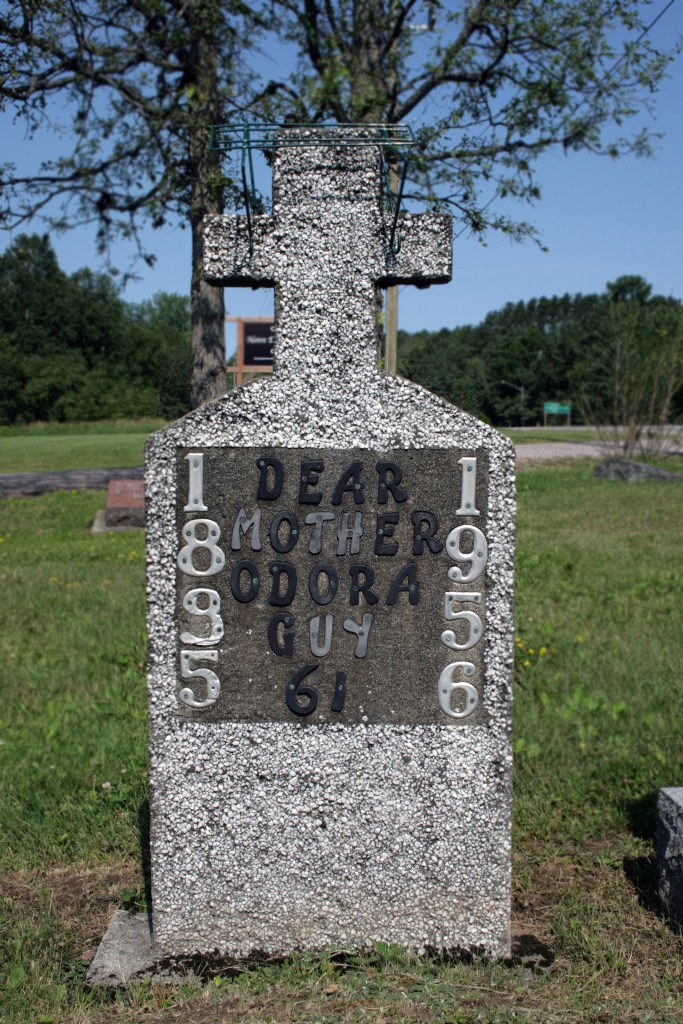
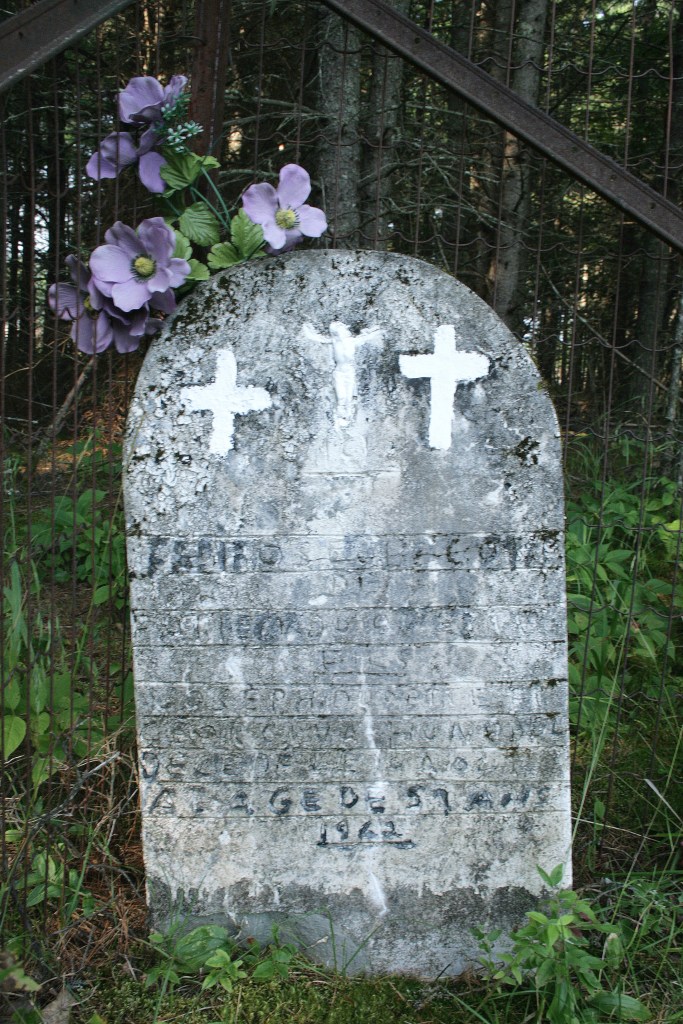
If you spend a lot of time in cemeteries, especially in Northern Ontario, you will start to notice the repetition of certain symbols and motifs. In Ontario and Quebec, something I have come across frequently is handmade stones.

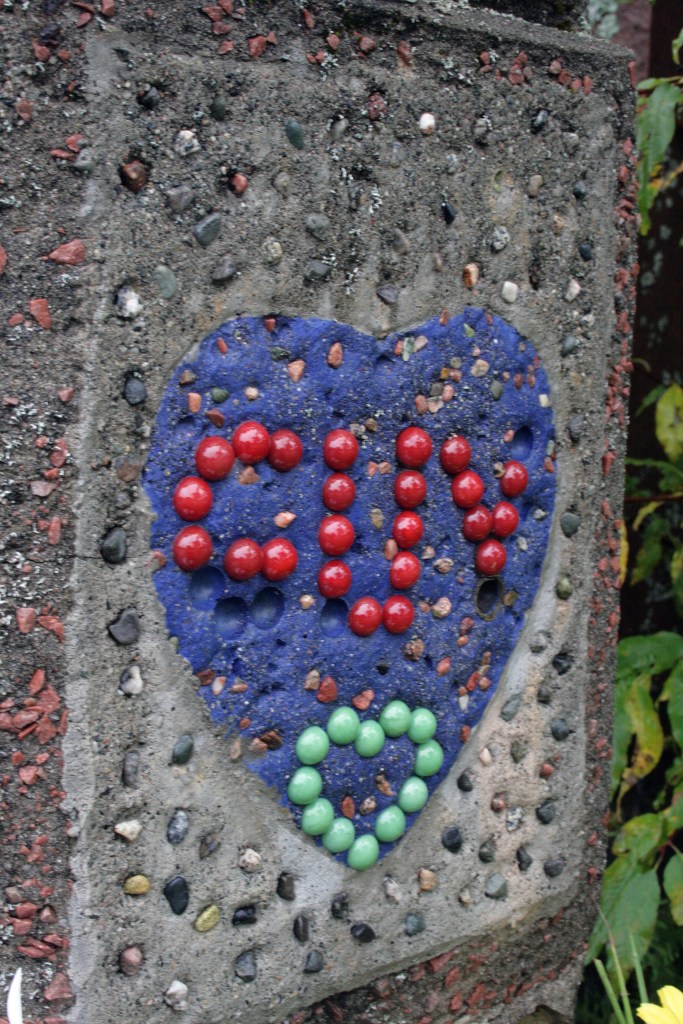
These stones have been lovingly hand-poured in cement, adorned with crucifixes, stones, and other baubles, and usually have hand lettering. They are beautiful representations of love for those who have passed. There could be many reasons why a handmade stone was created, and each one is unique and beautiful with its own charm.

I love finding handmade stones and have photographed many over the years. I wanted to share some of them with you.

White bronze, also known as Zinkys

Have you ever heard of Zinkys? You may have come across one or two in your cemetery travels. I know I have, but it has only been until recently that I discovered what these beautiful gravestones are. That is one of the many things I love about my cemetery community, I am always learning new things from my fellow taphophiles.

Zinkys as they are lovingly referred to, is also known as white bronze. They look very similar to carved stone headstones, but they are made from a zinc alloy and are hollow. These monuments were generally less expensive than carved stone, and are a lot more durable. You will often find intricate designs on white bronze headstones, that are still perfectly legible. You can recognize a white bronze headstone by its bluish-grey color, and giving it a gentle tap should produce a hollow sound.

According to Understanding Cemetery Symbols by Tui Snider, in the United States during the prohibition era, it was claimed that bootleggers would sometimes pry the panels off of these metal monuments to hide their booze.

Here in Canada, the White Bronze Company of St. Thomas, Ontario produced zinkys from 1883 to 1900. It was a child company of Monumental Bronze Co. of Bridgeport, Connecticut.1 According to Connecticuthistory.org, Monumental Bronze Co. only produced white bronze between 1874 and 1914. In 1914, World War I saw the facilities turn from creating pure zinc tombstones to creating gun mounts and munitions.2 After the war, it seemed that tastes had changed, and public demand shifted to other natural materials for grave markers.

These blue-grey markers are truly beautiful in person. They range in size and detail, but I always find myself fascinated by how perfectly intact they are. I have come across a couple of broken ones, where a cross or spire has been broken off, but the names of the deceased are always legible.

Since learning about them, I have kept an eye out for them in my cemetery travels, and have been rewarded a few times this summer. I look forward to finding more in my travels.

Have you come across and zinkys in your cemetery travels? I would love to read about it in the comments.

Thanks for reading!


References:

  1. The St. Thomas White Bronze Company: A Diffusion of Innovations Perspective | ResearchGate
  2. Monumental Bronze Company | Connecticut History

Stone Stories: Visiting the Dionne Quintuplets

On my vacation, my Mother and I took a road trip to North Bay, Callander, and Corbeil Ontario to explore and experience the story of Canadian folk figures, the Dionne Quintuplets.

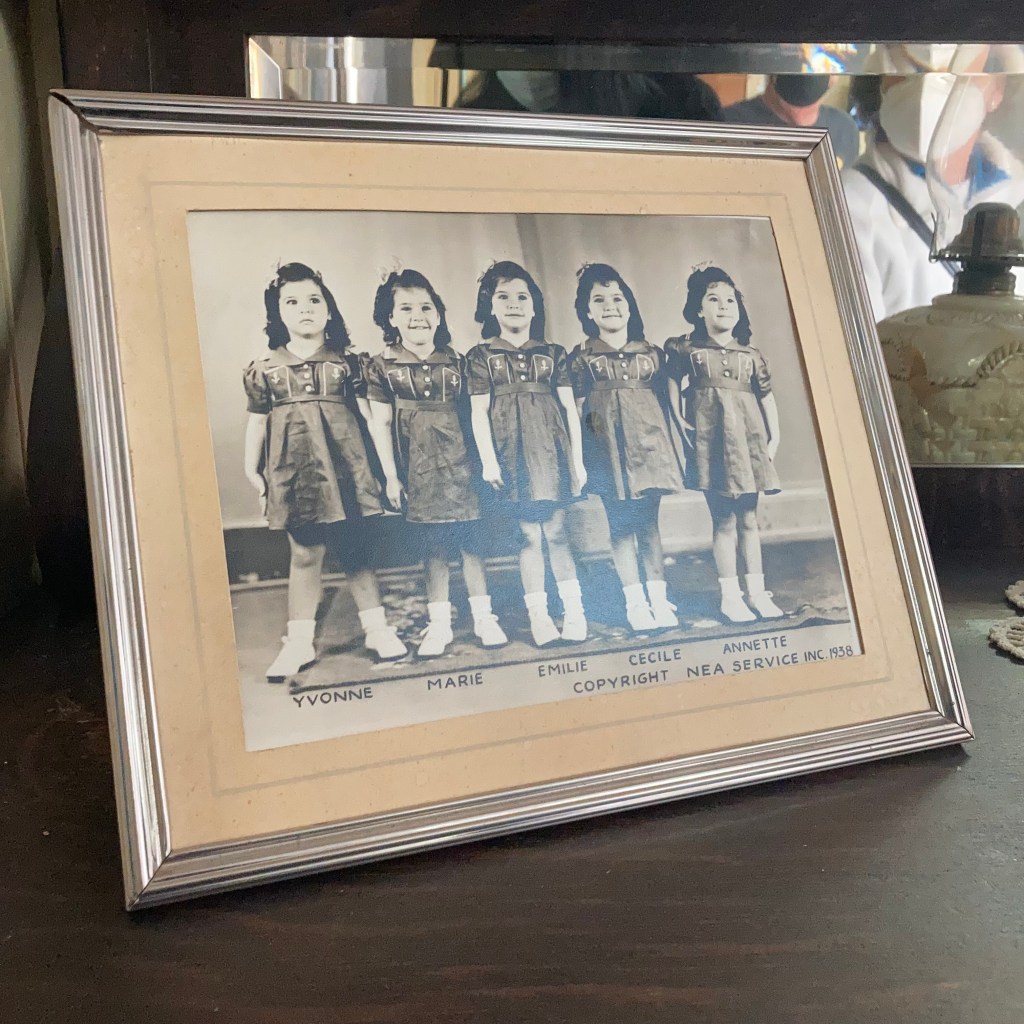
“On May 28, 1934, five identical girls were born to Oliva and Elzire Dionne, a Franco-Ontario family in the tiny community of Corbeil, Ontario. Their births were a miracle of its time during the difficult Depression, the only quintuplets to survive more than a few days. Midwives Douilda (Donalda) Legros and Mary-Jeanne Lebel delivered the first 3 of the quintuplets, and Dr. Allan Roy Dafoe assisted with the final 2 births. The five girls – Yvonne, Annette, Cécile, Émilie, and Marie – became a “good news” story in this challenging time, drawing worldwide attention to the area, and attracting 3 million people to “Quintland” to see and hear the girls at play. Hollywood told their story in 3 movies, while endorsements for commercial products became commonplace.” – Dionne Quints Heritage Board website

In North Bay, we visited the Quint House Museum. This was the actual family home where the quintuplets were born. It houses a lot of original artifacts; such as the bed where they were born, cribs, children’s beds, children’s clothing, and their baby carriages. It also contains a lot of original photos of when the children were born, while they were growing up at Quintland, and also a lot of the advertising that was created using their image. Everything from baby food to GM motors was advertised using the Dionne Quintuplets. Dr. Dafoe profited from the twin’s fame. At the Quint house museum, we were given a tour of the house and memorabilia by an actual relative of the quintuplets, their nephew. His mother was one of the siblings of the quintuplets, making Elzire Dionne his grandmother. He spoke about the quintuplets and what happened to them as a tragedy and preferred to not mention the doctor, as he sees him as a villain in their story.

The Dionne Quintuplets were separated from their family and exploited by the “good” Doctor. As well as extensive advertising using the girl’s image, Quintland was built. A large building complex where people from all over the world came to see the quintuplet girls. The courtyard of Quintland was encircled by two-way mirrors, where visitors could pay a fee to watch the girls as they played. After about 9 years, the girls left Quintland and returned to live with their parents. They had other siblings, as the Dionne’s had had 14 children in total. The quints were essentially strangers to their own family, after having been separated from them for so long. It must have been just as strange for their siblings, hearing about their famous sisters, but not knowing them at all. I can only imagine the strain that would put on the family.

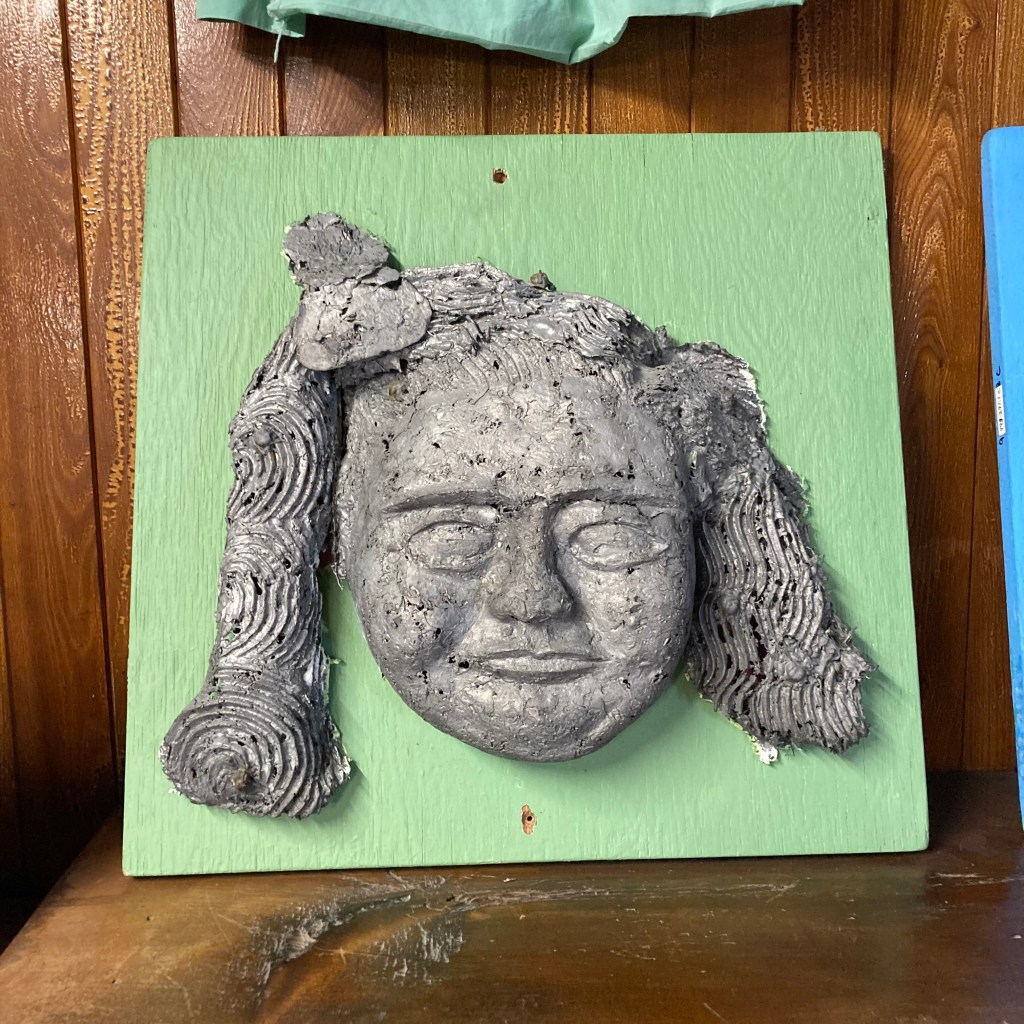
After visiting the Quint House Museum, we traveled a little bit down the road to Callander to visit the Callander Bay Heritage Museum and Alex Dufresne Gallery. This museum is housed in what was once the office of Dr. Alan Roy Dafoe. A turnstile that was used to admit and count attendees to Quintland sits outside. The Quint House Museum also has one of these turnstiles. The house is very rustic and feels like a home office. It would be really interesting if they had a floor plan of what the office looked like when it was in use. This museum also contains a lot of memorabilia of the quintuplets. Some of the more interesting items include lead sculptures of the quintuplet’s faces that were mounted on a clock tower. The sculptures are quite terrifying. There are other exhibits at this museum as well, such as a 1920s barbershop, some military items, as well as logging and mining history.

Visiting the Quint House Museum first made walking around Dr. Dafoe’s office a little awkward. Knowing the pain and strife he had put the family through, made the experience a tad unpleasant. The Callander Bay Heritage Museum also holds an art gallery. We took a little detour from the quintuplet exploration and looked at the beautiful artwork they had on display. We also visited the gift shop and purchased a few things; in particular a recent book on the history of the quintuplets called The Miracle & Tragedy of the Dionne Quintuplets by Sara Miller.

After grabbing some lunch at a delicious little chip stand in Callander, we made our way to Corbeil to visit the Sacred Heart cemetery. As we traveled down a little dirt road and came to the entrance of what looked like the driveway to a farm, I started to realize something.

I had been to this cemetery before!

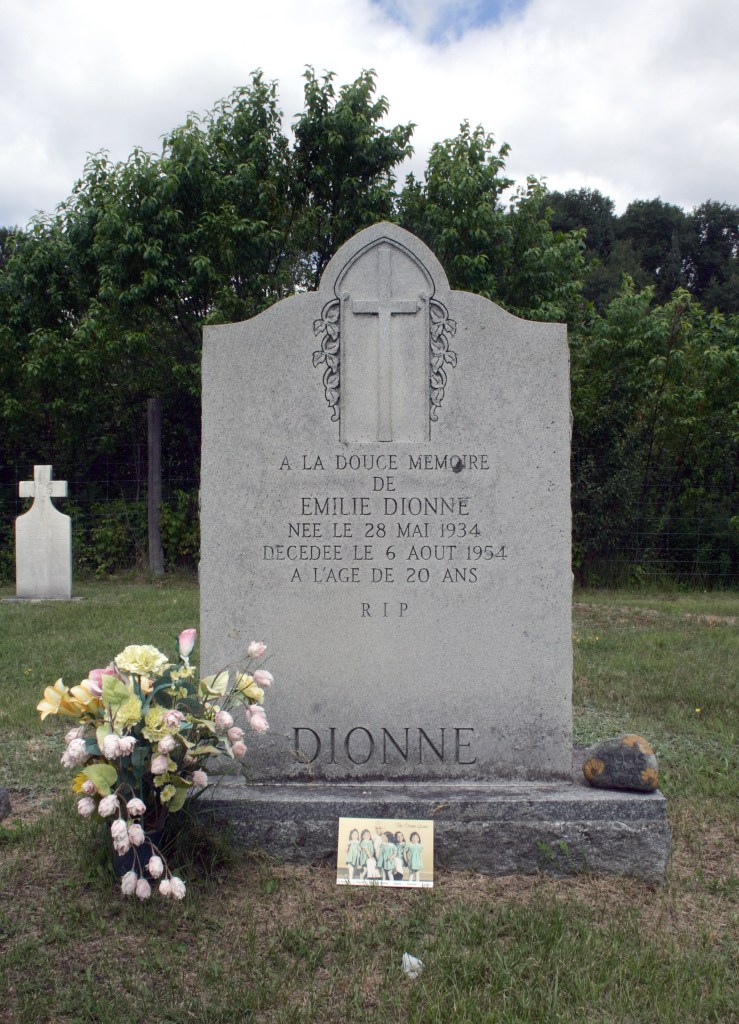
The cemetery is on farm land. Next to the chicken coops and tractors is a fenced-in cemetery with a bright orange diamond sign that says “cemetery entrance”. As we drove up, a man was outside working on his tractor. I rolled down my window and asked if it would be OK if we visited the cemetery. He smiled and nodded, saying that it was fine, so we proceeded to go in. It’s a medium-sized cemetery with a mix of older and newer stones. It looks like it is still an active cemetery as well. The Dionne’s have a small family plot. Oliva and Elzire, the Father and Mother of the quintuplets are buried there. Along with four of their children, one of which is one of the quintuplets Emilie. FindaGrave.com lists two of the quintuplets as being buried here, but I was only able to find the headstone of Emilie.

I have photographed this cemetery before. In 2019 some friends and I did a road trip to North Bay and the area, where we visited the local cemeteries. I’ve even taken pictures of Emilie’s stone. At the time, I recognized the name Dionne, which is why I took the photo. But I never made the connection between the two.

This time I had a postcard with me from the Callander Bay Heritage Museum that showed the quintuplets with Dr. Dafoe. I took photos of the postcard with Emilie’s stone, with no issue. I attempted to take a photo with the postcard on the tombstone for Oliva and Elzire Dionne. The wind was not cooperating and blew the postcard away. After several attempts of trying to get a shot with the postcard, I put it away. Maybe it was the wind, whipping up at an in-opportune moment, or maybe it was the spirit of Oliva and Elzire, refusing to take a photo with an image of the man who took their children away.

There are only two of the quintuplets still living, Annette and Cécile. Emilie and (supposedly) Yvonne are the only quintuplets buried in Corbeil, their home town. The rest of the quintuplets are buried in Montreal. I was curious as to where Dr. Dafoe was laid to rest—he is buried in Toronto.

This was a very educational trip. It was interesting to dive a little deeper into the true story of the Dionne quintuplets. Being able to speak to a blood relative and learn how the family was affected by what happened was truly heart-wrenching and eye opening. The Dionne Quintuplets still draw a crowd, but now for a different reason. In the 1930s it was seen as a miracle and amazing, and no one batted an eye at the fact that these children were taken away from their parents. Today, people are still interested in the Dionne Quintuplets, but the narrative is much different.

If you are interested in learning more about the story of the Dionne Quintuplets, you can visit these links below:

The road so far…

I recently started reading the book 199 cemeteries to see before you die by Loren Rhoads.

It’s a beautiful book, that can be used as a travelogue, that lists must-see cemeteries all over the world. It highlights the history that makes each of them unique. The descriptions are accompanied by beautiful photos as well. I get wanderlust just looking at them! 

It got me thinking about what my tally actually is for visited cemeteries. When I was younger, in the early days of my cemetery traveling, I did not document my cemetery photos that well, and have actually lost a large amount of those photos. They would have been taken with film cameras and an old digital point-and-shoot camera. I may still have the negatives somewhere. 

I remember getting lost in the large cemetery in Guelph, Ontario, but don’t have the photos to prove it. I also remember chatting with the caretaker at the old cemetery in Amos, Quebec, and how excited he was to show me some of the more interesting stones there. I don’t have the photos from that trip either. That is one I really regret, as my Mother is from Amos. In that cemetery, it was amusing to see her turn around in circles, amazed at all the family that was buried there. I really wish to go back to visit there again someday. 

So based on my folders of properly labeled and dated photos, here is the breakdown of how many cemeteries I have visited, so far:

  • Sudbury – 19
  • Ontario – 56
  • Other Provinces:
    • Quebec – 6 
    • Saskatchewan – 2
  • United States:
    • New York City – 2
  • Total – 85 cemeteries

My record for the number of cemeteries visited in one day is 13. Maybe one day that record will be broken, but it has been standing since 2019.

Thanks to 199 cemeteries to see before you die, I have added a large number of cemeteries to my bucket list. Due to the pandemic though, those won’t be added to my tally anytime soon. For now, I will focus on continuing to visit cemeteries close to me. Maybe by the end of the summer, I will have hit 100?

Do you have a running tally of visited cemeteries? What is your number? 

Thanks for reading!
Stone Stories: A life cut short

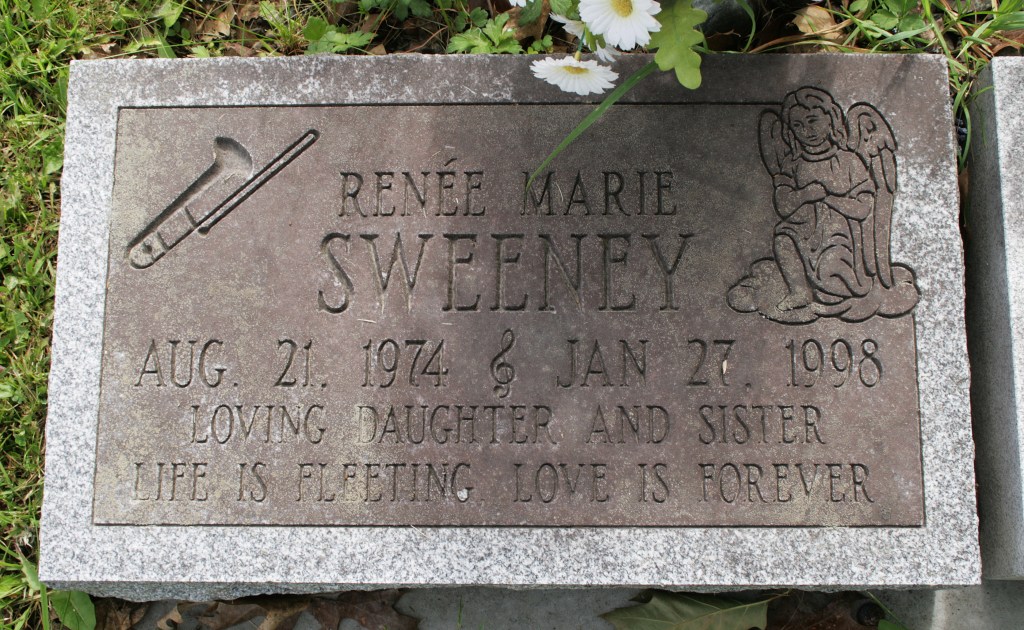
A couple of weekends ago I visited the grave of Renée Sweeney. 

While planning out a hike that weekend, I checked which cemeteries would be along the way. One of them just so happened to be her resting place. 

I usually don’t spend as much time in newer cemeteries because the stones and symbolism are much more modern and not as nuanced. This cemetery is full of some very interesting stones and stories. Because I was searching for one grave in particular, I took my time walking through the rows, examining every stone. I came across some lovely stones and epitaphs, as well as some heartbreaking ones.

But none as heartbreaking as the family plot of Renée Sweeney. 

Her grave marker is small, laying flat to the earth, but it tells a story of a life cut short, that had a lot of love yet to give. The epitaph reads “Loving Daughter and Sister, Life is fleeting Love is forever” A trombone is engraved on her stone, as well as a treble clef and an angel. She is buried beside her mother.

What happened to Renée is terrifying and heart-wrenching. She was 23 years old when she was brutally murdered in 1998. She was stabbed at least 30 times while working at Adults Only Video. 

Her murder went unsolved for 20 years.

In 2018, Robert Steven Wright was arrested. He faces a second-degree murder charge. Due to the pandemic, he is still awaiting trial. His new trial date as of this writing is October 25th, 2021. The trial is expected to last 5 weeks.

Renée’s story can be found in more detail in Unsolved Sudbury: Missing. Murdered. Unexplained. by Sarah May. Books are available locally at Bay Used Books, Jan Browning Boutique, and Sudbury Paint and Custom Framing.

If you are interested in learning more about this tragic history, you can read more about it at these links:

One year ago today…

At this time last year, I was exploring New York City with my boyfriend by my side.

It was his first time visiting the Big Apple, and my second time. We did a lot of the touristy stuff; strolling in Central Park, walking along the Brooklyn Bridge, and admiring the twinkling lights of Times Square. It was an amazing trip, that was full of surprises. We visited an amazing restaurant called Ninja New York and enjoyed some sake and delicious sushi.

We had the good fortune of finding Obscura Antiques, the curiosity shop that was featured on A&E’s television show – Oddities. It was so fun to talk to Mike and Evan, after dreaming about visiting their shop for ages. It was good timing as well since they have now closed their brick and mortar location. I also had the chance to visit not one, but two graveyards, while in New York. We had taken the Big Red Bus tours and were making our way to the Brooklyn Bridge. We got off just down the street, close to the Charging Bull statue on Wall Street, and walked back towards the bridge.

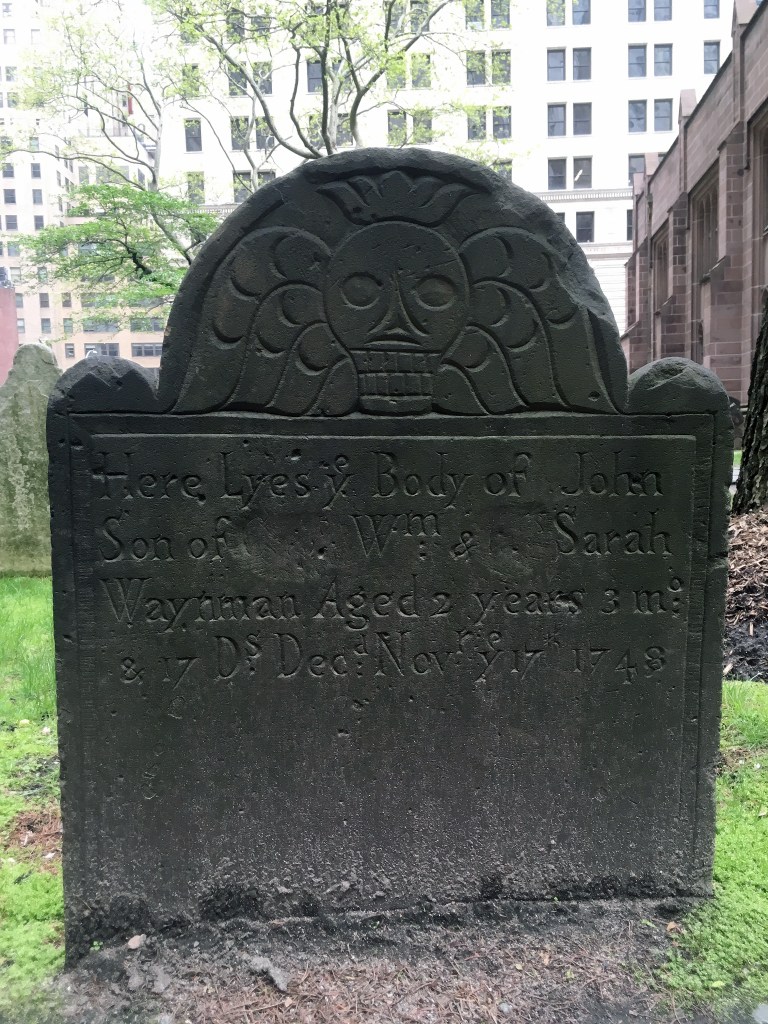
I had to stop in and take some photos. I was a little unprepared as I had not brought along my DSLR with me on this trip, but I did have my iPhone with me. I saw some beautifully carved slate stones, with memento mori and deaths head skulls littered among them. Both Trinity Church and St. Pauls Chapel graveyards are filled with them. You may have noticed that I have a deaths head skull as part of my logo. The craftsmanship in these stones is so detailed and has lasted over 300 years. Looking at the iconography on old stones like this always fills me with so many questions. I will have to go back with my proper camera and take some time exploring the grounds.